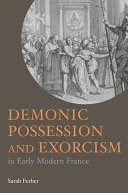
Demonic Possession and Exorcism in Early Modern France
 72
72

Demonic Possession and Exorcism in Early Modern France
Ferber’s examination of demonic possession in 17th-century France offers a starkly empirical approach to a subject often shrouded in sensationalism. The strength of this work lies in its detailed archival research, particularly its engagement with legal and ecclesiastical records that reveal the procedural meticulousness accompanying exorcism rites. One finds a particularly compelling analysis of how the physical symptoms of possession were often interpreted through pre-existing theological frameworks, effectively creating a self-fulfilling prophecy. A limitation, however, might be the text’s academic density; readers seeking purely narrative accounts of demonic encounters may find the scholarly apparatus demanding. Despite this, Ferber succeeds in presenting possession as a socio-historical phenomenon, rather than solely a supernatural one, a crucial distinction that elevates the work beyond mere occult curiosity. This is essential reading for historians of early modern Europe.
📝 Description
72
Sarah Ferber's 2004 study examines demonic possession and exorcism in 17th-century France.
In *Demonic Possession and Exorcism in Early Modern France*, Sarah Ferber analyzes the phenomenon of demonic infestation and the rituals used to combat it. Published in 2004, the book moves beyond simple interpretations of possession as religious delusion. Ferber argues it was a complex social and psychological construct woven into the fabric of 17th-century French society. The work is intended for academics, students of history, religious studies, and sociology, and for anyone interested in early modern European belief systems. Engaging with its dense historical analysis and theological discourse offers insight into how societal anxieties and religious beliefs shaped supernatural perceptions.
Ferber situates her study within the period's intense religious fervor and political instability, where belief in divine and infernal forces was strong. Accusations of possession and subsequent exorcisms served to reinforce social order and provide a framework for understanding suffering and deviance. She introduces concepts like the 'theater of possession,' where manifestations were often performed or interpreted through cultural scripts. The book details the roles of the possessed, exorcists, confessors, and the community in constructing these events, emphasizing the performative aspects of accusation and deliverance.
While not explicitly occult, Ferber's work engages with historical belief systems where the supernatural, including demonic influence, was a tangible aspect of reality. It examines how these beliefs structured understanding of the world and individual experience in early modern Europe. The study illuminates the historical context of practices and perceptions that, for many in that era, fell outside the realm of the mundane and into the domain of the spiritual or demonic.
💡 Why Read This Book?
• Gain a rigorous historical understanding of demonological beliefs in 17th-century France, moving beyond simplistic notions of superstition to grasp the social and psychological dynamics at play during the period of the Great Possessed of Loudun. • Analyze the performative aspects of possession and exorcism as detailed in Ferber’s study, understanding how societal structures and individual experiences converged to shape these dramatic events. • Appreciate the critical role of ecclesiastical and legal institutions in mediating claims of demonic influence, as exemplified by the detailed case studies presented from the era.
⭐ Reader Reviews
Honest opinions from readers who have explored this book.
❓ Frequently Asked Questions
What specific historical period does Sarah Ferber's book focus on regarding demonic possession?
The book primarily examines demonic possession and exorcism in early modern France, concentrating on the 17th century, a period rife with intense religious and social upheaval.
What is the 'theater of possession' concept discussed in the book?
The 'theater of possession' refers to the idea that the outward manifestations of demonic possession were often performed or interpreted according to established cultural scripts and expectations.
Which French city is notably discussed in relation to mass possession events?
The work extensively analyzes the events surrounding the Great Possessed of Loudun, a significant case of alleged mass demonic possession that captivated 17th-century France.
How does Ferber differentiate her approach from sensationalist accounts of exorcism?
Ferber adopts a socio-historical and critical lens, analyzing possession as a complex phenomenon shaped by religious doctrine, social anxieties, and psychological factors, rather than solely focusing on miraculous or terrifying supernatural events.
What kind of primary sources does the author utilize?
The research draws heavily on archival materials, including legal records, ecclesiastical documents, confessional accounts, and contemporary theological treatises from early modern France.
Does the book offer practical advice for modern exorcism practices?
No, the book is a historical and critical analysis of past practices and beliefs, not a manual for contemporary ritual. Its focus is on understanding the historical context and social functions of early modern exorcism.
🔮 Key Themes & Symbolism
The Social Construction of Possession
Ferber posits that demonic possession in early modern France was not merely a spiritual affliction but a socially constructed phenomenon. Accusations and manifestations were shaped by prevailing theological doctrines, societal anxieties, and the specific cultural contexts of the time. The 'theater of possession' concept highlights how individuals and communities enacted roles, and how these performances were interpreted within existing frameworks, reinforcing social norms and religious authority.
Ritual and Authority in Exorcism
The book meticulously examines the rigorous rituals of exorcism employed by the Catholic Church. These rites were not simply acts of spiritual warfare but complex procedures that reinforced ecclesiastical authority and provided a structured response to perceived supernatural threats. Ferber details how the precise performance of these rituals—involving prayers, blessings, and the use of sacred objects—was crucial for their perceived efficacy and for maintaining order within the community.
Possession as a Mirror of Anxieties
Demonic possession served as a potent metaphor for various societal and personal anxieties prevalent in early modern France. Whether reflecting fears of heresy, social unrest, or individual psychological distress, the possessed became focal points for collective anxieties. The work explores how these accusations often targeted marginalized individuals or provided explanations for inexplicable misfortunes, thus functioning as a mechanism for social control and psychological release.
The Role of the Accused and Accuser
Ferber looks at the dynamics between the accused individuals, often women, and those who initiated accusations or conducted exorcisms. The agency of the possessed, the motivations of accusers, and the decisions of ecclesiastical and legal authorities are all scrutinized. The study highlights the performative aspects of the accused and the interpretive frameworks applied by those in power, revealing the intricate interplay of belief, suspicion, and social status.
💬 Memorable Quotes
Direct passages from the work, attributed to the author.
“The performance of possession was often indistinguishable from its reality within the framework of belief.”
— This interpretation highlights Ferber's argument that the outward signs and behaviors associated with demonic possession were so deeply embedded within the cultural and religious understanding of the era that the distinction between genuine experience and enacted performance became blurred.
“Accusations of possession often became a means to articulate societal anxieties.”
— This concept implies that when people were accused of being possessed, it often reflected underlying fears or tensions within the community, such as religious dissent, social instability, or anxieties about the unknown.
“The physical symptoms were interpreted through pre-existing theological frameworks.”
— This highlights how the observed physical manifestations of a person believed to be possessed were understood and explained by referencing established religious doctrines and beliefs, rather than being viewed as purely medical or psychological phenomena.
“The Loudun possessions offered a potent stage for religious and political drama.”
— This suggests that the widely publicized events in Loudun, involving alleged demonic possession, became a significant arena where religious doctrines were tested and political power struggles played out, capturing public attention.
💡 Key Ideas
Editorial paraphrase of the work's core concepts — not direct quotes.
Exorcism rites functioned as both spiritual warfare and social regulation.
This paraphrase suggests that the rituals designed to expel demons served a dual purpose: addressing the perceived supernatural threat and simultaneously reinforcing the authority of the Church and the established social order.
🌙 Esoteric Significance
Tradition
While not strictly an esoteric text in the vein of Hermeticism or Kabbalah, Ferber's work touches upon the Catholic Church's historical engagement with what might be termed 'occult phenomena' through the lens of demonology. It explores the Church's sophisticated theological and ritualistic frameworks for understanding and combating perceived spiritual forces, which, from a comparative religious studies perspective, interfaces with broader discussions of spiritual warfare and unseen realities found in various esoteric traditions.
Symbolism
The symbolic weight of demonic possession is immense within the context Ferber examines. The demon itself symbolizes ultimate corruption and rebellion against the divine order, while the possessed individual becomes a battleground for spiritual forces. The exorcism ritual, with its reliance on sacred texts, holy water, and the invocation of saints, represents the triumph of divine grace and ecclesiastical authority over chaos and malevolence, symbolizing purification and restoration.
Modern Relevance
Contemporary practitioners of deliverance ministry, often found within various Christian denominations, echo some of the historical concerns and ritualistic approaches documented by Ferber. Furthermore, scholars of cultural studies and religious history continue to draw on Ferber's analysis to understand the intersection of belief, power, and social control in historical contexts, informing modern discussions on phenomena like mass hysteria, psychological trauma, and the performance of religious experience.
👥 Who Should Read This Book
• Students of early modern European history seeking to understand the socio-religious field of 17th-century France, particularly the dynamics of belief and power. • Scholars of religious studies and comparative religion interested in the historical practices and theological underpinnings of demonology and exorcism within Catholicism. • Researchers in cultural anthropology and sociology examining how societal anxieties are articulated and managed through ritualistic practices and belief systems.
📜 Historical Context
Early modern France, particularly the 17th century, was a crucible of religious intensity and social transformation. The Catholic Church exerted immense influence, yet faced challenges from internal reformations and external pressures. Belief in the active intervention of supernatural forces—both divine and demonic—was pervasive, shaping legal systems, social practices, and individual lives. Sarah Ferber's work engages with this climate, particularly the phenomenon of demonic possession and the Church's response through exorcism. This era saw figures like Cardinal Richelieu actively involved in cases, and the Jansenist-Molinist debates provided an intellectual backdrop for theological disputes. The reception of such works on possession was often intertwined with religious and political controversies; for instance, the sensationalism surrounding the Ursuline nuns of Loudun (1632-1637) drew scrutiny from figures like Urbain Grandier and the subsequent investigations.
📔 Journal Prompts
The societal anxieties mirrored in accusations of possession.
The performative elements within the 'theater of possession'.
The dual function of exorcism rites as spiritual warfare and social regulation.
The interpretation of physical symptoms through pre-existing theological frameworks.
The Loudun possessions as a stage for religious and political drama.
🗂️ Glossary
Demonic Possession
A state believed to occur when a malevolent spiritual entity (a demon) takes control of a person's body, influencing their behavior, speech, and physical state.
Exorcism
A religious ritual performed to expel a demon or evil spirit from a person or place, typically involving prayers, blessings, and specific rites prescribed by religious authorities.
The Theater of Possession
A concept suggesting that the outward manifestations of demonic possession were often enacted or interpreted according to established cultural scripts and expectations, blurring the line between performance and genuine experience.
Loudun Possessions
A significant historical event in 17th-century France involving the alleged demonic possession of a group of Ursuline nuns in Loudun, a case that attracted widespread attention and involved figures like Father Urbain Grandier.
Ecclesiastical Authority
The power and jurisdiction held by the Church and its officials, particularly in matters of doctrine, ritual, and governance, which played an important role in validating or dismissing claims of possession.
Theological Framework
The system of beliefs, doctrines, and interpretations derived from religious theology that provided the context for understanding phenomena such as demonic possession in early modern Europe.
Social Control
Mechanisms and practices employed by a society to regulate the behavior of individuals and groups, ensuring conformity to established norms and values, often intertwined with religious beliefs and practices.