The Pyramids, the Sphinx
 71
71

The Pyramids, the Sphinx
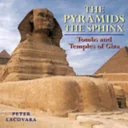
Peter Lacovara's "The Pyramids, the Sphinx" offers a meticulously researched overview, distinguished by its clear prose and excellent visual aids. The author skillfully navigates the vast scholarship surrounding these monuments, presenting a balanced perspective that respects both established Egyptological views and the persistent allure of speculative theories. One particularly strong aspect is the detailed analysis of the architectural techniques employed during the Old Kingdom, moving beyond mere description to explore the 'how' and 'why' of construction. However, the book’s focus remains squarely within conventional archaeological discourse, which may leave readers seeking deeper esoteric interpretations feeling somewhat unfulfilled; the speculative elements are acknowledged but not deeply engaged. A passage discussing the alignment of the Great Pyramid with cardinal points, for instance, is handled with factual rigor but lacks the speculative flourish some might anticipate. Lacovara provides a solid foundation, but the true mystical dimensions are left for the reader to ponder.
This is a commendable, fact-based introduction for the serious student of ancient Egypt.
📝 Description
71
Peter Lacovara's 2004 book examines the Pyramids and Sphinx with detailed illustrations.
This volume by Peter Lacovara offers a thorough look at the Giza Pyramids and the Sphinx. It includes detailed pictures and scholarly notes. The book discusses the architecture, history, and mysteries of these famous Egyptian monuments. It seeks to help readers understand how they were built, what their purpose was, and their role in Egyptian civilization.
The book is useful for people visiting Egypt, giving them background to appreciate their trip more. It also works as a reference for anyone interested in ancient Egypt, archaeology, building history, or the symbolic meanings of these structures. Students and researchers focusing on Egyptology will find its detailed approach helpful.
Published in 2004, Lacovara's work places the Pyramids and Sphinx in the Old Kingdom period, a time of significant architectural and state growth in Egypt. The book covers the common scholarly views on the Fourth Dynasty pharaohs, like Khufu, Khafre, and Menkaure, who ordered these large tombs. While mentioning current discussions and different ideas, the analysis is based on established archaeological evidence and texts from that time.
While this book focuses on historical and archaeological evidence regarding the Pyramids and Sphinx, its subject matter inherently touches upon esoteric traditions. Ancient Egyptian beliefs about the afterlife, the pharaoh's divine connection, and the cosmic order are central to understanding these structures. The book's examination of royal ideology and symbolic meanings, particularly concerning the Sphinx and its link to the sun god Ra, resonates with interpretations found in esoteric literature that seek deeper, often spiritual, meanings beyond the purely historical account. It provides factual grounding for concepts often discussed in broader esoteric circles.
💡 Why Read This Book?
• Gain a precise understanding of Old Kingdom construction methods and the logistical feats involved in building the Pyramids, as detailed in the sections on architectural analysis. • Explore the symbolic role of the Sphinx as an emblem of pharaonic power and its connection to solar cults, offering insights beyond its iconic image. • Appreciate the historical context of the Giza plateau's development during the Fourth Dynasty, understanding the site as a deliberate, planned royal necropolis.
⭐ Reader Reviews
Honest opinions from readers who have explored this book.
❓ Frequently Asked Questions
What is the primary historical period covered by this book regarding the Pyramids and Sphinx?
The book primarily focuses on the Old Kingdom period of ancient Egypt, specifically the Fourth Dynasty, which is when the great pyramids of Giza, including the Great Pyramid of Khufu, and the Sphinx were constructed.
Does the book discuss the Great Sphinx's missing nose?
While the book provides extensive detail on the Sphinx, its primary focus is on its construction, symbolism, and historical context rather than specific debated physical attributes like the missing nose.
What kind of illustrations can be expected in 'The Pyramids, the Sphinx'?
The book is described as 'lavishly illustrated,' suggesting it contains numerous high-quality photographs, diagrams, and possibly artist reconstructions to visually support the textual information.
Is Peter Lacovara a recognized Egyptologist?
Yes, Peter Lacovara is a respected Egyptologist and curator who has worked extensively with Egyptian antiquities and published on various aspects of ancient Egyptian art and archaeology.
Does the book present alternative or fringe theories about the pyramids?
The book is well-documented and grounded in scholarly research, acknowledging some alternative theories but primarily presenting the established Egyptological consensus regarding the monuments' origins and purpose.
What is the significance of the Pyramids and Sphinx in terms of royal ideology?
The book explores how the Pyramids and Sphinx functioned as powerful statements of royal authority, divine connection, and the pharaoh's eternal legacy within the context of ancient Egyptian beliefs about kingship and the afterlife.
🔮 Key Themes & Symbolism
Architectural Marvels
The work meticulously details the engineering and construction methods behind the Pyramids and the Sphinx, emphasizing the advanced knowledge of geometry, astronomy, and labor organization possessed by the Old Kingdom Egyptians. It moves beyond simple description to analyze the practicalities of quarrying, transporting, and precisely placing massive stone blocks, offering insights into the societal structure that enabled such monumental undertakings. The precision of alignment and scale challenges modern comprehension, hinting at sophisticated methodologies lost to time.
Royal Power and Divine Connection
Central to the book is the concept of the Pyramids and Sphinx as potent symbols of pharaonic authority and their connection to the divine. These structures served not only as elaborate tombs but as enduring testaments to the king's power on earth and his journey to the afterlife, ensuring cosmic order (Ma'at). The Sphinx, in particular, is explored as a guardian figure and a representation of the king's divine essence, often linked to the sun god Ra, reinforcing the ruler's celestial mandate.
Enduring Mysteries and Scholarly Debate
While grounded in Egyptology, the book acknowledges the persistent questions and speculative theories surrounding the Giza monuments. It frames these discussions within their historical and archaeological context, contrasting conventional interpretations with fringe ideas without necessarily validating the latter. The work encourages critical thinking about the limits of current knowledge and the ongoing quest to decipher the full meaning and purpose behind these ancient structures.
Symbolism of the Sphinx
The Sphinx is analyzed not just as a colossal statue but as a complex symbol laden with meaning. Its composite form—lion's body, human head—represents the fusion of animal strength and human intellect, embodying the pharaoh's dominion over both the physical and intellectual realms. Its position facing the rising sun further links it to solar worship and the eternal cycle of rebirth, making it a profound representation of kingship and cosmic principles.
💬 Memorable Quotes
Direct passages from the work, attributed to the author.
“The Pyramids were not merely tombs; they were resurrection machines.”
— This interpretation highlights the ancient Egyptian belief that the pyramids were designed with a specific funerary and regenerative purpose, facilitating the pharaoh's transition and eternal existence in the afterlife.
“The Sphinx guards the plateau, a silent sentinel of forgotten dynasties.”
— This reflects the enduring enigma of the Sphinx, emphasizing its role as a protective figure and a symbol of the vast, often inscrutable, history it presides over.
“Alignment with celestial bodies dictated the precise placement of these monumental structures.”
— This points to the sophisticated understanding of astronomy by the ancient Egyptians, suggesting that astronomical observations were integral to the design and orientation of the pyramids.
“The scale of the Giza complex demanded an unprecedented level of societal organization.”
— This underscores the immense logistical and managerial capabilities required to conceive and execute the construction of the pyramids and associated structures, reflecting a highly developed civilization.
“The Sphinx embodies the pharaoh's dual nature: strength and wisdom.”
— This interpretation focuses on the symbolic representation of the Sphinx, suggesting its form reflects the king's combination of physical power (lion's body) and intellectual or divine authority (human head).
🌙 Esoteric Significance
Tradition
While primarily an Egyptological work, "The Pyramids, the Sphinx" touches upon themes resonant within esoteric traditions that draw heavily on ancient Egypt. Its focus on the Pyramids as vehicles for resurrection and the Sphinx as a symbol of divine kingship aligns with Hermetic and Rosicrucian interpretations that view these structures as repositories of ancient wisdom and keys to understanding cosmic principles and the afterlife. The book implicitly provides the factual basis upon which many esoteric interpretations are built, separating the historical monument from its later symbolic layering.
Symbolism
The Pyramids themselves are potent symbols of ascension, stability, and the connection between the earthly realm and the divine. Their triangular form can represent the primordial mound, the spark of creation, or the journey of the soul towards the heavens. The Sphinx, with its lion body and human head, symbolizes the integration of primal power and enlightened consciousness, representing the pharaoh as a divine-human intermediary, a guardian of sacred knowledge, and a representation of solar energies.
Modern Relevance
Contemporary esoteric thinkers and practitioners continue to draw inspiration from the symbolism and perceived energies of the Pyramids and Sphinx. Movements like Thelema, which incorporates Egyptian deities and symbolism, often reference these monuments. Furthermore, architectural and geomantic studies frequently analyze the site's layout for energetic patterns. The book’s detailed examination of historical context provides a crucial counterpoint to purely speculative modern interpretations, grounding esoteric interest in factual archaeological understanding.
👥 Who Should Read This Book
• Students of Ancient Egypt: Those pursuing formal or informal study of Egyptology will find this book an invaluable, well-documented resource for understanding the Giza monuments. • Armchair Archaeologists: Individuals fascinated by ancient history and archaeological discoveries, particularly those interested in monumental architecture and its societal implications, will appreciate the detailed analysis. • Travelers to Egypt: Anyone planning a visit to the Giza plateau will benefit from the rich historical and contextual information provided, enhancing their appreciation of the sites.
📜 Historical Context
Peter Lacovara's "The Pyramids, the Sphinx" emerged in 2004, a period when Egyptology continued to refine understandings of the Old Kingdom, particularly the Fourth Dynasty. This era, roughly 2580–2560 BCE for Khufu's reign, was characterized by the consolidation of centralized power and monumental building projects. While mainstream archaeology, represented by scholars like Mark Lehner, focused on the logistical and social aspects of construction, alternative theories, often popularized in fringe literature, proposed non-human or advanced ancient civilizations as builders. Lacovara's work engages with this broader landscape by presenting detailed, evidence-based analysis that stands in contrast to speculative narratives. Its reception within academic circles would likely be as a solid, well-illustrated synthesis of current Egyptological thought, reinforcing established chronologies and interpretations, rather than engaging directly with the more sensationalist claims.
📔 Journal Prompts
The architectural precision of the Pyramids and the Sphinx.
The symbolic meaning of the Sphinx as a guardian figure.
The evidence for Old Kingdom societal organization supporting these constructions.
The alignment of the Great Pyramid with cardinal points.
The pharaoh's role in ancient Egyptian religious cosmology as depicted through these monuments.
🗂️ Glossary
Old Kingdom
The period in ancient Egyptian history spanning roughly from 2686 to 2181 BCE, known for its strong central government, flourishing arts, and the construction of the great pyramids at Giza.
Fourth Dynasty
A ruling dynasty within the Old Kingdom (c. 2613–2494 BCE) most famous for the construction of the Great Pyramid of Giza (Khufu), the Pyramid of Khafre, and the Sphinx.
Pharaoh
The title given to the rulers of ancient Egypt, considered divine or semi-divine figures responsible for maintaining cosmic order (Ma'at) and leading the state and religious functions.
Ma'at
An ancient Egyptian concept representing truth, balance, order, harmony, law, morality, and justice. It was personified as a goddess and was central to the pharaoh's role.
Giza Plateau
The elevated desert area near modern Cairo where the Great Pyramid of Giza, the Pyramid of Khafre, the Pyramid of Menkaure, and the Great Sphinx are located.
Funerary Complex
The architectural ensemble associated with a royal tomb, typically including the pyramid, a mortuary temple, a valley temple, and a causeway connecting them, designed for the king's burial and ongoing cultic activities.
Egyptology
The academic field devoted to the study of ancient Egyptian history, language, literature, religion, architecture, and art.
This book appears in 1 collection
🔮 Readers Also Liked
Browse all →







From the “Pyramids” Collection
View all →


More Free Esoteric History & Biography Books
View all →