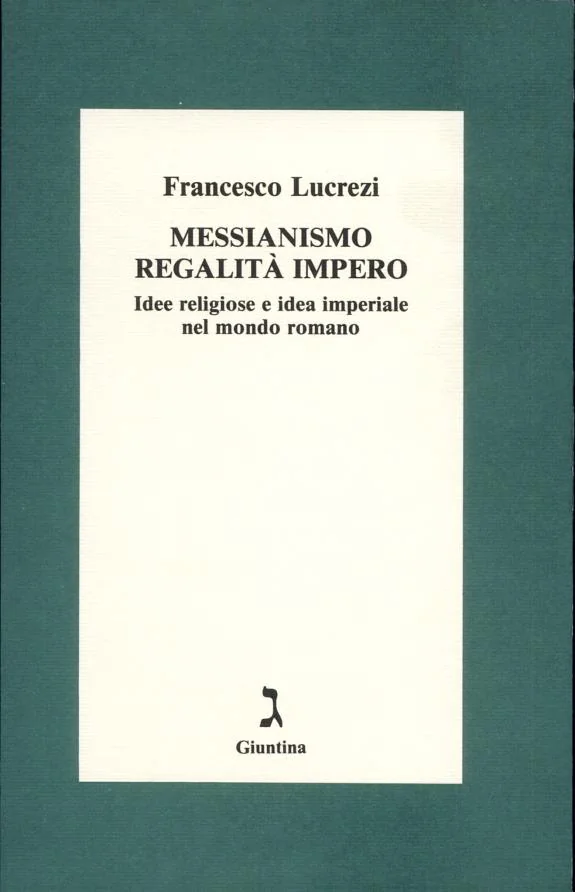
Messianismo regalità impero
 82
82

Messianismo regalità impero
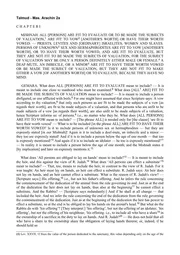
Francesco Lucrezi's Messianismo, regalità, impero offers a dense, academic exploration of the ideological foundations of the Roman Empire. The work meticulously details how Christian universalism became a cornerstone for imperial consolidation, a perspective particularly illuminated in its examination of laws affecting Jewish communities. The chapter focusing on Constantius II's constitution from 339 CE, which prohibited Jews from owning Christian slaves or circumcising them, is a stark illustration of this shift. While the depth of research is commendable, the prose can be exceptionally dense, making it a challenging read for those not already immersed in late antique studies. The book's strength lies in its rigorous analysis of legal and religious texts to demonstrate the ideological underpinnings of imperial power. However, its highly specialized nature might limit its accessibility. Lucrezi provides a vital, albeit demanding, account of ideological transformation.
📝 Description
82
Francesco Lucrezi's 2023 study traces the ideological shifts from Roman paganism to Christian universalism.
Francesco Lucrezi's "Messianismo, regalità, impero" examines the ideological transformations within the Roman world. The book focuses on the transition from the diverse religious beliefs of the Republic to a monotheistic outlook that supported the establishment of the empire. Lucrezi analyzes how religious ideas and political thinking were connected, charting the development of concepts such as messianism and the authority of the emperor.
The study is placed within the context of late 20th-century historical scholarship, particularly debates concerning Roman law and the Christianization of the empire. It looks at the period after Constantine the Great, a time of considerable religious and administrative changes, and considers the impact of imperial decrees. The book dissects the evolution of 'messianism,' from its Jewish roots through Christian interpretations and its use by imperial powers. It also analyzes 'regalità' (kingship), contrasting its imperial form with earlier republican ideals. The creation of the 'impero' (empire) is presented as more than just a political structure, but as the result of a cohesive ideological and religious framework.
This work engages with historical interpretations of how religious concepts, particularly those with messianic undertones, were adopted and reshaped by imperial power structures. It examines the historical trajectory of messianic ideas, moving from their origins in Judaism, through their adaptation within Christianity, and finally to their integration into the ideology of the Roman Empire. The study investigates how these evolving religious frameworks influenced the concept of imperial rule and the formation of a universal empire.
💡 Why Read This Book?
• Understand the legal implications of religious shifts through the analysis of Constantius II's constitution in 339 CE, revealing how imperial decrees enforced religious conformity. • Grasp the evolution of 'messianism' from its ancient roots to its role in legitimizing imperial power, offering a unique lens on religious justification for state authority. • Explore the transformation of 'regalità' within the Roman Empire, learning how the concept of kingship adapted to accommodate Christian universalist ideologies.
⭐ Reader Reviews
Honest opinions from readers who have explored this book.
❓ Frequently Asked Questions
What is the primary focus of Messianismo, regalità, impero?
The book primarily focuses on the ideological transformation of the Roman Empire, particularly how Christian universalism influenced the concepts of messianism, kingship, and imperial authority after the Republic.
When was Messianismo, regalità, impero first published?
Francesco Lucrezi's work, Messianismo, regalità, impero, was first published in 1996.
Which Roman Emperor's constitution is analyzed in detail?
The book specifically analyzes the constitution of Emperor Constantius II, issued around 339 CE, concerning prohibitions related to Jewish practices and Christian slaves.
What does the term 'regalità' refer to in the context of this book?
'Regalità' in this book refers to the concept of kingship or royalty, examining its evolution and adaptation within the Roman imperial system, especially as it intersected with religious ideology.
How does the book discuss the end of pagan pluralism?
It discusses the end of pagan pluralism by illustrating how the rise of the Roman Empire and the subsequent adoption of Christianity fostered a new ideology of uniformity and universality.
Is this book suitable for a general audience?
Due to its academic and specialized nature, focusing on historical and philosophical analysis of late antiquity, it is more suited for scholars and dedicated students of the subject rather than a general readership.
🔮 Key Themes & Symbolism
Imperial Ideology
The work dissects the ideological scaffolding that supported the Roman Empire, moving beyond simple political or military conquest. It highlights how religious thought, particularly the transition from pagan pluralism to Christian universalism, provided a unifying framework. This shift was crucial for consolidating power and imposing uniformity across diverse territories, demonstrating that the empire's endurance was as much an ideological project as a military one.
Christian Universalism
Lucrezi examines how Christian concepts of universality and a singular divine authority were instrumental in shaping the Roman imperial state. This provided a potent ideological counterpoint to the Republic's fragmented religious landscape, enabling the translation of abstract theological ideas into concrete state structures and laws that aimed for cohesion and control.
Messianism and Regalità
The book traces the evolution of messianic expectations and the concept of 'regalità' (kingship). It analyzes how these ideas, originating in Jewish traditions, were reinterpreted and ultimately co-opted by imperial power, serving to legitimize rulers and the imperial project within a new religious paradigm.
Legal and Social Control
Through specific examples, such as the decrees concerning Jewish communities under Constantius II, the work illustrates how ideological shifts translated into tangible legal and social controls. These measures enforced religious boundaries and demonstrated the state's power to regulate religious practice and inter-group relations.
💬 Memorable Quotes
Direct passages from the work, attributed to the author.
“Christianity’s translation of new ideas of uniformity and universality into a state system.”
— This captures the core argument: Christianity provided the intellectual and spiritual tools necessary for the Roman Empire to consolidate its vast territories under a unified ideology.
“The end of the ideology of pluralism and paganism of the Roman Republic.”
— This points to a fundamental shift in Roman socio-political thought, marking the decline of diverse religious practices in favor of a more singular, state-sanctioned belief system.
“Focus on the prohibition of Jews having Christian slaves or circumcising them.”
— This specific detail underscores the legal mechanisms employed to manage religious interactions and prevent perceived transgressions within the imperial framework.
“The rise of the Roman Empire brought to an end the ideology of pluralism and paganism.”
— This asserts a direct causal link between imperial expansion and the suppression of the Republic's diverse religious and ideological landscape.
💡 Key Ideas
Editorial paraphrase of the work's core concepts — not direct quotes.
The constitution of Constantius II regarding Jews and Christian slaves.
This passage highlights a concrete legal instrument used to enforce religious and social boundaries, illustrating the practical application of evolving imperial ideology concerning minority groups.
🌙 Esoteric Significance
Tradition
While not explicitly framed within a single esoteric lineage, Lucrezi's work touches upon themes resonant with Gnostic and Hermetic traditions that explored the nature of divine kingship and cosmic order. It analyzes how a specific interpretation of divine will became codified into state power, a process that esoteric traditions often critique or reinterpret through mystical lenses.
Symbolism
The concept of 'messianism' itself functions as a potent symbol of ultimate authority and divine mandate, reinterpreted from Jewish eschatology to Christian soteriology and finally to imperial legitimacy. 'Regalità' symbolizes the earthly manifestation of cosmic or divine order, its transformation reflecting shifts in how universal power was conceptualized and wielded.
Modern Relevance
Contemporary discussions on the intersection of religion and state, the use of ideology in governance, and the historical roots of universalist claims continue to draw upon analyses like Lucrezi's. Thinkers exploring political theology or the historical construction of religious authority might find value in its detailed examination of the Roman imperial model.
👥 Who Should Read This Book
• Academics and graduate students specializing in Roman history, late antiquity, and the history of religion, seeking rigorous analysis of imperial ideology. • Researchers in comparative religion and political philosophy, interested in how religious concepts like messianism are adapted for state power. • Advanced readers of esoteric philosophy, particularly those investigating the historical relationship between spiritual authority and temporal rule.
📜 Historical Context
Francesco Lucrezi's Messianismo, regalità, impero emerged in 1996, a period of robust scholarly engagement with late antiquity and the processes of Christianization. The intellectual currents favored detailed textual analysis and socio-legal history, building upon the work of scholars like Peter Brown. Lucrezi engages with the complex transition from the Roman Republic's religious pluralism to the unified imperial ideology fostered by Christianity. The book's examination of Constantius II’s reign (337-361 CE) places it within a critical era following Constantine’s embrace of Christianity, where imperial policy actively shaped religious discourse and practice. While not a period of widespread book banning, the era saw intense theological debates and imperial pronouncements that defined orthodoxy and heresy, influencing the reception of such historical analyses. Lucrezi’s work contributes to understanding how imperial power structure adapted to incorporate and leverage religious universalism, contrasting with earlier polytheistic frameworks.
📔 Journal Prompts
The constitution of Emperor Constantius II and its implications for religious minorities.
The evolution of 'messianism' as a concept legitimizing imperial authority.
The transformation of 'regalità' from Republic to Empire.
How Christian universalism facilitated state uniformity.
The end of pagan pluralism under Roman imperial rule.
🗂️ Glossary
Messianismo
The belief in a messiah or savior figure, particularly as it evolved from Jewish expectations to Christian interpretations and its appropriation by imperial power structures.
Regalità
Kingship or royalty; the concept and practice of rule by a monarch, examined here in its transformation within the Roman imperial context.
Impero
Empire; the Roman Empire, viewed not just as a political entity but as a system shaped by unifying religious and ideological frameworks.
Pluralism (ideological/religious)
The coexistence of diverse beliefs, ideologies, and religious practices, characteristic of the Roman Republic before the rise of imperial Christianity.
Universalism (religious/ideological)
The belief in a single, overarching truth or system applicable to all people, a concept central to Christianity and adopted by the Roman Empire for consolidation.
Constantius II
Roman Emperor from 337 to 361 CE, son of Constantine the Great, known for his Arian Christian beliefs and promulgation of laws affecting various religious groups, including Jews.
Constitution of 339
A specific imperial decree issued by Constantius II that imposed restrictions on Jews, notably prohibiting them from owning Christian slaves or circumcising them.
This book appears in 1 collection
🔮 Readers Also Liked
Browse all →







From the “Messianism” Collection
View all →






More Free Esoteric History & Biography Books
View all →