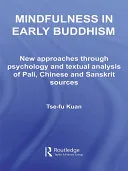
Mindfulness in Early Buddhism
 76
76

Mindfulness in Early Buddhism
Tse-fu Kuan's *Mindfulness in Early Buddhism* offers a much-needed scholarly counterpoint to the pervasive, often diluted, modern understanding of 'mindfulness.' Kuan meticulously dissects the term 'sati' through a comparative textual analysis of Pali, Chinese, and Sanskrit sources, a feat that distinguishes it from many popular treatments. The strength lies in its rigorous scholarship, grounding the practice in its original philosophical and ethical framework. A notable passage is Kuan's detailed examination of sati's role within the satipatthana sutta, revealing its active, recollective quality rather than passive observation. However, for the non-academic reader, the dense textual criticism and philological detail can present a significant barrier to entry. While invaluable for scholars, its accessibility for the general practitioner seeking practical guidance might be limited. Despite this, Kuan's work is an indispensable resource for anyone wishing to understand mindfulness at its historical and philosophical roots.
📝 Description
76
In 2007, Tse-fu Kuan published Mindfulness in Early Buddhism, grounding 'sati' in original scriptures.
Tse-fu Kuan's Mindfulness in Early Buddhism examines the concept of 'sati' as it was understood in the earliest Buddhist texts. The author bases the discussion on original Pali, Chinese, and Sanskrit scriptures, moving away from modern interpretations. Kuan analyzes textual evidence to reconstruct the historical and philosophical basis of sati, showing its importance in the Buddhist path to liberation.
The book was published during a time when mindfulness was gaining popularity but often separated from its Buddhist roots. Kuan's work acts as a response, returning to early Buddhist canons to clarify the term's original meaning. It compares scholarship on the Pali Canon and early Mahayana sutras, distinguishing its approach from later Buddhist thought and current mindfulness trends. The inclusion of Sanskrit and Chinese texts adds a comparative element that is frequently absent in English scholarship.
The core idea is 'sati,' which Kuan describes as more than just attention. It is a complex faculty encompassing recollection, awareness, and remembering the Dharma. The book also discusses how sati connects with other practices like samadhi (concentration) and prajna (wisdom), highlighting the ethical aspects.
This book situates mindfulness not as a modern secular technique, but as a crucial element within the early Buddhist path to liberation. It draws directly from the earliest available scriptures in Pali, Sanskrit, and Chinese, aiming to recover an understanding of 'sati' that is deeply embedded in the philosophical and ethical framework of the Buddha's teachings. By emphasizing recollection and awareness of the Dharma, Kuan connects sati to the realization of wisdom and the cessation of suffering, distinguishing it from later or popularized versions of the practice.
💡 Why Read This Book?
• Gain a precise understanding of 'sati' as recollective awareness, moving beyond superficial modern interpretations, as illuminated by Kuan's textual analysis of early Buddhist scriptures. • Grasp the ethical and soteriological function of mindfulness within the Noble Eightfold Path, a crucial distinction from contemporary secular applications, as detailed in the book's philosophical sections. • Appreciate the comparative textual scholarship across Pali, Chinese, and Sanskrit traditions, revealing the historical depth and diversity of early Buddhist contemplative practices, as demonstrated by Kuan's 2007 publication.
⭐ Reader Reviews
Honest opinions from readers who have explored this book.
❓ Frequently Asked Questions
What is the primary focus of Tse-fu Kuan's 'Mindfulness in Early Buddhism'?
The book's primary focus is a rigorous textual and philosophical examination of 'mindfulness' (sati) in early Buddhism, using Pali, Chinese, and Sanskrit sources to clarify its original meaning and practice.
How does Kuan's approach differ from popular mindfulness trends?
Kuan's approach is distinct by emphasizing the historical and philosophical context of 'sati' within early Buddhist doctrine, contrasting with many contemporary, often secularized, adaptations of mindfulness.
What are the key textual sources used in the book?
The book draws upon significant Buddhist scriptures written in Pali, classical Chinese, and Sanskrit, allowing for a comparative analysis of the concept of mindfulness across different early traditions.
Who would benefit most from reading this book?
Scholars of Buddhist studies, comparative religion, philosophy, and serious meditation practitioners seeking a deep, textually-grounded understanding of mindfulness will find this book particularly beneficial.
When was 'Mindfulness in Early Buddhism' first published?
The book was first published on December 18, 2007, positioning it as a scholarly response to the growing interest in mindfulness.
Does the book offer practical meditation instructions?
While it analyzes the practice of mindfulness, the book's strength lies in its scholarly and philosophical exposition rather than providing step-by-step practical meditation guidance.
🔮 Key Themes & Symbolism
Sati as Recollection
This work re-centers 'sati' not as mere present-moment awareness, but as a faculty of profound recollection and non-forgetting. Kuan's analysis, drawing from early Buddhist suttas, highlights how sati functions to remember the teachings (Dharma) and the path to liberation. This is crucial for understanding the ethical and cognitive dimensions of the practice, differentiating it from passive observation and emphasizing its active role in spiritual development within the monastic and lay communities of ancient India.
Comparative Textual Analysis
A central to Kuan's research is the comparative study of Buddhist texts in Pali, Chinese, and Sanskrit. This multi-lingual approach allows for a nuanced understanding of how mindfulness concepts were articulated and potentially varied across different early Buddhist schools and geographical regions. By examining these diverse textual traditions, the book offers a more comprehensive and historically accurate picture than studies relying on a single linguistic corpus, such as solely Pali texts.
Mindfulness in the Noble Eightfold Path
The book situates mindfulness ('sati') as an integral component of the Noble Eightfold Path, specifically within the domains of Right Mindfulness (Samma Sati) and Right Effort. Kuan explores how sati functions synergistically with other path factors like concentration (samadhi) and wisdom (prajna) to dismantle suffering. This ethical and soteriological framework underscores that for early Buddhism, mindfulness was not an end in itself but a vital tool for cultivating wholesome states and achieving enlightenment.
Philosophical Underpinnings
Beyond its practical application, Kuan explores the philosophical underpinnings of sati in early Buddhism. This includes exploring its relationship to Buddhist concepts of impermanence (anicca), suffering (dukkha), and no-self (anatta). The work investigates how the practice of mindfulness was intended to lead to a direct experiential realization of these core doctrines, thereby transforming one's understanding of reality and fostering detachment from conditioned phenomena.
💬 Memorable Quotes
Direct passages from the work, attributed to the author.
“The meaning of sati is not simply 'awareness' but rather a kind of 'non-forgetting' of the Dhamma.”
— This interpretation emphasizes that early Buddhist mindfulness involved a dynamic act of remembering and applying the teachings, rather than a passive state of being present.
“The satipatthana discourse presents sati as a faculty integral to the understanding of impermanence.”
— This highlights the intellectual and analytical aspect of early mindfulness practice, suggesting it was a tool for insight into the nature of reality, not just emotional regulation.
“Comparative study of Pali, Sanskrit, and Chinese texts reveals nuances in the early articulation of mindfulness.”
— This points to the methodological rigor of the book, suggesting that a single textual tradition might offer an incomplete picture of the historical concept of sati.
“Sati functions within the Noble Eightfold Path to cultivate wholesome mental states and dismantle suffering.”
— This interpretation frames mindfulness within its ethical and soteriological purpose in early Buddhism, emphasizing its role as a means to liberation and ethical conduct.
“Early Buddhist mindfulness practice was intrinsically linked to the development of wisdom (prajna).”
— This suggests that the practice was not merely about attention but was deeply integrated with cognitive insight and understanding of Buddhist philosophy.
🌙 Esoteric Significance
Tradition
While early Buddhism is not typically categorized within Western esoteric traditions like Hermeticism or Kabbalah, its contemplative practices and philosophical depth hold significant resonance for modern esotericists. The emphasis on mind-training, the investigation of consciousness, and the pursuit of liberation from illusion align with core esoteric aims. Kuan's work, by meticulously detailing the original framework of mindfulness, provides a foundational understanding for those seeking the esoteric dimensions within Buddhism itself, viewed as a path of inner transformation and gnosis.
Symbolism
Key symbols examined implicitly through the concept of 'sati' include the 'path' (magga), representing the structured progression toward enlightenment, and the 'mind' itself, depicted as a field for cultivation and insight. The notion of 'non-forgetting' can be seen as a symbolic representation of maintaining awareness of ultimate truths, guarding against the illusions of the mundane world. The careful analysis of these conceptual symbols provides esoteric practitioners with a deeper understanding of the internal architecture of Buddhist liberation.
Modern Relevance
Contemporary thinkers and practitioners in fields ranging from contemplative neuroscience to integral psychology draw heavily on the early Buddhist understanding of mindfulness that Kuan elucidates. Esoteric practitioners interested in Eastern contemplative systems find Kuan's work crucial for understanding the roots of Buddhist meditation, informing their own cross-traditional studies. Schools emphasizing rigorous mental discipline and the transformation of consciousness, such as certain Vajrayana lineages or modern adaptations of contemplative practices, find validation and depth in Kuan's scholarly reconstruction of 'sati'.
👥 Who Should Read This Book
• Scholars of Religious Studies and Buddhist Philosophy: Gain a critical, textually-based understanding of mindfulness ('sati') and its role in early Buddhist doctrine, utilizing comparative analysis of Pali, Chinese, and Sanskrit sources. • Dedicated Meditation Practitioners: Deepen your comprehension of mindfulness beyond popular adaptations by exploring its original ethical and philosophical context within the Noble Eightfold Path. • Historians of Contemplative Practices: Understand the historical evolution and diverse textual articulations of mindfulness in ancient India, providing essential context for its subsequent development.
📜 Historical Context
Tse-fu Kuan's *Mindfulness in Early Buddhism*, published in December 2007, arrived amidst a burgeoning global interest in mindfulness practices, often presented in secularized forms. The book serves as a scholarly corrective, anchoring the discussion firmly within the textual and philosophical field of early Buddhism. It engages with the complex history of Buddhist thought, specifically the period predating the extensive development of Mahayana traditions and the later proliferation of Zen or Tibetan practices. Kuan's work positions itself against a backdrop where popular interpretations of mindfulness frequently diverged from its original Pali, Sanskrit, and Chinese scriptural contexts. By focusing on the foundational texts, Kuan implicitly contrasts his approach with contemporary scholars like Jon Kabat-Zinn, whose work popularized secular mindfulness in the late 20th century, highlighting the need for historical fidelity. The book's comparative textual analysis is particularly significant, addressing a lacuna in Anglophone scholarship that often prioritized Pali sources, thereby offering a more holistic view of early Buddhist contemplative discourse.
📔 Journal Prompts
The concept of 'sati' as non-forgetting the Dhamma requires sustained reflection.
Consider the relationship between sati and prajna as presented in the textual analysis.
How does the early Buddhist understanding of sati inform your own contemplative practice?
Reflect on the ethical implications of mindfulness as detailed in the Noble Eightfold Path.
Examine the value of comparative textual criticism for understanding historical contemplative traditions.
🗂️ Glossary
Sati
A key Buddhist term often translated as 'mindfulness,' but more accurately encompassing recollection, awareness, and non-forgetting of the Dharma or teachings.
Dhamma
In early Buddhism, refers to the teachings of the Buddha, the truth, or the nature of reality. Sati involves remembering and understanding the Dhamma.
Noble Eightfold Path
The foundational path of Buddhist practice leading to liberation, comprising eight interconnected factors including Right View, Right Mindfulness, and Right Concentration.
Samadhi
Concentration or meditative absorption; a key mental faculty developed alongside mindfulness in Buddhist practice.
Prajna
Wisdom or insight, particularly concerning the nature of reality (e.g., impermanence, suffering, no-self), developed through contemplative practice and study.
Satipatthana
The 'foundations of mindfulness,' a key discourse in early Buddhism detailing methods for cultivating mindfulness through observation of body, feelings, mind, and phenomena.
Anicca
Impermanence; one of the three marks of existence in Buddhism, often a focus of insight cultivated through mindfulness practice.