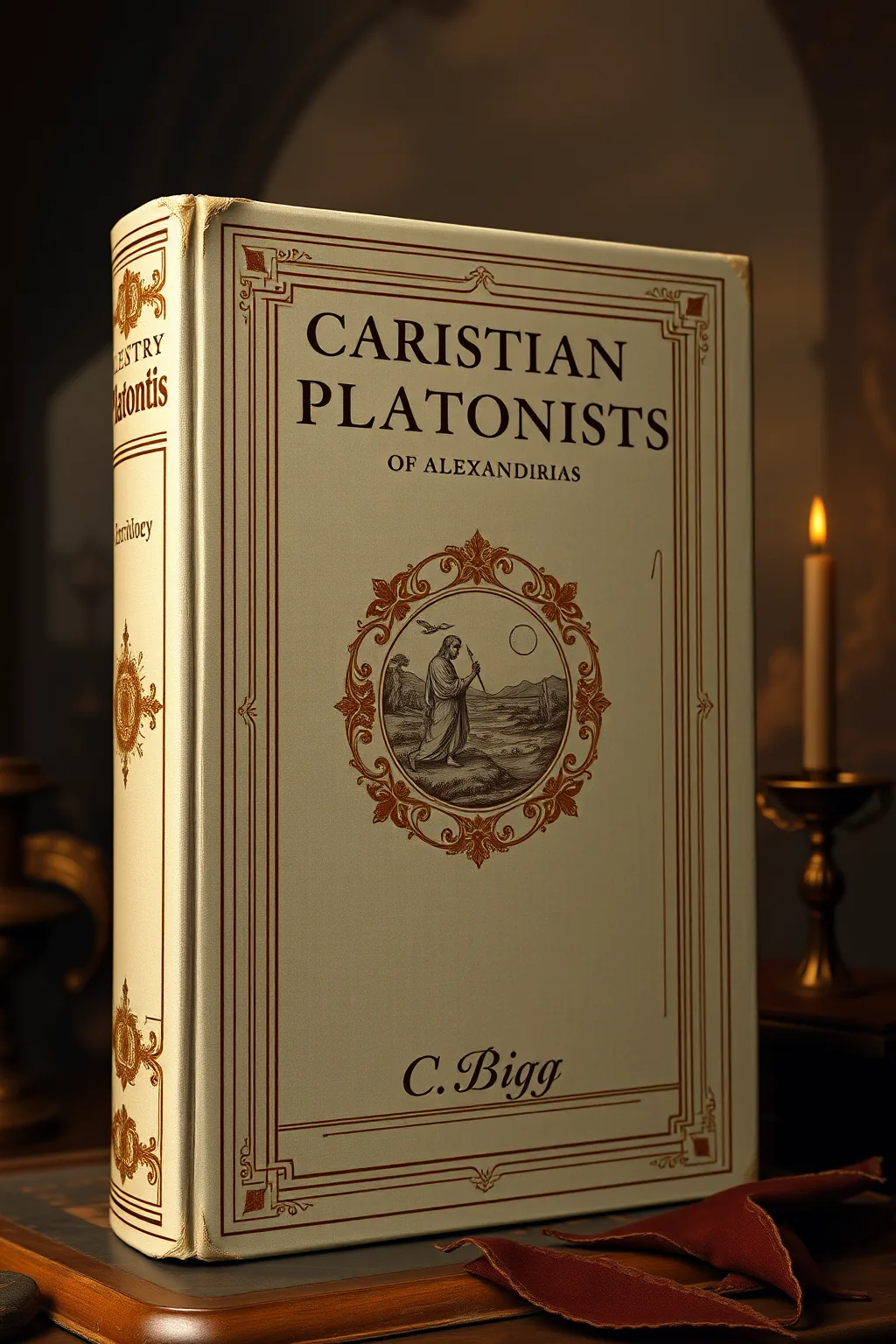
The Christian Platonists of Alexandria
 61
61

The Christian Platonists of Alexandria


Review by Marcus Thorne (Esoteric Sciences Reviewer) — 'The Christian Platonists of Alexandria' by C. Bigg is a masterful exploration of the syncretic traditions that flourished in the intellectual crucible of Alexandria. Bigg's meticulous research and eloquent prose bring to life the esoteric insights of the Christian Platonists, offering readers a profound understanding of the mystical underpinnings of early Christian thought. The strengths of this work lie in its ability to bridge the gap between ancient philosophy and modern spiritual inquiry, making it an indispensable resource for scholars and seekers alike. Whether you are a seasoned practitioner of Hermeticism or a curious novice, this book will enrich your understanding of the hidden knowledge that has shaped Western esoteric traditions.
📝 Description
61
C. Bigg's 1913 book examines the intersection of Platonic thought and early Christian doctrine in Alexandria.
This book details the philosophical currents within early Christianity, specifically focusing on the Alexandrian school's engagement with Platonic and Neoplatonic ideas. C. Bigg analyzes how thinkers in this milieu adapted classical philosophy to Christian theology, creating a unique spiritual and intellectual synthesis. The text illuminates concepts such as the divine nature of the soul, the hierarchy of being, and the ascent to God, all framed within the philosophical language of Plato and his successors.
Bigg traces the development of these ideas through key figures associated with Alexandrian thought. The work reveals a tradition that sought to reconcile faith with reason, using philosophical tools to interpret scripture and articulate Christian doctrine. It shows how this intellectual environment fostered a rich symbolic understanding of religious truths, aiming for a deeper apprehension of the divine beyond literal interpretation. The book is a study of a historical movement that sought to integrate philosophical inquiry with spiritual practice.
The Christian Platonists of Alexandria represents a study of an early historical manifestation of esoteric spirituality within a major religious tradition. It looks at a period where philosophical systems were not merely academic exercises but were actively used to understand divine mysteries and guide spiritual practice. The Alexandrian school, particularly, was a crucible for blending Greek philosophical inquiry with emergent Christian doctrine, producing interpretations that often went beyond the literal to embrace symbolic and allegorical meanings. This intellectual synthesis is a key element in understanding the development of Western esoteric traditions.
💡 Why Read This Book?
Read 'The Christian Platonists of Alexandria' to gain insights into the mystical fusion of Christian theology and Platonic philosophy. Ideal for seekers of hidden knowledge, scholars of ancient philosophy, and practitioners of esoteric arts, this book offers a rich exploration of symbolism and spiritual enlightenment. Discover the profound influence of Neoplatonism on early Christian thought and its enduring relevance in modern spiritual practices.
⭐ Reader Reviews
Honest opinions from readers who have explored this book.
❓ Frequently Asked Questions
What is the main focus of 'The Christian Platonists of Alexandria'?
The book explores the synthesis of Christian theology and Platonic philosophy within the Alexandrian school of thought.
Who is the intended audience for this book?
It is ideal for scholars of ancient philosophy, seekers of esoteric wisdom, and practitioners of mystical arts.
What makes this book significant in the field of esoteric studies?
The book reveals the hidden knowledge and profound symbolism that emerged from the Alexandrian school, offering insights into the mystical underpinnings of early Christian thought.
How does this book contribute to the understanding of Neoplatonism?
Bigg's work illuminates the intellectual fervor and spiritual questing that characterized the Neoplatonic tradition in Alexandria.
Can beginners in esoteric studies benefit from this book?
While it is rich in esoteric insights, beginners may find it challenging but rewarding with some prior knowledge of ancient philosophy.
🔮 Key Themes & Symbolism
Neoplatonic Influence
The book looks at the lasting impact of Neoplatonism on early Christian thought, revealing how the mystical teachings of Plotinus and other Neoplatonists shaped the spiritual range of Alexandria. This theme highlights the syncretic nature of the Alexandrian school, where the boundaries between philosophy and religion were fluid and dynamic.
Symbolism and Hidden Knowledge
Bigg's work is rich in symbolism and hidden knowledge, offering readers a deeper understanding of the esoteric underpinnings of Christian Platonism. The book uncovers the layers of meaning that lie beneath the surface of religious texts and philosophical discourse, inviting readers to start a path of reading of spiritual enlightenment.
Intellectual and Spiritual Questing
The atmosphere of intellectual fervor and spiritual questing in Alexandria is vividly portrayed, where seekers of truth explored the mysteries of the divine and the human condition. This theme emphasizes the enduring relevance of the Alexandrian tradition in modern spiritual practices and esoteric studies.
💬 Memorable Quotes
Direct passages from the work, attributed to the author.
“Philosophy is the handmaid of theology.”
— Bigg highlights the syncretic nature of Christian Platonism, where philosophy and religion were intertwined.
“The fusion of Christian theology and Platonic philosophy offers a profound understanding of the human condition.”
— Bigg's work reveals the depth of insight that emerges from the synthesis of these two traditions.
💡 Key Ideas
Editorial paraphrase of the work's core concepts — not direct quotes.
The quest for divine knowledge is the highest form of human endeavor.
This quote underscores the spiritual questing that characterized the Alexandrian school.
The mysteries of the divine are revealed to those who seek with an open heart.
This quote emphasizes the esoteric nature of the knowledge sought by the Christian Platonists.
The soul's journey towards the divine is a path of enlightenment and transformation.
This quote reflects the spiritual enlightenment that was central to the Neoplatonic tradition.
🌙 Esoteric Significance
Tradition
This book belongs to the Hermetic tradition, which seeks to uncover the hidden knowledge and spiritual truths that lie beneath the surface of religious and philosophical texts. The Christian Platonists of Alexandria were deeply influenced by Hermeticism, integrating its mystical teachings into their own philosophical and theological frameworks.
Symbolism
Key symbols in this work include the concept of the 'One,' the 'Intellect,' and the 'Soul,' which represent the hierarchical structure of reality in Neoplatonic thought. These symbols are imbued with esoteric meanings, inviting readers to explore the deeper layers of spiritual enlightenment and transformation.
Modern Relevance
The teachings of the Christian Platonists continue to influence modern spiritual practices and esoteric studies. Practitioners of Hermeticism, Gnosticism, and other mystical traditions draw upon the insights offered in this book to deepen their understanding of the divine and the human condition. The book's enduring relevance lies in its ability to bridge the gap between ancient wisdom and modern spiritual inquiry.
👥 Who Should Read This Book
Beginners in esoteric studies will find this book challenging but rewarding, as it offers a rich exploration of hidden knowledge and symbolism. Scholars of ancient philosophy will appreciate the depth of research and insight into the Neoplatonic tradition. Spiritual seekers and practitioners of mystical arts will benefit from the profound spiritual enlightenment that emerges from the synthesis of Christian theology and Platonic philosophy.
📜 Historical Context
Written in the late 19th century, 'The Christian Platonists of Alexandria' by C. Bigg explores the intellectual and spiritual fervor of the Alexandrian school during the late Roman Empire. This era was marked by a rich exchange of ideas between Eastern and Western traditions, leading to the emergence of syncretic philosophies that blended Christian theology with Platonic thought. The book's significance lies in its ability to shed light on the hidden knowledge and profound symbolism that characterized this period, offering insights into the mystical underpinnings of early Christian thought.
📔 Journal Prompts
Reflect on the ways in which the fusion of Christian theology and Platonic philosophy has shaped your understanding of spirituality.
Consider the role of symbolism in uncovering hidden knowledge and spiritual truths.
Explore the concept of the soul's journey towards the divine in your own spiritual practices.
How does the intellectual fervor of the Alexandrian school influence your approach to esoteric studies?
In what ways can the teachings of the Christian Platonists enrich your understanding of the human condition?
🗂️ Glossary
Neoplatonism
A philosophical tradition that emerged in the 3rd century AD, blending Platonic thought with elements of Eastern mysticism.
Syncretism
The blending of different beliefs, practices, or philosophies to create a new, integrated system.
Esoteric
Relating to knowledge that is intended for a small group of people with special knowledge or interests.
Hermeticism
An esoteric tradition based on the writings attributed to Hermes Trismegistus, focusing on spiritual alchemy and the divine.
Intellect
In Neoplatonic thought, the second hypostasis, representing the divine mind that emanates from the One.
This book appears in 2 collections
🔮 Readers Also Liked
Browse all →








More by C. Bigg
All books →
From the “Neoplatonism” Collection
View all →






More Free Alchemy & Hermeticism Books
View all →