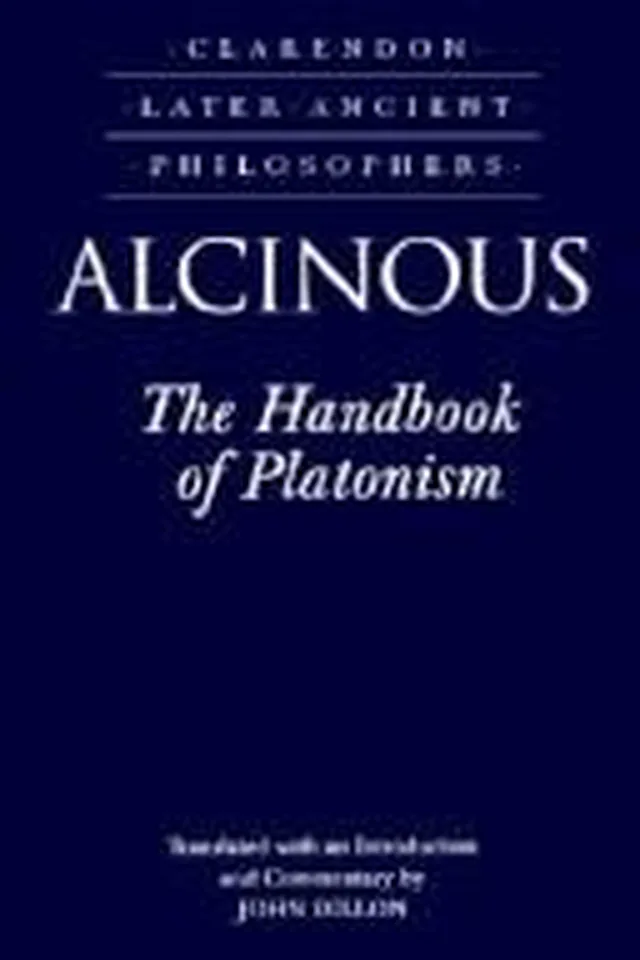
The handbook of Platonism
 62
62

The handbook of Platonism


Review by Sophia Crane (Associate Editor) — The Handbook of Platonism by Alcinous stands as a testament to the enduring power of esoteric wisdom. This seminal work offers a rich tapestry of mystical insights that resonate deeply with seekers of hidden knowledge. Alcinous's mastery of Platonism is evident in his clear and compelling exposition of complex philosophical concepts, making it an invaluable resource for both scholars and spiritual practitioners. The book's strength lies in its ability to illuminate the symbolic language of ancient philosophy, providing readers with a roadmap to the divine mysteries. It is an essential read for anyone interested in the esoteric traditions of the classical world.
📝 Description
62
Alcinous wrote The Handbook of Platonism around the 2nd century CE.
This ancient text presents a systematic account of Platonic philosophy, aiming to make its core doctrines accessible. Alcinous structures his work into chapters that cover topics like God, the intelligible and sensible worlds, the soul, and ethics. He draws heavily on the dialogues of Plato, but also incorporates elements from later Platonic thinkers. The Handbook is not a primary philosophical source but a lucid exposition intended to convey the essence of the Platonic system.
Its purpose was to provide a clear and organized introduction to Platonism, distinguishing it from other philosophical schools. Alcinous’s approach is methodical, moving from the divine to the human, and from the theoretical to the practical. He outlines the Platonic understanding of the Forms, the Demiurge, and the tripartite soul, alongside the virtues that lead to a good life. The text thus functions as a guide to the fundamental tenets of the tradition.
This work is valuable for its comprehensive overview of Platonic thought as it was understood in the Roman Imperial period. It offers a coherent picture of a philosophy that had evolved over centuries. Readers can find in its pages a reasoned pathway into the philosophical worldview that shaped much of Western thought.
Alcinous's Handbook falls within the tradition of Middle Platonism, a philosophical movement active from the 1st century BCE to the 3rd century CE. This period saw Platonism engage with other philosophical and religious currents, including Stoicism and Pythagoreanism, as well as emerging mystical and theological ideas. Middle Platonists sought to reconcile Plato's dialogues with a more systematic and theological worldview, often emphasizing the transcendent nature of the Good and the role of divine intermediaries. Alcinous's work reflects this tendency by presenting a structured cosmology and ethics rooted in Platonic principles.
💡 Why Read This Book?
The Handbook of Platonism is a must-read for seekers of spiritual enlightenment, scholars of ancient philosophy, and practitioners of esoteric traditions. It offers a structured approach to understanding the divine and the human experience, providing a roadmap to the hidden truths that lie beneath the surface of reality. Alcinous's work is a gateway to the mystical teachings of Platonism, making it an invaluable resource for anyone interested in uncovering the secrets of the universe.
⭐ Reader Reviews
Honest opinions from readers who have explored this book.
❓ Frequently Asked Questions
What is the significance of The Handbook of Platonism in esoteric studies?
The Handbook of Platonism is a foundational text in esoteric studies, providing deep insights into the mystical teachings of Platonism.
Who would benefit most from reading this book?
This book is ideal for spiritual seekers, scholars of ancient philosophy, and practitioners of esoteric traditions.
What are some key themes explored in The Handbook of Platonism?
Key themes include the nature of the divine, the soul's journey, and the symbolism of ancient philosophy.
How does Alcinous's work differ from other Platonic texts?
Alcinous's work is unique in its structured approach to Platonism, making complex philosophical concepts accessible to a wider audience.
Is this book suitable for beginners in esoteric studies?
While it is accessible, beginners may benefit from some prior knowledge of ancient philosophy and esoteric traditions.
🔮 Key Themes & Symbolism
The Divine Nature
Alcinous examines the mystical understanding of the divine, exploring the nature of God and the divine realm. This theme is central to Platonism and provides a foundation for understanding the soul's journey and its connection to the divine.
The Soul's Journey
The soul's journey from the divine realm to the physical world and back is a key theme. Alcinous offers insights into the process of reincarnation and the soul's quest for enlightenment.
Symbolism in Ancient Philosophy
Symbolism is a recurring motif, with Alcinous using ancient symbols to convey deep philosophical truths. This theme is essential for understanding the esoteric language of Platonism.
💬 Memorable Quotes
Direct passages from the work, attributed to the author.
“Wisdom is the knowledge of divine things.”
— Alcinous emphasizes the mystical aspect of wisdom, linking it to the divine realm.
“Symbols are the language of the divine.”
— Alcinous's use of symbolism reveals the hidden truths of ancient philosophy.
💡 Key Ideas
Editorial paraphrase of the work's core concepts — not direct quotes.
The soul is the most divine element within us.
This quote underscores the divine nature of the human soul and its potential for enlightenment.
The journey of the soul is a return to the divine.
This passage highlights the esoteric belief in reincarnation and the soul's quest for divine union.
True knowledge comes from within.
This quote encourages introspection and the search for inner wisdom.
🌙 Esoteric Significance
Tradition
The Handbook of Platonism belongs to the Hermetic tradition, blending mystical and philosophical insights to reveal hidden knowledge. It is a central to Neoplatonism, influencing later esoteric traditions.
Symbolism
Key symbols include the divine realm, the soul's journey, and the use of ancient philosophical symbols to convey deep truths. These symbols are essential for understanding the esoteric language of Platonism.
Modern Relevance
This text remains relevant today for modern practitioners of esoteric traditions who seek to uncover the hidden truths of the universe. It is studied by scholars and spiritual seekers alike.
👥 Who Should Read This Book
Beginners in esoteric studies will find this book accessible and enriching, providing a structured approach to ancient philosophy. Scholars of ancient philosophy will appreciate the depth of Alcinous's insights. Spiritual seekers will benefit from the mystical teachings, while practitioners of esoteric traditions will find valuable symbolic language and philosophical foundations.
📜 Historical Context
The Handbook of Platonism was written in the 2nd century CE during a time of significant philosophical and religious ferment in the Roman Empire. This period saw a resurgence of interest in ancient Greek philosophy, particularly Platonism, as people sought spiritual answers amidst political and social upheaval. Alcinous's work was influential in preserving and transmitting the esoteric teachings of Platonism, shaping the development of Neoplatonism and other mystical traditions. It remains a vital text for understanding the philosophical and spiritual field of the classical world.
📔 Journal Prompts
How does Alcinous's understanding of the divine nature influence your own spiritual beliefs?
Reflect on the symbolism used in the text and its relevance to your spiritual journey.
Consider the concept of the soul's journey and its implications for your own life.
How does the esoteric language of Platonism enrich your understanding of ancient philosophy?
What insights from The Handbook of Platonism can you apply to your daily spiritual practice?
🗂️ Glossary
Platonism
The philosophical system founded by Plato, emphasizing the divine and the soul's journey to enlightenment.
Neoplatonism
A mystical tradition that builds on Platonism, emphasizing the divine and the soul's quest for union with the divine.
Symbolism
The use of symbols to convey deep philosophical and spiritual truths in esoteric traditions.
Reincarnation
The belief in the soul's journey through multiple lifetimes, seeking enlightenment and divine union.
Divine Realm
The mystical area of the divine, from which the soul originates and to which it seeks to return.
This book appears in 3 collections
🔮 Readers Also Liked
Browse all →








From the “Neoplatonism” Collection
View all →







More Free Alchemy & Hermeticism Books
View all →