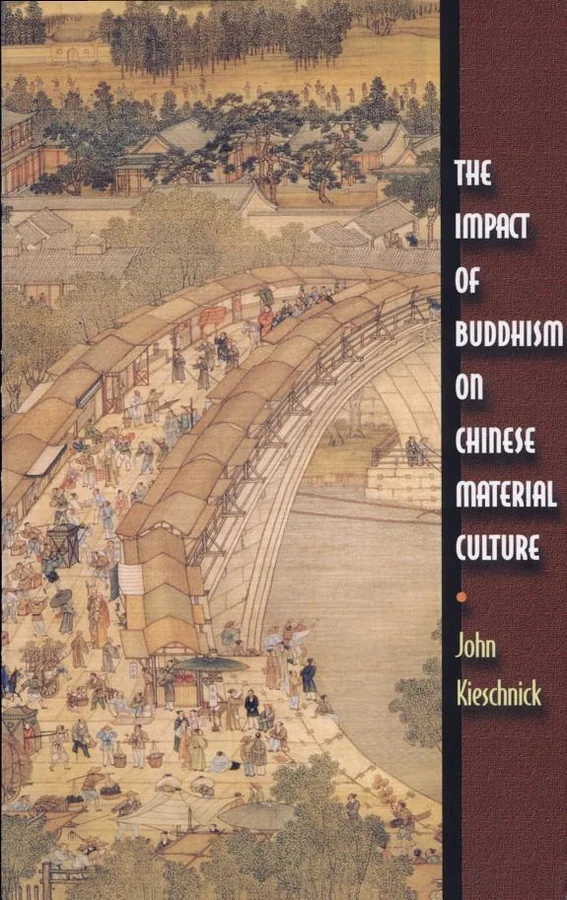
The Impact of Buddhism on Chinese Material Culture
 71
71

The Impact of Buddhism on Chinese Material Culture
Kieschnick’s examination of how Buddhism altered Chinese material culture offers a refreshingly concrete perspective. The strength lies in its meticulous tracing of specific items – the chair, sugar, bridges – demonstrating that religious influence is not solely ideological. The chapter on sugar, detailing its production and consumption through Buddhist monastic networks, is particularly revelatory. However, the book occasionally feels like an extended catalog of objects; a more explicit theoretical framework for understanding ‘material culture’ beyond simple object introduction might have elevated it further. The discussion of the chair’s adoption, linking it to monastic rules and evolving social etiquette, exemplifies the work’s unique contribution. Ultimately, this is a vital, albeit sometimes densely detailed, study of how faith reshapes the physical world.
📝 Description
71
John Kieschnick's 2003 book shows how Buddhism shaped everyday Chinese objects and technologies.
John Kieschnick’s "The Impact of Buddhism on Chinese Material Culture" examines how Buddhist thought and practice changed tangible aspects of Chinese life. The book argues that Buddhism’s influence extended beyond temples and philosophy into the creation and use of everyday items and technologies. Kieschnick analyzes objects ranging from sugar and chairs to bridges, showing how their adoption in China was often shaped by Buddhist attitudes and institutions.
This study is valuable for scholars of Chinese history, religious studies, and material culture. It is also for anyone interested in how religion affects daily life, moving beyond abstract ideas to concrete historical shifts. Readers curious about how foreign religious systems leave a lasting mark on a society’s infrastructure and habits will find this work particularly insightful. It offers a view of Buddhism not just as a spiritual path but as a force that altered the material world.
This work fits within a broader academic tradition that studies the transmission and adaptation of religious ideas in new cultural contexts. It specifically addresses how a foreign religious system, Buddhism, became deeply embedded in Chinese society, altering not just beliefs but the physical objects and practices of daily life. By focusing on material culture, Kieschnick connects religious history with the study of everyday objects, showing how spiritual frameworks can shape the way societies produce, use, and interact with their material world. This approach illuminates the lived experience of religious influence.
💡 Why Read This Book?
• Learn how Buddhist monasteries, beyond spiritual practice, acted as centers for the dissemination of new technologies and agricultural methods, evidenced by the introduction of sugar cultivation and processing detailed in the book. • Understand the nuanced adoption of the chair in China, moving from a foreign object to a common item, influenced by Buddhist monastic customs and evolving social norms around sitting and posture, as explored by Kieschnick. • Discover how Buddhist concepts and patronage directly influenced public works and infrastructure, such as the construction of bridges and pagodas, as discussed in relation to specific historical periods and locations.
⭐ Reader Reviews
Honest opinions from readers who have explored this book.
❓ Frequently Asked Questions
What specific Buddhist practices influenced the adoption of the chair in China?
The book suggests that Buddhist monastic rules regarding posture and seating, along with the foreign origins of the chair itself, contributed to its gradual adoption. Monks, often seen as exemplars of foreign wisdom, may have helped popularize its use.
How did Buddhism impact the production of sugar in China?
Kieschnick details how Buddhist monasteries, particularly in the Tang dynasty, played a role in adopting and disseminating sugar cane cultivation and refining techniques, often acting as centers of agricultural innovation.
What role did Buddhist monks play in the construction of bridges?
The work explores how Buddhist monks and patrons, motivated by merit-making and the need for travel to monasteries, commissioned the building of bridges, integrating Buddhist spiritual goals with practical infrastructure development.
Did Buddhism introduce tea culture to China?
While tea culture predates Buddhism in China, the book examines how Buddhist monks contributed to its refinement and popularization, associating tea drinking with meditation and monastic life, and developing specific rituals around it.
What is the significance of books in the context of Buddhism's material impact?
Buddhist scriptures themselves represent a significant material impact. Their translation, copying, and distribution required resources and standardization, influencing the very nature and spread of textual culture in China.
When was John Kieschnick's book first published?
John Kieschnick's "The Impact of Buddhism on Chinese Material Culture" was first published on April 6, 2003.
🔮 Key Themes & Symbolism
Materialization of Doctrine
This theme examines how abstract Buddhist principles manifested in concrete objects and practices. It moves beyond philosophical interpretations to show how concepts like merit-making, compassion, and impermanence were embedded in the construction of bridges, the cultivation of sugar, and the design of monastic spaces. The book illustrates that the spread of Buddhism was not merely ideological but also involved the physical transformation of the landscape and daily life, making tangible the otherwise ethereal nature of religious belief.
Monastic Networks as Innovation Hubs
Kieschnick highlights the crucial role of Buddhist monasteries as centers for technological and agricultural innovation. These institutions, often possessing land, wealth, and skilled personnel, acted as conduits for new ideas and techniques. The introduction and refinement of sugar production, the development of specific tea-drinking rituals, and even the adoption of the chair are traced through these monastic networks, demonstrating their function as engines of material change in medieval and imperial China.
Buddhism and Everyday Objects
This theme focuses on the surprising ways Buddhist influence permeated seemingly mundane aspects of Chinese life. Items like bridges, books, sugar, tea, and chairs, often taken for granted, are analyzed through a Buddhist lens. The book reveals how attitudes towards these novelties were shaped by religious frameworks, affecting their production, consumption, and social meaning. It underscores that the diffusion of Buddhism was intrinsically linked to the evolution of Chinese material culture.
Cultural Transmission and Adaptation
The work explores the complex process of how Buddhism, an imported religion, became deeply integrated into Chinese society. It shows that this integration was not passive but involved active adaptation and transformation of both Buddhist teachings and local material culture. The reception and modification of foreign objects and practices, such as the chair or specific sugar-making techniques, serve as case studies for this dynamic cultural exchange.
💬 Memorable Quotes
Direct passages from the work, attributed to the author.
“Buddhism changed the way the Chinese thought about their bodies, their houses, their food, and their landscape.”
— This statement captures the book's central argument: that Buddhist influence extended far beyond the spiritual, fundamentally altering the physical and practical aspects of Chinese existence and daily routines.
“The introduction of the chair was slow and incomplete, and it was not until the Tang dynasty that it became common in the monasteries.”
— This highlights how the adoption of foreign material culture, like the chair, was a gradual process, often mediated by elite institutions such as Buddhist monasteries, which served as early adopters and disseminators.
“Monasteries played a significant role in the transmission of technology and agricultural techniques.”
— This points to the practical, non-doctrinal functions of Buddhist institutions, positioning them as vital centers for innovation and the spread of knowledge concerning items like sugar production.
“The history of sugar in China is closely intertwined with the history of Buddhism.”
— This assertion underscores the deep connection Kieschnick establishes between the religious history of Buddhism and the material history of a key commodity, demonstrating religion's impact on economic and culinary development.
“Bridges were built for merit and for the convenience of travelers, including monks.”
— This illustrates how Buddhist motivations, such as accumulating merit, directly led to the construction of public infrastructure like bridges, blending spiritual aspirations with practical societal needs.
🌙 Esoteric Significance
Tradition
While not strictly an esoteric text in the Western Hermetic or Kabbalistic sense, Kieschnick’s work touches upon the 'esotericism' of Buddhism's practical application. It examines how Buddhist principles, often perceived as abstract, manifested in tangible, everyday forms, acting as a 'hidden' influence on material reality. This perspective aligns with certain interpretations of esoteric traditions that seek the underlying spiritual principles within the mundane world, demonstrating Buddhism’s profound, often unseen, shaping power.
Symbolism
The book explores the materialization of Buddhist concepts, which can be seen as a form of applied symbolism. For instance, the construction of bridges symbolizes the Buddhist aim of helping beings cross the river of suffering to reach enlightenment. Books, containing dharma teachings, are material vessels of spiritual knowledge. Even the chair, adopted and adapted, can symbolize a shift in posture and mindset, reflecting a subtle integration of Buddhist ideals into daily life.
Modern Relevance
Contemporary scholars of religion, material culture, and Asian studies continue to draw on Kieschnick's methodology. His work informs discussions on globalization, cultural hybridity, and the ways religious ideas embed themselves in economic and social structures. Thinkers examining the 'secularization' of societies might find relevance in how religious influence persists through material culture, even when overt religious practice declines.
👥 Who Should Read This Book
• Scholars of Chinese History and Religious Studies: Gain a nuanced understanding of Buddhism's pervasive influence beyond doctrine, impacting social structures and daily life. • Material Culture Enthusiasts: Discover how religious ideas shape the creation, adoption, and meaning of everyday objects, from food to furniture. • Comparative Religion Researchers: Explore concrete examples of cultural transmission and adaptation, illustrating how foreign religions become integrated into indigenous societies.
📜 Historical Context
John Kieschnick’s "The Impact of Buddhism on Chinese Material Culture," first published in 2003, arrived during a flourishing period for the study of Chinese Buddhism and its integration into Chinese society. Scholars were increasingly moving beyond purely textual analysis to explore the religion’s lived experience and its tangible effects. Kieschnick’s work emerged in conversation with scholarship on the Sinicization of Buddhism, building upon earlier foundational studies. It implicitly engaged with the long history of Buddhist transmission, tracing back to figures like Xuanzang who traveled to India in the 7th century. While not directly engaging with Daoism or Confucianism as competing schools in this specific text, the work inherently addresses how Buddhism carved out its space and influenced material aspects of life in a culture already shaped by these traditions. The book's detailed examination of everyday objects offered a novel perspective, complementing studies focused more narrowly on doctrine or monastic institutions.
📔 Journal Prompts
The materialization of Buddhist concepts: How did the introduction of the chair reflect changing attitudes towards the body?
Monastic networks as innovation hubs: Trace the historical link between Buddhist monasteries and sugar production.
The impact of books: Reflect on how the physical form and dissemination of Buddhist texts influenced their reception.
Bridges as merit-making: Consider the spiritual and practical motivations behind Buddhist-commissioned infrastructure.
Sugar, tea, and chairs: Analyze the cultural negotiation involved in adopting foreign material items.
🗂️ Glossary
Sinicization of Buddhism
The process by which Buddhism, originating in India, was adapted and integrated into Chinese culture, leading to the development of uniquely Chinese Buddhist schools and practices.
Material Culture
The aspect of human social existence, belief systems, and practices that is made evident in the use of physical objects and the creation of the physical environment.
Merit-making
In Buddhism, the accumulation of positive karma through good deeds, such as donating to monasteries or commissioning public works like bridges, to improve one's future rebirths.
Tang Dynasty
A major imperial dynasty of China that ruled from 618 to 907 CE, a period of significant cultural exchange and development, including the flourishing of Buddhism.
Xuanzang
A central Chinese Buddhist monk, scholar, and translator who traveled to India in the 7th century, bringing back numerous Buddhist scriptures and contributing significantly to the religion's development in China.
Dharma
In Buddhism, the teachings of the Buddha, the cosmic law and order, or the truth that underlies all things. It is often transmitted through scriptures (books).
Pagoda
A tiered tower with multiple eaves, common in East Asia, derived from the Indian stupa. Often associated with Buddhist temples and relics.
This book appears in 1 collection
🔮 Readers Also Liked
Browse all →









From the “Buddhism” Collection
View all →





More Free Esoteric History & Biography Books
View all →