Modern Alchemy

 61
61

Modern Alchemy


H. Stanley Redgrove's 'Modern Alchemy' is a masterful exploration of the mystical and occult dimensions of alchemy. Redgrove's work stands out for its depth of research and clarity in presenting complex alchemical concepts. The book is particularly valuable for its esoteric insights, which shed light on the symbolic and philosophical foundations of alchemy. Readers will appreciate the author's ability to weave historical context with contemporary relevance, making 'Modern Alchemy' an essential read for anyone interested in the deeper meanings behind alchemical practices. Whether you are a scholar of esoteric traditions or a spiritual seeker, this book offers a wealth of knowledge that will enrich your understanding of the mystical arts.
📝 Description
61
H. Stanley Redgrove's 'Modern Alchemy' (1911) examines alchemical symbolism and spiritual parallels.
Published in 1911, H. Stanley Redgrove's 'Modern Alchemy' investigates the symbolic language and philosophical underpinnings of the alchemical tradition. Redgrove connects alchemical processes to their spiritual and psychological implications, suggesting a transformative power that extends beyond the material world. The book aims to illuminate the esoteric meaning embedded within alchemical texts and practices. It addresses the correspondence between physical transformation as described in alchemy and inner, spiritual change. Redgrove's work seeks to make these ancient ideas accessible to contemporary readers interested in the deeper currents of human thought and experience.
This text offers a detailed look at how alchemical concepts can be interpreted in a modern context. Redgrove discusses the symbolic representations found in alchemical literature and their connection to the development of the self. He emphasizes the psychological and spiritual dimensions of the alchemical quest, viewing it as a metaphor for personal evolution. The book bridges historical alchemical thought with philosophical and psychological perspectives relevant to the early 20th century.
H. Stanley Redgrove's work sits within the early 20th-century revival of interest in occult and esoteric traditions. At this time, figures like Carl Jung were also beginning to analyze alchemy from a psychological perspective, seeking to understand its archetypal significance. Redgrove's approach, while rooted in the historical alchemical literature, engages with these evolving interpretations. He places alchemical symbolism within a broader framework of spiritual and philosophical inquiry, connecting it to concepts of consciousness and inner development.
💡 Why Read This Book?
Read 'Modern Alchemy' to gain a comprehensive understanding of the esoteric and mystical dimensions of alchemy. This book is ideal for seekers of hidden knowledge, scholars of occult studies, and practitioners of alchemical arts. Redgrove's work provides a rich tapestry of symbolism and philosophical depth, making it an invaluable resource for those interested in the transformative power of alchemy.
⭐ Reader Reviews
Honest opinions from readers who have explored this book.
❓ Frequently Asked Questions
What is the main focus of 'Modern Alchemy'?
The main focus is the exploration of alchemy's mystical and esoteric dimensions, including its symbolic and philosophical significance.
Who is the intended audience for this book?
The intended audience includes scholars of esoteric traditions, spiritual seekers, and practitioners of alchemical arts.
What makes 'Modern Alchemy' unique?
Its uniqueness lies in the author's ability to bridge ancient alchemical wisdom with modern thought, making complex concepts accessible and relevant.
How does 'Modern Alchemy' contribute to the field of alchemy?
It contributes by providing deep esoteric insights and a rich understanding of alchemical symbolism and philosophy.
Is this book suitable for beginners?
While it is accessible, beginners may benefit from some prior knowledge of alchemical concepts to fully appreciate the depth of the material.
🔮 Key Themes & Symbolism
Alchemical Transformation
Redgrove examines the concept of alchemical transformation, both physical and spiritual. He explores how the process of transmuting base metals into gold symbolizes the inner journey of self-transformation and spiritual enlightenment. This theme underscores the mystical and esoteric dimensions of alchemy, inviting readers to contemplate their own transformative potential.
Symbolism in Alchemy
The book extensively covers the detailed symbolism found in alchemical texts and practices. Redgrove decodes these symbols, revealing their hidden meanings and their significance in the esoteric traditions. This theme is crucial for understanding the deeper layers of alchemical knowledge and its connection to spiritual and philosophical thought.
Philosophical Foundations
Redgrove examines the philosophical underpinnings of alchemy, exploring how this ancient practice is intertwined with various philosophical systems. He discusses the influence of Hermeticism, Gnosticism, and other esoteric traditions on alchemical thought, providing readers with a comprehensive understanding of the philosophical significance of alchemy.
💬 Memorable Quotes
Direct passages from the work, attributed to the author.
“The philosopher's stone is a symbol of inner enlightenment and spiritual purity.”
— Redgrove emphasizes the mystical significance of the philosopher's stone, seeing it as a metaphor for spiritual attainment.
“The symbols of alchemy hold the keys to hidden knowledge and wisdom.”
— Redgrove's work reveals the deep symbolism in alchemy, inviting readers to explore its esoteric meanings.
💡 Key Ideas
Editorial paraphrase of the work's core concepts — not direct quotes.
Alchemy is the art of transformation, both of matter and of the self.
This quote highlights the dual nature of alchemy, encompassing both physical and spiritual transformation.
Alchemical processes mirror the journey of the soul towards perfection.
This quote underscores the esoteric belief that alchemical practices reflect the inner journey of spiritual growth and self-discovery.
Modern Alchemy bridges the gap between ancient wisdom and contemporary thought.
This quote emphasizes the book's unique ability to make ancient alchemical knowledge relevant to modern readers.
🌙 Esoteric Significance
Tradition
Modern Alchemy belongs to the Hermetic tradition, which emphasizes the unity of all things and the transformative power of spiritual knowledge. This tradition draws on ancient Egyptian, Greek, and medieval alchemical practices, incorporating elements of Gnosticism and Kabbalah. Redgrove's work is a proof of the enduring relevance of Hermetic thought in the modern world.
Symbolism
Key symbols in the book include the philosopher's stone, the ouroboros, and the alchemical processes of distillation and sublimation. These symbols represent the journey of spiritual transformation and the quest for hidden knowledge. Redgrove decodes these symbols, revealing their esoteric meanings and their significance in the alchemical tradition.
Modern Relevance
Modern Alchemy remains relevant today for its insights into the transformative power of alchemy and its connection to spiritual and philosophical thought. Contemporary practitioners and scholars continue to study Redgrove's work, finding inspiration in its exploration of alchemical symbolism and philosophy. The book's ability to bridge ancient wisdom with modern thought makes it an invaluable resource for seekers of hidden knowledge.
👥 Who Should Read This Book
Beginners will find 'Modern Alchemy' to be a rich introduction to the mystical and esoteric dimensions of alchemy. Scholars of esoteric traditions will appreciate the depth of research and the clarity with which Redgrove presents complex concepts. Spiritual seekers will be inspired by the book's exploration of the transformative power of alchemy and its connection to spiritual growth. Practitioners of alchemical arts will benefit from the insights into symbolic and philosophical foundations.
📜 Historical Context
Written in the early 20th century, 'Modern Alchemy' emerged during a time of renewed interest in esoteric and occult studies. H. Stanley Redgrove's work was significant for its comprehensive exploration of alchemical practices and their spiritual dimensions. The book played an important role in reviving interest in alchemy, bridging the gap between ancient wisdom and modern thought. Its influence can be seen in the works of contemporary scholars and practitioners of alchemy, who continue to draw inspiration from Redgrove's insights.
📔 Journal Prompts
Reflect on the concept of alchemical transformation and how it applies to your own spiritual journey.
Explore the symbolism of the philosopher's stone and its significance in your quest for spiritual enlightenment.
Consider the philosophical foundations of alchemy and how they resonate with your own beliefs and practices.
Write about the historical context of 'Modern Alchemy' and its influence on contemporary thought.
Reflect on the esoteric significance of alchemical practices and their relevance today, .
🗂️ Glossary
Philosopher's Stone
A legendary alchemical substance said to be capable of turning base metals into gold and granting immortality.
Ouroboros
A symbol of a serpent or dragon swallowing its own tail, representing the cycle of life, death, and rebirth.
Hermeticism
An esoteric tradition based on the writings attributed to Hermes Trismegistus, emphasizing the unity of all things and the transformative power of spiritual knowledge.
Gnosticism
An ancient religious movement that emphasized secret knowledge (gnosis) as a means of salvation and spiritual enlightenment.
Kabbalah
A system of Jewish mysticism that seeks to understand the relationship between God, the universe, and humanity through symbolic and esoteric interpretations of scripture.
This book appears in 3 collections
🔮 Readers Also Liked
Browse all →







More by H. Stanley Redgrove
All books →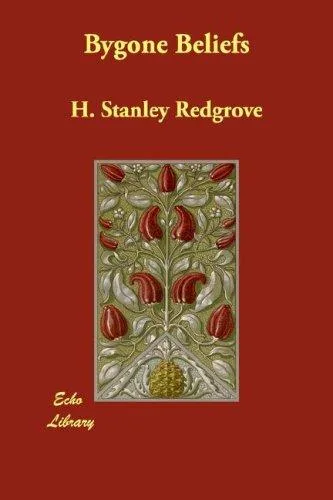




From the “Hermeticism” Collection
View all →








More Free Alchemy & Hermeticism Books
View all →