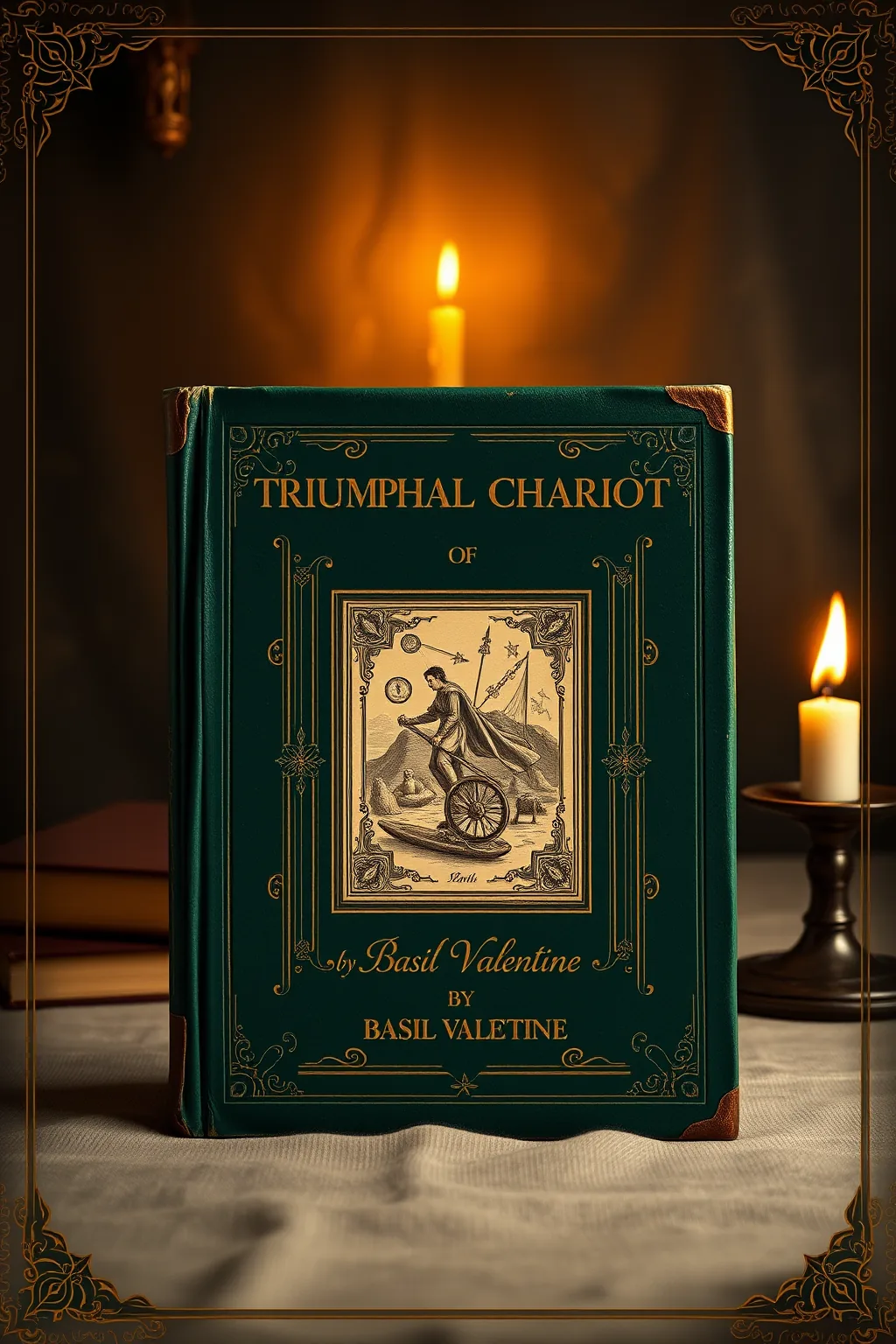
Triumphal Chariot of Antimony by Basil Valentine
 76
76

Triumphal Chariot of Antimony by Basil Valentine


Aurelia Blackwood (Occult Philosophy Critic) — Basil Valentine's 'The Triumphal Chariot of Antimony' stands as a monumental testament to the enduring power of alchemical literature. Valentine's exposition on the five crucial heads of the Art offers a structured yet deeply mystical framework for understanding the transformative processes, both material and spiritual. His emphasis on divine invocation and the contemplation of nature underscores the Hermetic axiom 'As Above, So Below.' This text is not for the casual reader; it is a profound exploration for those committed to the rigorous pursuit of alchemical knowledge, providing invaluable insights into preparation and application that remain relevant for contemporary practitioners seeking authentic, esoteric wisdom.
📝 Description
76
Basil Valentine's 'The Triumphal Chariot of Antimony' outlines five stages of the alchemical process.
Published in the 17th century, Basil Valentine's 'The Triumphal Chariot of Antimony' details the alchemical path. Valentine structures the work into five distinct parts: Divine Invocation, Contemplation of Nature, True Preparation, the Method of Application, and finally, the Utility and Fruit of the Art. The book is not solely focused on material transmutation. Instead, it presents a spiritual framework, encouraging readers toward inner purification and alignment with universal principles. Valentine uses alchemical symbolism to guide the practitioner through a process of self-transformation, linking the external alchemical work with internal spiritual development. The text requires careful study, rewarding dedicated readers with insights into fundamental cosmic laws and the hidden order of existence.
This work is a significant text within the Hermetic and alchemical traditions of the early modern period. It follows in the lineage of alchemical authors who sought to codify and transmit the principles of the 'Great Work,' often couched in allegorical and symbolic language. Valentine's approach emphasizes the spiritual dimension of alchemy, aligning it with Neoplatonic and Gnostic ideas about cosmic harmony and the divine spark within matter and the human soul. It reflects a broader esoteric current of the time that saw alchemy as a path to spiritual enlightenment as much as a chemical art.
💡 Why Read This Book?
Delve into the heart of alchemical philosophy and uncover the spiritual underpinnings of material transformation. 'The Triumphal Chariot of Antimony' offers a structured path to understanding the Great Work, guiding seekers through essential stages of preparation and application. Ideal for students of Hermeticism, practitioners of Spagyrics, and anyone drawn to the profound symbolism of ancient wisdom traditions seeking deeper esoteric knowledge.
⭐ Reader Reviews
Honest opinions from readers who have explored this book.
❓ Frequently Asked Questions
What is Antimony in alchemical terms?
In alchemical context, Antimony often symbolizes a potent, volatile substance, a key ingredient or principle necessary for the Great Work, representing both purification and the potential for profound transformation.
Is this book about literal gold-making?
While it discusses alchemical processes, the primary focus is often on spiritual and philosophical transmutation, with material transformation serving as a metaphor for inner purification and enlightenment.
Who was Basil Valentine?
Basil Valentine is a pseudonymous alchemist from the 15th or 17th century, whose works are foundational in the field of alchemy and Hermeticism, known for their detailed descriptions and symbolic language.
What are the "five principal Heads" mentioned?
The five principal heads are: Invocation of God, Contemplation of Nature, True Preparation, The Way of Using, and Utility and Fruit, representing the foundational pillars of the alchemical art.
Is this book suitable for beginners?
While foundational, the text is dense and requires dedicated study. Beginners are advised to approach it with patience and perhaps alongside introductory texts on alchemy and Hermeticism.
🔮 Key Themes & Symbolism
The Five Pillars of the Great Work
Valentine meticulously outlines five indispensable stages for aspiring alchemists: the spiritual grounding of Divine Invocation, the observational wisdom of Nature's contemplation, the meticulous rigor of True Preparation, the practical application of the Method of Using, and the ultimate realization of Utility and Fruit. These are presented not as sequential steps but as interconnected principles, essential for working through the complex field of the alchemical pursuit and achieving genuine mastery.
Spiritual Transmutation and Inner Purity
Beyond the pursuit of material gold, 'The Triumphal Chariot of Antimony' strongly emphasizes the alchemical journey as one of profound inner transformation. The purification of metals serves as a potent metaphor for the purification of the human spirit, aligning the seeker with divine principles and cosmic order. The text urges a holistic approach, where spiritual development is intrinsically linked to the alchemical process, leading to enlightenment and a higher state of being.
The Hermetic Philosophy and Divine Correspondence
This work is deeply steeped in the Hermetic tradition, echoing the principle of 'As Above, So Below.' Valentine explores the interconnectedness of the microcosm (man) and the macrocosm (universe), suggesting that understanding the fundamental laws of nature unlocks the secrets of both material and spiritual realms. The invocation of God and contemplation of nature are not mere rituals but pathways to recognizing divine order and one's place within it.
💬 Memorable Quotes
Direct passages from the work, attributed to the author.
“For he, who regards not these, shall never obtain place among true Chymists.”
— This statement highlights the critical importance of the five outlined principles, suggesting that neglecting them renders one an imposter in the true alchemical arts.
“This first of which is, Invocation of GOD.”
— Underscores the paramount importance of spiritual grounding and divine connection as the initial and most fundamental step in any alchemical endeavor.
“Contemplation of Nature.”
— Emphasizes the necessity of keen observation and understanding of natural processes as a prerequisite for manipulating and transforming substances.
“True Preparation.”
— Points to the meticulous and precise methods required in alchemical work, stressing that the quality of the foundation dictates the success of the outcome.
“Utility and Fruit.”
— Refers to the ultimate purpose and beneficial results of the alchemical process, implying both material and spiritual gains.
🌙 Esoteric Significance
Tradition
This work is a core part of the Hermetic and Alchemical traditions, deeply rooted in the principles of Paracelsianism and Neoplatonism. It embodies the Hermetic quest for understanding the hidden laws of the cosmos and applying them for both material and spiritual betterment, emphasizing the interconnectedness of all things and the divine spark within matter and man.
Symbolism
Valentine employs detailed symbolism, with Antimony itself representing a powerful, often challenging, agent of transformation. The 'Triumphal Chariot' symbolizes the successful mastery of the alchemical process and the triumphant ascent of the adept. The five heads represent fundamental, often archetypal, stages and principles that guide the alchemist's journey towards perfection.
Modern Relevance
The alchemical principles discussed, particularly those concerning purification, intention, and the harmonious interplay between spirit and matter, hold profound relevance for modern seekers. They offer a framework for understanding personal growth, the challenges of transformation, and the pursuit of deeper meaning in a complex world, transcending mere material pursuits.
👥 Who Should Read This Book
This text is essential for dedicated students of Alchemy and Hermeticism, particularly those interested in the Spagyric arts and the philosophical underpinnings of the Great Work. Scholars of esoteric history and philosophy will find it an invaluable primary source. Spiritual seekers looking for profound metaphors for inner transformation and personal development will also benefit. Practitioners of related mystical disciplines, such as Western Esotericism or occult studies, will find its structured approach to esoteric knowledge highly useful.
📜 Historical Context
Written during a period of intense alchemical exploration and philosophical upheaval, 'The Triumphal Chariot of Antimony' emerged from an era where scientific inquiry was deeply intertwined with mystical and religious thought. The Renaissance and early modern period saw alchemists like Basil Valentine operating at the fringes of nascent scientific societies, blending empirical observation with Hermetic philosophy and esoteric traditions. Their work often served as a bridge between the medieval worldview and the emerging rationalism of the Enlightenment, grappling with concepts of matter, energy, and spiritual evolution. The secrecy and symbolic language prevalent in alchemical texts of this time were a response to both intellectual challenges and societal pressures, making works like Valentine's invaluable windows into the esoteric intellectual field of the past.
📔 Journal Prompts
Reflect on the concept of 'Invocation of God' in your personal spiritual or philosophical framework. How does it inform your understanding of the 'Great Work'?
Consider one aspect of nature that you find particularly profound. How might contemplating its essence contribute to your own preparation for transformation?
What does 'True Preparation' mean to you in the context of pursuing a significant life goal or mastering a skill?
How can the principle of 'The Way of Using' be applied not just to alchemical substances, but to the resources and opportunities available in your life?
Beyond material wealth, what constitutes 'Utility and Fruit' in your personal pursuit of knowledge and wisdom?
🗂️ Glossary
Spagyrists
Practitioners of Spagyric, a branch of alchemy focused on the preparation of medicinal remedies from plants, emphasizing the separation and recombination of their vital essences.
Chymists
An older term for alchemists, referring to those who practiced the art of transmutation and the study of the principles of matter.
Great Work
The main work of alchemy, referring to the process of creating the Philosopher's Stone and achieving spiritual perfection or enlightenment.
Hermeticism
A philosophical and religious tradition based on writings attributed to Hermes Trismegistus, emphasizing hidden knowledge, divine wisdom, and the interconnectedness of the cosmos.
Antimony
A chemical element often used in alchemy as a catalyst or a key component in the transformation process, symbolizing both purification and potency.
This book appears in 2 collections
🔮 Readers Also Liked
Browse all →









From the “Hermeticism” Collection
View all →









More Free Alchemy & Hermeticism Books
View all →








![The ancient fragments; containing what remains of the writings of Sanchoniatho, Berossus, Abydenus, Megasthenes, and Manetho. Also the Hermetic Creed, the Old Chronicle, the Laterculus of Eratosthenes, the Tyrian Annals, the Oracles of Zoroaster […]](/img/thumb/the-ancient-fragments-containing-what-remains-of-the-writings-of-sanchoniatho-berossus-abydenus-megasthenes-and-manetho-also-the-hermetic-creed-the-old-chronicle-the-laterculus-of-eratosthenes-the-tyr.webp)
