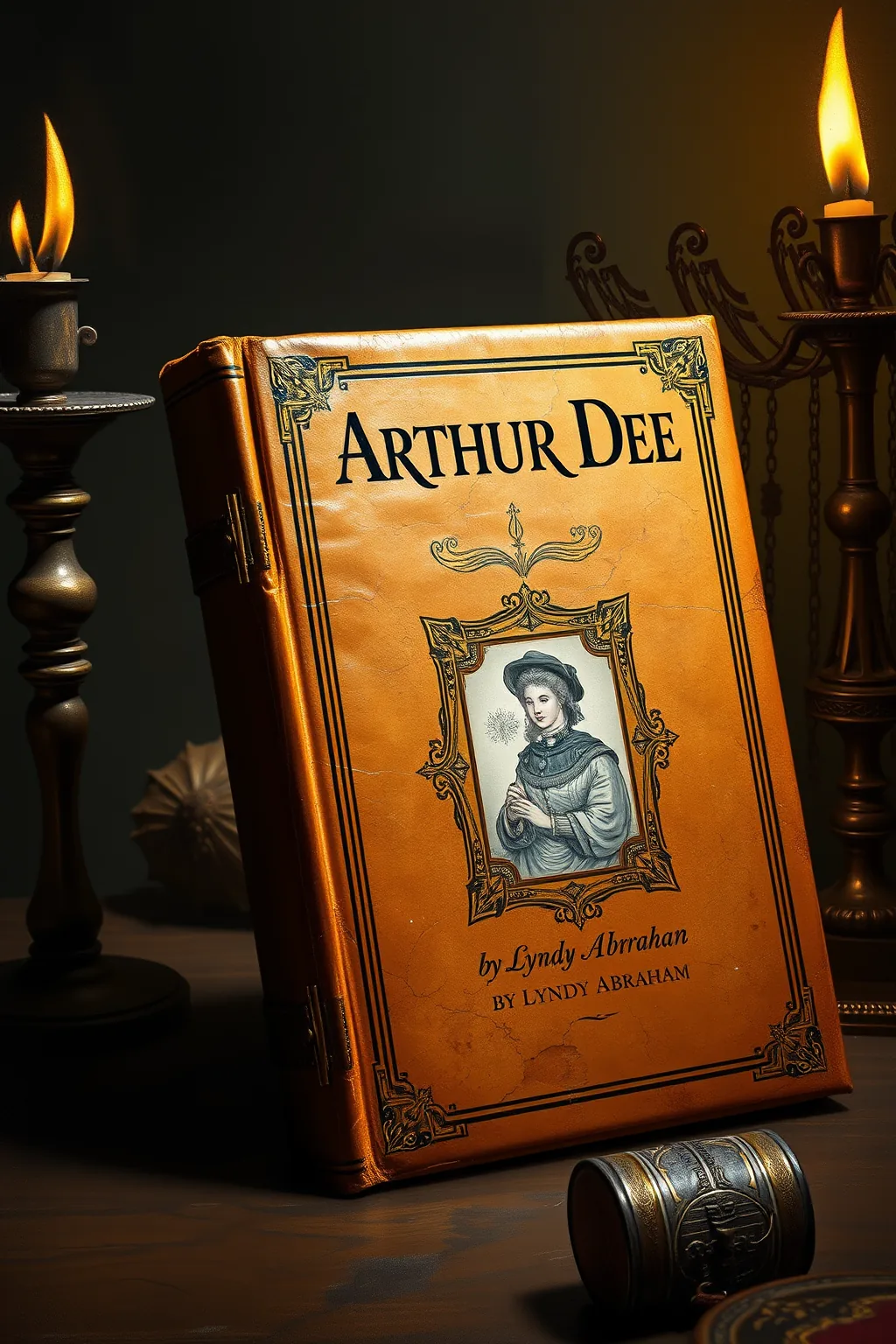
Arthur Dee
 84
84

Arthur Dee
Lyndy Abraham's "Arthur Dee" meticulously reconstructs the life of a man whose existence was largely defined by his relationship to his more famous father, John Dee. The strength of this biography lies in its detailed archival research, particularly concerning Arthur's lengthy sojourn and career as a physician in Tsarist Russia. Abraham successfully argues for Arthur's significance as an alchemist and physician in his own right, moving beyond his inherited legacy. A notable passage details Arthur's intricate network of correspondences, highlighting the challenges of maintaining alchemical practice amidst political instability. However, the book occasionally suffers from a density that can make its arguments feel somewhat dry for the general reader. While rigorously academic, a more dynamic narrative approach in certain sections might have better conveyed the inherent drama of Dee's life. Nevertheless, it remains an indispensable scholarly contribution for anyone studying the history of alchemy and early modern medicine. It offers a focused, factual account of a life lived in the shadow of greatness, yet marked by unique professional achievements.
📝 Description
84
Lyndy Abraham's 2012 "Arthur Dee" examines a life distinct from his father's famous legacy.
Lyndy Abraham's biography of Arthur Dee focuses on his life as a physician and alchemist, separate from his father John Dee's renown. The book traces Arthur's education, travels, and his career in Russia during the early 17th century. It details his involvement in court intrigue and esoteric pursuits, presenting him as an individual shaped by the complex scientific, alchemical, and religious currents of his time. Abraham situates Arthur's trajectory within the late 16th and early 17th centuries, a period marked by intellectual shifts and religious changes. The work details his professional life, particularly his service in Tsarist Russia where European expertise was sought. This biography aims to illuminate Arthur Dee's distinct contributions and experiences.
Arthur Dee's life and work are placed within the context of Hermeticism and Paracelsianism, traditions that blended spiritual, philosophical, and practical alchemical pursuits. This era, the late 16th and early 17th centuries, saw these esoteric systems interact with both nascent mechanical philosophies and established religious doctrines. Arthur's professional path as a physician in Russia also reflects the period's interest in applying alchemical principles to medicine and statecraft. The book examines how individuals like Arthur operated within these fluid intellectual and political environments, where esoteric knowledge was often tied to practical application and courtly influence.
💡 Why Read This Book?
• Gain a nuanced understanding of Arthur Dee's independent alchemical and medical career, distinct from his father's fame, by examining his appointment as physician to Tsar Michael I in 1633. • Appreciate the transmission of esoteric knowledge across borders by tracing Arthur Dee's journey and professional life in early 17th-century Russia. • Understand the practical applications of alchemy in early modern medicine, as evidenced by Arthur Dee's documented medical practices and remedies.
⭐ Reader Reviews
Honest opinions from readers who have explored this book.
❓ Frequently Asked Questions
Who was Arthur Dee and what is his primary significance?
Arthur Dee (1579-1651) was an English alchemist, physician, and son of the famed mathematician and occultist John Dee. His significance lies in his extensive career as a physician to the Russian Tsar and his own alchemical pursuits, particularly in Russia.
What was Arthur Dee's role in Russia?
Arthur Dee served as a physician to the Russian Tsar, beginning with Tsar Michael I in 1633. He practiced medicine and continued his alchemical research there for many years, becoming a respected figure at the Tsar's court.
How does Arthur Dee's work relate to his father, John Dee?
While influenced by his father's legacy and esoteric interests, Arthur Dee developed his own distinct career. He applied alchemical principles to medicine, a practical focus that distinguished his work from some of his father's more theoretical and divinatory pursuits.
What time period does Lyndy Abraham's book cover for Arthur Dee's life?
The book primarily covers Arthur Dee's life from his birth in 1579 through his death in 1651, with a particular focus on his adult career and alchemical activities in the early to mid-17th century.
What historical currents influenced Arthur Dee?
Arthur Dee was influenced by the intellectual climate of late Renaissance England, the continued traditions of Hermeticism and Paracelsianism, and the practical demands of medicine in an era where alchemy was still closely allied with healing.
What is the scholarly reputation of Lyndy Abraham's "Arthur Dee"?
Lyndy Abraham's "Arthur Dee" is recognized as a significant scholarly work, providing a detailed and well-researched account of Arthur Dee's life and contributions, particularly within the context of early modern science and alchemy.
🔮 Key Themes & Symbolism
Alchemy and Early Modern Medicine
The work illuminates the intricate connection between alchemical theory and medical practice in the 17th century. Arthur Dee, as a physician, utilized and refined alchemical preparations for therapeutic purposes. This theme explores how substances believed to possess transformative qualities were applied to human ailments, reflecting a worldview where the microcosm (human body) and macrocosm (universe) were seen as interconnected, governed by similar principles. The text details specific remedies and approaches, demonstrating that alchemy was not solely about transmutation but also a vital, albeit often esoteric, branch of pharmaceutical knowledge.
The Dee Family Legacy
This theme centers on the enduring influence of John Dee and how his son Arthur navigated his own path within the shadow of such a prominent figure. The book examines the transmission of intellectual and esoteric traditions from father to son, but crucially, it also highlights Arthur's distinct contributions. It questions whether Arthur sought to distance himself from his father's more controversial occult studies or to further them through his own practical alchemical work. The narrative underscores the unique challenges and opportunities presented by being born into a family renowned for its engagement with hidden knowledge.
Esoteric Knowledge in Russia
Lyndy Abraham's study provides a rare glimpse into the reception and practice of Western esoteric traditions, specifically alchemy, within the court of Tsarist Russia in the early 17th century. Arthur Dee's appointment as a royal physician facilitated the introduction and application of these complex ideas and practices within a non-Western European context. The theme explores how figures like Arthur Dee served as conduits for intellectual exchange, bringing European Hermetic and Paracelsian thought to a new cultural landscape and adapting it to local needs and understanding.
The Alchemist as Courtier
This theme examines the precarious position of alchemists and esoteric practitioners who served in royal courts. Arthur Dee's career in Russia illustrates the delicate balance required to maintain favor and continue one's work amidst political machinations and the inherent suspicion that often surrounded alchemical pursuits. The book details how Dee leveraged his medical skills to secure his standing, while his alchemical endeavors, though perhaps pursued more discreetly, remained a significant aspect of his intellectual life. It underscores the intersection of science, magic, and courtly patronage.
💬 Memorable Quotes
Direct passages from the work, attributed to the author.
“Arthur Dee pursued alchemical investigations that were deeply integrated with his medical practice.”
— This interpretation highlights that Arthur Dee didn't separate his alchemical research from his professional duties as a physician. His work suggests a view where the principles of alchemy were directly applicable to healing, blurring the lines between theoretical esoteric study and practical medicine.
“His appointment as physician to Tsar Michael I in 1633 marked a significant phase in his career.”
— This statement emphasizes the importance of Arthur Dee's role in the Russian court. It signifies a period where his medical expertise, likely informed by his alchemical knowledge, gained him considerable influence and a platform for his continued esoteric pursuits.
“The transmission of alchemical knowledge across Europe was facilitated by figures like Arthur Dee.”
— This concept points to Arthur Dee's role as an intellectual bridge. By practicing and likely sharing his alchemical understanding in Russia, he contributed to the movement of esoteric ideas and methods from Western Europe to Eastern Europe during the early 17th century.
“Lyndy Abraham's work reconstructs Dee's life from fragmented documentary evidence.”
— This highlights the scholarly effort involved in the book. It suggests that Arthur Dee's life is not well-documented, and Abraham has undertaken a rigorous process of gathering and interpreting scattered historical records to build a comprehensive biography.
“Dee's alchemical interests were intertwined with the broader Paracelsian medical tradition.”
— This interpretation connects Arthur Dee's work to a specific historical medical and philosophical movement. It implies that his alchemical endeavors were likely informed by Paracelsian principles, which emphasized the use of chemical remedies and a holistic understanding of health.
🌙 Esoteric Significance
Tradition
Arthur Dee's work is situated within the Western Hermetic tradition, heavily influenced by the iatrochemical and philosophical currents of Paracelsianism. His practice of alchemy as a method for preparing medicinal substances aligns with the Hermetic principle of correspondence between the celestial, terrestrial, and human realms, where understanding the macrocosm offered keys to healing the microcosm. Unlike more speculative or purely metallurgical alchemists, Dee's focus was practical, seeking to extract and purify potent remedies from natural substances through alchemical processes, reflecting a pragmatic application of esoteric principles.
Symbolism
The book touches upon symbols inherent in alchemical practice, such as the 'prima materia' (first matter), representing the raw, unformed potential from which all substances are derived, and the concept of the 'philosopher's stone,' not just as a means of transmutation but as a symbol of perfected health and spiritual attainment. Dee's work likely involved understanding the symbolic language of minerals, metals, and celestial influences, applying these to the preparation of tinctures and elixirs. The serpent, often symbolizing renewal and transformation, is a common motif in alchemical imagery that may have informed Dee's understanding of potent medicinal agents.
Modern Relevance
Contemporary interest in Arthur Dee is often linked to the resurgence of interest in the history of alchemy and its connection to early pharmacology and chemistry. Thinkers and practitioners within modern Hermeticism and Western esoteric traditions may look to Dee as an example of applying esoteric knowledge in a professional, tangible way. His career in Russia also offers a case study for understanding the historical exchange of esoteric ideas across cultures, relevant to contemporary comparative studies of spiritual and scientific traditions. His pragmatic approach to alchemical medicine continues to inform historical perspectives on the roots of modern pharmacy and medicine.
👥 Who Should Read This Book
• Scholars of early modern science and medicine seeking detailed biographical accounts of key figures operating at the intersection of empirical study and esoteric traditions. • Students of Hermeticism and alchemy interested in the practical application of these arts, particularly through the lens of 17th-century medical practice. • Researchers of Russian history and cultural exchange who wish to understand the influx of Western European intellectual and scientific expertise into Tsarist Russia during the early 17th century.
📜 Historical Context
Lyndy Abraham's "Arthur Dee" emerges from a late 20th-century scholarly environment that increasingly recognized the complexity and continuity of esoteric traditions within the history of science. Written in 1996, it arrived as interest in figures like John Dee was growing, prompting a closer look at his less famous but professionally significant son. Arthur's life, spanning 1579-1651, places him squarely in the era of Paracelsianism's influence and the early stirrings of the Scientific Revolution. His alchemical work occurred concurrently with figures like Robert Boyle, though Dee's approach remained more rooted in traditional Hermetic and medical theories. The book implicitly addresses the challenges faced by alchemists, who operated in a space between empirical investigation and often-suspect mystical pursuits, a tension evident in the reception of his father's work. Abraham's detailed focus on Arthur's Russian career provides crucial insight into the international diffusion of esoteric and medical knowledge, a less-explored facet of the period.
📔 Journal Prompts
Arthur Dee's alchemical remedies and their connection to his role as a physician.
The challenges of practicing esoteric arts within a courtly environment.
Reflect on the transmission of alchemical knowledge from father to son within the Dee family.
The significance of Arthur Dee's prolonged career in Tsarist Russia.
Paracelsian influences on Arthur Dee's medical and alchemical approaches.
🗂️ Glossary
Alchemy
An ancient tradition focused on the transformation of matter, often involving the pursuit of transmutation of base metals into gold, the creation of an elixir of life, and the development of potent medicines through chemical processes.
Hermeticism
A philosophical and religious tradition based on writings attributed to Hermes Trismegistus, emphasizing divine wisdom, the interconnectedness of the cosmos, and the potential for human spiritual ascent through knowledge and practice.
Iatrochemistry
A branch of alchemy and early medicine concerned with the application of chemical knowledge and remedies to the treatment of diseases, heavily influenced by the work of Paracelsus.
Paracelsianism
The medical and philosophical system developed by Theophrastus von Hohenheim, known as Paracelsus, which emphasized chemical remedies, the influence of celestial bodies, and the elemental nature of disease.
Prima Materia
In alchemy, the primordial, undifferentiated substance from which all things are believed to originate. It is often seen as a symbol of potential and the starting point for alchemical transformation.
Philosopher's Stone
A legendary alchemical substance believed to be capable of transmuting base metals into gold and, in some traditions, of conferring immortality or perfect health. It symbolizes ultimate perfection and transformation.
Tsarist Russia
The historical period of the Russian monarchy, particularly relevant here to the early 17th century when Arthur Dee served Tsar Michael I, a time of consolidation and increasing engagement with Western European scientific and medical knowledge.
🔮 Readers Also Liked
Browse all →








More by Lyndy Abraham
All books →
More Free Alchemy & Hermeticism Books
View all →