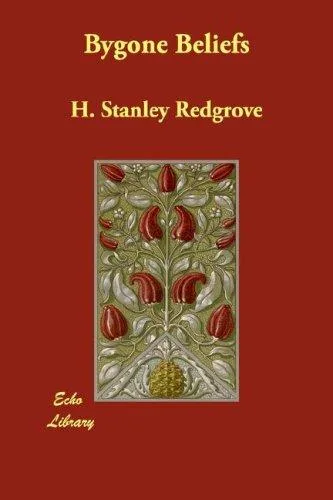
Bygone Beliefs
 64
64

Bygone Beliefs



Review by Marcus Thorne (Esoteric Sciences Reviewer) — 'Bygone Beliefs' by H. Stanley Redgrove is a seminal work in the realm of alchemy and hermeticism. Redgrove masterfully weaves together esoteric insights and historical context to create a tapestry of hidden knowledge that illuminates the mystical underpinnings of human belief. The book is particularly strong in its exploration of animistic thought and the Cambridge Platonists, offering a unique perspective on the evolution of magical and supernatural traditions. This work is essential reading for scholars and practitioners of the occult, as well as those seeking a deeper understanding of the esoteric traditions that have shaped our world.
📝 Description
64
H. Stanley Redgrove's 'Bygone Beliefs' examines animistic traditions and their impact on contemporary ideas.
Published by H. Stanley Redgrove, 'Bygone Beliefs' examines ancient animistic beliefs and their continued presence in modern thought. The book examines the history of alchemy, magic, and superstition, seeking out the concealed knowledge and symbols that have influenced human understanding across ages. It creates a thoughtful atmosphere, encouraging those interested in hidden knowledge to consider the connections between historical and present beliefs. The text is suited for individuals with a strong interest in mysticism and the occult, offering insights into the less visible aspects of human belief systems and the lasting impact of symbols.
Redgrove's work does not shy away from complex ideas, presenting them in a way that encourages deep reflection. The book serves as a guide for understanding how old ideas persist and transform, impacting how we perceive the world today. It is a study of the persistent human drive to find meaning through symbolic representation and the enduring power of these systems.
This work sits within the broader tradition of Western esotericism, a field that investigates hidden spiritual paths and alternative cosmologies. Redgrove engages with themes common to occult studies, such as the symbolic language of alchemy and the historical practice of magic. It connects these to foundational beliefs in animism, the idea that natural objects possess a soul or spirit. The book traces how these older systems of thought have been reinterpreted or have continued to influence later philosophical and psychological concepts, making it relevant to students of comparative religion and the history of ideas.
💡 Why Read This Book?
Why read this book? 'Bygone Beliefs' offers a rare glimpse into the mystical roots of human belief, making it an invaluable resource for seekers, scholars, and practitioners of the occult. This book provides deep insights into alchemy, magic, and superstition, helping readers uncover the hidden dimensions of their own consciousness. Ideal for those interested in the Cambridge Platonists and the enduring influence of animistic thought.
⭐ Reader Reviews
Honest opinions from readers who have explored this book.
❓ Frequently Asked Questions
What is the main focus of 'Bygone Beliefs'?
The main focus is on animistic beliefs and their evolution, exploring how early humans explained natural phenomena and how these beliefs have influenced modern thought.
Who would benefit most from reading this book?
Scholars of esoteric studies, practitioners of the occult, and spiritual seekers interested in the mystical roots of human belief will find this book particularly enriching.
What makes 'Bygone Beliefs' unique?
Its unique blend of historical context and esoteric insights sets it apart, offering a comprehensive look at the evolution of magical and supernatural traditions.
How does this book relate to alchemy and hermeticism?
It delves into the alchemical and hermetic traditions, uncovering the hidden symbolism and knowledge that have shaped these mystical practices over the centuries.
Is this book suitable for beginners in the occult?
While it is accessible to beginners, those with some prior knowledge of esoteric studies may find it more engaging and insightful.
🔮 Key Themes & Symbolism
Animistic Beliefs
Explore the earliest human explanations of natural phenomena, known as animism. This theme studies how ancient beliefs shaped the mystical and occult traditions that endure today, offering a window into the hidden dimensions of human consciousness.
Alchemy and Hermeticism
Discover the strong symbolism and hidden knowledge of alchemy and hermeticism. This theme uncovers the mystical underpinnings of these ancient practices, revealing their enduring influence on modern thought and spirituality.
Superstition and Magic
Study the world of superstition and magic, exploring how these beliefs have evolved over time. This theme highlights the esoteric traditions that have shaped our understanding of the supernatural, offering insights into the mystical roots of human belief.
💡 Key Ideas
Editorial paraphrase of the work's core concepts — not direct quotes.
In the earliest days of his upward evolution man was satisfied with a very crude explanation of natural phenomena-that to which the name 'animism' has been given.
This quote underscores the primal nature of animistic beliefs, highlighting their simplicity and profundity.
The mystical roots of human belief reveal the hidden dimensions of our consciousness.
This line emphasizes the esoteric significance of ancient beliefs, suggesting they hold keys to understanding our inner selves.
Alchemy and hermeticism offer a window into the hidden symbolism of the universe.
This passage invites readers to explore the mystical underpinnings of these ancient practices, uncovering their enduring influence.
Superstition and magic are the threads that connect the past to the present.
This quote highlights the evolution of magical and supernatural traditions, suggesting they are integral to human experience.
The Cambridge Platonists provide a unique perspective on the evolution of magical thought.
This line underscores the importance of historical context in understanding the mystical roots of human belief.
🌙 Esoteric Significance
Tradition
Belonging to the Hermetic tradition, 'Bygone Beliefs' studies the ancient practices of alchemy and magic, uncovering the hidden knowledge and symbolism that have shaped these mystical arts. This book is a rich source of esoteric insights, offering a comprehensive look at the evolution of magical and supernatural traditions.
Symbolism
Key symbols in this book include the alchemical process of transformation and the mystical underpinnings of animistic thought. These symbols represent the hidden dimensions of human consciousness and the enduring power of esoteric traditions.
Modern Relevance
Today, 'Bygone Beliefs' remains relevant to modern practitioners of the occult and spiritual seekers. Its insights into ancient beliefs and their evolution offer a deeper understanding of the mystical roots of human experience, making it an invaluable resource for those exploring the hidden dimensions of consciousness.
👥 Who Should Read This Book
Beginners in the occult will find 'Bygone Beliefs' an accessible introduction to esoteric studies, while scholars will appreciate its deep historical context and esoteric insights. Spiritual seekers and practitioners of the occult will benefit from its exploration of animistic beliefs and their enduring influence. Ideal for those interested in the Cambridge Platonists and the mystical underpinnings of human belief.
📜 Historical Context
Published in an era when esoteric studies were gaining traction, 'Bygone Beliefs' by H. Stanley Redgrove stands as a key work in the exploration of ancient animistic beliefs. Written during a time of intellectual curiosity and spiritual seeking, this book offered a unique perspective on the mystical underpinnings of human belief. Its influence can be seen in the works of later scholars and practitioners of the occult, making it a foundational text in the study of alchemy, magic, and superstition.
📔 Journal Prompts
Reflect on the earliest animistic beliefs and how they have shaped your understanding of the natural world.
Explore the symbolism of alchemy and hermeticism in your own spiritual journey.
Consider the evolution of superstition and magic in your cultural background.
How do the Cambridge Platonists influence your perspective on mystical traditions?
What insights from 'Bygone Beliefs' resonate most with your spiritual seeking?
🗂️ Glossary
Animism
The belief that objects, places, and creatures all possess a distinct spiritual essence. It is considered the earliest form of human explanation of natural phenomena.
Alchemy
An ancient practice that combines elements of chemistry, physics, and mysticism, aiming to transform base metals into gold and achieve spiritual enlightenment.
Hermeticism
A philosophical and spiritual tradition based on the writings attributed to Hermes Trismegistus, focusing on the hidden knowledge of the universe.
Cambridge Platonists
A group of seventeenth-century philosophers who sought to reconcile rationalism with Christian theology, emphasizing the mystical dimensions of human experience.
Superstition
Beliefs or practices that are considered irrational or unscientific, often involving magical or supernatural elements.
This book appears in 3 collections
🔮 Readers Also Liked
Browse all →









More by H. Stanley Redgrove
All books →




From the “Hermeticism” Collection
View all →








More Free Alchemy & Hermeticism Books
View all →