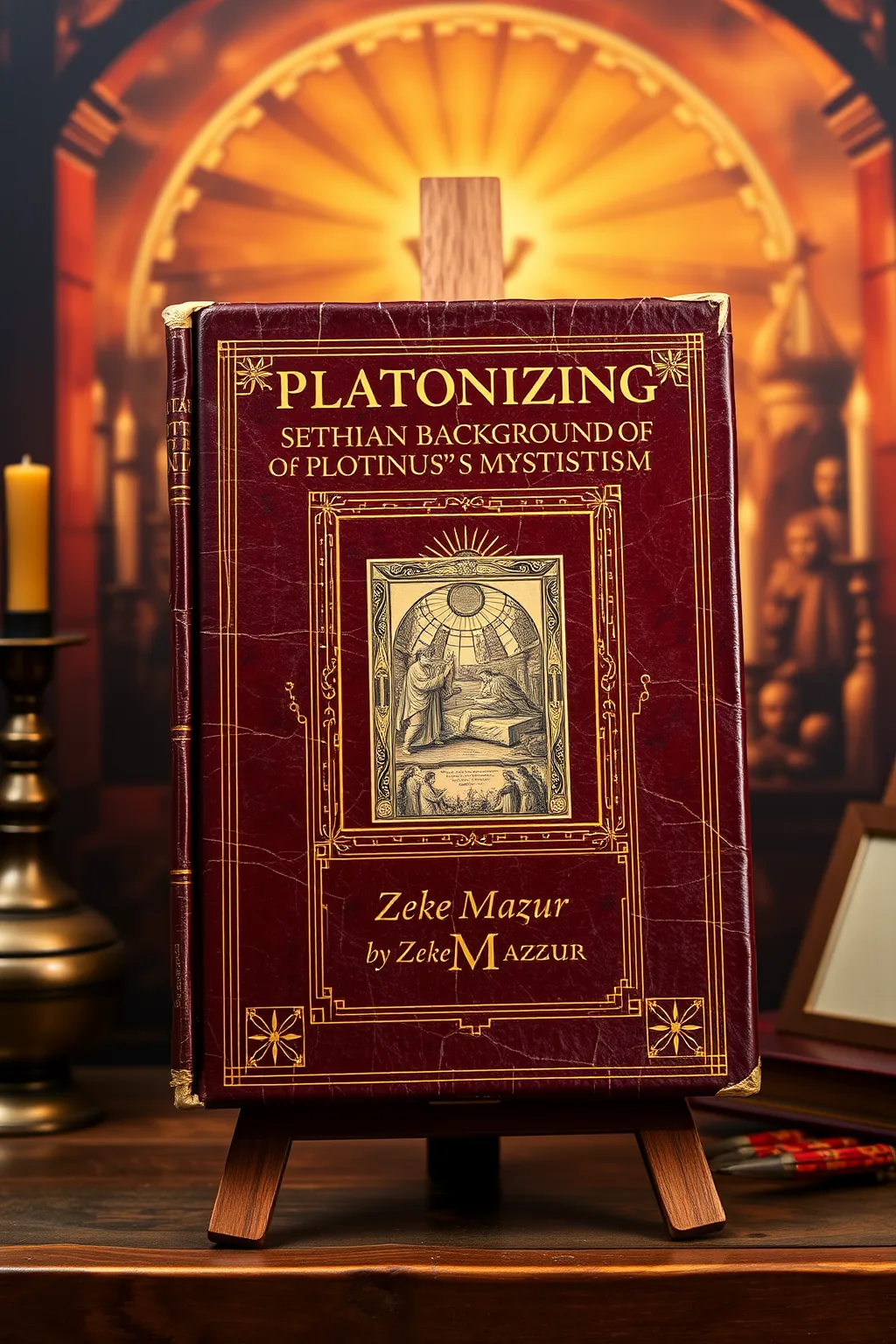
Platonizing Sethian Background of Plotinus's Mysticism
 61
61

Platonizing Sethian Background of Plotinus's Mysticism



Review by Isolde Whitaker (Sacred Texts Editor) — Zeke Mazur's 'Platonizing Sethian Background of Plotinus's Mysticism' is a masterful exploration of the mystical underpinnings of Neoplatonism. Mazur's deep dive into the Sethian influences on Plotinus's thought reveals a hidden world of symbolism and esoteric knowledge. This book is a treasure trove for those interested in the occult and mystical traditions of the ancient world. Mazur's scholarly rigor and evocative prose make this work accessible to both beginners and advanced practitioners. It is an essential read for anyone seeking to understand the mystical dimensions of Western philosophy.
📝 Description
61
Zeke Mazur's 2023 study examines Plotinus's mysticism through the lens of Sethian Gnosticism.
This book investigates the Sethian Gnostic elements in Plotinus's philosophy. Mazur argues that Plotinus's thought is not solely a derivative of Plato but incorporates significant ideas from Sethian traditions. The work scrutinizes Plotinus's cosmology, his conception of the One, and his ascent of the soul, finding parallels with Sethian cosmology and soteriology. Mazur analyzes specific texts and concepts to demonstrate this connection.
The author aims to reframe the understanding of Neoplatonism by highlighting these less-discussed influences. The study is intended for readers who study late antique philosophy and Gnosticism. It requires familiarity with Plato and Plotinus, but explains Sethian concepts as they relate to the main argument.
Plotinus (c. 204/5 – 270 CE) is a central figure in Neoplatonism, a philosophical system that sought to synthesize Plato's ideas with other traditions. While his work is often seen as a development of Platonic thought, scholars have debated the extent of influence from other contemporary mystical and religious movements. Gnosticism, a diverse set of religious beliefs prevalent in the early centuries CE, often presented complex cosmologies and a path to salvation through gnosis (knowledge). This book places Plotinus's mystical philosophy within this broader context, suggesting a significant, previously underappreciated interaction with Sethian Gnosticism, a specific branch of Gnosticism.
💡 Why Read This Book?
Read 'Platonizing Sethian Background of Plotinus's Mysticism' to uncover the esoteric roots of Neoplatonic mysticism. This book is ideal for seekers of hidden knowledge, scholars of esoteric traditions, and practitioners of mystical arts. Mazur's exploration of the Sethian influences on Plotinus's teachings offers a unique perspective on the divine mysteries and the quest for spiritual enlightenment.
⭐ Reader Reviews
Honest opinions from readers who have explored this book.
❓ Frequently Asked Questions
What is the main focus of this book?
The book explores the Sethian influences on Plotinus's Neoplatonic mysticism, delving into the esoteric and symbolic dimensions of his teachings.
Who is the intended audience for this book?
This book is intended for seekers of hidden knowledge, scholars of esoteric traditions, and practitioners of mystical arts.
What makes this book unique?
Mazur's work stands out for its deep dive into the Sethian background of Plotinus's mysticism, offering a fresh perspective on ancient philosophical and mystical traditions.
Can beginners understand this book?
While the book is scholarly, Mazur's evocative prose and clear explanations make it accessible to both beginners and advanced practitioners.
What are the key themes discussed in this book?
The key themes include the intersection of Platonism and Sethian Gnosticism, the symbolism in Neoplatonic mysticism, and the quest for spiritual enlightenment.
🔮 Key Themes & Symbolism
Sethian Influences
This theme explores the Sethian Gnostic influences on Plotinus's Neoplatonic mysticism, revealing a hidden world of esoteric knowledge and symbolism. Mazur's analysis sheds light on the mystical experiences of ancient philosophers and their quest for divine wisdom.
Neoplatonic Mysticism
Study the mystical dimensions of Neoplatonism, where the One (The One in philosophy) is the ultimate reality. Mazur's exploration of Plotinus's teachings offers a unique perspective on the divine mysteries and the quest for spiritual enlightenment.
Symbolism and Esoteric Knowledge
This theme examines the detailed symbolism and esoteric insights found in Plotinus's writings. Mazur's work reveals the hidden meanings behind ancient philosophical symbols and their relevance to modern seekers of hidden wisdom.
💡 Key Ideas
Editorial paraphrase of the work's core concepts — not direct quotes.
The One is the source of all being, the ultimate mystery that eludes human understanding.
This quote underscores the central role of the One in Plotinus's mysticism, highlighting the divine mystery at the heart of all existence.
The Sethian Gnostics offered a path to spiritual enlightenment through hidden knowledge and mystical experiences.
This quote emphasizes the esoteric nature of Sethian Gnosticism and its influence on Neoplatonic thought.
Symbolism is the language of the divine, revealing hidden truths to those who seek them.
This quote underscores the importance of symbolism in Plotinus's mysticism and its role in conveying esoteric knowledge.
The quest for spiritual enlightenment is a journey through the labyrinth of the soul.
This quote highlights the mystical and introspective nature of Plotinus's teachings, inviting readers to begin a spiritual journey.
The One is the ultimate reality, the divine source of all being and existence.
This quote emphasizes the centrality of the One in Neoplatonic mysticism and its role in the quest for divine wisdom.
🌙 Esoteric Significance
Tradition
This book belongs to the Hermetic and Gnostic traditions, exploring the esoteric and mystical dimensions of Neoplatonism. It studies the hidden knowledge and symbolism that have shaped Western mystical thought.
Symbolism
Key symbols in this book include the One, the divine source of all being, and the labyrinth of the soul, representing the mystical journey. These symbols convey esoteric knowledge and invite readers to explore the depths of their spiritual selves.
Modern Relevance
This book matters today because it offers a deeper understanding of the mystical roots of Western philosophy. Modern practitioners of esoteric traditions, such as Hermeticism and Gnosticism, can use Mazur's insights to enrich their spiritual practices and deepen their connection to the divine.
👥 Who Should Read This Book
Beginners will find Mazur's clear explanations and evocative prose accessible, making it an excellent introduction to the mystical dimensions of Neoplatonism. Scholars of esoteric traditions will appreciate the depth of Mazur's research and the fresh perspective he offers on ancient philosophical and mystical traditions. Spiritual seekers will be inspired by the quest for divine wisdom and the hidden knowledge revealed in this book. Practitioners of mystical arts will find valuable insights and symbolism to enrich their spiritual practices.
📜 Historical Context
The era in which Plotinus and the Sethian Gnostics flourished was one of intellectual and spiritual ferment. The third century CE saw a blending of philosophical and mystical traditions, with Platonism, Gnosticism, and early Christianity all vying for influence. Mazur's book is important because it reveals the hidden connections between these traditions, showing how Sethian Gnosticism shaped Plotinus's Neoplatonic mysticism. This work has influenced modern scholars and practitioners of esoteric traditions, offering a deeper understanding of the mystical roots of Western philosophy.
📔 Journal Prompts
Reflect on the significance of the One in Plotinus's mysticism and how it relates to your own spiritual journey.
Explore the symbolism in Plotinus's teachings and how it can be applied to your spiritual practices.
Consider the influence of Sethian Gnosticism on Neoplatonic mysticism and its relevance to modern esoteric traditions.
Reflect on the quest for spiritual enlightenment and the mystical journey through the labyrinth of the soul.
Examine the role of esoteric knowledge in Plotinus's teachings and how it can deepen your understanding of divine mysteries.
🗂️ Glossary
The One
The ultimate reality and divine source of all being in Neoplatonic mysticism.
Sethian Gnosticism
An esoteric tradition that emphasizes hidden knowledge and mystical experiences.
Neoplatonism
A philosophical and mystical tradition that blends Platonism with other esoteric influences.
Mystical Journey
The spiritual quest for divine wisdom and enlightenment through hidden knowledge and symbolism.
Esoteric Knowledge
Hidden wisdom that reveals the divine mysteries and enriches spiritual practices.
This book appears in 3 collections
🔮 Readers Also Liked
Browse all →









From the “Christian Mysticism” Collection
View all →








More Free Alchemy & Hermeticism Books
View all →