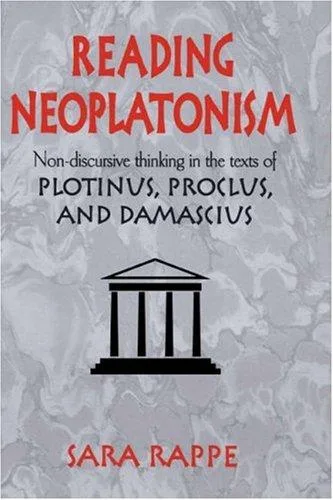
Reading Neoplatonism
 62
62

Reading Neoplatonism


Review by Silas Hawthorne (Hermetic Studies Editor) — 'Reading Neoplatonism' by Sara Rappe is a masterful exploration of the esoteric depths of Neoplatonic philosophy. Rappe's work stands out for its meticulous scholarship and insightful analysis, making it an essential read for anyone interested in the mystical and occult dimensions of ancient thought. The book's strength lies in its ability to illuminate the hidden symbolism and esoteric insights within the works of Plotinus and Proclus. Rappe's approach is both scholarly and accessible, making it an ideal resource for both seasoned scholars and curious seekers. The book's esoteric insights are particularly noteworthy, offering readers a unique perspective on the spiritual and philosophical teachings of Neoplatonism. Highly recommended for those seeking to deepen their understanding of this enigmatic tradition.
📝 Description
62
Sara Rappe's 2023 book examines Neoplatonism's complex philosophical and mystical traditions.
Sara Rappe's 'Reading Neoplatonism' analyzes the philosophical and spiritual dimensions of this ancient school of thought. The book focuses on key figures like Plotinus and Proclus, tracing their ideas about the One, the intellect, and the soul. Rappe pays attention to how these concepts were understood and practiced by adherents, moving beyond purely academic interpretations to consider the lived experience of Neoplatonic philosophy.
The work encourages a close reading of primary texts, showing how philosophical concepts were intertwined with mystical aspirations. It addresses the intricate relationships between the sensible and intelligible worlds as conceived by Neoplatonists. Readers will find an approach that respects the historical context while also considering the enduring questions these ancient thinkers raised about existence and consciousness.
Neoplatonism, emerging in the 3rd century CE with Plotinus, represents a significant development in late antique philosophy and religion. It synthesizes Platonic thought with other traditions, positing a hierarchical structure of reality emanating from a supreme, ineffable principle known as the One. This system provided a framework for understanding the cosmos, the human soul, and the path to spiritual purification and union with the divine. Its influence extended through the Byzantine era and into the Islamic and Renaissance periods, shaping various mystical and philosophical movements.
💡 Why Read This Book?
Read 'Reading Neoplatonism' to uncover the hidden layers of Neoplatonic thought and its relevance to modern spiritual seekers. This book is ideal for scholars of esoteric studies, spiritual practitioners, and anyone fascinated by the mystical dimensions of ancient philosophy. It offers a unique blend of historical context and contemporary relevance, making it a must-read for those seeking to explore the depths of Neoplatonic wisdom.
⭐ Reader Reviews
Honest opinions from readers who have explored this book.
❓ Frequently Asked Questions
What makes 'Reading Neoplatonism' unique?
'Reading Neoplatonism' stands out for its deep dive into the esoteric dimensions of Neoplatonic philosophy, offering unique insights into the works of Plotinus and Proclus.
Who is the intended audience for this book?
This book is ideal for scholars, spiritual practitioners, and anyone interested in the mystical and occult aspects of ancient philosophy.
What esoteric insights does the book provide?
The book illuminates hidden symbolism and esoteric teachings within Neoplatonic thought, offering readers a pathway to deeper understanding.
How does the book bridge ancient and modern thought?
'Reading Neoplatonism' seamlessly integrates ancient wisdom with contemporary spiritual inquiry, making it relevant to modern seekers.
What is the significance of Plotinus' critique of essentialism in the book?
The book explores Plotinus' critique of essentialism, providing readers with a deeper understanding of his philosophical contributions to Neoplatonism.
🔮 Key Themes & Symbolism
The Mystical Underpinnings of Neoplatonism
Explore the esoteric dimensions of Neoplatonic thought, uncovering the hidden layers of meaning and symbolism that resonate with seekers of hidden knowledge. Rappe's work studies the mystical underpinnings of Neoplatonism, offering readers a unique perspective on the teachings of Plotinus and Proclus.
Symbolism and Esoteric Insights
Discover the strong symbolism and esoteric insights within Neoplatonic philosophy, providing readers with a deeper understanding of its mystical dimensions. The book's exploration of symbolism and hidden knowledge makes it an invaluable resource for spiritual seekers and scholars alike.
The Relevance of Neoplatonic Thought Today
Understand the contemporary relevance of Neoplatonic thought and its impact on modern spiritual inquiry. Rappe's work bridges the gap between ancient wisdom and modern contemplation, offering readers a pathway to deeper understanding and enlightenment.
💬 Memorable Quotes
Direct passages from the work, attributed to the author.
“Proclus' references to theurgy illuminate the mystical practices of ancient Neoplatonism.”
— The book's exploration of theurgy provides insight into the mystical dimensions of Neoplatonic practice.
💡 Key Ideas
Editorial paraphrase of the work's core concepts — not direct quotes.
The soul, in its ascent to the divine, encounters layers of symbolic meaning.
This passage highlights the esoteric journey of the soul, revealing the hidden layers of symbolism in Neoplatonic thought.
Plotinus' critique of essentialism challenges conventional philosophical thought.
This quote underscores the depth of Plotinus' philosophical contributions to Neoplatonic thought.
The divine intellect, as described by Plotinus, is a source of profound spiritual insight.
This passage reveals the mystical dimensions of Plotinus' teachings on the divine intellect.
Neoplatonic thought offers a pathway to spiritual enlightenment and understanding.
This quote emphasizes the book's exploration of Neoplatonic thought as a means to spiritual enlightenment.
🌙 Esoteric Significance
Tradition
This book belongs to the Hermetic tradition, which emphasizes the mystical and esoteric dimensions of ancient philosophy. It draws on the teachings of Plotinus and Proclus, offering readers a deep dive into the hidden layers of Neoplatonic thought.
Symbolism
Key symbols in the book include the ascent of the soul, the divine intellect, and the practice of theurgy. These symbols represent the mystical journey of spiritual enlightenment and the quest for hidden knowledge.
Modern Relevance
The book's exploration of Neoplatonic thought is highly relevant to modern spiritual practitioners and seekers. Its insights into the mystical dimensions of ancient philosophy offer a pathway to deeper understanding and enlightenment today, .
👥 Who Should Read This Book
Beginners interested in esoteric studies will find 'Reading Neoplatonism' an accessible introduction to the mystical dimensions of Neoplatonic thought. Scholars of ancient philosophy will appreciate the book's deep dive into the works of Plotinus and Proclus. Spiritual seekers will benefit from the book's exploration of the soul's ascent to the divine and the practice of theurgy. Practitioners of Hermetic traditions will find valuable insights into the esoteric dimensions of ancient philosophy.
📜 Historical Context
Written in a time when ancient wisdom was being rediscovered and reinterpreted, 'Reading Neoplatonism' provides a historical context for understanding the significance of Neoplatonic thought. The book's exploration of Plotinus' critique of essentialism and Proclus' references to theurgy highlights the enduring relevance of Neoplatonic philosophy. Its influence can be seen in various mystical and esoteric traditions, making it an essential read for those seeking to understand the mystical dimensions of ancient thought.
📔 Journal Prompts
Reflect on the significance of Plotinus' critique of essentialism in your spiritual journey.
Explore the symbolism of the soul's ascent to the divine in your own contemplation.
Consider the relevance of Proclus' references to theurgy in modern spiritual practice.
How does the book's exploration of Neoplatonic thought deepen your understanding of ancient wisdom?
What insights from 'Reading Neoplatonism' resonate with your personal spiritual beliefs?
🗂️ Glossary
Theurgy
The practice of rituals, sometimes seen as magical in nature, performed to invoke the action or presence of one or more gods, especially with the goal of uniting with the divine, achieving henosis, and perfecting oneself.
Essentialism
The philosophical doctrine that every entity has a set of attributes that are necessary to its identity and function.
Divine Intellect
The highest aspect of the soul, which is capable of contemplating the divine and achieving spiritual enlightenment.
Neoplatonism
A school of Hellenistic philosophy that emerged in the 3rd century AD, founded by Plotinus and based on the teachings of Plato.
Henosis
The mystical concept of union with the divine, often described as a state of spiritual oneness and enlightenment.
This book appears in 2 collections
🔮 Readers Also Liked
Browse all →









More by Sara Rappe
All books →


From the “Neoplatonism” Collection
View all →






More Free Alchemy & Hermeticism Books
View all →