The Great Seal of the United States
 73
73

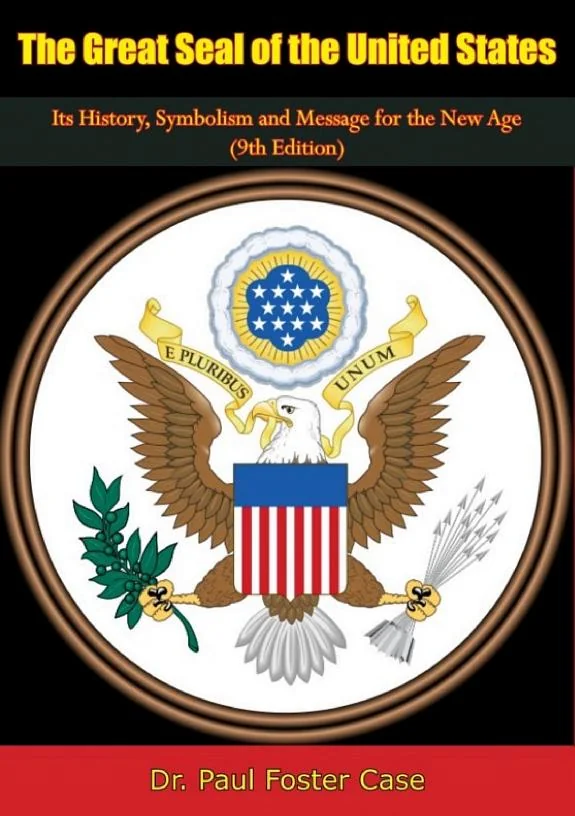
The Great Seal of the United States
Paul Foster Case’s analysis of the Great Seal of the United States offers a compelling, albeit dense, argument for its esoteric significance. Case, a foundational figure in the B.O.T.A., approaches the Seal as a sacred diagram, meticulously unpacking its visual components through a Hermetic lens. His interpretation of the unfinished pyramid as a symbol of human endeavor awaiting divine completion is particularly striking. However, the book’s primary limitation lies in its academic density; the prose, while precise, can be challenging for readers unfamiliar with occult terminology or Kabbalistic concepts. For those willing to engage with its intricate symbolism, the work provides a unique perspective on American foundational ideals, viewing them through the prism of ancient wisdom traditions. It reveals a layer of meaning many overlook, making it a valuable, if demanding, study.
📝 Description
73
Paul Foster Case published 'The Great Seal of the United States' in 1935, interpreting national symbols as spiritual glyphs.
Paul Foster Case's 1935 book examines the Great Seal of the United States not simply as a national emblem, but as a spiritual symbol. Case, a significant figure in early 20th-century occultism and the founder of Builders of the Adytum, applies his understanding of esoteric philosophy to the Seal's design. He analyzes specific elements like the unfinished pyramid, the eye of Providence, and the Latin mottoes 'Annuit Coeptis' and 'Novus Ordo Seclorum.' According to Case, these components are deliberate representations of cosmic principles and a vision for a new epoch intended by the nation's founders.
This work is suited for students of symbolism, comparative religion, and American history who are interested in the philosophical roots of the United States. It appeals to those seeking to uncover the deeper meanings within national symbols and the occult ideas that may have shaped them. Case's analysis is presented within the context of a growing interest in occult sciences and esoteric readings of Western culture during his time.
Written in 1935, Case's book emerges from a period where occultism and esoteric interpretations of history were gaining traction. It aligns with thinkers like Manly P. Hall who sought to uncover hidden meanings in Western civilization's symbols and narratives. Case situates the Great Seal within a tradition that connects sacred geometry, Hermetic philosophy, and what he perceived as a divinely guided, prophesied new era for the nation, reflecting a broader interest in esoteric lineages during the early 20th century.
💡 Why Read This Book?
• Gain an esoteric interpretation of the Great Seal's iconography, moving beyond conventional historical accounts to understand its symbolic representation of spiritual principles articulated by the Founding Fathers. • Explore the concept of the 'Novus Ordo Seclorum' as presented by Case, understanding its connection to Hermetic philosophy and its implication for a divinely guided new world order. • Analyze specific symbols like the Eye of Providence and the unfinished pyramid, learning how their meanings are derived from ancient traditions and applied to the American experiment as intended by its originators.
⭐ Reader Reviews
Honest opinions from readers who have explored this book.
❓ Frequently Asked Questions
What is the primary esoteric interpretation of the Great Seal of the United States presented by Paul Foster Case?
Case interprets the Great Seal as a spiritual glyph, a sacred diagram embodying the principles and ideals of the nation's founders. He sees it as a representation of divine guidance and the establishment of a 'Novus Ordo Seclorum' (New World Order) aligned with Hermetic and Kabbalistic wisdom.
When was The Great Seal of the United States first published, and what was the context?
The book was first published in 1935. This was a period of significant interest in occultism and esoteric interpretations of history and symbols in the Western world, with many thinkers exploring hidden meanings in established structures.
Who founded the Builders of the Adytum (B.O.T.A.), and why is this relevant?
Paul Foster Case founded the Builders of the Adytum (B.O.T.A.). His role as a prominent teacher within this esoteric organization lends weight to his detailed symbolic analysis of the Great Seal, as the B.O.T.A. is dedicated to the study of Hermetic Qabalah and Tarot symbolism.
What are some key symbols within the Great Seal that Case analyzes?
Case focuses on symbols such as the unfinished pyramid, the Eye of Providence (the all-seeing eye), and the Latin mottos 'Annuit Coeptis' and 'Novus Ordo Seclorum.' He examines their historical and esoteric meanings.
Is this book suitable for beginners in occult studies?
While accessible to those with some familiarity with esoteric concepts, Case's work is dense and assumes a certain level of understanding of Hermeticism and Kabbalah. Beginners might find it more rewarding after consulting introductory texts on these subjects.
What does 'Novus Ordo Seclorum' mean in the context of Case's book?
'Novus Ordo Seclorum' is Latin for 'New Order of the Ages.' In Case's interpretation, it signifies a divinely ordained epoch or new era, reflecting the founders' vision for a nation built upon spiritual principles and cosmic law.
🔮 Key Themes & Symbolism
Spiritual Glyph Interpretation
Case posits that the Great Seal transcends its function as a national emblem, serving instead as a deliberate spiritual glyph. He argues its design encodes universal principles of creation, divine providence, and the unfolding of human destiny. This perspective frames the Seal not just as a historical artifact but as a living symbol meant to guide and inspire future generations toward a higher spiritual order, aligning with Hermetic ideals of microcosm and macrocosm.
The 'Novus Ordo Seclorum'
A central theme is the interpretation of the Latin motto 'Novus Ordo Seclorum' (New Order of the Ages). Case connects this phrase to the founders' vision of establishing a nation under divine guidance, ushering in a new epoch. This 'New World Order' is presented not as a political construct but as a spiritual evolution, rooted in ancient wisdom traditions and the unfolding of cosmic cycles, with the Seal acting as a key to understanding this transition.
Symbolism of the Unfinished Pyramid
The unfinished pyramid is analyzed as a potent symbol of human endeavor and the ongoing process of creation. Case interprets its incomplete state as representing humanity's role in co-creating with the divine, the continuous work required to build a just and spiritual society. The apex, crowned by the Eye of Providence, signifies divine oversight and the ultimate goal of achieving a higher state of consciousness and order.
The Eye of Providence
Case studies the esoteric meaning of the Eye of Providence, the all-seeing eye within a triangle. He explains it as a representation of divine consciousness, omnipresence, and the ultimate source of wisdom and guidance. Its placement atop the unfinished pyramid underscores the idea that all human efforts are observed and guided by a higher intelligence, essential for the realization of the 'Novus Ordo Seclorum'.
💬 Memorable Quotes
Direct passages from the work, attributed to the author.
“The Great Seal of the United States is a profound spiritual glyph.”
— This statement captures Case's central thesis: the Seal is more than a national symbol; it's a coded message of spiritual principles intended by its creators to guide the nation's destiny.
“The unfinished pyramid symbolizes human endeavor and the work of building a new order.”
— This highlights the active role of humanity in the grand cosmic plan, suggesting that the nation's foundation is a project requiring ongoing effort, guided by higher powers.
“Annuit Coeptis means 'He has favored our undertakings.'”
— Case uses this motto to emphasize the belief held by the founders that their efforts to establish a new nation were divinely sanctioned and supported by Providence.
“Novus Ordo Seclorum signifies a new era or epoch.”
— This phrase, according to Case's analysis, points to the founders' vision of initiating a transformative period in human history, guided by spiritual ideals.
“The Eye of Providence represents divine omniscience and guidance.”
— This interpretation stresses the presence of a higher intelligence overseeing human actions, providing wisdom and direction for the establishment of the new order.
🌙 Esoteric Significance
Tradition
Case's work is firmly rooted in the Western Esoteric Tradition, specifically drawing from Hermeticism, Kabbalah, and Rosicrucianism. He interprets the Great Seal through the lens of sacred geometry and numerology, common tools in these lineages for understanding divine principles. The book positions the Seal as a manifestation of these ancient wisdom teachings, intended by its designers to embody universal laws and spiritual truths, thus aligning the American experiment with a cosmic blueprint.
Symbolism
Key symbols analyzed include the unfinished pyramid, representing humanity's ongoing spiritual work and potential, and the Eye of Providence, symbolizing divine consciousness and omnipresence overseeing creation. The Latin mottos 'Annuit Coeptis' (He has favored our undertakings) and 'Novus Ordo Seclorum' (New Order of the Ages) are interpreted not merely historically but as declarations of divine will and the ushering in of a new spiritual epoch.
Modern Relevance
Contemporary esotericists, particularly within B.O.T.A. and related Hermetic study groups, continue to reference Case's interpretation of the Great Seal. His work is relevant to modern discussions on sacred symbolism in civil society, comparative mythology, and the philosophical underpinnings of national identity. Thinkers exploring the intersection of spirituality and governance, or the hidden histories behind secular symbols, find value in Case's detailed symbolic breakdown.
👥 Who Should Read This Book
• Students of Hermeticism and Kabbalah: Those seeking to understand how ancient esoteric principles are applied to modern national symbols and discover connections to concepts like the 'Novus Ordo Seclorum'. • Researchers of American Esoteric History: Individuals interested in the philosophical and potentially occult influences on the founding of the United States and its symbolism. • Symbolism Enthusiasts: Anyone fascinated by the deeper meanings behind visual emblems, particularly those who appreciate detailed analyses of iconography from an esoteric perspective.
📜 Historical Context
Paul Foster Case's The Great Seal of the United States emerged in 1935, a period marked by significant exploration into esoteric philosophies and the symbolic interpretations of Western civilization. The early 20th century saw a resurgence of interest in Hermeticism, Kabbalah, and Rosicrucianism, fueled by figures like Manly P. Hall, whose own work, 'The Secret Teachings of All Ages' (1928), similarly sought to uncover hidden meanings in ancient symbols and institutions. Case's analysis of the Seal fits within this intellectual current, presenting it as a sophisticated allegorical document rather than a purely political or historical artifact. While Case himself was a founder of the Builders of the Adytum (B.O.T.A.), a notable esoteric organization, his work engaged with broader themes of Western esotericism that were circulating widely. There is no record of significant public censorship or a specific, widely noted academic reception event for this particular work at the time of its initial publication, though its esoteric nature would have limited its appeal to mainstream academic circles.
📔 Journal Prompts
The unfinished pyramid's symbolism as a representation of ongoing human spiritual work.
Reflect on the Eye of Providence as a symbol of divine oversight in societal structures.
Analyze the concept of 'Novus Ordo Seclorum' beyond its political connotations.
Consider the founders' intent in embedding esoteric meaning within the Great Seal.
Examine the relationship between human endeavor ('Annuit Coeptis') and divine favor.
🗂️ Glossary
Great Seal of the United States
The official emblem of the United States, consisting of a front and reverse side. Paul Foster Case interprets its design as a profound spiritual glyph encoding esoteric principles.
Novus Ordo Seclorum
Latin for 'New Order of the Ages.' Case interprets this motto on the reverse of the Great Seal as signifying a divinely guided new epoch or era for humanity.
Annuit Coeptis
Latin for 'He has favored our undertakings.' Case views this motto as evidence of the founders' belief in divine sanction for their nation-building efforts.
Eye of Providence
The all-seeing eye, typically depicted within a triangle, featured on the reverse of the Great Seal. Case interprets it as a symbol of divine omniscience and guidance.
Unfinished Pyramid
A key element on the reverse of the Great Seal. Case interprets its incomplete state as symbolizing ongoing human effort and the potential for spiritual completion under divine guidance.
Spiritual Glyph
A symbol or diagram representing spiritual truths or principles. Case argues the Great Seal functions as such a glyph, conveying esoteric wisdom.
Hermeticism
An ancient esoteric tradition based on writings attributed to Hermes Trismegistus. Case's analysis is deeply informed by Hermetic principles of correspondence and divine order.
This book appears in 1 collection
🔮 Readers Also Liked
Browse all →







From the “Hermetic Alchemy” Collection
View all →








More Free Alchemy & Hermeticism Books
View all →