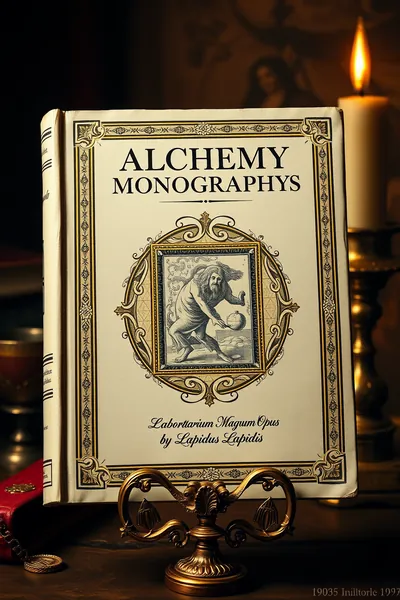
Did The Alchemists Achieve The Magnum Opus?

 61
61

Did The Alchemists Achieve The Magnum Opus?



Review by Marcus Thorne (Esoteric Sciences Reviewer) — Did The Alchemists Achieve The Magnum Opus? by H. Stanley Redgrove is a masterful examination of one of the most enigmatic and fascinating subjects in the realm of esoteric literature. Redgrove's meticulous research and eloquent prose make this book a standout in the field of alchemy and hermeticism. The book's strength lies in its ability to bridge the gap between historical alchemy and modern spiritual practices, providing readers with a comprehensive understanding of the alchemical process. This work is particularly valuable for those who seek to integrate alchemical principles into their spiritual journey. The book's esoteric insights are both illuminating and thought-provoking, making it an essential read for anyone interested in the mystical and occult.
📝 Description
61
H. Stanley Redgrove's 1929 book asks if alchemists truly achieved the Magnum Opus.
This 1929 work by H. Stanley Redgrove examines the alchemical pursuit of the Magnum Opus. Redgrove investigates the historical and symbolic underpinnings of this central alchemical goal, questioning whether alchemists succeeded in their quest for transformation. The book draws upon a range of alchemical texts and traditions to assess the nature of the Great Work, considering its potential spiritual and material interpretations.
The author addresses the hidden meanings within alchemical symbolism and the philosophical inquiries that accompanied the practical aspects of the art. Redgrove aims to clarify the alchemists' objectives and the extent to which they realized them, moving beyond popular misconceptions. The text considers the alchemical process not just as a search for gold but as a path toward spiritual perfection.
This book sits within the tradition of Western esotericism, specifically the study of alchemy. Alchemy, a practice blending early chemical techniques with philosophical and spiritual aspirations, sought the transformation of base metals into gold and the elixir of life. Redgrove's work engages with this rich history, analyzing the symbolic language and the ultimate aims of alchemists, particularly concerning the concept of the 'Great Work' or Magnum Opus. It connects alchemical theory to hermetic philosophy and mystical traditions.
💡 Why Read This Book?
Read Did The Alchemists Achieve The Magnum Opus? to gain a deep understanding of the alchemical quest for the Magnum Opus. Ideal for seekers of hidden knowledge, scholars of the occult, and practitioners of spiritual alchemy, this book offers a wealth of esoteric insights and philosophical depth. It is a treasure trove for those who wish to explore the symbolic language of alchemy and its transformative power.
⭐ Reader Reviews
Honest opinions from readers who have explored this book.
❓ Frequently Asked Questions
What is the Magnum Opus in alchemy?
The Magnum Opus, or Great Work, is the ultimate goal of alchemy, symbolizing the process of spiritual transformation and the creation of the Philosopher's Stone.
Who is H. Stanley Redgrove?
H. Stanley Redgrove was a renowned author and scholar in the field of alchemy and hermeticism, known for his extensive research and insightful writings on esoteric subjects.
What makes this book unique?
This book stands out for its comprehensive exploration of the alchemical quest and its integration of historical context with modern spiritual practices.
Is this book suitable for beginners?
While it is accessible to beginners, those with some prior knowledge of alchemy and hermeticism will find the most value in its esoteric insights.
What are some key themes in the book?
Key themes include the symbolism of alchemy, the historical context of the alchemical quest, and the philosophical significance of the Magnum Opus.
🔮 Key Themes & Symbolism
The Symbolism of Alchemy
The book looks at the detailed symbolism of alchemy, exploring the hidden meanings behind alchemical processes and the quest for the Philosopher's Stone. Redgrove's analysis provides a deep understanding of the esoteric language of alchemy and its significance in spiritual transformation.
Historical Context of Alchemy
Redgrove presents a comprehensive overview of the historical context of alchemy, tracing its origins and evolution through the ages. This theme highlights the enduring fascination with alchemy and its impact on various cultures and spiritual traditions.
The Philosophical Significance of the Main work
The book explores the philosophical depths of the Main work, examining its role in the pursuit of spiritual enlightenment. Redgrove's insights into the transformative power of the alchemical process offer readers a profound understanding of its relevance in modern spiritual practices.
💡 Key Ideas
Editorial paraphrase of the work's core concepts — not direct quotes.
The alchemist seeks not merely to transmute base metals, but to transform the soul.
This quote underscores the spiritual dimension of alchemy, emphasizing the transformative power of the alchemical process.
The quest for the Philosopher's Stone is a journey of self-discovery and spiritual enlightenment.
This passage highlights the esoteric significance of the alchemical quest, emphasizing its role in the pursuit of spiritual growth.
Alchemy is the art of turning lead into gold, both literally and metaphorically.
This quote illustrates the dual nature of alchemy, blending material and spiritual alchemy.
The Main work is the ultimate goal of the alchemist, symbolizing the pinnacle of spiritual achievement.
This passage emphasizes the transformative power of the Main work and its significance in the alchemical journey.
The alchemist's laboratory is a sacred space, where the mysteries of the universe are revealed.
This quote highlights the sacred and esoteric nature of the alchemical process, emphasizing its role in spiritual exploration.
🌙 Esoteric Significance
Tradition
This book belongs to the Hermetic tradition, which emphasizes the transformative power of spiritual alchemy. Hermeticism, with its roots in ancient Egyptian and Greek mysticism, seeks to uncover the hidden knowledge of the universe and the divine. This book is a valuable resource for those interested in the esoteric teachings of Hermeticism and its relevance in modern spiritual practices.
Symbolism
Key symbols in the book include the Philosopher's Stone, the alchemical process of transmutation, and the quest for spiritual enlightenment. These symbols represent the transformative power of alchemy and its role in the pursuit of spiritual growth. The book provides a deep understanding of the esoteric language of alchemy and its significance in the Hermetic tradition.
Modern Relevance
This book remains relevant today for those interested in spiritual alchemy and the pursuit of esoteric wisdom. Modern practitioners of Hermeticism and alchemy continue to study Redgrove's work for its insights into the transformative power of the alchemical process. His teachings are integrated into various spiritual practices and esoteric studies, making this book an essential resource for seekers of hidden knowledge.
👥 Who Should Read This Book
Beginners will find this book an accessible introduction to the world of alchemy and hermeticism, offering a wealth of esoteric insights and historical context. Scholars of the occult will appreciate the depth of research and philosophical inquiry presented in the book. Spiritual seekers will find inspiration in the transformative power of the alchemical process and its role in the pursuit of spiritual enlightenment. Practitioners of spiritual alchemy will benefit from the book's comprehensive exploration of the symbolism and philosophy of alchemy, providing a valuable resource for their spiritual journey.
📜 Historical Context
Did The Alchemists Achieve The Main work? was written during a time of renewed interest in esoteric and occult studies. The early 20th century saw a resurgence in the study of alchemy and hermeticism, as scholars and seekers sought to uncover the hidden knowledge of ancient traditions. Redgrove's work is significant for its thorough exploration of the alchemical quest and its integration of historical context with modern spiritual practices. This book has influenced countless seekers of esoteric wisdom, providing a comprehensive guide to the symbolism and philosophy of alchemy.
📔 Journal Prompts
Reflect on the significance of the Main work in your spiritual journey.
How does the symbolism of alchemy resonate with your personal experiences?
Consider the transformative power of the alchemical process in your life.
What insights have you gained from the historical context of alchemy?
How does the quest for the Philosopher's Stone relate to your pursuit of spiritual enlightenment?
🗂️ Glossary
Main work
The ultimate goal of alchemy, symbolizing the process of spiritual transformation and the creation of the Philosopher's Stone.
Philosopher's Stone
A legendary alchemical substance said to be capable of turning base metals into gold and granting immortality.
Hermeticism
An esoteric tradition based on the writings of Hermes Trismegistus, emphasizing the transformative power of spiritual alchemy.
Transmutation
The alchemical process of transforming one substance into another, often symbolizing spiritual transformation.
Alchemical Process
The series of steps and procedures followed by alchemists to achieve their goals, often involving symbolic and esoteric meanings.
This book appears in 3 collections
🔮 Readers Also Liked
Browse all →








More by H. Stanley Redgrove
All books →




From the “Hermeticism” Collection
View all →








More Free Alchemy & Hermeticism Books
View all →