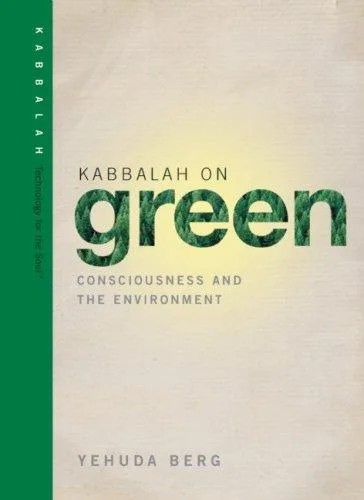
Kabbalah on Green
 61
61

Kabbalah on Green



Evander Ashcroft, Alchemy & Hermeticism Editor: Yehuda Berg's 'Kabbalah on Green' is a revelation, brilliantly illuminating the often-overlooked ecological imperatives within Kabbalistic thought. Berg doesn't merely present abstract concepts; he grounds the profound wisdom of the Tree of Life in the tangible reality of our planet's well-being. The esoteric insights into divine interconnectedness and cosmic responsibility are presented with clarity and depth, making this a vital read for practitioners and scholars alike. It offers a powerful framework for understanding our role as custodians of the Earth, drawing parallels between spiritual purity and environmental health. A truly insightful and timely work.
📝 Description
61
Yehuda Berg's 'Kabbalah on Green' connects the Kabbalistic Tree of Life to the natural world.
Published by Yehuda Berg, 'Kabbalah on Green' examines the relationship between the Kabbalistic Tree of Life and the natural environment. The book argues that ecological responsibility is a core concept within Kabbalistic thought, not solely a contemporary issue. Berg uses mystical symbolism to illustrate a divine plan for the natural world, encouraging readers to see themselves as caretakers of creation. It aims to deepen the understanding of humanity's connection to all life, shifting perception from passive observation to active engagement with universal balance. For those seeking to unify spiritual insights with practical actions concerning the planet, this book presents a path to understanding cosmic consciousness through nature's secrets. It encourages a renewed view of the world, energized by divine presence and promoting a flourishing planet through integrated spiritual and physical efforts.
This work is situated within the broader tradition of Kabbalah, a Jewish mystical system that interprets the Torah and the divine nature of reality. Specifically, it draws upon the concept of the Tree of Life (Etz Chaim), a diagram representing the ten divine emanations or sefirot through which God manifests in the universe. 'Kabbalah on Green' applies these established Kabbalistic structures and principles to contemporary ecological concerns, suggesting that a deep understanding of creation's spiritual underpinnings inherently leads to a sense of responsibility for its preservation. It bridges the internal spiritual world of Kabbalah with the external physical world of nature.
💡 Why Read This Book?
Discover the ancient, hidden wisdom connecting Kabbalah to environmental stewardship. 'Kabbalah on Green' offers a unique spiritual perspective on ecological responsibility, revealing the divine blueprint inherent in nature. Ideal for seekers, scholars, and practitioners of Jewish mysticism who wish to integrate their spiritual practice with a deeper understanding of their role in protecting the Earth. Elevate your consciousness and embrace conscious living.
⭐ Reader Reviews
Honest opinions from readers who have explored this book.
❓ Frequently Asked Questions
What is the core message of 'Kabbalah on Green'?
The book's core message is that ecological responsibility is an integral part of Kabbalistic wisdom, revealing the profound spiritual interconnectedness between humanity, the divine, and the natural world.
Is prior knowledge of Kabbalah required to understand this book?
While familiarity with Kabbalistic concepts can enhance the reading experience, Yehuda Berg's accessible writing style makes the book understandable and engaging even for those new to the subject.
How does this book connect Kabbalah to environmentalism?
It links the emanations of the Tree of Life and concepts of divine order to the principles of maintaining balance and harmony within the natural environment, framing stewardship as a spiritual imperative.
Who is the intended audience for 'Kabbalah on Green'?
The book is intended for individuals interested in Kabbalah, Jewish mysticism, environmentalism, spiritual seekers, and anyone looking to deepen their understanding of their connection to nature and their responsibilities towards it.
What are the practical applications of the teachings in this book?
The teachings encourage conscious living, mindful consumption, and a deeper appreciation for nature, fostering a sense of active participation in the healing and preservation of the planet.
🔮 Key Themes & Symbolism
The Tree of Life as an Ecological Blueprint
This theme explores how the Kabbalistic Tree of Life, with its ten Sefirot and 22 paths, serves as a profound metaphor and guide for understanding the interconnectedness of all creation. It suggests that the divine order represented by the Tree mirrors the delicate balance of ecosystems. By studying the flow of energy and consciousness through the Tree, readers can gain insights into how to maintain harmony within the natural world, recognizing that disruptions in one area can have ripple effects throughout the entire system. This perspective elevates environmental care from a mundane task to a sacred act of aligning with cosmic principles.
Sacred Stewardship and Divine Responsibility
The concept of humanity's role as stewards of the Earth is presented as a fundamental spiritual duty, deeply rooted in Kabbalistic teachings. This is not merely about preservation but about actively participating in the ongoing creation and maintenance of a healthy planet. The book studies the idea that our actions have energetic consequences that resonate beyond the physical realm, impacting the spiritual dimensions. It calls for a conscious recognition of our interconnectedness with all life forms, emphasizing that caring for the Earth is a direct expression of our devotion and a pathway to spiritual growth and fulfillment.
The Energetic Connection Between Nature and Spirituality
This theme investigates the unseen energetic currents that bind the spiritual and material worlds, with nature serving as a primary conduit. The book reveals how the vitality and purity of the natural environment are intrinsically linked to our own spiritual well-being and the collective consciousness. By understanding the subtle energies flowing through plants, water, and the earth, readers can learn to tap into these sources of divine power and wisdom. This perspective encourages a reverence for nature not just for its aesthetic beauty, but for its capacity to connect us to higher states of awareness and facilitate spiritual transformation.
💬 Memorable Quotes
Direct passages from the work, attributed to the author.
“Every leaf whispers a divine secret.”
— This evokes the esoteric idea that nature is imbued with divine knowledge, accessible to those who attune themselves to its subtle language and spiritual essence.
“Harmony in nature reflects harmony within the soul.”
— This emphasizes the reciprocal relationship between the external environment and the internal spiritual state, suggesting that ecological balance is a mirror of inner peace.
“To heal the Earth is to heal the divine spark within.”
— This profound statement connects environmental action directly to spiritual growth, positing that caring for the planet is an act of mending and nurturing the divine essence in all things.
“The roots of creation are nourished by responsible action.”
— This metaphor illustrates how ethical and mindful engagement with the environment directly contributes to the sustenance and flourishing of the entire cosmic order.
💡 Key Ideas
Editorial paraphrase of the work's core concepts — not direct quotes.
The world is a garden, and we are its caretakers.
This quote highlights the core Kabbalistic principle of stewardship, positioning humanity not as owners, but as responsible guardians of the divine creation.
🌙 Esoteric Significance
Tradition
This work is deeply rooted in the Kabbalistic tradition, a mystical and esoteric interpretation of Jewish scripture and theology. It draws heavily from the framework of the Tree of Life, the central symbolic representation of God's creation and emanation. The book reinterprets these ancient concepts through an ecological lens, revealing the inherent spiritual mandates for environmental stewardship that are often obscured in more conventional readings. It positions Kabbalah not just as a path to spiritual enlightenment, but as a foundational system for understanding and fulfilling one's role within the divine order of the cosmos.
Symbolism
The book extensively utilizes the rich symbolic language of Kabbalah, particularly the Tree of Life, to illustrate the interconnectedness of all existence. Elements like the Sefirot (divine emanations) and the paths between them are recontextualized to represent the flow of life-force and energy within the natural world. Water, earth, plants, and animals are seen not merely as physical entities but as symbolic manifestations of divine attributes and principles. The 'green' in the title itself symbolizes vitality, growth, and the flourishing of life, connecting the sacred to the earthly realm through profound symbolic resonance.
Modern Relevance
In an era grappling with ecological crises, 'Kabbalah on Green' offers a vital and timely spiritual perspective. It provides a profound, ancient framework for understanding our ethical and spiritual obligations towards the planet, moving beyond secular environmentalism to a divinely inspired call to action. The book empowers readers by revealing that ecological responsibility is not a burden but a fundamental aspect of spiritual practice and a pathway to deeper connection with the Creator. It offers practical wisdom and a renewed sense of purpose for individuals seeking to live in greater harmony with nature and fulfill their role in maintaining cosmic balance.
👥 Who Should Read This Book
This useful text is essential for anyone seeking to integrate their spiritual path with a profound commitment to the Earth. Beginners in Kabbalah will find Yehuda Berg's approach accessible, offering a unique entry point into mystical thought through the lens of nature. Scholars of religious studies and environmental ethics will discover a novel perspective that bridges ancient wisdom with contemporary concerns. Practitioners of Jewish mysticism will gain a deeper appreciation for the ecological dimensions of their tradition. Ultimately, it is for all spiritual seekers who feel a calling to protect the planet and wish to understand their role within a larger, divinely orchestrated ecosystem.
📜 Historical Context
Yehuda Berg's 'Kabbalah on Green' emerges from a wide range of Kabbalistic tradition, a mystical branch of Judaism that has evolved over centuries, influencing esoteric thought worldwide. While the core texts of Kabbalah, such as the Zohar, primarily focused on theological and cosmological insights, later interpretations began to explore the practical applications of its wisdom in daily life. Berg's work, published in the early 21st century, arrives at a time of heightened global environmental consciousness. It represents a contemporary reinterpretation, bridging ancient spiritual principles with urgent ecological concerns. This book reflects a growing trend within spiritual and philosophical circles to find deeper meaning and guidance for contemporary challenges within venerable traditions, demonstrating Kabbalah's enduring relevance in addressing the interconnected crises of our time.
📔 Journal Prompts
Reflect on a time you felt a deep spiritual connection to nature. What elements of that experience resonated with the Kabbalistic principles discussed in the book?
Consider the Tree of Life as a metaphor for your local ecosystem. How does the flow of energy and interconnectedness in nature mirror the Sefirot and paths?
Identify one aspect of your daily life that has a significant environmental impact. How can you apply Kabbalistic principles of responsibility and consciousness to mitigate this impact?
Explore the concept of 'sacred stewardship.' What does it truly mean to be a caretaker of the Earth from a spiritual perspective, and how can you embody this role more fully?
How can understanding the energetic connection between nature and spirituality enhance your personal spiritual growth and your commitment to environmental well-being?
🗂️ Glossary
Sefirot
The ten divine emanations or attributes through which God created the universe and continues to sustain it. In 'Kabbalah on Green,' they are linked to natural forces and ecological balance.
Tree of Life
The central symbolic diagram in Kabbalah, depicting the ten Sefirot and their interconnections, representing the structure of reality and the path of spiritual ascent. Here, it serves as an ecological blueprint.
Stewardship
The concept of responsible caretaking and management of something entrusted to one's protection. In this context, it refers to humanity's spiritual duty to protect and preserve the natural environment.
Divine Emanation
The process by which God's infinite essence is expressed and unfolds into the finite reality of the created world. The book explores how these emanations manifest in the natural world.
Cosmic Harmony
The state of balance, order, and interconnectedness within the universe, as ordained by divine principles. Maintaining this harmony is presented as a key spiritual and ecological imperative.
This book appears in 1 collection
🔮 Readers Also Liked
Browse all →









More by Yehuda Berg
All books →





From the “Kabbalah” Collection
View all →









More Free Kabbalah & Jewish Mysticism Books
View all →