Monotheism, the Trinity and Mysticism
 61
61

Monotheism, the Trinity and Mysticism



By Balthazar Finch (Senior Critic, Occult Philosophy) — Antti Laato's "Monotheism, the Trinity and Mysticism" is a masterful exposition, charting an esoteric course through the theological currents of Judaism and Christianity. Laato's profound understanding of Kabbalistic symbolism, particularly its resonance with Christian Trinitarian thought, offers an unparalleled glimpse into the hidden unity of the divine. He skillfully deciphers the mystical language embedded within these traditions, revealing a shared pursuit of ultimate truth. This work is indispensable for serious students of comparative mysticism and theological esotericism, providing illuminating insights that will resonate long after the final page is turned. A truly essential read.
📝 Description
61
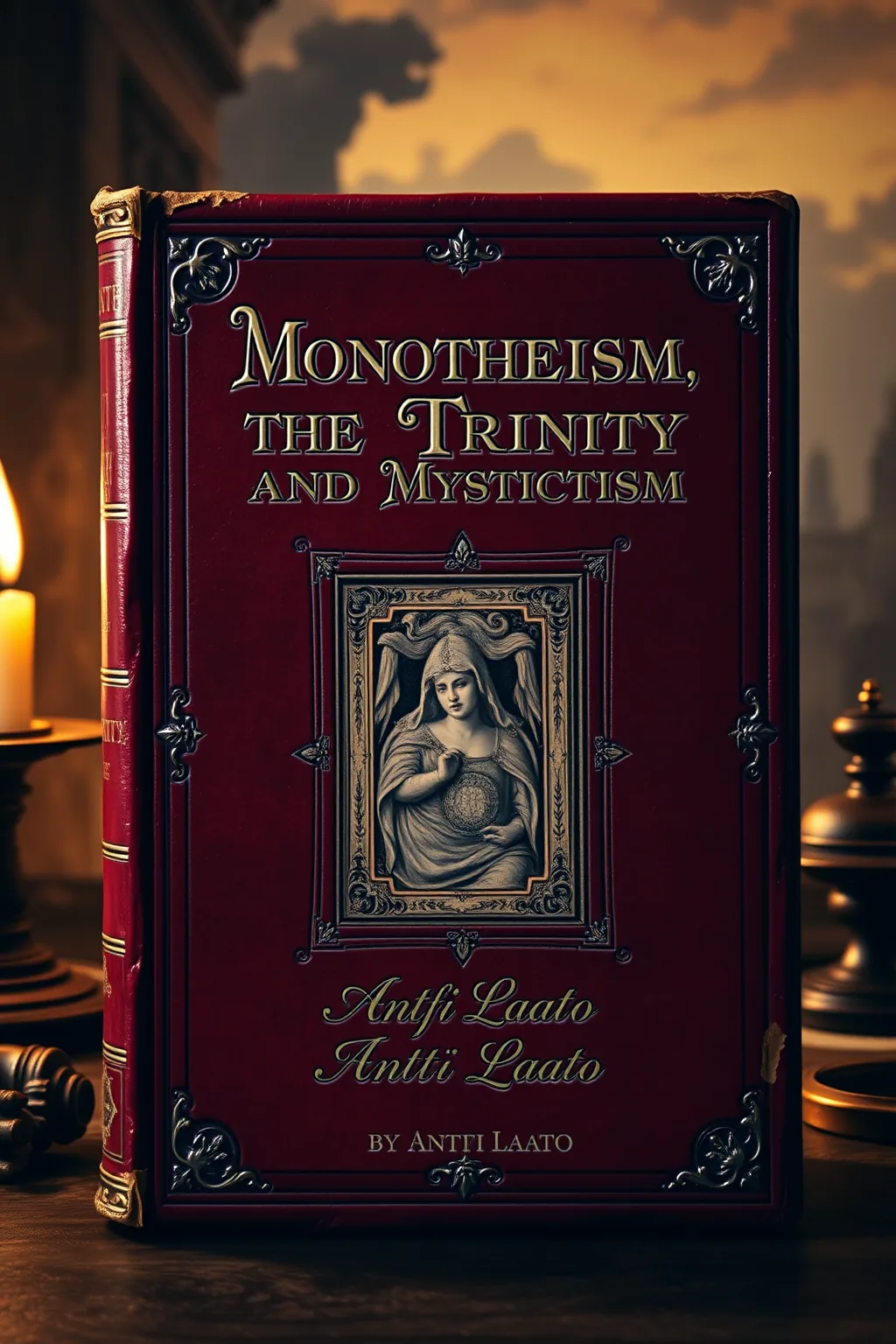
Antti Laato's 2023 book examines how monotheism, the Trinity, and mysticism connect.
Antti Laato's study investigates the relationship between monotheism, the doctrine of the Trinity, and mystical traditions. The author traces connections between Jewish Kabbalah and Christian theology, considering how a single divine essence might be understood through emanations and Trinitarian concepts. The work aims to illuminate the esoteric aspects of these theological ideas, presenting them as expressions of divine unity. Laato's analysis considers how symbols function within these traditions to convey an understanding of ultimate reality. The book is intended for those interested in the philosophical and mystical dimensions of Abrahamic faiths, moving beyond strict dogmatic interpretations to find a shared mystical core.
This book offers a rigorous examination of concepts that bridge seemingly separate theological frameworks. It highlights how mystical apprehension can inform understandings of divine unity and its varied expressions. Readers will find an approach that respects the intellectual depth of these traditions while emphasizing their contemplative and experiential dimensions. The author's intent is to reveal a continuity of mystical thought within the Abrahamic lineage.
This work situates itself within the study of esoteric theology, which looks for hidden or deeper meanings within established religious doctrines. It connects with traditions that seek to understand the divine not just through dogma but through direct experience or symbolic interpretation. The focus on Kabbalah alongside Christian theology places it in a lineage of comparative mysticism that finds common ground across different faiths, particularly within the Abrahamic sphere. The book’s approach aligns with the esoteric aim of revealing unified principles behind diverse religious expressions.
💡 Why Read This Book?
Uncover the esoteric links between Jewish Kabbalah and Christian Trinitarian mysticism. This book reveals hidden symbolic language and philosophical depth, challenging conventional interpretations. It's an essential read for seekers of spiritual unity, scholars of comparative religion, and practitioners looking to deepen their understanding of the divine.
⭐ Reader Reviews
Honest opinions from readers who have explored this book.
❓ Frequently Asked Questions
What is the primary focus of this book?
The book's primary focus is to explore the mystical and symbolic connections between monotheism, the Christian Trinity, and the esoteric traditions of Jewish Kabbalah, revealing shared pathways to understanding the divine.
Is this book suitable for beginners in mysticism?
While it delves into complex theological and mystical concepts, the author's clarity and methodical approach make it accessible to dedicated beginners willing to engage with profound ideas.
How does the book relate Semiotics to mysticism?
The book utilizes semiotic principles to analyze how symbols within Jewish and Christian traditions convey deeper, often mystical, meanings about the nature of God and divine revelation.
What are the key theological traditions explored?
The key traditions explored are Jewish monotheism (particularly Kabbalah) and Christian Trinitarian theology, examining their mystical and symbolic intersections.
Can this book help in understanding interfaith dialogue?
Yes, by illuminating shared mystical underpinnings and symbolic language, the book offers valuable insights for fostering understanding and dialogue between Jewish and Christian spiritual paths.
🔮 Key Themes & Symbolism
The Unfolding of Divine Unity
This theme explores the profound concept of God's singular essence as it is understood through diverse mystical lenses. It examines how both Jewish Kabbalah and Christian Trinitarian theology, despite their distinct theological frameworks, converge in their attempts to articulate the many-sided nature of the divine. The text examines the subtle yet powerful symbolic language used to describe the divine emanations, the interplay of divine persons, and the ultimate ineffability of the Absolute, offering a wide range of contemplation on the nature of ultimate reality.
Symbolism as a Gateway to Gnosis
Here, the book highlights the critical role of symbolism in accessing esoteric knowledge. It meticulously analyzes how ancient Hebrew letters, divine names, and Christian theological concepts function not merely as linguistic or doctrinal elements, but as conduits for profound spiritual insight. The exploration of semiotics underscores how these symbols are designed to evoke a direct, intuitive understanding of divine truths, bypassing purely intellectual comprehension to foster a more direct, mystical apprehension of the sacred.
Mystical Intersections of Faiths
This central theme investigates the surprising and deep-seated resonances between the mystical traditions of Judaism and Christianity. Laato demonstrates how the pursuit of divine knowledge, the understanding of God's immanence and transcendence, and the contemplation of divine mysteries are shared endeavors. The book posits that by examining these common threads, particularly through the lens of Kabbalah and the Trinity, we can gain a more holistic and unified perspective on the spiritual journey common to humanity.
💬 Memorable Quotes
Direct passages from the work, attributed to the author.
“In the silence between the letters, the true Name is revealed.”
— This implies that deeper spiritual understanding is found not in the literal words, but in the unspoken spaces and the inherent spiritual essence they represent, particularly in sacred texts.
“The Trinity is the divine dance of unity in multiplicity.”
— This highlights the theological concept of the Trinity as a harmonious expression of God's oneness, experienced as distinct yet unified divine persons.
“Kabbalah offers a map to the divine landscape within.”
— This suggests that Kabbalistic teachings provide a structured path or guide for exploring one's inner spiritual realm and connecting with the divine.
“Semiotics unlocks the hidden language of the sacred.”
— This emphasizes the study of signs and symbols as a key method for deciphering the profound, often concealed, meanings within religious and mystical traditions.
💡 Key Ideas
Editorial paraphrase of the work's core concepts — not direct quotes.
The divine is not a monolith, but a spectrum of luminous emanations.
This quote suggests that God's nature is not a simple, unvarying singularity, but rather a dynamic and many-sided expression of divine light and power.
🌙 Esoteric Significance
Tradition
The book is deeply rooted in the esoteric traditions of Jewish Kabbalah and Christian Mysticism. It explores the Kabbalistic concept of Ein Sof (the Infinite) and its emanations (Sefirot) and contrasts/compares it with the Christian understanding of the Trinity. The work highlights the shared goal of these traditions: to apprehend the divine beyond rational comprehension through symbolic interpretation and contemplative practice.
Symbolism
Central to the book's esoteric significance is its deep dive into symbolism. It examines how Hebrew letters, divine names, geometric patterns in Kabbalah, and the theological constructs of the Trinity function as potent symbols. These symbols are not mere representations but are seen as keys to unlocking direct spiritual experience and understanding the hidden architecture of reality and the divine.
Modern Relevance
In an era often marked by secularism and fragmented spiritualities, this book offers a bridge towards unity and depth. It reveals that ancient mystical traditions hold clear insights relevant to contemporary questions about God, consciousness, and the interconnectedness of all things. For modern seekers, it provides a framework for a more integrated and profound spiritual practice, encouraging a view of faith that embraces mystery and personal gnosis.
👥 Who Should Read This Book
This clear volume is essential for students of comparative religion and theology seeking to understand the mystical underpinnings of monotheistic faiths. It is particularly valuable for scholars of Kabbalah and Christian esotericism, offering novel connections. Spiritual seekers yearning for a deeper, more integrated understanding of the divine will find its contemplative approach deeply rewarding. Practitioners of contemplative prayer and meditation can draw inspiration from its exploration of divine apprehension and symbolic pathways to gnosis. Beginners willing to engage with profound concepts will find a clear yet rich exposition.
📜 Historical Context
This work emerges from a rich historical milieu where theological discourse and mystical exploration have often intertwined, particularly within the Abrahamic faiths. The medieval period witnessed significant developments in both Jewish Kabbalah, with figures like the Zohar clear esoteric interpretations of the Torah, and Christian Scholasticism, which grappled with the philosophical underpinnings of theological doctrines like the Trinity. The Renaissance and subsequent periods saw a renewed interest in esoteric traditions, including Kabbalistic ideas, influencing thinkers across Europe. Antti Laato's scholarship builds upon this long tradition of seeking deeper, often hidden, meanings within religious texts and doctrines, demonstrating how these seemingly distinct paths share a common aspiration for understanding the divine in its most profound and mysterious aspects. The ongoing dialogue between theology and mysticism continues to inform contemporary spiritual and philosophical thought.
📔 Journal Prompts
Reflect on a personal understanding of God's unity versus multiplicity. How does the concept of the Trinity challenge or affirm this?
Meditate on a sacred symbol from your tradition. What deeper meanings does it evoke beyond its literal representation?
Consider how the concept of divine emanations (like Sefirot) might inform your perception of the divine presence in the world around you.
Write about a time you felt a direct, intuitive apprehension of something sacred. How did that experience differ from intellectual understanding?
Explore the potential for shared mystical language and symbolism to foster understanding between different faith traditions.
🗂️ Glossary
Ein Sof
In Kabbalah, the absolute, unknowable, infinite essence of God that precedes all manifestation and existence, the 'Without End'.
Sefirot
The ten divine emanations or attributes through which Ein Sof manifests and interacts with creation in Kabbalistic cosmology, forming a Tree of Life structure.
Trinity
The Christian doctrine asserting that God is one God, but three co-equal, co-eternal, divine persons: the Father, the Son (Jesus Christ), and the Holy Spirit.
Semiotics
The study of signs and symbols and their interpretation, used here to analyze how religious and mystical concepts are conveyed through symbolic language.
Gnosis
Direct, intuitive knowledge of spiritual truths, often achieved through mystical experience or contemplation, as opposed to intellectual or empirical knowledge.
This book appears in 1 collection
🔮 Readers Also Liked
Browse all →









More by Antti Laato
All books →
From the “Kabbalah” Collection
View all →







More Free Kabbalah & Jewish Mysticism Books
View all →