The Power of Kabbalah

 64
64

The Power of Kabbalah

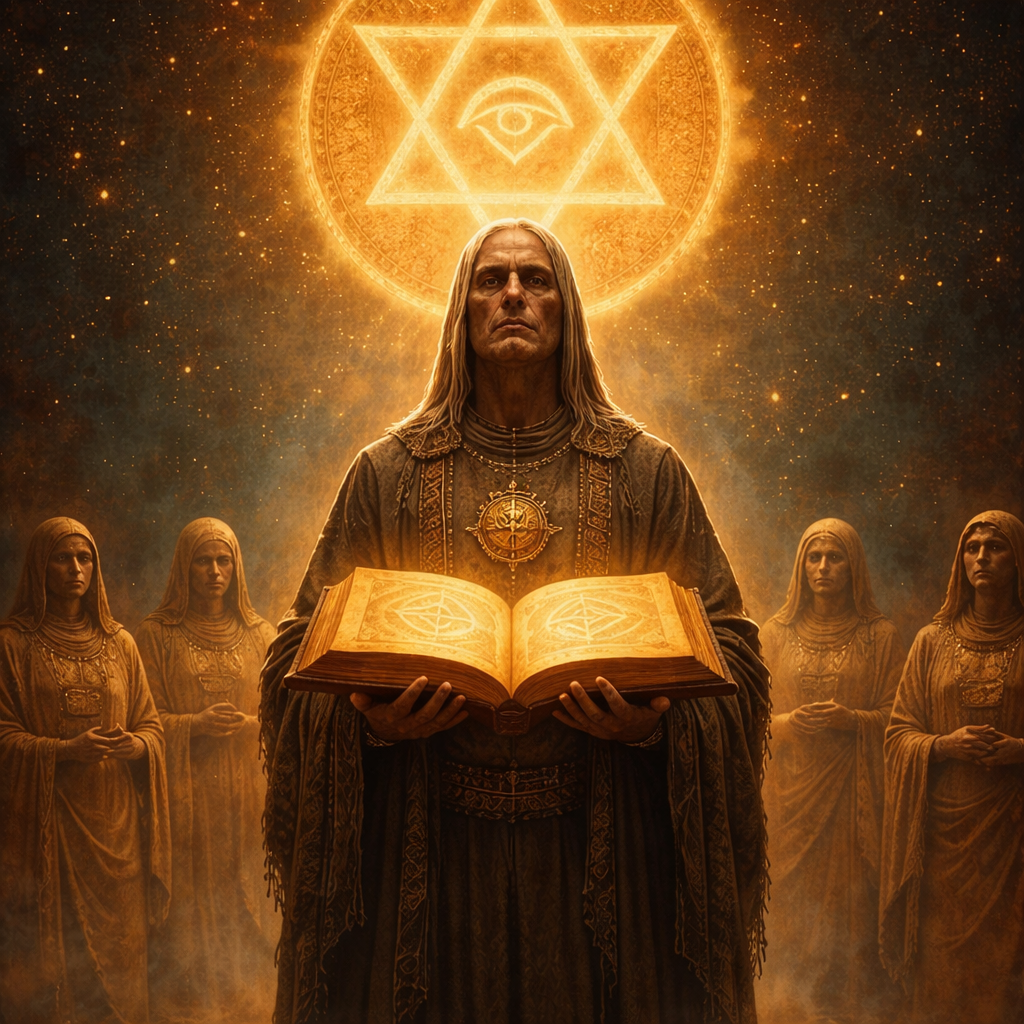

Yehuda Berg's 'The Power of Kabbalah' serves as an accessible yet potent gateway into the labyrinthine depths of Kabbalistic thought. As an editor immersed in esoteric traditions, I find Berg's ability to distill complex concepts into digestible wisdom remarkable. He navigates the intricate symbolism and philosophical underpinnings with clarity, offering profound insights into the nature of reality and the human spirit. This work is particularly valuable for those seeking to understand the foundational principles of this ancient mystical path, presenting its core tenets in a way that resonates with contemporary spiritual seekers and scholars alike. Its strength lies in bridging the gap between ancient esoteric lore and modern existential queries, making the profound accessible.
📝 Description
64
Yehuda Berg's 2002 book, 'The Power of Kabbalah,' explains Kabbalistic principles for modern life.
This book presents Kabbalah not as a religious system, but as a method for understanding the universe and humanity's role within it. Berg analyzes historical texts and symbolic language to describe what he calls the structure of reality and a divine plan. He aims to reveal the inner power present in every person. The work addresses individuals seeking deeper knowledge, intellectual engagement, or spiritual growth.
It encourages readers to consider core questions about self, purpose, and the forces influencing existence. The text suggests a connection between all things. Berg frames 'The Power of Kabbalah' as more than just reading material; it is presented as a guide for personal spiritual development and finding a meaningful life.
This work engages with Kabbalah, a Jewish mystical tradition that interprets the Torah and seeks to understand God and creation. It draws on concepts like the Sefirot, the Tree of Life, and divine emanations. While rooted in Jewish thought, its modern interpretations often focus on universal spiritual principles and personal transformation, seeking to make these complex ideas accessible to a wider audience.
💡 Why Read This Book?
Unlock the secrets of the universe and your own potential. 'The Power of Kabbalah' demystifies ancient wisdom, revealing the hidden order of creation and your integral role within it. It's ideal for spiritual seekers yearning for deeper meaning, scholars interested in esoteric traditions, and practitioners looking to enhance their understanding of Kabbalistic principles for personal transformation and connection.
⭐ Reader Reviews
Honest opinions from readers who have explored this book.
❓ Frequently Asked Questions
What is Kabbalah?
Kabbalah is an esoteric tradition within Judaism that seeks to understand the divine nature and the creation of the universe through mystical interpretation of scripture and symbolic language. It explores the hidden aspects of God and our connection to the divine.
Is this book suitable for beginners?
Yes, Yehuda Berg's approach in 'The Power of Kabbalah' is designed to be accessible to those new to the subject, providing a clear introduction to its core concepts and terminology.
What are the primary benefits of studying Kabbalah?
Studying Kabbalah can lead to a deeper understanding of oneself and the universe, foster spiritual growth, enhance consciousness, and provide tools for navigating life's challenges with greater wisdom and purpose.
Does the book require prior knowledge of Judaism?
While a basic familiarity with Jewish concepts can be helpful, the book is structured to guide readers through the material. Berg explains necessary terminology and context, making it comprehensible even without extensive prior knowledge.
What kind of transformation can one expect from reading this book?
Readers can anticipate a shift in perspective, a greater sense of connection to the divine and the cosmos, and a renewed understanding of their personal power and purpose in life.
🔮 Key Themes & Symbolism
The Divine Blueprint of Creation
This theme examines the Kabbalistic concept of a divine plan or blueprint that underpins the entire cosmos. It explores how the universe was brought into existence through a series of emanations and divine energies, revealing the intricate structure and interconnectedness of all things. Readers will discover the underlying principles that govern reality, from the smallest particle to the grandest celestial bodies, fostering a sense of awe and understanding of our place within this cosmic design.
The Tree of Life and Its Mystical Significance
Central to Kabbalistic cosmology is the Tree of Life (Etz Chaim), a symbolic map representing the divine attributes, the stages of creation, and the path of spiritual ascent. Berg illuminates the ten Sephirot (divine emanations) and the pathways connecting them, revealing their profound meanings and practical applications. Understanding the Tree of Life offers a framework for comprehending the interplay between the spiritual and material realms, and provides a guide for personal growth and self-discovery.
Unlocking the Power Within
This theme focuses on the inherent spiritual power and potential that resides within every individual. The Kabbalah teaches that we are all sparks of the divine, capable of accessing higher consciousness and influencing our reality. Berg guides readers to understand how to tap into this inner power through spiritual practice, intention, and alignment with universal laws, empowering them to overcome limitations and live a more purposeful and fulfilling life.
💬 Memorable Quotes
Direct passages from the work, attributed to the author.
“We are all connected.”
— This simple yet profound statement expresses the core Kabbalistic understanding of universal interconnectedness, emphasizing that every being and every aspect of existence is intrinsically linked.
“The universe is a reflection of our inner world.”
— This clear insights suggests that our perception and experience of reality are deeply intertwined with our internal state, emphasizing the power of consciousness and self-awareness.
“There is no such thing as chance.”
— This statement points to the Kabbalistic belief in a divinely ordered universe, where events unfold according to a higher plan, even if they appear random to the human eye.
“To know yourself is to know God.”
— This ancient wisdom underscores the idea that self-discovery is a direct path to understanding the divine, as the divine spark resides within each individual.
💡 Key Ideas
Editorial paraphrase of the work's core concepts — not direct quotes.
The purpose of life is to become closer to the Creator.
This quote highlights the central goal of the Kabbalistic path: spiritual evolution and the pursuit of a deeper relationship with the divine source of all being.
🌙 Esoteric Significance
Tradition
This work is firmly rooted in the Kabbalistic tradition, a mystical interpretive method within Judaism that explores the hidden dimensions of the Torah and the divine nature. It draws heavily on ancient texts like the Zohar and Sefer Yetzirah, offering a framework for understanding creation, the human soul, and the path to spiritual enlightenment through a divine-human dialogue.
Symbolism
Kabbalah is replete with potent symbolism, and 'The Power of Kabbalah' meticulously deciphers key motifs such as the Tree of Life, the Hebrew alphabet, divine names, and the concept of emanations (Sephirot). These symbols are not mere decorative elements but represent profound cosmological and psychological principles, serving as keys to unlock deeper spiritual truths and guide the practitioner on their journey of self-realization.
Modern Relevance
In an age often characterized by existential uncertainty and a search for meaning, the teachings of Kabbalah, as presented by Berg, offer a compelling framework for understanding our place in the universe and our inherent spiritual potential. The emphasis on interconnectedness, personal responsibility, and the power of consciousness resonates deeply with contemporary seekers looking for practical wisdom to read through the complexities of modern life and foster personal growth.
👥 Who Should Read This Book
This book is a treasure for a broad spectrum of readers. Absolute beginners to spiritual or Kabbalistic concepts will find a clear and engaging introduction. Scholars of comparative religion and esoteric traditions will appreciate Berg's insightful interpretations and the synthesis of complex ideas. Spiritual seekers yearning for a deeper understanding of life's mysteries and their own purpose will discover profound guidance. Practitioners of meditation or other spiritual disciplines may find valuable tools and perspectives to deepen their practice and connection.
📜 Historical Context
Yehuda Berg's 'The Power of Kabbalah' emerges from the wide range of Jewish mysticism, a tradition with roots stretching back to ancient Israel and the development of the Zohar in the 13th century. While Kabbalah has historically been studied by select scholars and mystics, Berg's work, published in the late 20th and early 21st centuries, belongs to a modern resurgence and popularization of Kabbalistic teachings. This era saw a growing global interest in esoteric and spiritual traditions, driven by a desire for deeper meaning and personal transformation amidst rapid societal changes. Berg's accessible approach aimed to bring these complex, often guarded, teachings to a wider audience, bridging the gap between ancient wisdom and contemporary seekers.
📔 Journal Prompts
Reflect on a time you felt a strong sense of connection to something larger than yourself. What did this experience reveal about your place in the universe?
Consider the concept of divine emanations (Sephirot). Which emanation do you feel most drawn to currently, and why?
How does the idea of 'unlocking the power within' resonate with your personal aspirations and challenges?
If 'the universe is a reflection of our inner world,' what aspects of your inner world might you need to address to improve your outer experience?
What does 'becoming closer to the Creator' mean to you in practical, everyday terms?
🗂️ Glossary
Kabbalah
An esoteric tradition within Judaism that explores the mystical dimensions of God, creation, and the human soul, often through symbolic interpretation of sacred texts.
Sephirot
Ten divine emanations or attributes through which God reveals Himself and creates the universe, forming the structure of the Kabbalistic Tree of Life.
Tree of Life (Etz Chaim)
A central diagram in Kabbalah, comprising the ten Sephirot and the pathways connecting them, symbolizing the structure of the universe and the path of spiritual ascent.
Ein Sof
The Kabbalistic concept of God in His absolute, infinite, and unknowable essence, 'without end' or limit, prior to any manifestation or emanation.
Tzimtzum
The Kabbalistic concept of 'contraction' or 'withdrawal,' describing God's initial act of making space for creation by condensing His infinite light.
This book appears in 1 collection
🔮 Readers Also Liked
Browse all →








More by Yehuda Berg
All books →





From the “Kabbalah” Collection
View all →








More Free Kabbalah & Jewish Mysticism Books
View all →