The Wisdom Box: Kabbalah

 61
61

The Wisdom Box: Kabbalah

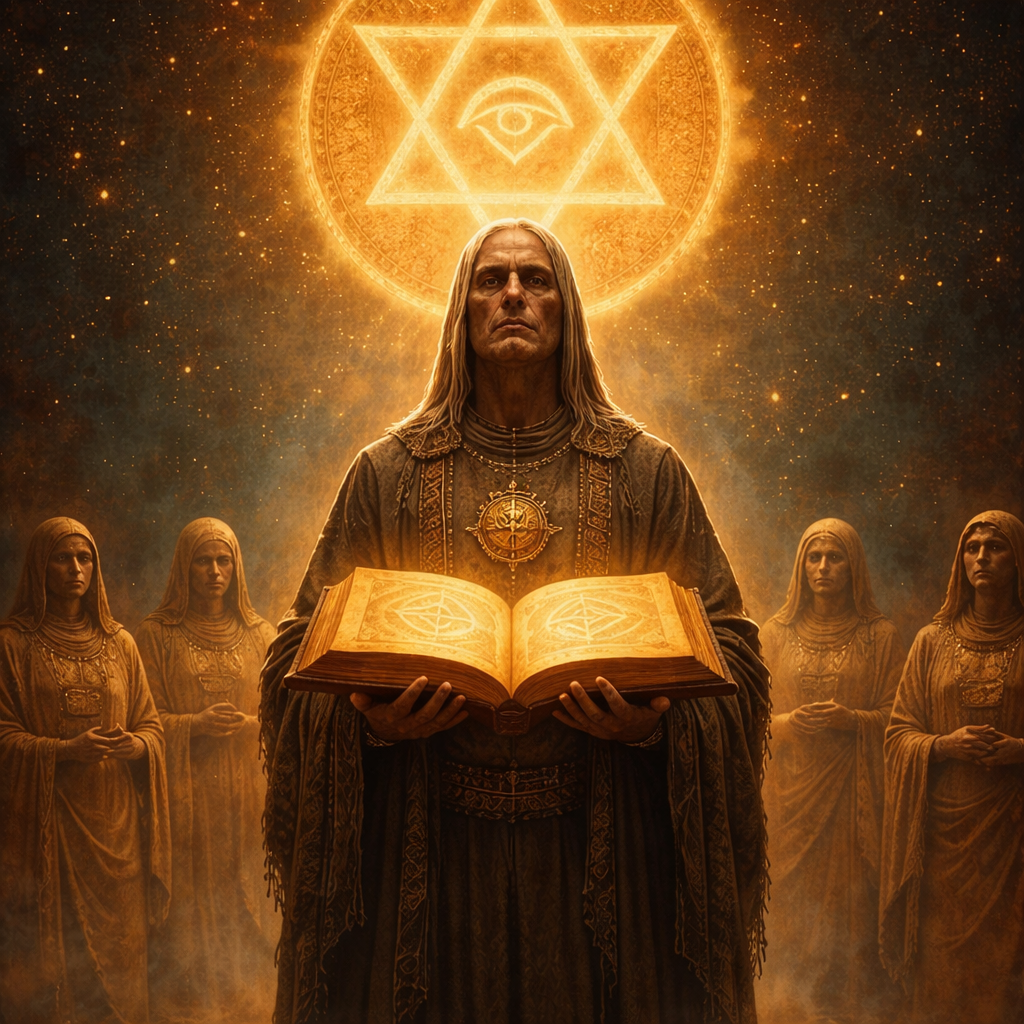

Ophelia Vance, Mystical Literature Reviewer — Yehuda Berg's "The Wisdom Box: Kabbalah" stands as a beacon for those navigating the labyrinthine depths of Jewish mysticism. Berg's unparalleled ability to distill complex esoteric doctrines into accessible yet profound insights is a hallmark of his work. This volume meticulously unpacks the foundational principles of Kabbalah, offering readers a clear roadmap through its rich symbolism and spiritual architecture. The book excels in demystifying concepts like the Tree of Life and the Sefirot, making them comprehensible for both neophytes and seasoned practitioners. Its strength lies in its practical application, guiding the reader towards personal transformation and a deeper connection with the divine. An essential acquisition for any serious student of esoteric traditions.
📝 Description
61
Yehuda Berg's 2004 book, 'The Wisdom Box: Kabbalah,' explains Kabbalistic principles.
Yehuda Berg's 'The Wisdom Box: Kabbalah' aims to clarify the core concepts of Kabbalistic thought for a wider audience. The book addresses the Tree of Life, detailing its structure and the divine emanations described within Kabbalistic cosmology. Berg works to translate the symbolic language and esoteric teachings that have traditionally been accessible only to initiates. It covers the Sefirot, different states of consciousness, and the idea that all existence is interconnected. The text is structured to help individuals seeking a more thorough grasp of spiritual principles, the soul's nature, and paths toward spiritual unity. Berg suggests that Kabbalah provides a unique perspective on human existence, fostering personal development and spiritual awareness.
This book is situated within the Kabbalistic tradition, a mystical interpretive tradition of Judaism that originated in medieval Provence. Kabbalah seeks to understand the divine nature and the relationship between God, creation, and humanity through methods like gematria and textual exegesis. Key concepts such as the Sefirot (divine attributes or emanations) and the Tree of Life (a diagram representing these emanations) are central to its teachings. Yehuda Berg's work often aims to make these complex ideas more accessible, drawing from the lineage of Kabbalistic masters.
💡 Why Read This Book?
Uncover the profound cosmic blueprint and the divine architecture of existence. "The Wisdom Box" offers a clear, accessible entry point into the ancient, mystical teachings of Kabbalah. Ideal for seekers yearning for deeper spiritual understanding, scholars exploring esoteric traditions, or practitioners seeking to integrate Kabbalistic principles into their lives for personal growth and enlightenment. Unlock hidden knowledge and transform your perception of reality.
⭐ Reader Reviews
Honest opinions from readers who have explored this book.
❓ Frequently Asked Questions
What is Kabbalah?
Kabbalah is an ancient esoteric tradition of Jewish mysticism that seeks to understand the nature of God and the universe through symbolic interpretation of religious texts and contemplation of divine emanations.
Who was Yehuda Berg?
Yehuda Berg was a prominent Kabbalist and author, known for his efforts to make Kabbalistic teachings accessible to a global audience, bridging ancient wisdom with modern understanding.
What is the Tree of Life in Kabbalah?
The Tree of Life is a central mystical diagram in Kabbalah, representing the structure of creation, the divine emanations (Sefirot), and the pathways of spiritual ascent.
Is this book suitable for beginners?
Yes, "The Wisdom Box" is designed to be accessible to beginners, providing clear explanations and a structured approach to understanding complex Kabbalistic concepts.
What are the Sefirot?
The Sefirot are the ten divine attributes or emanations through which God reveals himself and interacts with the created universe, forming the structure of the Kabbalistic Tree of Life.
🔮 Key Themes & Symbolism
The Tree of Life: A Cosmic Blueprint
Central to Kabbalistic thought, the Tree of Life is presented as the divine map of creation, detailing the ten Sefirot – the channels through which divine energy flows into the world. This section studies the symbolic meaning of each Sefirah, from Keter (Crown) to Malkhut (Kingdom), revealing how they represent stages of consciousness, divine attributes, and the interconnectedness of all existence. Understanding this sacred diagram is key to comprehending the universe's underlying structure and one's personal spiritual journey.
Unveiling the Sefirot: Divine Emanations
This theme focuses on the profound nature of the Sefirot, the ten divine emanations that form the heart of Kabbalistic cosmology. Each Sefirah is explored not just as an abstract concept, but as a dynamic force influencing our reality and spiritual growth. Berg elucidates how these divine attributes manifest, how they interact, and how we can learn to consciously connect with them. The exploration offers insights into the divine will, the creation process, and the potential for humanity to align itself with these powerful cosmic energies.
The Kabbalistic Path to Spiritual Fulfillment
Beyond theoretical knowledge, "The Wisdom Box" emphasizes the practical application of Kabbalistic principles for personal transformation and spiritual fulfillment. This theme explores how understanding the universe's hidden mechanics empowers individuals to overcome challenges, cultivate positive attributes, and achieve a deeper connection with the Divine. It highlights the journey of self-discovery, the purification of the soul, and the ultimate aim of returning to the source of all existence, offering a roadmap for a more meaningful and enlightened life.
💬 Memorable Quotes
Direct passages from the work, attributed to the author.
“True wisdom is not in knowing, but in becoming.”
— This profound statement underscores the experiential nature of Kabbalistic learning, shifting the focus from intellectual accumulation of knowledge to the transformative process of embodying spiritual principles and evolving one's consciousness.
“To understand the divine, one must first understand oneself.”
— This emphasizes the introspective nature of Kabbalistic study, positing that self-knowledge and inner exploration are the essential precursors to comprehending the higher spiritual realms and the nature of God.
💡 Key Ideas
Editorial paraphrase of the work's core concepts — not direct quotes.
The universe is not a random collection of events, but a divinely orchestrated symphony.
This quote captures the Kabbalistic view of an ordered cosmos, suggesting that every event has a divine purpose and interconnectedness, challenging the notion of chaos and promoting a sense of awe and spiritual understanding.
Within the smallest atom lies the blueprint of the entire universe.
Highlighting the principle of 'as above, so below,' this quote emphasizes the micro-macrocosm relationship in Kabbalah, suggesting that universal laws and divine patterns are reflected in even the most minute aspects of creation.
The light of the Creator is within all things, waiting to be revealed.
This quote speaks to the inherent divinity within everything and everyone, suggesting that the purpose of spiritual practice is to remove the veils that obscure this divine essence, allowing for its full manifestation.
🌙 Esoteric Significance
Tradition
This work is deeply rooted in the Kabbalistic tradition, a mystical interpretive tradition within Judaism that explores the divine nature, the creation of the universe, and the spiritual significance of the Torah. It draws heavily upon foundational texts like the Zohar and the Sefer Yetzirah, offering a systematic approach to understanding the hidden meanings within scripture and the energetic structure of reality.
Symbolism
The esoteric significance lies in its profound exploration of Kabbalistic symbolism, particularly the Tree of Life and the ten Sefirot. These symbolic representations are not mere abstract diagrams but are understood as dynamic energies and pathways that govern existence. The book deciphers the intricate language of divine names, Hebrew letters, and cosmic archetypes, revealing the underlying spiritual architecture that connects the mundane to the divine.
Modern Relevance
In a world often characterized by fragmentation and a search for meaning, "The Wisdom Box" offers a timeless framework for understanding life's purpose and our connection to the universe. Its teachings provide practical tools for personal growth, emotional healing, and spiritual enlightenment, making ancient Kabbalistic wisdom profoundly relevant for contemporary individuals seeking deeper self-awareness and a more harmonious existence.
👥 Who Should Read This Book
This informative volume is a treasure for a diverse range of readers. For the **beginner** seeking an accessible yet profound introduction to Kabbalah, it offers a clear and structured pathway into complex concepts. **Scholars** of mysticism and comparative religion will find its comprehensive approach and insightful interpretations important for their research. **Spiritual seekers** yearning for a deeper understanding of the universe, their soul's purpose, and the nature of the Divine will discover a rich source of wisdom. **Practitioners** of various spiritual disciplines can integrate its teachings to enhance their meditation, personal development, and connection to higher consciousness.
📜 Historical Context
Yehuda Berg's "The Wisdom Box: Kabbalah" emerges from a rich lineage of Jewish mystical thought, tracing its roots back to ancient Hebrew texts and the development of Kabbalah during the medieval period, particularly in Spain and Safed. While the core principles of Kabbalah have been studied for centuries, Berg's work is situated within a modern context where the desire for spiritual understanding transcends traditional religious boundaries. The late 20th and early 21st centuries have seen a resurgence of interest in esoteric and metaphysical teachings, and Berg's accessible approach positioned Kabbalah as a relevant and practical philosophy for contemporary seekers. His efforts to explain complex concepts contributed to a broader global engagement with this ancient wisdom tradition, making it a significant contribution to the popularization of Kabbalistic studies in the modern era.
📔 Journal Prompts
Reflect on the Sefirah that resonates most strongly with your current life challenges and aspirations. How can you cultivate its energy more consciously?
Consider the concept of divine light. Where do you perceive its presence in your daily life, and where are there areas you wish to illuminate further?
How does the interconnectedness described in Kabbalah influence your perception of your relationships with others and the world around you?
Meditate on a specific Hebrew letter or symbol presented in the book. What intuitive insights or personal meanings arise from this contemplation?
Explore the idea of spiritual ascent as presented in Kabbalah. What small, tangible steps can you take this week to move closer to your higher self?
🗂️ Glossary
Sefirot
The ten divine emanations or attributes through which God reveals Himself and creates the universe, forming the structure of the Kabbalistic Tree of Life.
Tree of Life
A central diagram in Kabbalah representing the structure of the cosmos, the divine emanations, and the pathways of spiritual ascent, comprised of ten Sefirot and 22 paths.
Ein Sof
The Kabbalistic term for God in His absolute, infinite, and unknowable essence, beyond all description or comprehension.
Keter
The first Sefirah on the Tree of Life, representing the Crown, the ultimate divine will, and the primordial spark of creation.
Malkhut
The tenth and final Sefirah on the Tree of Life, representing the Kingdom, the physical realm, and the manifestation of divine energy in the material world.
This book appears in 1 collection
🔮 Readers Also Liked
Browse all →




More by Yehuda Berg
All books →





From the “Kabbalah” Collection
View all →






More Free Kabbalah & Jewish Mysticism Books
View all →