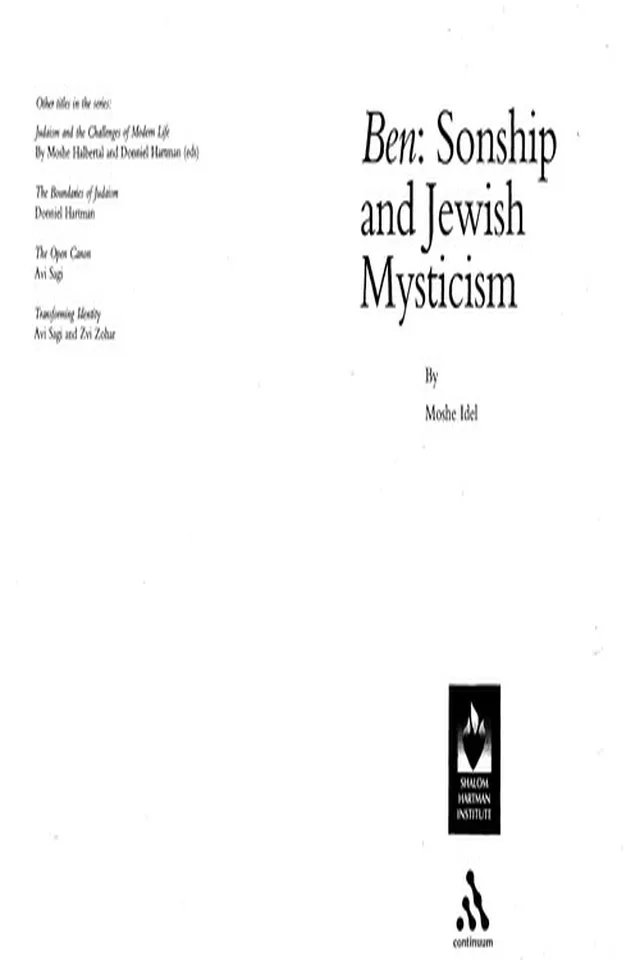
Ben
 61
61

Ben

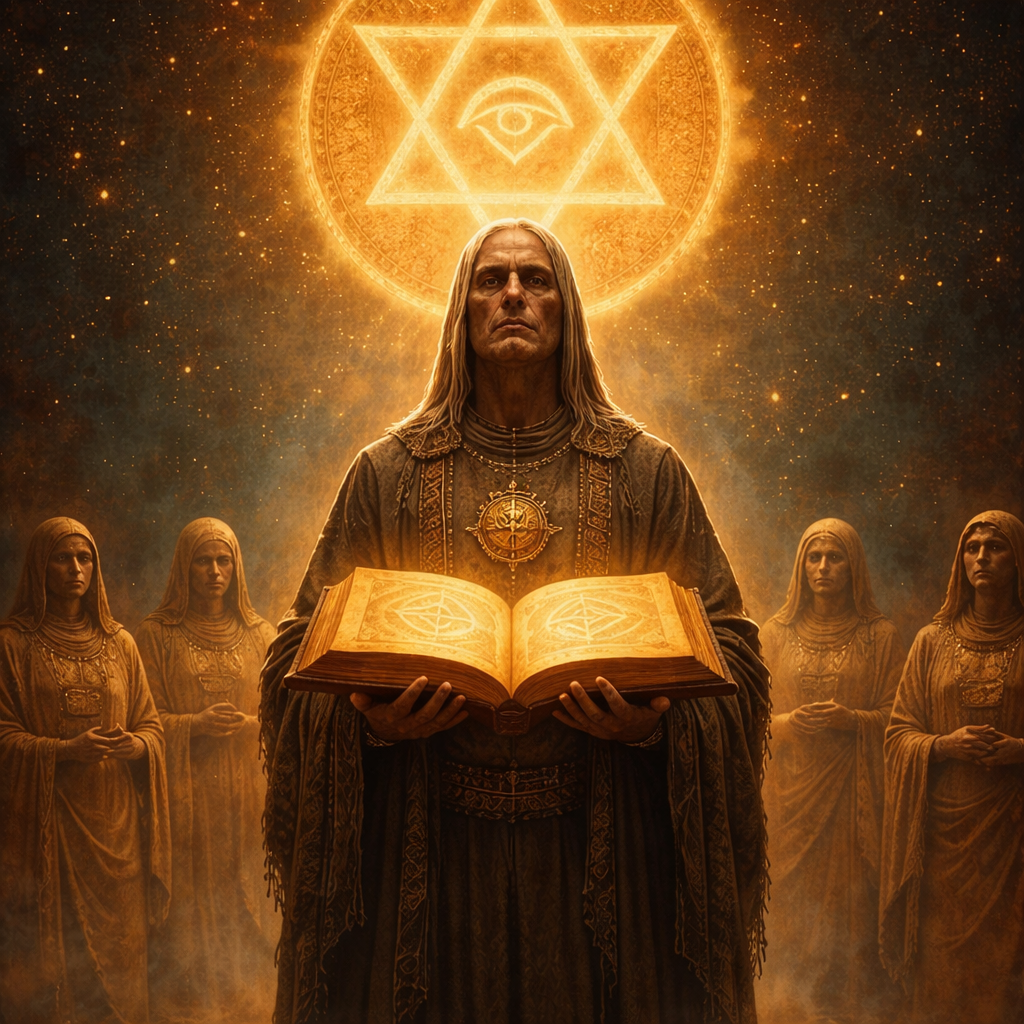

A truly seminal, albeit anonymously authored, exploration of Kabbalistic thought. 'Ben' offers an unparalleled window into the foundational principles of Jewish mysticism, meticulously dissecting concepts of divine essence and human connection to the sacred. Its strength lies in its profound, often paradoxical, insights that resonate deeply with practitioners and scholars alike. While the text demands focused contemplation, the rewards are immense for those seeking to understand the intricate tapestry of creation and the soul's ascent. This is essential reading for anyone serious about the lineage of esoteric Judaism.
📝 Description
61
'Ben,' an anonymous Kabbalistic work, appeared sometime after the 13th century.
This text, known as 'Ben,' delves into the esoteric dimensions of Kabbalah. It examines the structure of divine emanation and the symbolic connections that link the universe. The book uses allegories and symbols to lead readers past ordinary comprehension, hinting at the sacredness of existence and the divine presence in all life. It is a significant work within Kabbalistic thought, aimed at individuals interested in the philosophical basis of creation. Specifically, it addresses the concept of the 'Son of God' from a Jewish perspective and the mystical traditions that have influenced spiritual ideas over centuries.
'Ben' promises an intellectual and spiritual exploration. Each section acts as a means to uncover deeper universal truths and personal mystical knowledge. The book's allegorical style requires careful study, rewarding the persistent reader with insights into complex spiritual concepts.
As a Kabbalistic text, 'Ben' belongs to a tradition of Jewish mysticism that seeks to understand God and creation through esoteric interpretation of scripture and tradition. This tradition, which flourished particularly from the medieval period onwards, employs symbolic language, numerology, and meditative practices to explore divine mysteries. 'Ben' engages with themes common to Kabbalah, such as the Sefirot (divine attributes or emanations) and the hidden meanings within the Torah, positioning itself within this rich, long-standing lineage of spiritual inquiry.
💡 Why Read This Book?
Uncover the foundational secrets of Kabbalah and its intricate symbolic language. 'Ben' provides a direct conduit to ancient Jewish mystical thought, revealing hidden pathways to understanding divinity and self. Ideal for seekers of profound spiritual knowledge, scholars of comparative mysticism, and practitioners looking to deepen their engagement with esoteric traditions. This is your gateway to the heart of Jewish esoteric wisdom.
⭐ Reader Reviews
Honest opinions from readers who have explored this book.
❓ Frequently Asked Questions
What is the primary focus of 'Ben'?
'Ben' primarily focuses on the esoteric teachings of Kabbalah, exploring themes of divine emanation, creation, and the spiritual nature of existence within the Jewish mystical tradition. It delves into symbolic interpretations of sacred texts.
Who is the intended audience for this book?
The book is intended for individuals with a serious interest in Kabbalah, Jewish mysticism, and comparative spirituality. It appeals to scholars, practitioners, and sincere seekers of hidden knowledge.
What makes the authorship 'Unknown' significant?
The anonymity of the author lends an aura of timelessness and universality to the work, suggesting that the wisdom conveyed transcends individual identity and speaks directly to the collective spiritual consciousness.
How does 'Ben' relate to the concept of the 'Son of God' in Judaism?
Within its Kabbalistic framework, 'Ben' explores concepts that can be interpreted as spiritual offspring or divine aspects, offering a unique perspective on the 'Son of God' as a manifestation of divine consciousness rather than a singular historical figure.
Is 'Ben' accessible to beginners in Kabbalah?
While profound, 'Ben' may present challenges to absolute beginners. However, with dedicated study and perhaps supplementary resources, those committed to understanding its core tenets can certainly embark on this journey.
🔮 Key Themes & Symbolism
The Tree of Life and Divine Emanation
Fundamentally, , 'Ben' meticulously navigates the intricate pathways of the Kabbalistic Tree of Life. It elucidates the ten Sephiroth as divine attributes and stages of emanation, charting the descent of the divine light from the unknowable Ein Sof into the manifest world. This theme explores the fundamental structure of reality as understood in esoteric Judaism, offering a symbolic map of creation and the relationship between the Creator and the created.
Symbolism and Allegorical Interpretation
The text is rich with layers of symbolism, employing allegorical language to convey profound spiritual truths that elude direct expression. 'Ben' teaches the reader to look beyond the literal, deciphering the hidden meanings embedded in scripture, myth, and natural phenomena. This approach unlocks a deeper, more intuitive understanding of the divine mysteries and the interconnectedness of all things.
The Divine Spark and Human Potential
'Ben' profoundly explores the concept of the divine spark (Neshama) residing within every human being. It illuminates the soul's journey, its potential for spiritual ascent, and the practical methods for reconnecting with the divine source. This theme emphasizes the inherent divinity within humanity and the transformative power of esoteric knowledge for spiritual actualization.
💬 Memorable Quotes
Direct passages from the work, attributed to the author.
“The light descends, and the vessels break.”
— This expresses the Kabbalistic concept of creation involving the emanated divine light (Or) and the finite vessels (Kelim) that contain it, hinting at the inherent challenges and cosmic processes involved in manifestation.
“Seek the hidden root, not the flowering branch.”
— An exhortation to examine the underlying principles and causal origins of phenomena, rather than merely observing their outward appearances.
“In the silence, the Name is revealed.”
— Suggests that true divine revelation and understanding are achieved through inner stillness and contemplation, beyond the noise of the material world.
“The microcosm mirrors the macrocosm.”
— A fundamental esoteric principle highlighting the interconnectedness of the human being (microcosm) with the universe (macrocosm), implying that understanding one leads to understanding the other.
“Wisdom is the bridge between worlds.”
— Positions knowledge and insight as the crucial element that allows for passage and understanding between the material and spiritual realms.
🌙 Esoteric Significance
Tradition
This work is a core part of the Kabbalistic tradition, a profound esoteric interpretation of Judaism that explores the divine nature, creation, and the human soul's journey. It is a key text for understanding the mystical dimensions of Jewish spirituality, influencing subsequent esoteric movements and thinkers across various spiritual disciplines.
Symbolism
The text is replete with intricate symbolism, most notably the Tree of Life (Etz Chaim), representing the ten Sephiroth and their interrelationships. Other potent symbols include divine names, Hebrew letters as mystical forces, and allegorical narratives that encode complex metaphysical concepts about emanation, consciousness, and the cosmos.
Modern Relevance
In contemporary times, 'Ben' offers a profound antidote to materialistic worldviews, providing a framework for understanding consciousness, interconnectedness, and the spiritual dimensions of existence. Its teachings on self-awareness, divine immanence, and the search for meaning resonate deeply with modern seekers and practitioners of esoteric arts.
👥 Who Should Read This Book
Scholars of comparative religion and mysticism will find 'Ben' an invaluable primary source for understanding the evolution of Kabbalistic thought. Dedicated practitioners of esoteric traditions, seeking to deepen their understanding of universal spiritual principles, will discover clear insights. Aspiring students of Kabbalah will find a foundational text that, while challenging, offers a direct link to ancient wisdom. Even the curious seeker, drawn to the mysteries of existence and the nature of the divine, will find 'Ben' a rewarding, albeit demanding, exploration into the heart of esoteric Judaism.
📜 Historical Context
The genesis of texts like 'Ben' is deeply rooted in the rich intellectual and spiritual milieu of medieval Jewish communities, particularly during the flourishing of Kabbalistic thought in Southern France and Spain. Emerging from a tradition of intense scriptural study and philosophical inquiry, Kabbalah sought to explain the nature of God, the creation of the universe, and the mystical relationship between the divine and the human. These works often arose in response to philosophical challenges, messianic hopes, or a profound desire to access deeper layers of religious experience. The anonymity of many early Kabbalistic texts, including potentially 'Ben,' underscores a communal approach to wisdom, where the teachings were considered more vital than the individual author, fostering an aura of ancient authority and divine inspiration.
📔 Journal Prompts
Reflect on a moment you felt a sense of profound interconnectedness. How might this relate to the Kabbalistic concept of divine emanation?
Consider a symbol from nature or your life that holds deep personal meaning. How could this symbol be interpreted through a Kabbalistic lens?
Meditate on the concept of the 'divine spark' within you. What actions could you take to nurture and express this spark more fully?
If 'Ben' describes the creation of the universe, what aspects of your personal 'creation' (e.g., your beliefs, your life path) are most significant to you?
How does the idea of 'hidden knowledge' in 'Ben' challenge or affirm your current understanding of truth and reality?
🗂️ Glossary
Ein Sof
The Kabbalistic term for the infinite, unknowable, and absolute divine essence, the primordial source of all existence that transcends all comprehension and description.
Sephiroth
The ten divine attributes or emanations of God, forming the Kabbalistic Tree of Life. They represent stages of divine manifestation and are seen as channels through which divine energy flows into the world.
Tzimtzum
The Kabbalistic concept of divine 'contraction' or withdrawal, understood as a necessary act of self-limitation by God to make space for the creation of the universe.
Neshama
The highest spiritual soul-part in Kabbalah, often referred to as the 'divine spark' or the 'breath of God,' representing the purest essence of the human being and its direct connection to the divine.
Kelim
Literally 'vessels,' these are the spiritual structures or forms that are intended to contain and manifest the divine light (Or) during the process of creation. Their breaking is a significant concept in Kabbalistic cosmogony.
This book appears in 1 collection
🔮 Readers Also Liked
Browse all →









From the “Kabbalah” Collection
View all →







More Free Kabbalah & Jewish Mysticism Books
View all →