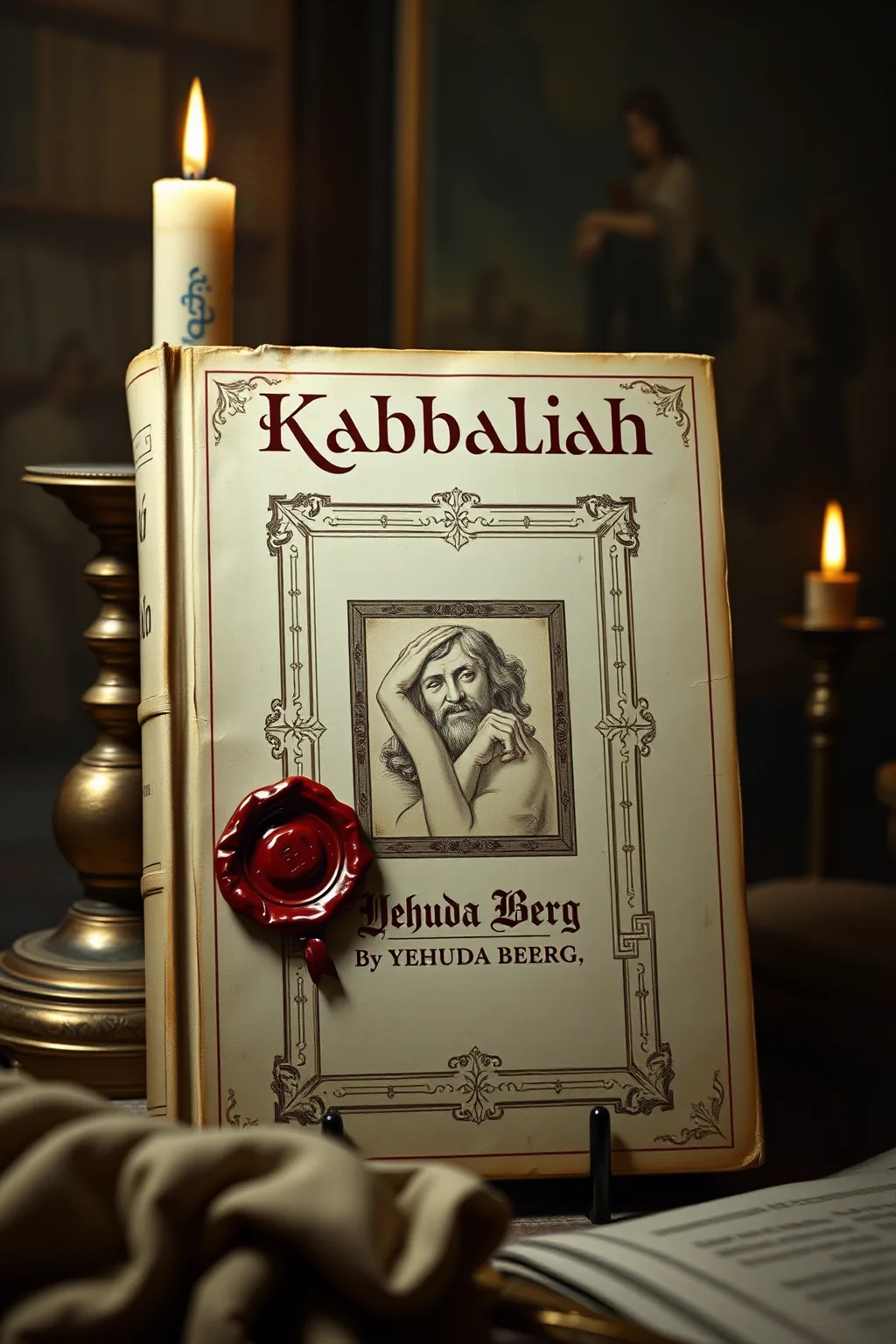
Kabbalah
 61
61

Kabbalah


Alaric Kestrel, Metaphysical Studies Reviewer — Yehuda Berg's 'Kabbalah' is an indispensable guide for anyone seeking to penetrate the esoteric heart of Jewish mysticism. Berg’s accessible yet profound exposition demystifies the Tree of Life and the Sefirot, offering a clear path through ancient, often cryptic, teachings. He adeptly bridges the gap between theoretical Kabbalah and its practical application for personal transformation. This work is particularly potent for those who feel the pull of deeper spiritual inquiry and are ready to engage with a system that offers a cosmic map of existence. Its strength lies in its ability to illuminate the underlying spiritual mechanics of reality, empowering readers to apply these insights to their everyday lives.
📝 Description
61
Yehuda Berg's 2004 book deciphers the Zohar for modern students of Kabbalah.
This book aims to introduce the core concepts of Kabbalah, drawing heavily on the Zohar and other key texts. Berg breaks down complex ideas such as the Tree of Life and the Sefirot, making them accessible to a wider audience. The author's approach focuses on the practical application of these mystical teachings for personal spiritual development and understanding one's place in the cosmos.
The text addresses the nature of creation, the structure of consciousness, and the divine plan. It seeks to illuminate the symbolic language used in Kabbalistic tradition, connecting ancient wisdom to contemporary seekers. The author's intent is to provide a clear path for those interested in exploring Jewish mysticism and unlocking their own spiritual potential.
Kabbalah is a tradition of Jewish mysticism that seeks to understand the divine nature and the creation of the universe. It utilizes scriptural exegesis, meditation, and contemplation to explore concepts like emanation, the divine attributes (Sefirot), and the structure of reality. Central to Kabbalah is the Zohar, a foundational text that offers allegorical interpretations of the Torah. This particular book engages with these elements, interpreting them through a lens that emphasizes personal transformation and cosmic interconnectedness.
💡 Why Read This Book?
Embark on a transformative journey into the ancient wisdom of Kabbalah. This book offers profound insights into the nature of reality, consciousness, and the divine, demystifying complex esoteric concepts. Ideal for seekers of spiritual truth, students of mysticism, and practitioners looking to deepen their understanding of the universe's hidden architecture. Discover practical tools for personal growth and a richer connection to the cosmos.
⭐ Reader Reviews
Honest opinions from readers who have explored this book.
❓ Frequently Asked Questions
What is Kabbalah?
Kabbalah, meaning 'reception' in Hebrew, is an esoteric tradition within Judaism that explores the mystical aspects of God and the universe. It seeks to understand the divine nature and the relationship between the infinite Creator and the finite creation through allegory, symbolism, and meditation.
Who is Yehuda Berg?
Yehuda Berg was a prominent contemporary Kabbalist and author, known for making Kabbalistic teachings accessible to a global audience. He co-founded the Kabbalah Centre and authored numerous books that translated ancient wisdom for modern seekers.
What is the Tree of Life in Kabbalah?
The Tree of Life is a central diagram in Kabbalistic cosmology, representing the structure of the divine emanation, the pathways of creation, and the different levels of consciousness. It consists of ten Sefirot (divine attributes or emanations) connected by 22 paths.
Is this book suitable for beginners?
Yes, Yehuda Berg's approach is renowned for its clarity and accessibility, making this book an excellent starting point for individuals new to Kabbalah, while still offering depth for those with prior knowledge.
What are the Sefirot?
The Sefirot are the ten divine emanations or attributes through which God reveals Himself and interacts with the universe. They represent different facets of the divine consciousness and are central to understanding Kabbalistic cosmology and spiritual progression.
🔮 Key Themes & Symbolism
The Tree of Life: A Cosmic Blueprint
The Tree of Life serves as the central symbolic map within Kabbalistic thought, illustrating the process of divine emanation from the Infinite (Ein Sof) down to the material world. Composed of ten Sefirot (divine attributes) and 22 connecting paths, it represents the structure of the universe, the stages of spiritual ascent, and the interconnectedness of all existence. Understanding its intricate layout provides a framework for comprehending the divine architecture and the journey of the soul, offering a profound visual metaphor for spiritual realization and the underlying order of creation.
The Sefirot: Divine Emanations and Attributes
The ten Sefirot are the primary channels through which the divine light and energy flow into the created world. Each Sefirah represents a distinct aspect of God's nature, such as wisdom (Chokhmah), understanding (Binah), kindness (Chesed), and judgment (Gevurah). They are not separate deities but rather facets of the unified divine consciousness. Studying the Sefirot reveals how the infinite God manifests in finite forms and provides a pathway for humans to connect with these divine attributes, fostering personal growth and spiritual refinement through their study and practice.
Consciousness and Spiritual Transformation
Kabbalah posits that the universe is fundamentally spiritual and that our perception of reality is a reflection of our consciousness. This book guides readers towards expanding their awareness, moving beyond material limitations to perceive the divine presence that permeates all existence. It offers practical insights and meditations designed to elevate consciousness, enabling individuals to understand their true spiritual nature, break free from restrictive patterns, and begin a path of profound personal transformation and spiritual awakening.
💬 Memorable Quotes
Direct passages from the work, attributed to the author.
“We are all sparks of the divine light.”
— This powerful statement highlights the core Kabbalistic belief in the inherent divinity within every individual, suggesting that our essence is a fragment of the ultimate divine source.
“To know God is to know yourself.”
— This profound statement captures the Kabbalistic path of self-discovery as the ultimate route to understanding the divine, asserting an inseparable link between self-awareness and spiritual knowledge.
“Every action has a cosmic echo.”
— This highlights the Kabbalistic understanding of interconnectedness and causality, where even seemingly small actions can have far-reaching spiritual and cosmic repercussions.
💡 Key Ideas
Editorial paraphrase of the work's core concepts — not direct quotes.
The Zohar is not a book to be read, but a book to be experienced.
This quote emphasizes the transformative and experiential nature of Kabbalistic texts like the Zohar, suggesting that true understanding comes not from passive reading but through deep engagement and inner realization.
The universe is a mirror of our inner world.
This quote points to the Kabbalistic principle of correspondence, where the external reality reflects our internal states of consciousness and spiritual development.
🌙 Esoteric Significance
Tradition
This work is deeply embedded within the Western Esoteric tradition, specifically the branch known as Kabbalah, which originates from Jewish mysticism. It offers a systematic approach to understanding the divine, the cosmos, and the human soul through a unique symbolic language and cosmology. Its esoteric nature lies in its focus on hidden meanings, divine mechanics, and the transformative potential of spiritual knowledge, aimed at facilitating a direct experience of the divine.
Symbolism
Kabbalah employs a rich and intricate system of symbolism, with the Tree of Life being its most prominent visual representation. Other key symbols include the Hebrew alphabet (believed to hold creative power), divine names, angelic hierarchies, and the interplay of light and vessels. These symbols are not mere decorations but are seen as keys to unlocking deeper spiritual realities, representing divine attributes, cosmic processes, and pathways for the soul's journey and transformation.
Modern Relevance
In an era often marked by existential searching and a desire for deeper meaning, Kabbalah, as presented by Berg, offers a compelling framework for understanding consciousness, purpose, and interconnectedness. Its teachings on personal responsibility, spiritual growth, and the underlying unity of existence provide clear insights applicable to modern life. The book's accessibility allows contemporary seekers to explore ancient wisdom for self-improvement, stress reduction, and a more profound connection to the universe and their place within it.
👥 Who Should Read This Book
This book is a treasure for the earnest spiritual seeker, offering a structured path to explore the profound mysteries of existence. Beginners to Kabbalah will find Yehuda Berg's clear exposition an invaluable introduction, clarifying complex concepts like the Tree of Life and the Sefirot. Scholars of mysticism and comparative religion will appreciate the insightful interpretations of ancient texts. Practitioners seeking to deepen their understanding of spiritual principles and their application in daily life will find practical guidance and philosophical depth. Ultimately, anyone feeling a calling to understand the deeper workings of the universe and their own spiritual potential will benefit immensely.
📜 Historical Context
Yehuda Berg's work emerges from the collection of Jewish mysticism, a tradition with roots stretching back to ancient times. While its formalized expression, Kabbalah, saw significant development in medieval Spain with texts like the Zohar, its oral traditions and esoteric practices predate this period. Berg's contribution lies in his ability to synthesize and present these ancient, often complex, teachings in a way that speaks to a modern, global audience. His efforts in the late 20th and early 21st centuries democratized access to Kabbalistic concepts, making them available to individuals beyond traditional religious or scholarly circles, sparking widespread interest in its philosophical and spiritual dimensions.
📔 Journal Prompts
Reflect on a time you felt a profound sense of interconnectedness with the universe. How does this relate to the Kabbalistic concept of unity?
Consider the Sefirot as divine attributes. Which attribute do you feel most drawn to, and how can you cultivate it in your life?
The Tree of Life is a map of consciousness. Where do you see yourself on this map, and what pathways are you exploring?
How does the Kabbalistic idea that 'the universe is a mirror of our inner world' influence your perception of your current circumstances?
What does it mean to you to be a 'spark of the divine light,' and how can you embody this truth more fully each day?
🗂️ Glossary
Ein Sof
The Kabbalistic concept of the Infinite or the Limitless Divine, representing God in His absolute, unmanifested state, beyond all comprehension or description.
Sefirah (plural: Sefirot)
Divine emanations or attributes through which God reveals Himself and creates the universe. They form the structure of the Tree of Life and represent different facets of the divine consciousness.
Tree of Life (Etz Chaim)
A central diagram in Kabbalah, consisting of ten Sefirot and 22 paths, representing the structure of the cosmos, the divine emanation, and the pathways of spiritual ascent.
Zohar
The foundational text of Kabbalah, a mystical commentary on the Torah, written in Aramaic. It is considered a major source of Kabbalistic doctrine and esoteric knowledge.
Malkhut
The tenth Sefirah, representing the Kingdom or Presence, and the physical world. It is the receptacle for divine energy and the point of manifestation of all spiritual forces.
This book appears in 1 collection
🔮 Readers Also Liked
Browse all →








More by Yehuda Berg
All books →





From the “Kabbalah” Collection
View all →





More Free Kabbalah & Jewish Mysticism Books
View all →