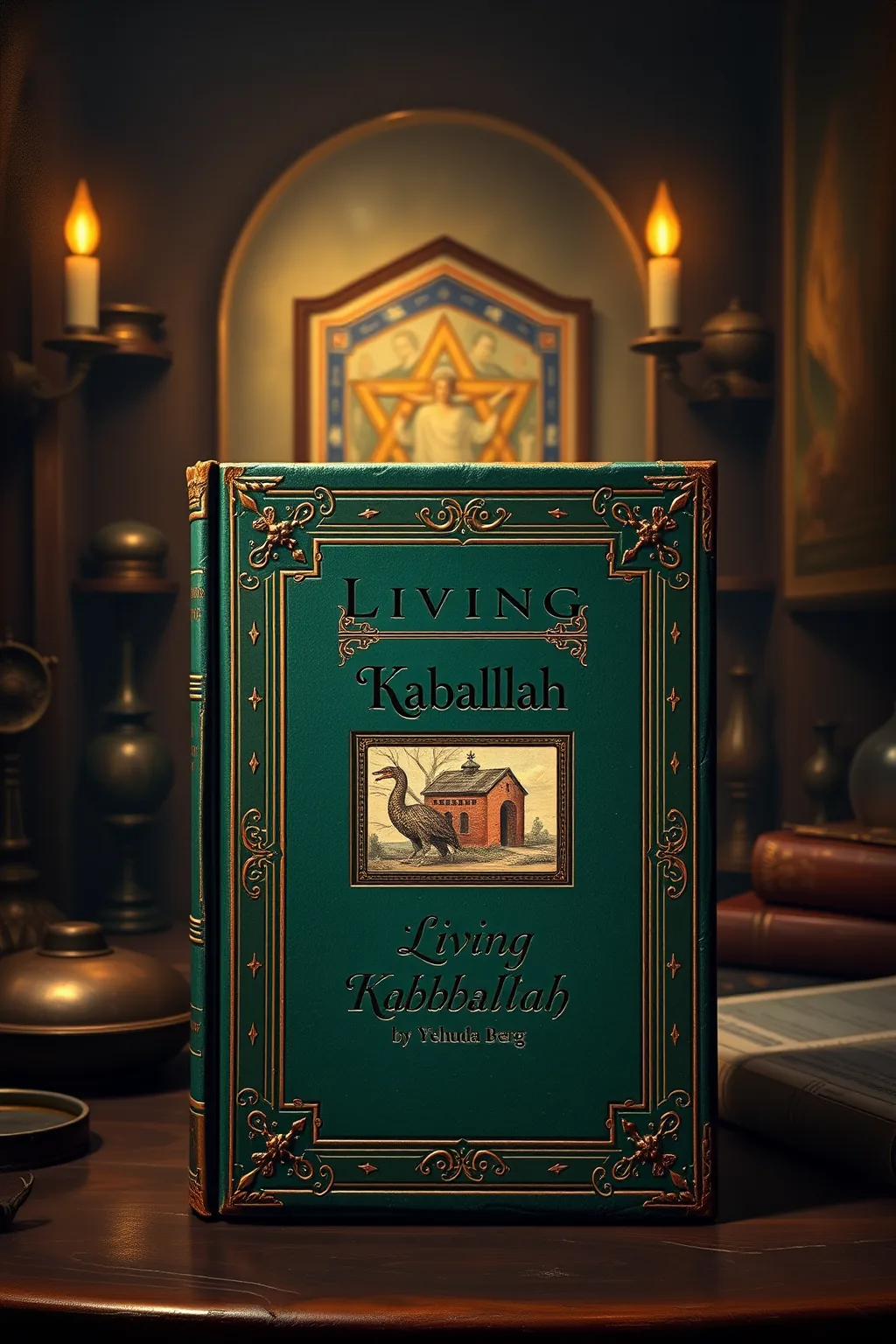
Living Kabbalah
 62
62

Living Kabbalah


Yehuda Berg's 'Living Kabbalah' stands as a beacon for those navigating the labyrinthine pathways of esoteric thought. As Senior Critic at Occult Philosophy, I find Berg's ability to distill millennia of Kabbalistic wisdom into a digestible yet potent form truly remarkable. He masterfully bridges the gap between ancient texts and the modern spiritual seeker, offering practical insights into the energetic currents that shape our reality. The book's strength lies in its clarity and its focus on the practical application of Kabbalistic principles for spiritual growth. It is an indispensable guide for anyone drawn to the profound mysteries of the divine feminine and masculine, the nature of consciousness, and the inherent interconnectedness of all things. Highly recommended for practitioners and students of the esoteric arts.
📝 Description
62
Yehuda Berg's 'Living Kabbalah' was published in 2004, seeking to demystify Jewish mysticism.
Yehuda Berg's 'Living Kabbalah' examines the core principles of Kabbalah, a tradition of Jewish mysticism. The book focuses on making these complex ideas accessible to a general audience, particularly through its explanation of the Kabbalistic Tree of Life. Berg illustrates how the Tree of Life functions as a map of consciousness and a blueprint for the universe, connecting the spiritual and material worlds.
The text aims to show readers how to apply Kabbalistic concepts to their personal lives, fostering spiritual growth and a deeper understanding of existence. It addresses the interplay of various forces and how individuals can work with them for self-improvement and a more profound connection to the divine. Berg's approach is designed for those interested in exploring the esoteric dimensions of Jewish tradition and seeking greater spiritual purpose.
This book engages with the Kabbalistic tradition, a body of esoteric teachings within Judaism that seeks to explain the relationship between the divine, the world, and humanity. Kabbalah traditionally uses symbolic language and mystical interpretation to explore concepts such as creation, the nature of God, and the human soul's journey. 'Living Kabbalah' positions itself within this lineage by translating its complex symbolic systems, like the Sefirot on the Tree of Life, into practical insights for contemporary readers. It aims to bridge the gap between ancient mystical texts and modern spiritual seeking.
💡 Why Read This Book?
Uncover the mystical blueprint of existence and your place within it. 'Living Kabbalah' offers profound insights into spiritual growth, the nature of consciousness, and the hidden forces that shape our reality. Ideal for seekers of deeper meaning, students of esoteric traditions, and practitioners seeking to integrate ancient wisdom into their modern lives.
⭐ Reader Reviews
Honest opinions from readers who have explored this book.
❓ Frequently Asked Questions
What is the primary focus of 'Living Kabbalah'?
The book focuses on demystifying the core principles of Kabbalah, particularly the Tree of Life, and presenting them as a practical framework for spiritual growth and understanding the universe.
Is prior knowledge of Kabbalah required to read this book?
No, Yehuda Berg's approach is designed to be accessible to beginners, gradually introducing complex concepts with clarity and illustrative examples.
How does 'Living Kabbalah' relate to Jewish tradition?
It draws directly from the rich esoteric tradition of Jewish mysticism, offering a contemporary interpretation of ancient teachings.
What are the practical applications of the teachings in this book?
The book provides tools for self-awareness, understanding relationships, navigating life's challenges, and cultivating a deeper connection to the divine.
What makes this book unique compared to other Kabbalah resources?
Its emphasis on 'living' Kabbalah – making the teachings practical and applicable to everyday life – distinguishes it, moving beyond theoretical study to experiential understanding.
🔮 Key Themes & Symbolism
The Tree of Life as a Cosmic Map
The central motif of 'Living Kabbalah' is the enigmatic Tree of Life, presented not merely as a symbol, but as a dynamic, living map of creation. Berg elucidates the ten Sephirot and the twenty-two paths, revealing how they represent stages of divine emanation and the journey of consciousness from the infinite to the finite. This section explores the energetic flow, the divine attributes manifested, and the interconnectedness of all existence, offering a profound framework for understanding both the macrocosm and the microcosm within ourselves. It's an invitation to perceive the universe as a divinely ordered system, accessible through its symbolic representation.
Spiritual Awakening and Transformation
This theme studies the practical application of Kabbalistic principles for personal evolution. 'Living Kabbalah' guides readers on a path of self-discovery, clear how understanding the divine energies and our own internal landscape can foster profound transformation. It emphasizes the concept of 'Tikkun Olam' (repairing the world) beginning with self-correction and spiritual refinement. The book offers insights into overcoming limitations, embracing our divine potential, and actively participating in the cosmic dance of creation, fostering a deeper sense of purpose and spiritual fulfillment in daily life.
The Divine and Human Connection
Yehuda Berg masterfully explores the intricate relationship between the Creator and humanity. 'Living Kabbalah' unveils the esoteric understanding of God's presence within all things and the inherent spark of divinity that resides within each individual. It provides a framework for bridging the perceived gap between the material and spiritual realms, demonstrating how conscious effort and spiritual awareness can lead to a profound and intimate connection with the Divine. This theme encourages readers to see their lives as sacred opportunities for experiencing and expressing divine love and wisdom.
💬 Memorable Quotes
Direct passages from the work, attributed to the author.
“We are all sparks of the divine light.”
— Emphasizes the inherent divinity within every individual, suggesting a fundamental connection to a higher source.
“The Tree of Life is the blueprint of the soul.”
— Positions the central Kabbalistic symbol as a guide to understanding the structure and journey of human consciousness.
“To know yourself is to know God.”
— Suggests that introspection and self-understanding are direct pathways to comprehending the divine.
“The universe is a reflection of our inner state.”
— Highlights the profound connection between our internal world and the external reality we experience.
💡 Key Ideas
Editorial paraphrase of the work's core concepts — not direct quotes.
The Kabbalah is not a religion, but a wisdom.
This quote highlights the universal and philosophical nature of Kabbalistic teachings, positioning them as a system of knowledge rather than a dogma.
🌙 Esoteric Significance
Tradition
This work is deeply rooted in the Kabbalistic tradition, a mystical branch of Judaism that explores the hidden dimensions of God and the universe. It draws upon centuries of esoteric interpretation, particularly focusing on the Sephirot (divine emanations) and the structure of the Tree of Life as a framework for understanding creation, consciousness, and spiritual evolution. Berg's contribution lies in translating these profound, often abstract, concepts into a more accessible and practical form for contemporary practitioners.
Symbolism
The primary symbolism revolves around the Kabbalistic Tree of Life, with its ten Sephirot and twenty-two pathways. Each Sephirah represents a divine attribute or stage of emanation, and the pathways connect them, illustrating the flow of divine energy and the journey of the soul. Other key symbols include Hebrew letters, divine names, and archetypal imagery that represent cosmic forces and spiritual principles, all serving as keys to unlock deeper levels of understanding about existence and the divine.
Modern Relevance
In an era often characterized by materialism and spiritual seeking, 'Living Kabbalah' offers a timeless wisdom that remains profoundly relevant. It provides a spiritual cosmology and a practical roadmap for personal growth, self-awareness, and connecting with a deeper sense of purpose. The teachings on balance, divine connection, and the interconnectedness of all life offer useful insights for reading through the complexities of modern existence and fostering a more meaningful and fulfilling spiritual life.
👥 Who Should Read This Book
This book is a treasure for a wide spectrum of readers. For the absolute beginner, it serves as an inviting and clear introduction to the foundational concepts of Kabbalah. Scholars of comparative religion and mysticism will find Berg's interpretations insightful and his modern lens valuable. Spiritual seekers yearning for a deeper understanding of the universe and their place within it will find profound guidance. Practitioners of various spiritual disciplines may discover new tools and perspectives to enrich their existing practices, making 'Living Kabbalah' a versatile and essential read for anyone on a path of conscious evolution.
📜 Historical Context
Yehuda Berg's 'Living Kabbalah' emerges from the wide range of Jewish mystical tradition, a lineage stretching back to ancient texts like the Sefer Yetzirah and the Zohar. While Kabbalah has evolved over centuries, experiencing periods of both intense secrecy and widespread revival, Berg's work is situated within a modern context that seeks to make these profound teachings accessible to a global audience. The late 20th and early 21st centuries have witnessed a resurgence of interest in esoteric philosophies, and Berg's accessible style and focus on practical application resonate with contemporary spiritual seekers. His work builds upon the foundational interpretations of historical figures like Isaac Luria, while adapting the complex symbolism to address the challenges and opportunities of modern spiritual life, making it relevant beyond its original religious framework.
📔 Journal Prompts
Reflect on your personal understanding of the Tree of Life. How do you see its different aspects manifesting in your daily life?
Consider the concept of divine sparks within all things. How does this perspective change your interaction with the world around you?
Identify a personal limitation or challenge. How might the principles of Kabbalah offer a new perspective or approach to overcoming it?
Explore the idea of 'Tikkun Olam' (repairing the world) beginning with self-correction. What small steps can you take today to contribute to this process?
What does 'living Kabbalah' mean to you? How can you integrate its wisdom more actively into your daily existence?
🗂️ Glossary
Sephirah
Singular: Sephirah, Plural: Sephirot. These are the ten divine emanations or attributes through which God manifests and interacts with the universe, forming the structure of the Kabbalistic Tree of Life.
Tree of Life (Etz Chaim)
The central diagram in Kabbalah, depicting the ten Sephirot and their interconnections, representing the structure of the cosmos, the divine creation, and the journey of the soul.
Ein Sof
The Kabbalistic term for the 'Infinite' or 'Without End,' referring to God in God's absolute, unknowable essence before any emanation or creation.
Tikkun Olam
A Hebrew phrase meaning 'repair of the world.' In Kabbalah, it refers to the cosmic task of restoring harmony and wholeness to creation, often beginning with individual spiritual perfection.
Malkuth
The tenth Sephirah on the Tree of Life, representing the physical world, the kingdom, and the manifestation of divine energy in the material realm. It is often seen as the feminine aspect of the divine.
This book appears in 1 collection
🔮 Readers Also Liked
Browse all →









More by Yehuda Berg
All books →





From the “Kabbalah” Collection
View all →







More Free Kabbalah & Jewish Mysticism Books
View all →