And They Shall Be One Flesh : on the Language of Mystical Union in Judaism
 61
61

And They Shall Be One Flesh : on the Language of Mystical Union in Judaism


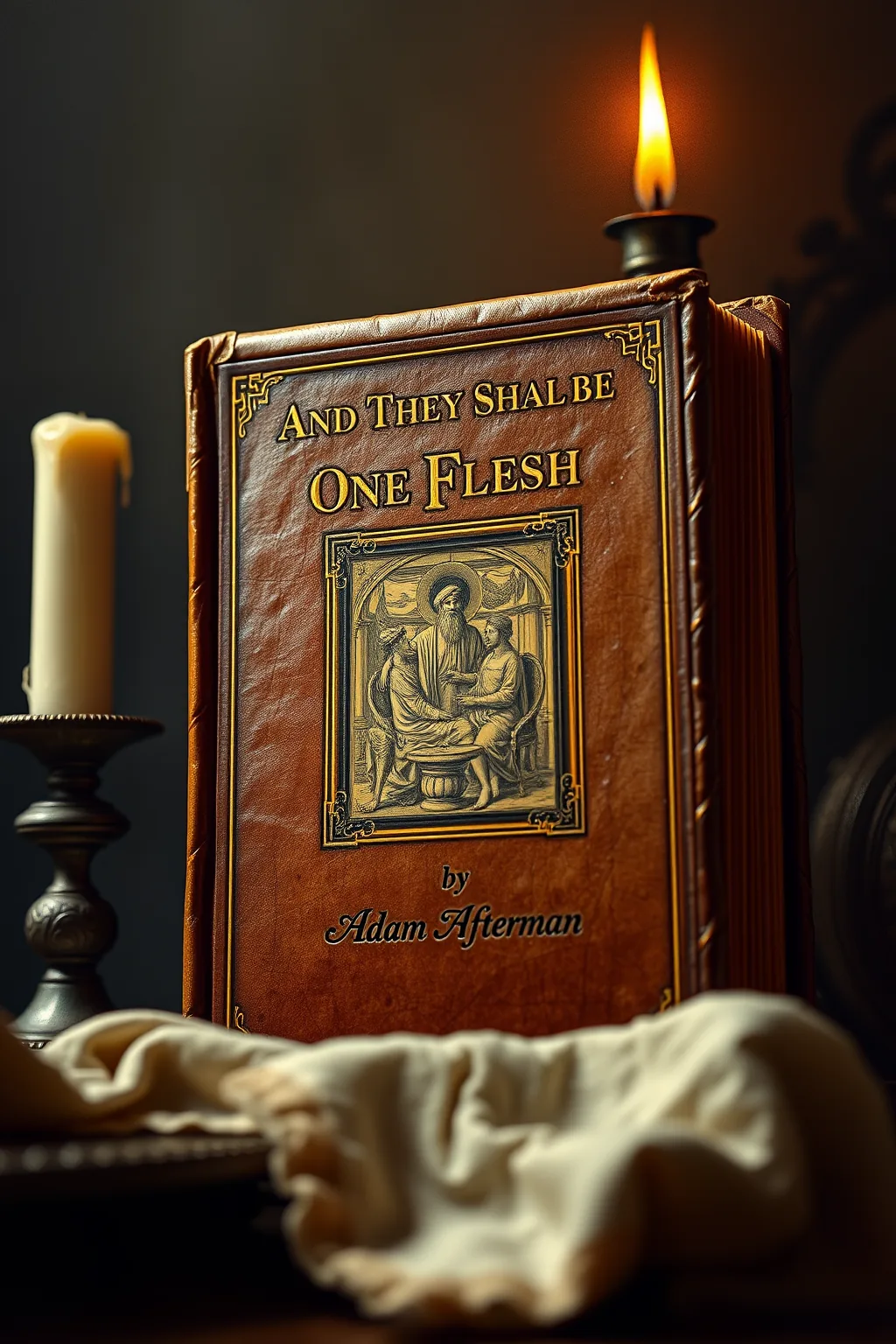
Adam Afterman's "And They Shall Be One Flesh" is an authoritative and illuminating examination of mystical union within Judaism. Afterman masterfully demonstrates Philo's pivotal role in shaping this concept, revealing its deep roots and influence on later traditions. The meticulous analysis of medieval Kabbalistic thought offers invaluable insights into the diverse expressions of embodied divine connection. This work is indispensable for scholars of Jewish mysticism and philosophy, as well as for serious practitioners seeking a deeper theoretical framework for their contemplative practices. Its clarity and depth provide a rare and potent glimpse into the heart of esoteric Jewish experience.
📝 Description
61
Adam Afterman's 2020 book examines the language used to describe mystical union in Jewish tradition.
In "And They Shall Be One Flesh," Adam Afterman investigates the linguistic expressions of divine union within Jewish mysticism. He begins by identifying Philo of Alexandria as an early figure to articulate the concept of unio mystica in a monotheistic context, noting its connections to Neoplatonic ideas. The book then traces how this pursuit of communion evolved through medieval Jewish mystical literature. Afterman details the various symbolic systems and terminologies that mystics developed to articulate ecstatic experiences of closeness with God. He connects these concepts to an enduring spiritual aspiration for transcendence and a desire to bridge the gap between the physical and the divine.
The work considers how embodiment and the sacredness of language function within these mystical frameworks. It looks at how specific terms and metaphors were used to describe the experience of unification. The book aims to illuminate the diverse ways Jewish mystics conceptualized and communicated their encounters with the divine, showing a consistent thread of seeking unity across different historical periods and schools of thought.
This book is situated within the study of Jewish mysticism, a tradition that has long explored states of divine consciousness and union. It engages with figures and concepts that bridge Hellenistic philosophy, Neoplatonism, and the Kabbalistic traditions that developed in the Middle Ages and later. The focus on language highlights how esoteric traditions often rely on specific terminologies and symbolic systems to convey experiences that transcend ordinary understanding. Afterman's work examines how these mystical traditions developed unique vocabularies to articulate the experience of oneness with the divine.
💡 Why Read This Book?
Uncover the hidden language of divine intimacy in Judaism. "And They Shall Be One Flesh" reveals the philosophical and historical roots of mystical union, tracing its evolution through pivotal thinkers and traditions. Ideal for seekers of esoteric wisdom, scholars of comparative mysticism, and practitioners yearning for a deeper understanding of embodied spiritual connection. Embark on a profound journey into the heart of Jewish mystical aspiration.
⭐ Reader Reviews
Honest opinions from readers who have explored this book.
❓ Frequently Asked Questions
What is the primary focus of "And They Shall Be One Flesh"?
The book's primary focus is an extensive study of mystical union and embodiment within the Jewish mystical tradition, exploring its philosophical origins and historical development.
Who is considered the first to articulate mystical union in Judaism according to this book?
Adam Afterman argues that Philo of Alexandria was the first to articulate the notion of unio mystica within Judaism and monotheism, influencing later Neoplatonic traditions.
What historical periods does the book cover regarding Jewish mysticism?
The book delves into the philosophical foundations laid by Philo and extensively analyzes the development of mystical union concepts within medieval Jewish traditions, particularly Kabbalah.
What kind of reader would benefit most from this book?
Scholars of Jewish studies, Kabbalah, comparative mysticism, and advanced practitioners seeking a deep theoretical understanding of mystical union would find this book highly beneficial.
Does the book discuss the practical aspects of achieving mystical union?
While primarily a historical and philosophical study, the book's exploration of the 'language' of mystical union provides a theoretical framework that can inform and deepen practical contemplative efforts.
🔮 Key Themes & Symbolism
The Unio Mystica in Jewish Thought
This theme explores the profound concept of mystical union, or unio mystica, as a central aspiration within Jewish spiritual traditions. It investigates how Jewish mystics, from Philo to medieval Kabbalists, conceptualized the ecstatic merging of the human soul with the Divine. The focus is on the theological, philosophical, and experiential dimensions of this ultimate spiritual goal, examining the various interpretations and symbolic representations that have emerged throughout history to describe this sacred and transformative encounter.
Philo's Hermeneutics of Divine Union
Adam Afterman highlights the central role of Philo of Alexandria in establishing the foundations of mystical union within Jewish thought. This theme explores Philo's philosophical exegesis and his articulation of the 'henōsis' (union) as a key aspect of the monotheistic experience. It examines how his intellectual framework influenced not only subsequent Jewish mystical traditions but also the broader field of Hellenistic and Neoplatonic philosophy, positioning him as a crucial progenitor of esoteric thought on divine communion.
The Embodied Language of Mystical Connection
This theme investigates the intricate 'language' and symbolic systems that mystics employ to describe and attain divine union. It moves beyond abstract theological concepts to explore how the body, emotions, and sensory experiences are integrated into the mystical journey. The focus is on the collection of metaphors, allegories, and practices that allow individuals to articulate and experience the profound, often ineffable, reality of becoming one with the Divine, emphasizing the embodied nature of spiritual realization.
💬 Memorable Quotes
Direct passages from the work, attributed to the author.
“The ascent of the soul is a descent into the self.”
— This aphorism suggests that true spiritual advancement and connection with the Divine are achieved not through external striving, but through introspection and deep self-understanding, revealing the inner landscape as the true path to transcendence.
“The boundary between lover and beloved dissolves in the crucible of longing.”
— This evocative statement describes the ultimate merging in mystical union, where the distinction between the individual soul (beloved) and the Divine (lover) is obliterated by the intensity of spiritual desire and devotion.
“Sacred language is the bridge between the seen and the unseen.”
— This highlights the power of symbolic and mystical language not just to describe, but to actively facilitate the connection between the material world and the spiritual realms, acting as a vital medium for esoteric understanding.
“To know God is to be known by God, in an embrace of unity.”
— This expresses the reciprocal nature of divine encounter in mystical traditions, where the pursuit of knowledge of the Divine leads to a state of being recognized and embraced by the Divine, culminating in a profound, unified existence.
💡 Key Ideas
Editorial paraphrase of the work's core concepts — not direct quotes.
In the echo of silence, the Divine whispers its name.
This quote points to the practice of contemplative silence as a conduit for divine revelation. It suggests that profound spiritual truths are not found in noise, but in the quiet receptivity of the soul, allowing for subtle, intimate communication with the sacred.
🌙 Esoteric Significance
Tradition
This work is deeply rooted in the esoteric traditions of Kabbalah and Jewish Mysticism, exploring the inner dimensions of Jewish spirituality. It explores the Gnostic-like pursuit of divine knowledge and union, examining how mystical texts and practices serve as keys to unlocking hidden spiritual realities. The book illuminates the esoteric pathways of transformation, emphasizing the symbolic and allegorical interpretations that guide the seeker towards a direct, transformative experience of the Divine, aligning with the core tenets of esoteric wisdom.
Symbolism
The book meticulously unpacks the detailed symbolism inherent in Jewish mysticism, particularly concerning divine union. It explores how concepts like 'Ein Sof' (the Infinite), the Sefirot (divine emanations), and the allegorical meanings of biblical narratives serve as symbolic language for the journey of the soul towards God. Afterman highlights the use of metaphors of love, marriage, and embodiment to describe the ineffable union, demonstrating how these potent symbols act as vehicles for conveying profound spiritual truths and facilitating the seeker's understanding and experience of divine intimacy.
Modern Relevance
In an era often characterized by secularism and disconnection, "And They Shall Be One Flesh" offers a compelling re-engagement with the timeless human quest for spiritual meaning and transcendence. The book's exploration of embodied mysticism and the language of divine union provides valuable insights for contemporary seekers grappling with questions of identity, purpose, and connection. It demonstrates the enduring power of ancient wisdom traditions to offer profound perspectives on the human condition and pathways to inner peace and spiritual fulfillment in the modern world.
👥 Who Should Read This Book
Scholars of Jewish studies, Kabbalah, and comparative religious traditions will find this book an indispensable academic resource, offering rigorous analysis and novel interpretations. Advanced practitioners and spiritual seekers interested in the deeper philosophical underpinnings of mystical union will gain profound theoretical insights. Beginners curious about the esoteric dimensions of Judaism will find an accessible yet profound introduction to the concept of divine communion. Those interested in the history of ideas and the evolution of Western esotericism will appreciate the book's historical scope and its tracing of influential thought patterns.
📜 Historical Context
Adam Afterman's "And They Shall Be One Flesh" emerges from a collection of philosophical and mystical inquiry that spans millennia. The study grounds itself in the Hellenistic period, specifically examining the works of Philo of Alexandria, a central figure who synthesized Jewish theology with Greek philosophy. His articulation of 'henōsis' laid crucial groundwork for later esoteric thought. The book then transitions to the vibrant intellectual field of medieval Judaism, a period marked by the flourishing of Kabbalah. This era saw the development of complex symbolic systems, meditative practices, and theological frameworks aimed at understanding and achieving divine communion. The historical context is one of profound spiritual yearning, intellectual innovation, and the persistent human desire to bridge the perceived gap between the finite and the infinite, shaping the very language and understanding of mystical experience within the Jewish tradition.
📔 Journal Prompts
Reflect on your personal understanding of 'union' – with yourself, others, or the Divine. How does this book's concept of unio mystica resonate or challenge your current views?
Consider a moment in your life when you felt a profound sense of connection or transcendence. What elements were present, and how might they relate to the 'language' of mystical union described by Afterman?
Explore the symbolism of 'embodiment' in your spiritual or personal journey. How does the idea of the physical body as a vessel for spiritual experience inform your understanding?
If you were to articulate the Divine to someone unfamiliar with Jewish mysticism, what symbolic language or metaphors would you use, drawing inspiration from the book's themes?
How can the ancient pursuit of mystical union offer guidance or solace in reading through the complexities and challenges of modern life?
🗂️ Glossary
Unio Mystica
A Latin term referring to the mystical union or ecstatic merging of the individual soul with the Divine, a central goal in many spiritual traditions.
Henōsis
A Greek term, often translated as 'union' or 'unity,' used in Hellenistic philosophy and mysticism, particularly by Philo and the Neoplatonists, to describe the soul's unification with the Divine.
Kabbalah
The esoteric tradition of Jewish mysticism, which seeks to understand the nature of God and the universe through symbolic interpretation of scripture and mystical contemplation.
Ein Sof
A Hebrew term in Kabbalah meaning 'without end' or 'infinite,' referring to God in His absolute, unknowable, and transcendent aspect, beyond all description and comprehension.
Sefirot
In Kabbalah, the ten divine emanations or attributes through which God reveals Himself and interacts with the creation. They form a mystical tree of life.
This book appears in 1 collection
🔮 Readers Also Liked
Browse all →








More by Adam Afterman
All books →
From the “Kabbalah” Collection
View all →





More Free Kabbalah & Jewish Mysticism Books
View all →