The Mystery of the Aleph

 69
69

The Mystery of the Aleph

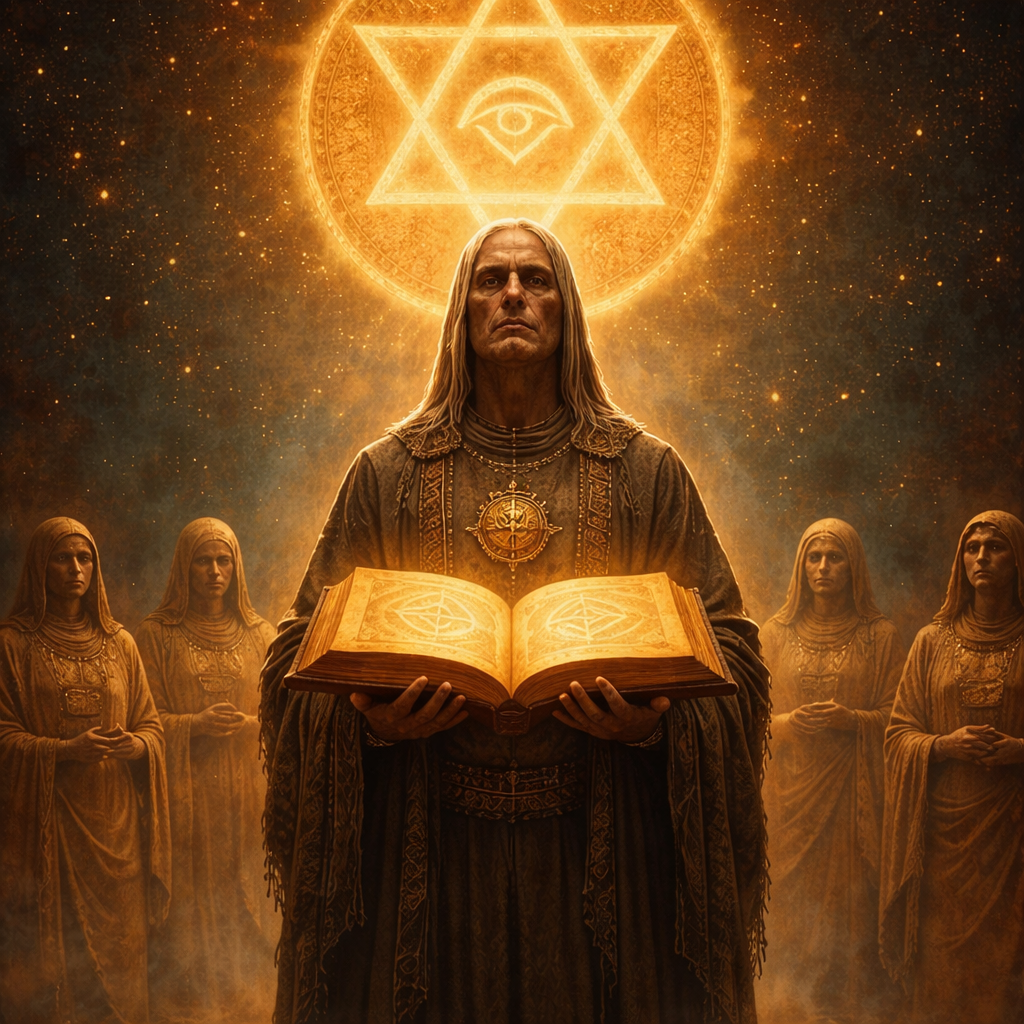

Amir D. Aczel's 'The Mystery of the Aleph' is a captivating synthesis of the esoteric and the mathematical. Aczel, with scholarly grace, illuminates the surprising parallels between Kabbalistic thought and Georg Cantor's revolutionary work on infinite sets. This is not merely a biography of a mathematician, but a profound exploration of how the human mind grapples with the boundless. The book offers profound insights into the nature of infinity, drawing potent analogies from Jewish mysticism. It is a must-read for anyone interested in the intersection of spirituality, mathematics, and the philosophical underpinnings of reality, particularly those drawn to the rich tapestry of Kabbalah.
📝 Description
69
Amir D. Aczel connects Kabbalah's infinity concepts to Cantor's transfinite numbers in 2000.
Amir D. Aczel's 2000 book, 'The Mystery of the Aleph,' examines the surprising parallels between Jewish mysticism and modern mathematics. Aczel shows how the Kabbalistic concept of divine emanations and infinite worlds resonates with Georg Cantor's work on set theory and transfinite numbers. The book details how ancient mystics grappled with ideas of endlessness that later mathematicians would formalize.
It traces this connection through concepts like the 'Ein Sof' (the Infinite) in Kabbalah and the development of cardinal and ordinal numbers in mathematics. Aczel argues that both traditions, despite their different methods, arrive at similar understandings of limitlessness. The text explores how the abstract nature of infinity, represented by the Aleph symbol, appears in both mystical contemplation and rigorous mathematical proof. It is a study for those interested in the intersection of these seemingly disparate fields.
This book sits within the esoteric tradition by bridging the gap between mystical interpretations of the divine and abstract mathematical principles. It draws specifically from Kabbalah, a Jewish mystical tradition that explores the nature of God, creation, and the universe through symbolic language and numerical correspondences. Aczel highlights how Kabbalistic thought, particularly its engagement with concepts of the infinite and the structured levels of existence, anticipates or parallels mathematical ideas about unending quantities and sets. The work positions these mystical traditions not as mere faith, but as a form of speculative inquiry into reality's deepest structures.
💡 Why Read This Book?
Unravel the profound connections between Kabbalah and the mathematics of infinity. Discover how ancient mystics and modern mathematicians independently pursued the nature of the boundless. This book is essential for seekers of esoteric wisdom, scholars of Jewish mysticism, and anyone fascinated by the philosophical implications of infinity. Explore the universe through a unique, mind-expanding perspective.
⭐ Reader Reviews
Honest opinions from readers who have explored this book.
❓ Frequently Asked Questions
What is the 'Aleph' in this context?
The 'Aleph' refers to the transfinite cardinal numbers introduced by Georg Cantor, representing the sizes of infinite sets. In this book, it also serves as a symbolic bridge between mathematical infinity and the infinite concepts explored in Kabbalistic mysticism.
Is prior knowledge of Kabbalah or advanced mathematics required?
No, the book is written for a general audience. Aczel provides clear explanations of both Kabbalistic principles and mathematical concepts, making them accessible to readers without specialized backgrounds.
What is the historical significance of the mathematician discussed?
The book delves into the life and work of Georg Cantor, the creator of set theory and the concept of transfinite numbers. His groundbreaking theories revolutionized mathematics and challenged prevailing philosophical views on infinity.
How does this book connect mathematics with mysticism?
Aczel posits that both Kabbalah and Cantor's mathematics, though originating from vastly different traditions, grapple with and attempt to define the concept of the infinite. The book explores shared symbolic language and conceptual frameworks.
What kind of reader would most enjoy this book?
This book is ideal for curious minds interested in the intersections of science, philosophy, and spirituality, particularly those drawn to Jewish mysticism, the history of mathematics, and the contemplation of infinity.
🔮 Key Themes & Symbolism
The Infinite Continuum
This theme explores the profound concept of infinity as explored through both the Kabbalistic Tree of Life and Georg Cantor's transfinite numbers. It examines how these seemingly disparate systems attempt to map, understand, and articulate the boundless nature of existence. Aczel reveals how the divine emanations in Kabbalah find a surprising resonance in the hierarchical structure of infinite cardinalities, suggesting a universal pursuit of understanding the ultimate reality that transcends human comprehension.
Symbolism of the Aleph
The Aleph, the first letter of the Hebrew alphabet and the symbol for Cantor's smallest infinity, serves as a potent nexus in this work. It represents the primal origin, the unmanifest potential, and the gateway to understanding the infinite. The book explores its significance within Jewish mysticism as a divine spark and its mathematical representation as the cardinality of the set of natural numbers, highlighting how this single symbol captures profound truths about creation and structure.
The Mathematician as Mystic
This theme investigates the notion that the pursuit of pure mathematics, particularly in grappling with the infinite, can be a form of mystical inquiry. Aczel presents Georg Cantor not just as a rigorous logician but as an individual whose mathematical discoveries led him to profound spiritual insights and personal struggles. The narrative explores how the deep contemplation of abstract concepts can lead to an expanded consciousness and a perception of hidden order within the universe.
💬 Memorable Quotes
Direct passages from the work, attributed to the author.
“Where the Kabbalists saw divine will, Cantor saw logical necessity.”
— This highlights the core tension and surprising convergence explored in the book: the seemingly mystical pronouncements of Kabbalah finding parallel in the rigorous, logical framework of mathematical discovery.
“Infinity whispers secrets to those who listen.”
— This evocative statement suggests that the profound nature of infinity is not merely a mathematical construct but a profound enigma that reveals its truths through deep contemplation and open receptivity.
“The map of the infinite is drawn with both numbers and ancient symbols.”
— This emphasizes the book's central thesis: that understanding the infinite requires embracing both the rational language of mathematics and the symbolic, intuitive language of esoteric traditions.
💡 Key Ideas
Editorial paraphrase of the work's core concepts — not direct quotes.
The Aleph is the beginning of all infinities.
This quote captures the dual nature of the Aleph as both the foundational letter in Hebrew and the symbol for the smallest transfinite cardinal, representing the genesis of all boundless quantities.
Beyond the finite lies a universe of untold potential.
This quote speaks to the transformative power of contemplating infinity, suggesting that it opens up vast possibilities for understanding existence and our place within it.
🌙 Esoteric Significance
Tradition
This work is deeply rooted in the esoteric tradition of Kabbalah, the Jewish mystical system that explores the divine, creation, and the nature of reality through symbolic interpretation of scripture and a rich cosmology. It also draws parallels with Gnostic and Neoplatonic ideas concerning emanation and the infinite.
Symbolism
The central symbol is the Aleph, representing the primal unity, the unmanifest divine, and the gateway to the infinite. Other key symbols include the Tree of Life, representing the structure of divine emanation, and the concept of 'Ein Sof' (the Infinite), which mirrors the mathematical concept of unboundedness and the ultimate reality beyond comprehension.
Modern Relevance
In an age often characterized by fragmentation and reductionism, 'The Mystery of the Aleph' offers a powerful reminder of the interconnectedness of knowledge. It demonstrates how ancient mystical wisdom can inform and enrich our understanding of modern scientific concepts, fostering a more holistic worldview and encouraging a deeper contemplation of existence.
👥 Who Should Read This Book
This book is a treasure for the intellectually curious and spiritually inclined. Beginners in Kabbalah will find an accessible entry point into its profound concepts, illuminated by mathematical analogy. Scholars of Jewish mysticism and the history of mathematics will appreciate Aczel's nuanced synthesis and original insights. Seekers of esoteric knowledge will discover a compelling bridge between the rational and the mystical. Practitioners looking to deepen their understanding of cosmic principles will find inspiration in the exploration of infinity's boundless potential.
📜 Historical Context
The late 19th and early 20th centuries were a period of immense intellectual ferment, marked by rapid advancements in science and mathematics, coupled with a burgeoning interest in spiritualism and esoteric philosophies. Georg Cantor's work on set theory and transfinite numbers, developed during this era, profoundly challenged existing mathematical and philosophical paradigms, leading to both acclaim and fierce opposition. Simultaneously, movements like Theosophy and Anthroposophy, alongside the continued study of ancient mystical traditions like Kabbalah, reflected a desire to find deeper meaning and interconnectedness in a rapidly modernizing world. 'The Mystery of the Aleph' sits at the fascinating intersection of these currents, exploring how seemingly disparate inquiries into the nature of reality could converge.
📔 Journal Prompts
How does the concept of 'infinity' resonate with your personal understanding of the divine or the universe?
In what ways can mathematical logic offer a new perspective on ancient mystical teachings?
Consider a personal experience where you felt a sense of the boundless or the infinite. Describe it.
If the Aleph is a gateway, what doors of understanding does it open for you?
How can the pursuit of knowledge, whether scientific or spiritual, be seen as a form of reverence?
🗂️ Glossary
Aleph
In Kabbalah, the first letter of the Hebrew alphabet, often symbolizing unity and the divine. In mathematics, it represents the cardinality of infinite sets, with Aleph-null (ℵ₀) being the smallest infinity.
Kabbalah
A system of Jewish mysticism that seeks to understand the nature of God and the universe through esoteric interpretations of the Torah and a complex symbolic framework, most notably the Tree of Life.
Transfinite Cardinal Number
A number that represents the size (cardinality) of an infinite set, developed by Georg Cantor. These numbers are larger than any finite number and form a hierarchy of infinities.
Ein Sof
A Kabbalistic term meaning 'without end' or 'infinite,' referring to God in His absolute, unknowable essence, beyond all description or limitation.
Set Theory
A branch of mathematical logic concerned with the study of sets, which are collections of objects. Georg Cantor's work in set theory introduced the concept of infinite sets and their different sizes.
This book appears in 1 collection
🔮 Readers Also Liked
Browse all →








From the “Kabbalah” Collection
View all →








More Free Kabbalah & Jewish Mysticism Books
View all →