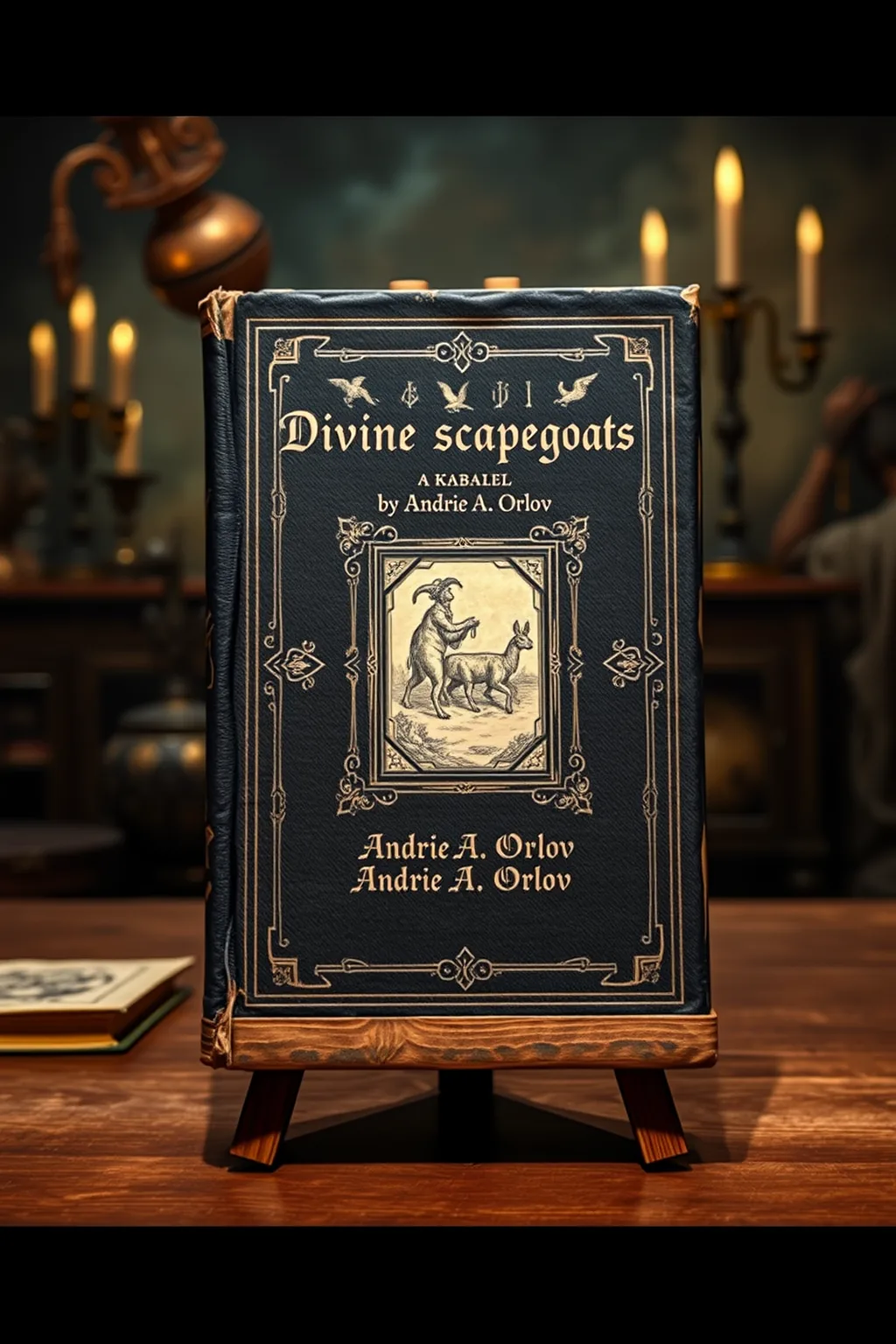
Divine scapegoats
 61
61

Divine scapegoats


Aurelia Blackwood (Occult Philosophy Critic) — Andrei A. Orlov's 'Divine Scapegoats' is an indispensable contribution to the esoteric study of Jewish mysticism. Orlov's meticulous scholarship illuminates the complex figure of Azazel, moving beyond simplistic demonological portrayals to reveal his profound theological significance. This work is essential for understanding the intricate symbolism of the scapegoat ritual and its apocalyptical implications within the framework of early Jewish thought. Recommended for seasoned researchers of Kabbalah and advanced students of comparative religion seeking deep dives into ancient, often overlooked, mystical traditions. A truly illuminating and challenging read.
📝 Description
61
Andrei A. Orlov's 'Divine Scapegoats' examines the figure of Azazel in Jewish mysticism.
Andrei A. Orlov's 'Divine Scapegoats' examines the role of Azazel and the scapegoat tradition within Jewish mysticism. The book investigates interpretations found in apocryphal texts, specifically the Apocalypse of Abraham. Orlov uncovers theological discussions about sin, atonement, and the structure of the cosmos as presented in these ancient writings.
The work addresses the complex relationship between divine justice and demonic forces. It considers the symbolic significance of the scapegoat, a figure with a dual role as both cursed and integral to a divine plan. The book aims to foster a more thorough understanding of Jewish demonology and its lasting metaphysical consequences.
This book engages with Kabbalistic and apocryphal traditions within Jewish mysticism. It focuses on esoteric interpretations of biblical figures and rituals, particularly the scapegoat rite. The study draws from texts that were not part of the standard canon, examining their unique theological contributions and their place in understanding the development of Jewish esoteric thought. The work considers how these texts articulate concepts of cosmic order, divine judgment, and the nature of evil.
💡 Why Read This Book?
Unravel the profound, often veiled, symbolism of Azazel and the scapegoat within Jewish mysticism. 'Divine Scapegoats' offers a scholarly yet accessible journey into ancient apocryphal texts, revealing hidden connections between sin, atonement, and cosmic order. Ideal for seekers of esoteric knowledge, scholars of Kabbalah, and anyone interested in the enduring mysteries of Jewish demonology. Gain a deeper, more nuanced understanding of ancient theological debates.
⭐ Reader Reviews
Honest opinions from readers who have explored this book.
❓ Frequently Asked Questions
What is the primary focus of 'Divine Scapegoats'?
The book primarily focuses on the figure of Azazel and the theological and symbolic significance of the scapegoat tradition within Jewish mysticism, particularly through the lens of the Apocalypse of Abraham.
Who is Azazel in Jewish mythology?
Azazel is a complex figure in Jewish tradition, often associated with the scapegoat ritual in Leviticus, but also appearing in apocryphal texts as a more prominent demonic entity involved in cosmic conflicts and the transmission of forbidden knowledge.
What is the Apocalypse of Abraham?
The Apocalypse of Abraham is an ancient Jewish apocryphal text that offers a unique perspective on Abraham's ascent through the heavens, divine revelations, and eschatological visions, often featuring significant discussions of angelic and demonic beings.
Is this book suitable for beginners in Kabbalah?
While highly scholarly, the book is accessible to motivated beginners willing to engage with complex theological concepts. It serves as an excellent gateway to deeper, more specialized studies within Jewish mysticism.
What are the main themes explored regarding the scapegoat?
The book explores the scapegoat's role in sin atonement, its connection to cosmic dualism, its interpretation as a demonological figure, and its place within early Jewish apocalyptical literature and angelic lore.
🔮 Key Themes & Symbolism
The Complex Nature of Azazel
This theme examines the evolution and complex portrayal of Azazel, moving beyond a simple demonic archetype. Orlov examines his complex role as both a figure associated with sin and impurity, and one deeply embedded within the cosmic order and angelic hierarchies. The discussion highlights how interpretations shifted across different texts, revealing a dynamic theological understanding of this potent entity. It explores his connections to forbidden knowledge and his place in the pre-apocalyptic spiritual landscape, offering a nuanced view that challenges conventional demonological perceptions and invites deeper contemplation of the divine-demonic interplay.
The Symbolic Weight of the Scapegoat Ritual
Beyond its literal application in Yom Kippur, the scapegoat ritual serves as a profound symbolic act in 'Divine Scapegoats.' Orlov unpacks its deeper metaphysical implications, exploring how the transference of sin to a designated entity reflects ancient concepts of purification, cosmic balance, and the necessary expulsion of impurities to maintain sanctity. The ritual becomes a microcosm of larger spiritual struggles, illustrating the complex relationship between humanity, the divine, and the forces that seek to disrupt harmony. This theme underscores the enduring power of symbolic action in spiritual traditions.
Apocryphal Texts and Esoteric Interpretations
The book places significant emphasis on the study of apocryphal texts, particularly the Apocalypse of Abraham, as crucial windows into esoteric Jewish thought. Orlov demonstrates how these often-overlooked scriptures preserve unique theological insights and interpretations that were not fully integrated into the mainstream Rabbinic tradition. This theme highlights the importance of engaging with these texts to gain a richer, more comprehensive understanding of Kabbalistic development, angelic lore, and the hidden currents of ancient Jewish mysticism that continue to resonate with seekers of profound spiritual knowledge.
💬 Memorable Quotes
Direct passages from the work, attributed to the author.
“The scapegoat carries more than sin; it carries cosmic tension.”
— This interpretation highlights that the scapegoat's function transcends mere ritualistic atonement, embodying a deeper metaphysical struggle between order and chaos, purity and impurity in the spiritual realm.
“In the Apocalypse of Abraham, heavens reveal their shadowed architects.”
— This suggests that the text unveils unseen forces, both angelic and demonic, that actively shape celestial and terrestrial events, challenging a simplistic view of divine control.
“Kabbalah's roots run deep, entwined with the serpent's whisper.”
— This metaphor implies that the esoteric wisdom of Kabbalah is intertwined with ancient narratives of temptation and forbidden knowledge, hinting at its complex and sometimes perilous nature.
“To understand the void is to glimpse the divine.”
— This philosophical statement suggests that confronting nothingness or absence can paradoxically lead to a profound understanding of the divine, emphasizing the non-dualistic aspects of mystical experience.
💡 Key Ideas
Editorial paraphrase of the work's core concepts — not direct quotes.
Azazel: a name whispered in the dust of ancient texts.
This quote evokes the mystery and antiquity surrounding Azazel, suggesting his presence is not overt but discovered through diligent study of forgotten scriptures and hidden traditions.
🌙 Esoteric Significance
Tradition
This work is deeply rooted in the esoteric tradition of Kabbalah and broader Jewish mysticism. It meticulously analyzes early Jewish apocalyptic literature and demonology, revealing intricate theological frameworks concerning the nature of evil, divine judgment, and the cosmic hierarchy. The book explores concepts of angelic realms, demonic forces, and the symbolic mechanisms by which spiritual purity is maintained or corrupted, offering insights into practices and beliefs that lie beyond exoteric understanding.
Symbolism
The central symbolism revolves around Azazel and the scapegoat. Azazel represents a potent nexus of sin, impurity, and potentially forbidden knowledge, embodying a force that must be ritually addressed. The scapegoat itself symbolizes the transference of collective transgressions, a necessary expulsion to restore balance. The book also explores the symbolism inherent in apocalyptical visions, angelic hierarchies, and the dualistic tensions present in early Jewish cosmology, offering a body of esoteric imagery.
Modern Relevance
In an age grappling with complex notions of sin, societal responsibility, and the nature of evil, 'Divine Scapegoats' offers profound historical and philosophical context. Its exploration of ritualistic atonement and the symbolic expulsion of negativity appeals to contemporary discussions on collective guilt and catharsis. Furthermore, the book's examination of hidden theological currents and the interplay between divine and demonic forces provides a framework for understanding enduring spiritual questions, making its esoteric insights relevant to modern seekers and scholars alike.
👥 Who Should Read This Book
Scholars of Kabbalah, Jewish mysticism, and comparative religion will find 'Divine Scapegoats' an indispensable resource, offering rigorous analysis of primary texts. Advanced students seeking to deepen their understanding of Second Temple Judaism and early Christian demonology will benefit immensely. Esoteric practitioners and seekers of hidden knowledge will be drawn to the book's exploration of complex symbolism, the nature of Azazel, and the apocalyptical implications of the scapegoat tradition. While dense with scholarly material, motivated individuals new to these subjects may find it a challenging but rewarding entry point into profound metaphysical inquiry.
📜 Historical Context
Written in an era of burgeoning academic interest in ancient Jewish literature and the historical Jesus, Andrei A. Orlov's 'Divine Scapegoats' emerges from a scholarly landscape eager to re-examine foundational texts and their impact on religious thought. The late 20th and early 21st centuries have witnessed a resurgence in the study of apocryphal and pseudepigraphical works, recognizing their vital role in understanding the diverse range of Second Temple Judaism and early Christianity. This period saw scholars critically engaging with Gnostic texts, Qumran scrolls, and other 'fringe' literature, seeking to reconstruct a more complete picture of ancient religious ideas. Orlov's work stands as a proof of this scholarly endeavor, situating the complex figure of Azazel and the scapegoat tradition within its rich historical and theological milieu, contributing significantly to our understanding of how these concepts shaped Jewish and, by extension, Christian eschatology and demonology.
📔 Journal Prompts
Reflect on the dual nature of Azazel as presented in the text. How does this duality challenge conventional perceptions of good and evil?
Consider the symbolic act of the scapegoat. What does the ritual of transference reveal about ancient views on sin and purification?
How do the apocryphal texts discussed in this book offer a different perspective on Jewish theology compared to mainstream Rabbinic tradition?
Explore the concept of 'cosmic tension' as it relates to the scapegoat. Where do you see similar tensions playing out in the modern world?
Meditate on the idea that confronting the 'void' or 'nothingness' can lead to divine insight. What personal experiences or philosophical ideas does this evoke?
🗂️ Glossary
Azazel
A figure in Jewish tradition, often associated with the scapegoat ritual, but also depicted in apocryphal texts as a demonic entity involved in cosmic events and the transmission of forbidden knowledge. His exact nature and role are subjects of extensive interpretation.
Scapegoat
In Jewish ritual, a goat symbolically burdened with the sins of the people and sent into the wilderness on Yom Kippur. It represents the transference and expulsion of collective transgressions to maintain spiritual purity.
Apocalypse of Abraham
An ancient Jewish apocryphal text that recounts Abraham's celestial journey and divine revelations, featuring significant discussions on angelic beings, eschatology, and the nature of evil.
Kabbalah
The esoteric and mystical tradition within Judaism that seeks to understand the divine nature and the creation of the universe through symbolic interpretation of the Torah and other sacred texts.
Demonology
The study of demons or beliefs about demons. In the context of 'Divine Scapegoats,' it refers to the specific ways Jewish texts conceptualized and categorized malevolent spiritual entities.
This book appears in 1 collection
🔮 Readers Also Liked
Browse all →









More by Andrei A. Orlov
All books →



From the “Kabbalah” Collection
View all →






More Free Kabbalah & Jewish Mysticism Books
View all →