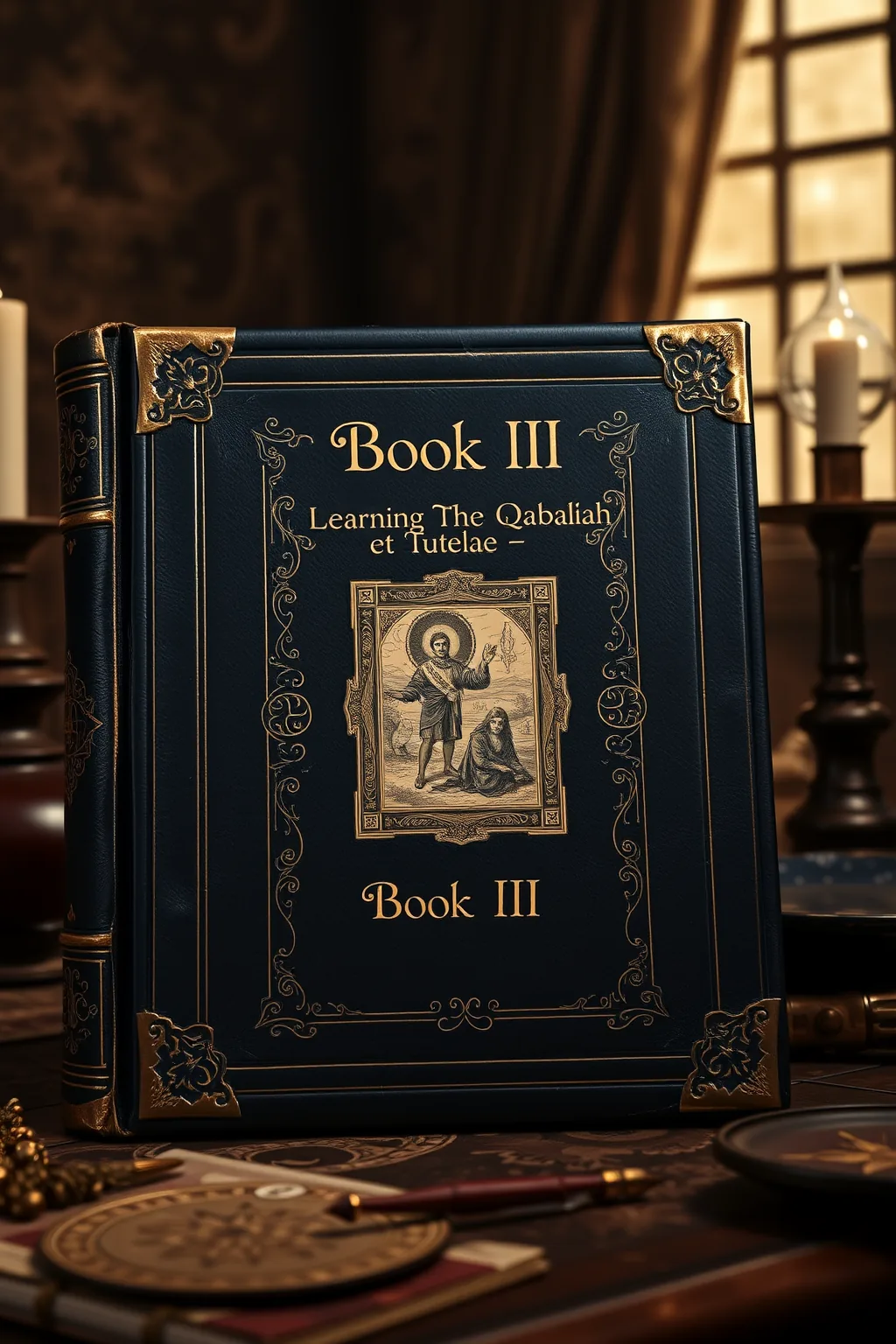
Book III Learning the Qabalah of the et Custosi Tutelae
 61
61

Book III Learning the Qabalah of the et Custosi Tutelae


Celeste Moreau, Divination & Symbolism Reviewer — 'Book III: Learning the Qabalah of the et Custosi Tutelae' is a masterful exposition, offering unparalleled clarity on complex Qabalistic principles. Freedman & Cabalis illuminate the mystical depths of this ancient tradition with an authoritative yet accessible voice. The text excels in its detailed analysis of symbolism and its practical implications for spiritual growth. It is particularly valuable for those who have established a foundational understanding and are ready to engage with the more profound, practical aspects of Qabalah. This book is a beacon for serious students and practitioners seeking to integrate its wisdom into their lives.
📝 Description
61
Published in the early 21st century, Book III details the Qabalah of the et Custosi Tutelae.
This volume, authored by Freedman & Cabalis, examines the Qabalah as taught by the et Custosi Tutelae order. It breaks down complex Qabalistic concepts, focusing on how these principles are applied in practice. The text aims to clarify the structure of the Tree of Life and the methods for spiritual progression associated with it.
Freedman & Cabalis present a structured approach to learning these esoteric teachings. They connect theoretical frameworks with actionable techniques, fostering a serious study environment. This book is intended for individuals committed to understanding Jewish mysticism, particularly its more arcane aspects and its relationship with the wider cosmos and personal spiritual development.
The et Custosi Tutelae tradition represents a specific school within the broader Qabalistic movement, which itself is a mystical interpretation of Judaism. This book engages with that lineage, focusing on its unique doctrines and practices. Unlike more widely known Qabalistic texts, the et Custosi Tutelae school emphasizes a particular method for understanding divine emanations and the human soul's journey through them. Freedman & Cabalis aim to transmit this specific interpretive framework, situating it within the larger history of Jewish esoteric thought.
💡 Why Read This Book?
This book is essential for anyone yearning to unlock the profound mysteries of the Qabalah. It offers a clear, systematic approach to understanding the Tree of Life, its Sephiroth, and their interconnectedness. Ideal for seekers of spiritual wisdom, practitioners seeking to deepen their meditative practices, and scholars interested in the esoteric dimensions of Jewish thought, it provides the keys to unlocking a richer understanding of the universe and one's place within it. Discover hidden pathways to consciousness and divine connection.
⭐ Reader Reviews
Honest opinions from readers who have explored this book.
❓ Frequently Asked Questions
What is the primary focus of Book III?
Book III centers on the practical application and deeper understanding of Qabalistic principles, focusing on the pathways and interconnections within the Tree of Life for spiritual growth and esoteric knowledge.
Is prior knowledge of Qabalah required?
While a foundational understanding of basic Qabalistic concepts is beneficial, Freedman & Cabalis aim to guide readers progressively, making it accessible to dedicated beginners ready for in-depth study.
What kind of symbolism is explored?
The book meticulously examines the rich symbolic language of the Qabalah, including Hebrew letters, divine names, planetary correspondences, and the archetypal imagery of the Sephiroth and their paths.
How does this book aid spiritual development?
It provides practical exercises and contemplative tools to integrate Qabalistic wisdom into one's inner life, fostering self-awareness, spiritual discernment, and a deeper connection to the divine.
What distinguishes this 'et Custosi Tutelae' edition?
This edition emphasizes the protective and custodial aspects of Qabalistic practice, suggesting a focus on safeguarding one's spiritual journey and understanding the guardians of esoteric knowledge.
🔮 Key Themes & Symbolism
The Tree of Life as a Cosmic Map
This theme explores the Tree of Life not merely as a diagram but as a dynamic, living map of creation, consciousness, and the divine. It details the interconnectedness of the ten Sephiroth and the twenty-two paths, illustrating how they represent stages of emanation, psychological archetypes, and pathways for spiritual ascent. The intricate symbolism is unveiled to reveal the underlying structure of the universe and the human psyche, offering a profound framework for understanding existence.
Esoteric Symbolism and Hermeneutics
Freedman & Cabalis examine the body of Qabalistic symbols, from the Hebrew alphabet to divine names and planetary correspondences. This theme focuses on the hermeneutic approach required to decipher these layered meanings, understanding them not just as intellectual concepts but as keys to unlocking deeper states of consciousness. The book provides insights into how these symbols function as conduits for spiritual energy and divine revelation, offering a guide to their interpretation and application.
Custodial Practices and Spiritual Guardianship
The 'et Custosi Tutelae' aspect highlights the importance of safeguarding one's spiritual journey and understanding the forces that protect and guide the aspirant. This theme explores the concept of inner guardians, the ethical responsibilities of the Qabalist, and the methods for working through the higher realms with integrity and protection. It emphasizes that true Qabalistic learning involves not only knowledge but also the development of spiritual discipline and the cultivation of a sacred inner space.
💬 Memorable Quotes
Direct passages from the work, attributed to the author.
“Each path is a journey, not a destination, a lesson etched in the soul.”
— This highlights the process-oriented nature of spiritual growth within Qabalah, emphasizing that the journey of learning and transformation is more significant than reaching a final state.
“Within the letter lies the seed of the cosmos.”
— This points to the profound significance of Hebrew letters in Qabalistic cosmology, suggesting that they contain the fundamental blueprints and creative potential of all existence.
“Guard your inner temple, for it is the gateway to the infinite.”
— This underscores the importance of inner discipline and spiritual purity, framing the individual's consciousness as a sacred space essential for experiencing divine connection.
“To know the Qabalah is to know thyself, and to know the Divine.”
— This expresses the ultimate aim of Qabalistic study: a profound union of self-knowledge, cosmic understanding, and direct communion with the divine essence.
💡 Key Ideas
Editorial paraphrase of the work's core concepts — not direct quotes.
The Sephiroth are not static points, but living currents of divine energy.
This quote emphasizes the dynamic nature of the Qabalistic spheres, suggesting they are active forces rather than inert concepts, inviting a more engaged and experiential approach to their study.
🌙 Esoteric Significance
Tradition
This work is deeply rooted in the Hermetic Qabalah tradition, which synthesizes Jewish Kabbalistic concepts with Western esoteric philosophies like Neoplatonism and Hermeticism. It focuses on the Tree of Life as a universal model for understanding creation, consciousness, and spiritual evolution, making its principles accessible to a broader esoteric audience beyond strictly Jewish practitioners.
Symbolism
The core symbolism revolves around the Tree of Life, its ten Sephiroth (divine emanations), and the twenty-two paths connecting them. These are interpreted as archetypal forces, stages of consciousness, and energetic pathways. Hebrew letters, divine names, astrological correspondences, and Tarot imagery are often interwoven to provide a multi-layered symbolic language for understanding the divine architecture and the human soul's journey.
Modern Relevance
In the modern era, 'Book III' offers a profound framework for personal development, self-discovery, and spiritual resilience. Its teachings provide tools for working through the complexities of contemporary life by fostering a deeper understanding of one's inner landscape, cultivating mindfulness, and connecting with a sense of cosmic purpose and universal order. The emphasis on inner guardianship remains highly relevant for maintaining spiritual integrity in a material world.
👥 Who Should Read This Book
This volume is a treasure for dedicated students of esoteric wisdom. It is highly recommended for those who have a foundational understanding of Qabalistic principles and are ready to examine its more profound and practical applications. Scholars of comparative religion and mysticism will find its detailed analysis invaluable. For spiritual seekers and practitioners aiming to deepen their meditative practices, enhance their self-awareness, and connect with the divine architecture of existence, this book offers a systematic and clear guide, fostering both intellectual comprehension and experiential insight.
📜 Historical Context
Emerging from the body of Jewish mystical traditions, Qabalah gained significant traction and development during the medieval period, particularly in the 12th and 13th centuries with texts like the Zohar. The intellectual and spiritual climate of this era was characterized by deep engagement with scriptural exegesis, Neoplatonic philosophy, and a yearning for direct mystical experience. The dissemination of Qabalistic ideas, often through tightly guarded teachings passed from master to disciple, profoundly influenced subsequent esoteric movements across Europe and the Mediterranean. Freedman & Cabalis, in presenting 'Book III', draw upon this enduring legacy, connecting contemporary seekers with the ancient wisdom that shaped centuries of mystical thought and practice, offering a bridge between historical scholarship and living tradition.
📔 Journal Prompts
Reflect on the Sephiroth you feel most connected to and why. What divine attributes do they represent in your life?
Meditate on one of the paths on the Tree of Life discussed in this book. What challenges and insights does it reveal about your personal journey?
How can the concept of 'Custodi Tutelae' (Guardianship) be applied to protect your inner spiritual space and focus?
Consider a challenging aspect of your life. How might viewing it through the lens of Qabalistic symbolism offer a new perspective or solution?
What is one practical exercise from this book that you can incorporate into your daily practice to deepen your understanding of Qabalistic principles?
🗂️ Glossary
Sephiroth
The ten divine emanations or attributes of God in Kabbalah, forming the structure of the Tree of Life. They represent stages of creation and divine manifestation.
Tree of Life
A central diagram in Kabbalah, symbolizing the structure of the universe and the divine emanations. It consists of ten Sephiroth connected by twenty-two paths.
Keter
The first Sephirah, representing the crown, the highest point of divine will, unity, and pure potentiality. It is considered the source of all existence.
Binah
The third Sephirah, often associated with understanding, wisdom, and the Great Mother. It represents form, limitation, and the receptive aspect of the divine.
Gevurah
The fifth Sephirah, embodying judgment, severity, and divine power. It represents discipline, restriction, and the force that limits and defines.
This book appears in 1 collection
🔮 Readers Also Liked
Browse all →








From the “Kabbalah” Collection
View all →



More Free Kabbalah & Jewish Mysticism Books
View all →