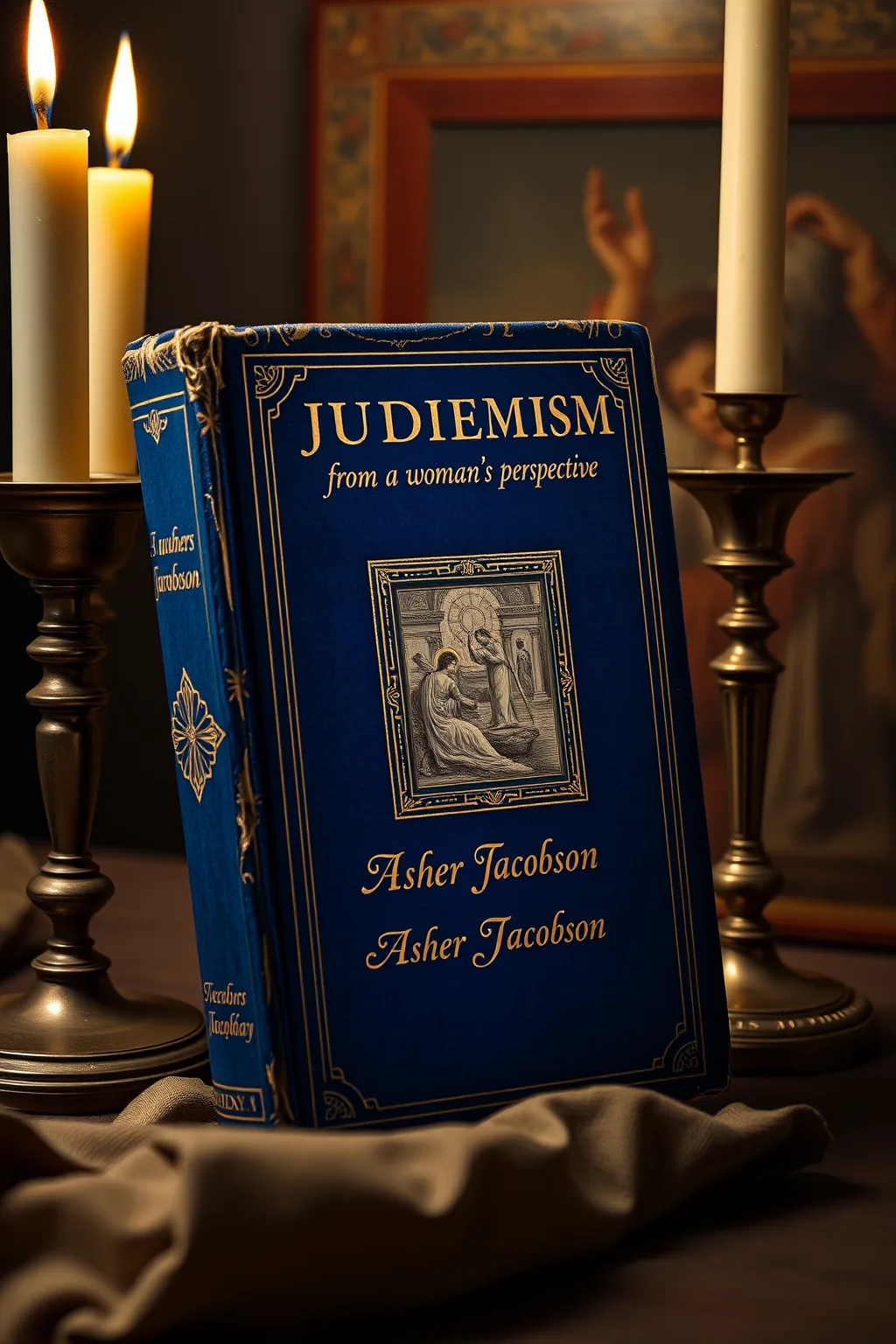
Judaism from a woman's perspective
 61
61

Judaism from a woman's perspective



By Aurelia Blackwood (Occult Philosophy Critic) — Asher Jacobson's 'Judaism from a Woman's Perspective' is a revelation for those seeking the veiled currents of Jewish mysticism. Eschewing superficial interpretations, Jacobson plunges into the heart of Kabbalah, illuminating the potent, often overlooked, divine feminine principle. The text is rich with esoteric insights, offering a profound re-contextualization of familiar narratives and rituals. Its strength lies in its ability to empower readers, particularly women, by revealing the inherent spiritual authority and mystical depth within their tradition. This book is essential for practitioners of esoteric Judaism and for anyone interested in the intersection of gender and divine manifestation.
📝 Description
61
Asher Jacobson's 2017 book examines Judaism through the lens of the divine feminine.
This work looks at Jewish tradition from the viewpoint of feminine consciousness. Jacobson analyzes Kabbalistic texts and mystical ideas, finding divine feminine energies and archetypes within them. He examines ancient writings and lore to uncover symbolism that relates to spiritual experience. The book retells sacred stories, emphasizing the presence of the Shekhinah and the power of matriarchal figures. It is not just a historical or religious study. It aims to foster a closer connection to the divine, particularly for those interested in the sacred feminine within Judaism.
It appeals to those looking for esoteric knowledge and academic study of mystical traditions. The book connects historical concepts with modern understanding and combines intellectual inquiry with personal experience. Jacobson's approach offers a distinct viewpoint for readers interested in these themes.
This book sits within the broader tradition of Jewish mysticism, specifically Kabbalah. It focuses on interpretations that highlight the feminine aspects of divinity, often overlooked in more traditional or patriarchal readings. By drawing on texts like the Zohar and exploring concepts of the Shekhinah, it connects with a lineage of esoteric Jewish thought. The work also engages with contemporary discussions on gender and spirituality, placing ancient mystical ideas into dialogue with modern concerns about the sacred feminine.
💡 Why Read This Book?
Uncover the profound spiritual power of the divine feminine within Judaism. This book offers unique Kabbalistic insights, revealing hidden symbolism and esoteric interpretations of sacred texts. Ideal for seekers of deeper spiritual meaning, scholars of mysticism, and practitioners looking to integrate feminine divine energies into their understanding of Jewish tradition.
⭐ Reader Reviews
Honest opinions from readers who have explored this book.
❓ Frequently Asked Questions
Does this book offer a feminist critique of traditional Judaism?
While it re-contextualizes traditional texts through a feminine lens, its primary focus is on revealing the inherent spiritual power and esoteric wisdom associated with the divine feminine within Kabbalah and Jewish mysticism, rather than solely offering a critique.
Is prior knowledge of Kabbalah required to understand this book?
The book is written to be accessible, guiding readers through complex concepts with clarity. While some familiarity with Jewish concepts is helpful, Jacobson’s evocative prose makes the esoteric accessible to a broad audience seeking spiritual depth.
What is the role of the Shekhinah in this interpretation?
The Shekhinah, the immanent presence of God, is central. Jacobson explores its feminine aspects, revealing its vital role in creation, divine immanence, and the spiritual lives of individuals, particularly women.
How does this book connect historical Jewish women to mystical practice?
It re-examines the roles and spiritual contributions of biblical matriarchs and historical Jewish women, highlighting their often-unacknowledged connections to mystical traditions and their embodiment of divine wisdom.
Can this book be used for personal spiritual growth?
Absolutely. By illuminating the divine feminine and its presence in Jewish mystical thought, the book provides pathways for personal connection to the sacred and a deeper understanding of one's own spiritual journey.
🔮 Key Themes & Symbolism
The Divine Feminine in Kabbalah
This theme explores the profound, often obscured, presence of the divine feminine within the Kabbalistic framework. It explores the personification of God's immanent aspect, the Shekhinah, and her many-sided roles in creation, revelation, and spiritual communion. Jacobson unearths ancient teachings that elevate feminine divine energies, presenting them not as subordinate but as integral to the cosmic order and the path to gnosis. This section illuminates how understanding these feminine currents unlocks deeper layers of meaning in Jewish scripture and mystical practice, offering a more holistic vision of the Divine.
Archetypes of Jewish Matriarchs
This theme re-examines the foundational figures of Jewish tradition – Sarah, Rebecca, Rachel, and Leah – not merely as historical women but as potent archetypes embodying specific divine attributes and mystical pathways. Jacobson reveals how their stories, often interpreted through a patriarchal lens, are imbued with esoteric wisdom and symbolic resonance. Their lives become maps for navigating spiritual challenges, understanding divine providence, and accessing inherent feminine power within the Jewish tradition. This exploration offers a fresh, empowering perspective on these revered figures and their enduring mystical legacy.
The Shekhinah's Immanent Presence
Central to this theme is the concept of the Shekhinah, the feminine aspect of God's immanence, dwelling within the world and intimately connected to humanity. Jacobson guides readers to perceive the Shekhinah's pervasive influence in prayer, ritual, and everyday life, highlighting her role as a source of comfort, wisdom, and divine connection. This perspective shifts the understanding of God from a distant entity to a present, nurturing force, emphasizing the accessibility of the divine through the recognition of feminine spiritual power and its embodiment.
💬 Memorable Quotes
Direct passages from the work, attributed to the author.
“Within the sacred texts, traces of the Matriarchs await our listening ear.”
— It implies that the wisdom and spiritual guidance of ancient Jewish women are not lost but are present within the scriptures, waiting to be rediscovered and understood through a feminine lens.
“Shekhinah's light is the hidden thread woven through all creation.”
— This highlights the pervasive and essential nature of the divine feminine presence in the universe, suggesting it is the underlying force that binds and animates all existence.
“To know God is to embrace the wholeness of Her being.”
— This emphasizes the need to acknowledge and integrate both masculine and feminine aspects of the Divine for a complete and authentic understanding of God.
“The path to wisdom is often found in the sacred feminine's embrace.”
— It posits that spiritual enlightenment and profound understanding are significantly facilitated by engaging with and honoring the principles and energies of the divine feminine.
💡 Key Ideas
Editorial paraphrase of the work's core concepts — not direct quotes.
The veil thins where the feminine spirit whispers.
This quote suggests that spiritual revelation and access to hidden knowledge are particularly potent when one connects with the energies and perspectives associated with the divine feminine.
🌙 Esoteric Significance
Tradition
This work is deeply rooted in the Kabbalistic tradition, specifically exploring its esoteric dimensions through the lens of the divine feminine. It draws upon foundational Kabbalistic texts like the Zohar and Sefer Yetzirah, reinterpreting their symbolism and cosmology to reveal the integral role of feminine divine energies. The focus is on the immanent aspect of God (Shekhinah) and the spiritual power inherent in feminine archetypes within the Jewish mystical framework, offering a path to gnosis through a balanced understanding of masculine and feminine divine forces.
Symbolism
Key symbols explored include the Shekhinah, often depicted as a nurturing mother or a divine bride, representing God's indwelling presence. The Sefirot, particularly those with feminine associations like Malkhut (Kingdom), are re-examined. Archetypal figures such as the Matriarchs (Sarah, Rebecca, Rachel, Leah) are presented as vessels of divine wisdom and power. The feminine aspects of creation, divine light, and the sacred feminine's role in the cosmic dance are woven throughout the text, offering profound metaphorical insights into spiritual realities and the human connection to the Divine.
Modern Relevance
In an era increasingly conscious of gender dynamics and the need for inclusive spiritual paradigms, Jacobson's work offers profound relevance. It empowers individuals, particularly women, by validating and useful their spiritual heritage and inherent connection to the Divine within Judaism. The exploration of the divine feminine provides a contemporary framework for understanding God's immanence and accessibility, fostering a more holistic and integrated spiritual practice for all seekers interested in the intersection of gender, mysticism, and religious experience.
👥 Who Should Read This Book
This book is a treasure for seekers of profound spiritual insight, particularly those drawn to the esoteric dimensions of Judaism and Kabbalah. Scholars of comparative religion and mysticism will find its unique perspective useful. Practitioners of Jewish mysticism seeking to deepen their understanding of the divine feminine will find it invaluable. Beginners to Kabbalah will appreciate its accessible yet profound exploration of complex themes. Anyone interested in the intersection of gender, spirituality, and ancient wisdom traditions will discover a rich and transformative reading experience.
📜 Historical Context
Asher Jacobson's work emerges from a wide range of Jewish mystical thought, particularly flourishing during the medieval period with the advent of Kabbalah. This era, marked by intellectual inquiry and a deep engagement with scripture, saw the development of complex symbolic systems aimed at understanding the nature of God and the universe. While often presented through a patriarchal framework, subtle yet powerful feminine currents were always present, particularly in the conceptualization of the Shekhinah. This book revisits these traditions during a contemporary period of renewed interest in esoteric studies and feminist theology, seeking to reclaim and illuminate the often-overlooked feminine dimensions of Jewish spirituality, offering a bridge between ancient mystical insights and modern spiritual seeking.
📔 Journal Prompts
Reflect on the concept of the Shekhinah in your personal spiritual life. How does recognizing the divine feminine presence alter your perception of the Divine?
Consider the stories of the Matriarchs. Which of their archetypal qualities most resonate with your own spiritual journey and challenges?
How can you integrate the energies of the divine feminine into your daily practices, rituals, or meditations?
Explore the symbolic language of creation from a feminine perspective. What new meanings emerge?
In what ways does acknowledging the divine feminine enrich your understanding of your own identity and spiritual potential within your tradition?
🗂️ Glossary
Shekhinah
The immanent presence of God in the world, often personified as the feminine aspect of the Divine. She represents God's dwelling within creation and intimacy with humanity.
Kabbalah
A system of Jewish mysticism that seeks to understand the nature of God and the universe through esoteric interpretation of scripture and symbolic cosmology, particularly the Sefirot.
Sefirot
The ten divine emanations or attributes through which God reveals Himself and interacts with creation in Kabbalistic cosmology. They form a tree-like structure.
Gnosis
Spiritual knowledge or insight, often experiential, leading to enlightenment or a direct apprehension of the Divine. It is a central aim in many esoteric traditions.
Archetype
A universally understood symbol, character, or pattern of behavior that recurs in myth, literature, and the collective unconscious, representing fundamental human experiences or divine principles.
This book appears in 1 collection
🔮 Readers Also Liked
Browse all →









From the “Kabbalah” Collection
View all →







More Free Kabbalah & Jewish Mysticism Books
View all →