Studies in religious philosophy and mysticism

 62
62

Studies in religious philosophy and mysticism


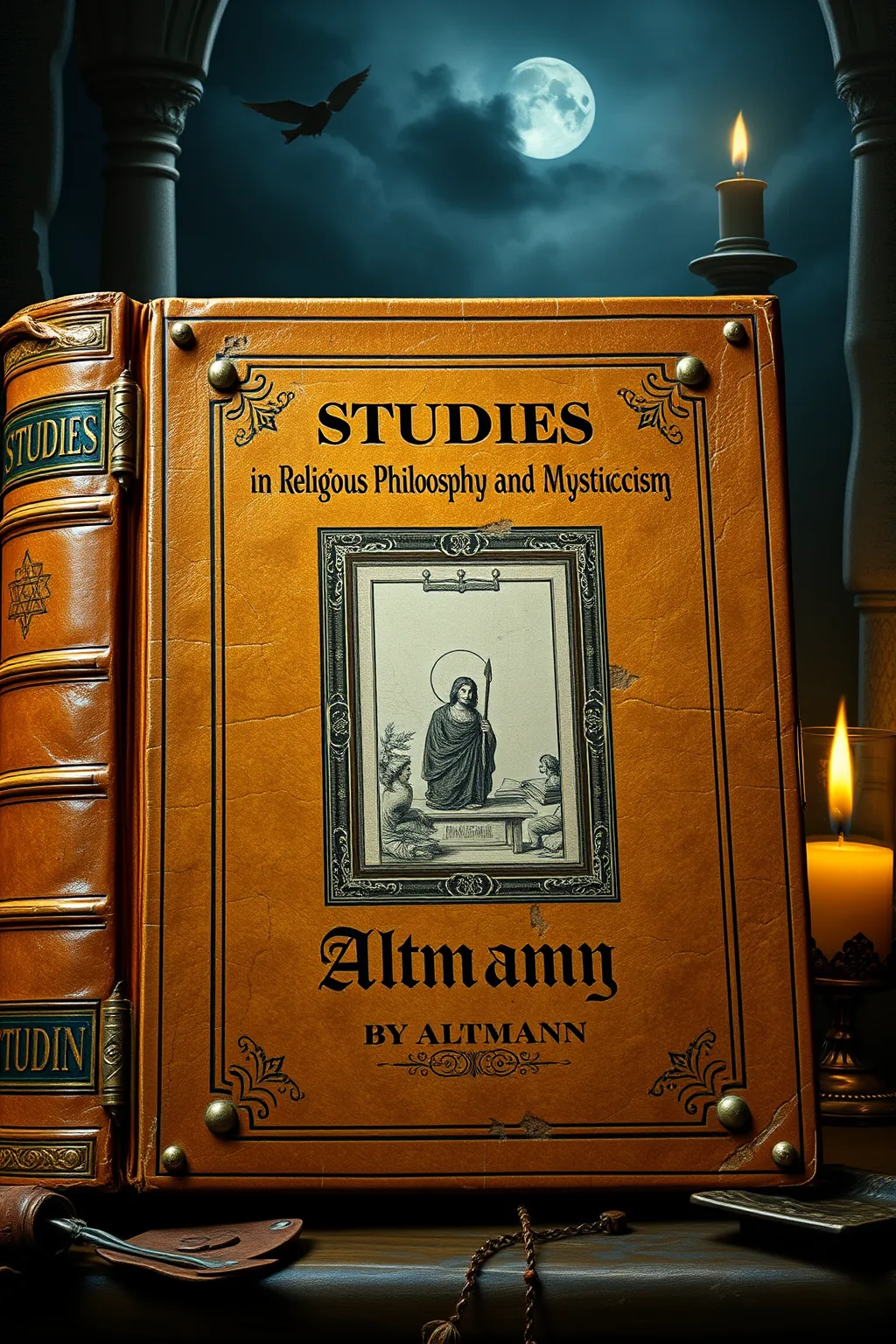
Lorelei Sage (Contemplative Literature Editor) — Alexander Altmann’s 'Studies in Religious Philosophy and Mysticism' is an indispensable guide for anyone seeking to grasp the esoteric dimensions of Jewish thought. Altmann masterfully navigates the labyrinthine pathways of Kabbalah, revealing its philosophical sophistication and mystical allure. His meticulous scholarship illuminates the intricate symbolism and theological concepts that define this rich tradition. This work is a treasure trove for scholars of comparative religion, students of Jewish philosophy, and mystics yearning for deeper comprehension of the divine-human dialogue. It stands as a beacon for those who seek not just knowledge, but gnosis.
📝 Description
62
Alexander Altmann's 1950 'Studies in Religious Philosophy and Mysticism' examines Jewish mystical traditions.
This collection presents Alexander Altmann's scholarly work on Jewish religious philosophy and mysticism. The essays focus on the Kabbalah, its philosophical foundations, and the development of Jewish mystical thought. Altmann analyzes the symbolic language, allegorical methods, and the pursuit of divine union within these traditions.
The book explores the connections between concepts of God, the universe, and the human spirit as understood in Jewish mysticism. It aims to provide insight into the intellectual and spiritual dimensions of these traditions for those interested in serious study. The essays are designed to clarify complex ideas about metaphysical inquiry within Judaism.
Alexander Altmann's work situates itself within the long history of Jewish esoteric traditions, particularly the Kabbalah. These traditions often involve symbolic interpretations of religious texts, mystical experiences, and a focus on hidden meanings and divine realities. The book engages with the philosophical frameworks that have shaped and been shaped by these mystical currents, connecting them to broader intellectual currents within Judaism.
💡 Why Read This Book?
Embark on a profound intellectual and spiritual odyssey through the heart of Jewish mysticism. Altmann’s 'Studies' offers essential insights into Kabbalistic philosophy, unveiling hidden symbolic languages and the quest for divine unity. Ideal for seekers of esoteric knowledge, scholars of comparative religion, and practitioners of contemplative Judaism who desire a deeper understanding of transcendent realities.
⭐ Reader Reviews
Honest opinions from readers who have explored this book.
❓ Frequently Asked Questions
What is Kabbalah?
Kabbalah is a mystical tradition within Judaism that explores the divine nature, the creation of the universe, and the relationship between God and humanity through esoteric interpretations of religious texts and symbolic systems.
What philosophical concepts are explored?
The book delves into concepts such as divine emanation, the nature of the soul, the structure of the cosmos, and the path to spiritual enlightenment, drawing connections between philosophical inquiry and mystical experience.
Is this book suitable for beginners?
While comprehensive, the book is best suited for those with a foundational understanding of Jewish thought or a strong interest in mysticism. Beginners may find it beneficial to approach with a guide or supplementary materials.
What is the role of symbolism in Jewish mysticism?
Symbolism is paramount, serving as a vehicle to convey profound spiritual truths and divine mysteries that transcend ordinary language. Key symbols like the Tree of Life and the sefirot unlock deeper layers of meaning.
How does this book relate to broader religious philosophy?
Altmann bridges the gap between academic religious philosophy and visceral mystical experience, demonstrating how Jewish mystical thought offers unique perspectives on universal questions about existence, consciousness, and the divine.
🔮 Key Themes & Symbolism
The Kabbalistic Cosmos: Emanation and Structure
This theme studies the intricate cosmology of Kabbalah, particularly the concept of divine emanation through the ten Sefirot, the divine attributes or emanations that bridge the infinite God and the finite world. Altmann elucidates the symbolic architecture of this cosmic order, revealing how each Sefira represents a stage in creation and a pathway for spiritual ascent. The interconnectedness of these divine emanations and their influence on the terrestrial realm are explored, offering a profound understanding of the universe as a divinely orchestrated manifestation.
The Nature of the Soul and Divine Union
A central focus is the exploration of the human soul within the framework of Jewish mysticism. Altmann examines the many-sided nature of the soul, its origins, its journey through various spiritual realms, and its ultimate yearning for reunion with the Divine Source. The texts discussed often detail practices and contemplative methods aimed at purifying the soul and achieving a state of ecstatic union or 'devekut' with God. This theme highlights the human capacity for spiritual transformation and the profound quest for transcendence.
Symbolism and Allegory in Sacred Texts
Altmann meticulously unpacks the wide range of symbolism and allegory embedded within Jewish sacred literature, particularly the Zohar and other Kabbalistic texts. He demonstrates how seemingly simple narratives or laws conceal profound mystical truths about the divine, creation, and human destiny. Understanding this symbolic language is presented as crucial for unlocking the esoteric dimensions of Judaism, revealing layers of meaning that resonate with timeless spiritual principles and offer guidance for the seeker's path.
💬 Memorable Quotes
Direct passages from the work, attributed to the author.
“The universe is a mirror reflecting the Divine.”
— This highlights the pantheistic or panentheistic undercurrents in Jewish mysticism, suggesting that all of creation is imbued with divine presence and offers clues to understanding God.
“Through contemplation, the soul ascends.”
— This speaks to the core practice of mysticism, where focused meditation and inner reflection are seen as the primary means by which the human spirit can connect with higher realities.
“Hidden meanings lie beneath the surface of the law.”
— This points to the allegorical and esoteric interpretation methods used in Kabbalah, where the literal meaning of religious texts is seen as a gateway to deeper spiritual insights.
“The quest for God is the soul's ultimate destiny.”
— This captures the teleological drive within Jewish mysticism, framing the entire spiritual journey as a purposeful movement towards divine communion and ultimate fulfillment.
💡 Key Ideas
Editorial paraphrase of the work's core concepts — not direct quotes.
The Kabbalah is not merely a speculative doctrine, but a living tradition.
This quote emphasizes the dynamic and experiential nature of Kabbalah, positioning it not just as an abstract intellectual pursuit but as a practice that shapes spiritual life and consciousness.
🌙 Esoteric Significance
Tradition
This work is deeply rooted in the Kabbalistic tradition, a complex and profound system of Jewish mysticism that seeks to understand the divine nature, creation, and the human connection to God. It explores the esoteric interpretations of the Torah, the symbolic language of the Zohar, and the philosophical underpinnings that have guided generations of mystics in their pursuit of spiritual enlightenment and divine union.
Symbolism
The book meticulously deciphers the rich symbolic language of Jewish mysticism, focusing on core concepts like the Sefirot (divine emanations), the Tree of Life, the mystical significance of Hebrew letters, and the allegorical interpretations of biblical narratives. These symbols are presented not as mere decorative elements, but as vital keys to unlocking hidden layers of spiritual meaning and understanding the divine architecture of reality.
Modern Relevance
In an era often characterized by materialism and spiritual searching, Altmann's 'Studies' offers timeless wisdom. It provides a framework for understanding consciousness, the interconnectedness of all things, and the profound human desire for meaning and transcendence. The philosophical rigor and mystical depth presented remain highly relevant for individuals seeking to integrate spiritual insights into their lives and to explore the perennial questions of existence.
👥 Who Should Read This Book
This volume is a profound resource for a diverse audience. Scholars of religious studies, Jewish philosophy, and comparative mysticism will find Altmann's meticulous research and insightful analysis invaluable. Seekers of esoteric knowledge and spiritual wisdom will discover a rich exploration of Kabbalistic thought, offering pathways to deeper understanding. Practitioners interested in contemplative Judaism and the mystical dimensions of faith will find practical and theoretical guidance. Even those new to the subject but possessing a curious mind will be drawn into the profound beauty and intellectual depth of Jewish mystical traditions.
📜 Historical Context
Published in the mid-20th century, Alexander Altmann's 'Studies in Religious Philosophy and Mysticism' emerged during an important period for the academic study of religion and Jewish thought. Following the devastation of the Holocaust and amidst the nascent state of Israel, there was a renewed global interest in preserving and understanding Jewish heritage, including its profound mystical traditions. Altmann, a distinguished scholar, contributed significantly to this scholarly effort, bringing his deep knowledge of medieval Jewish philosophy and Kabbalah to a wider audience. His work served to legitimize Kabbalistic studies within academic circles, often bridging the gap between historical exegesis and philosophical analysis, while also resonating with a burgeoning interest in comparative mysticism and esoteric traditions worldwide.
📔 Journal Prompts
Reflect on a personal experience of divine presence. How might Kabbalistic concepts of emanation or union illuminate this experience?
Consider the role of symbolism in your own life. How can understanding the symbolic language of Kabbalah deepen your perception of the world?
Explore the concept of the 'soul' as presented in the text. How does this understanding resonate with or challenge your own beliefs about the self?
What does the idea of 'devekut' (cleaving to God) mean to you? What practices might facilitate this connection in your daily life?
How can the philosophical underpinnings of Kabbalah inform your understanding of the universe and humanity's place within it?
🗂️ Glossary
Kabbalah
A mystical tradition within Judaism that explores the divine nature, creation, and the human connection to God through esoteric interpretations and symbolic systems.
Sefirot
The ten divine emanations or attributes through which God manifests and interacts with the created world, often depicted as the 'Tree of Life'.
Zohar
The foundational text of Kabbalah, a mystical commentary on the Torah, rich in symbolism, allegory, and esoteric teachings.
Devekut
A Hebrew term meaning 'cleaving' or 'attachment,' referring to a state of intense spiritual communion and intimacy with God.
Ein Sof
Literally 'Without End,' this refers to the unmanifest, infinite, and unknowable aspect of God before any divine emanation or creation occurred.
This book appears in 1 collection
🔮 Readers Also Liked
Browse all →








More by Altmann, Alexander
All books →



From the “Kabbalah” Collection
View all →







More Free Kabbalah & Jewish Mysticism Books
View all →