A Sufi-Jewish Dialogue

 61
61

A Sufi-Jewish Dialogue



Alaric Kestrel, Metaphysical Studies Reviewer: Diana Lobel's "A Sufi-Jewish Dialogue" is a breathtaking revelation, meticulously charting the often-overlooked confluence of Sufi and Jewish mystical thought in the medieval era. By re-contextualizing Bahya Ibn Paquda's "Duties of the Heart" within its original Judeo-Arabic and Islamic milieu, Lobel unveils layers of esoteric insight previously obscured. The author's scholarly rigor is matched by her evocative prose, making complex philosophical and spiritual concepts accessible. This work is indispensable for scholars of Kabbalah and Islamic mysticism, offering profound new perspectives on the evolution of contemplative practices and the universal pursuit of divine knowledge. A truly illuminating contribution.
📝 Description
61
Diana Lobel's 2011 book examines the Arabic origins of Bahya Ibn Paquda's "Duties of the Heart."
Diana Lobel's "A Sufi-Jewish Dialogue" investigates the connections between eleventh-century Judeo-Arabic and Islamic mystical traditions. The book centers on Bahya Ibn Paquda's "Duties of the Heart," a work often studied only through its Hebrew translation. Lobel argues that understanding the Arabic context, deeply influenced by early Sufism, is crucial to grasping Bahya's ethical and spiritual teachings. She shows how Islamic mystical literature informed Bahya's ideas about self-perfection and the pursuit of divine closeness.
The study highlights shared contemplative practices and symbolic language that linked these traditions. It reveals how Bahya drew upon the rich spiritual thought of his time, demonstrating a common search for spiritual truth across different faith communities. Lobel's work illuminates a period of significant cross-cultural exchange in medieval spirituality.
This book is situated within the study of medieval comparative mysticism, specifically focusing on the intellectual and spiritual currents that flowed between Jewish and Islamic thinkers in the Arabic speaking world. It examines how esoteric concepts of divine proximity, ethical self discipline, and contemplative practices were shared and adapted across these traditions. The work addresses the historical reality of sustained dialogue and mutual influence, challenging isolated readings of religious thought.
💡 Why Read This Book?
Uncover the hidden mystical dialogue between Sufism and Jewish thought, revealing the profound spiritual kinship of Bahya Ibn Paquda's "Duties of the Heart." Explore the esoteric dimensions of early Islamic and Jewish ethics, enriched by cross-cultural influences. Ideal for scholars, seekers of ancient wisdom, and practitioners interested in the universal language of the soul's journey towards the divine.
⭐ Reader Reviews
Honest opinions from readers who have explored this book.
❓ Frequently Asked Questions
What is the primary focus of "A Sufi-Jewish Dialogue"?
The book meticulously examines the influence of Islamic Sufi mysticism on Bahya Ibn Paquda's "Duties of the Heart," a foundational text in Jewish spirituality, highlighting its original Judeo-Arabic context.
Who was Bahya Ibn Paquda?
Bahya Ibn Paquda was an eleventh-century Jewish philosopher and poet from Muslim Spain, renowned for his ethical and spiritual masterpiece, "Duties of the Heart" (Kitab al-Hidayah ila Fara'id al-Qulub).
What makes the Judeo-Arabic context significant?
The Judeo-Arabic context reveals the deep immersion of Bahya's work in the philosophical and mystical currents of Islamic scholarship and Sufi practices prevalent in his time, offering a richer understanding.
Is this book for beginners or advanced scholars?
While accessible to dedicated beginners, the book offers profound depth for scholars of comparative religion, Jewish mysticism, and Islamic Sufism, making it valuable for a wide range of readers.
How does this book connect to modern spiritual seeking?
It connects by demonstrating enduring universal themes of self-purification, ethical living, and the yearning for divine connection, offering timeless wisdom for contemporary spiritual journeys.
🔮 Key Themes & Symbolism
The Esoteric Heart of Bahya's Teachings
This theme studies the hidden, spiritual dimensions of Bahya Ibn Paquda's "Duties of the Heart," moving beyond its ethical framework to explore its profound mystical underpinnings. It examines how Bahya's work can be understood as a guide to inner transformation, a journey of the soul towards divine consciousness, echoing the Sufi emphasis on the purification of the heart as the locus of spiritual experience. The exploration includes symbolic interpretations of key concepts and the allegorical pathways to spiritual realization.
Cross-Cultural Mystical Exchange in Medieval Iberia
This theme illuminates the vibrant intellectual and spiritual field of eleventh-century Muslim Spain, where Jewish and Islamic traditions engaged in a rich dialogue. It highlights how Sufi concepts and practices, such as asceticism, contemplation, and the annihilation of the ego, found resonance and integration within Jewish devotional literature. The focus is on the mutual influences and shared aspirations for spiritual understanding that characterized this era of remarkable cultural synthesis.
The Language of the Soul: Sufi and Kabbalistic Parallels
This theme draws parallels between the mystical language and practices of Sufism and early Kabbalah, as exemplified in Bahya's work. It explores shared symbolic vocabularies, common spiritual goals (like divine union or gnosis), and analogous methods for achieving spiritual ascent. The aim is to reveal an underlying unity in the human quest for transcendence, demonstrating how different traditions, despite their distinct formulations, often articulate similar profound truths about the nature of reality and the human spirit.
💬 Memorable Quotes
Direct passages from the work, attributed to the author.
“Wisdom blooms in the soil of humility.”
— Highlighting the virtue of humility as essential for spiritual growth and the attainment of true knowledge, a concept central to both ascetic Sufism and Jewish ethical teachings.
“The divine whispers are heard in the quietude of the soul.”
— This speaks to the importance of inner silence and contemplative practice for receiving spiritual insight, a core tenet in various mystical paths.
“To know the self is the first step to knowing the Divine.”
— Underscoring the introspective journey and self-awareness as foundational to spiritual understanding and connection with the transcendent.
“The path is paved with intention, the destination with devotion.”
— This emphasizes the dual nature of spiritual progress: the importance of sincere intent in one's actions and the ultimate goal of profound love and surrender to the Divine.
💡 Key Ideas
Editorial paraphrase of the work's core concepts — not direct quotes.
The heart is the crucible where faith is forged.
This quote emphasizes the central role of inner disposition and emotional sincerity in the authentic practice of faith, echoing both Sufi and Jewish mystical traditions.
🌙 Esoteric Significance
Tradition
This work is deeply embedded in the esoteric traditions of both Sufism and early Kabbalah. It bridges these two mystical paths by exploring the inner dimensions of religious observance and the cultivation of virtues as pathways to divine knowledge. The emphasis on the purification of the heart, inner contemplation, and the symbolic interpretation of spiritual states aligns with the core practices and goals of both traditions, offering a unique lens into their shared spiritual heritage.
Symbolism
The text is rich with symbolism, drawing from both Islamic and Jewish contemplative traditions. Key symbols include the 'heart' as the locus of divine presence and spiritual struggle, the 'limbs' representing outward actions, and the 'soul' as the divine spark seeking return. Allegorical interpretations of divine commandments and the journey of the soul through various spiritual stations are central, offering esoteric insights into the nature of the self and its relationship with the Infinite.
Modern Relevance
In an age often characterized by external distractions, "A Sufi-Jewish Dialogue" offers a potent reminder of the timeless importance of inner work and ethical self-cultivation. The book's exploration of universal themes of spiritual discipline, the purification of intentions, and the pursuit of divine love provides a profound framework for contemporary seekers. It demonstrates that the quest for spiritual depth transcends specific religious boundaries, offering a shared vocabulary for those striving for a more meaningful and connected existence.
👥 Who Should Read This Book
This useful volume is essential for scholars and students of Kabbalah, Jewish mysticism, and Islamic Sufism, offering groundbreaking insights into their historical and philosophical intersections. Spiritual seekers interested in comparative religion and the perennial wisdom traditions will find a collection of devotional practices and ethical guidance. Practitioners of meditation and contemplative prayer will discover timeless techniques for inner purification and the cultivation of divine consciousness. Even those new to these traditions will be drawn in by Lobel's clear prose and the profound, universal message of spiritual transformation.
📜 Historical Context
Eleventh-century Muslim Spain, known as Al-Andalus, was a vibrant crucible of intellectual and cultural exchange. Within this dynamic environment, Jewish scholars and mystics thrived, deeply engaged with the surrounding Islamic intellectual tradition. Bahya Ibn Paquda, a leading figure of this era, composed "Duties of the Heart" (Kitab al-Hidayah ila Fara'id al-Qulub) in Judeo-Arabic, a lingua franca for Jewish scholarship. This period witnessed a profound cross-pollination of ideas, where Sufi contemplative practices, philosophical inquiries, and ethical frameworks significantly influenced Jewish thought. Bahya's masterpiece, while rooted in Jewish tradition, demonstrably absorbed and reinterpreted concepts from Islamic mysticism, particularly Sufism, regarding the purification of the inner life, the cultivation of virtues, and the yearning for divine proximity. The rapid translation of his work into Hebrew attests to its immense significance and its ability to resonate deeply across religious boundaries, shaping generations of Jewish spiritual seekers.
📔 Journal Prompts
Reflect on a time when your 'heart' felt distant from your actions. How can you bridge this gap?
What does the concept of 'divine whispers' mean to you? How can you cultivate inner silence to hear them?
Explore the virtue of humility in your own life. How does it influence your pursuit of knowledge and spiritual growth?
Consider the symbolic meaning of 'purification' in your spiritual journey. What aspects of yourself do you seek to refine?
How can the lessons from this Sufi-Jewish dialogue inform your understanding of interfaith relations and shared spiritual aspirations?
🗂️ Glossary
Sufism
The mystical dimension of Islam, focused on the pursuit of divine love and direct experience of God through asceticism, meditation, and spiritual discipline.
Kabbalah
The esoteric system of Jewish mysticism, concerned with the study of the divine nature, the creation of the universe, and the hidden meanings of sacred texts.
Judeo-Arabic
A dialect of Arabic written using Hebrew characters, commonly used by Jews in the Middle Ages for literary and scholarly purposes.
Bahya Ibn Paquda
An eleventh-century Jewish philosopher and theologian from Muslim Spain, author of the influential ethical and spiritual work, "Duties of the Heart."
Duties of the Heart (Kitab al-Hidayah ila Fara'id al-Qulub)
Bahya Ibn Paquda's important work, originally written in Judeo-Arabic, which guides readers on the ethical and spiritual obligations of the heart, emphasizing inner transformation.
This book appears in 1 collection
🔮 Readers Also Liked
Browse all →









More by Diana Lobel
All books →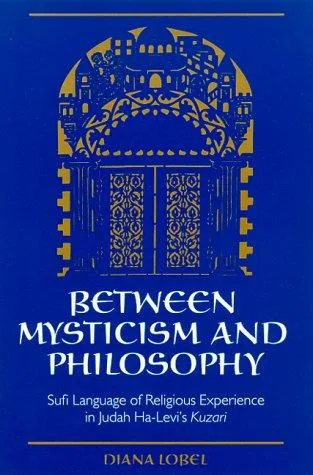
From the “Kabbalah” Collection
View all →







More Free Kabbalah & Jewish Mysticism Books
View all →