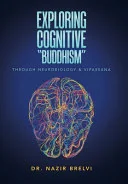
Exploring Cognitive "Buddhism": Through Neurobiology & Vipassana
 80
80

Exploring Cognitive "Buddhism": Through Neurobiology & Vipassana
Nazir Brelvi’s attempt to map Vipassana meditation onto neurobiological correlates in "Exploring Cognitive 'Buddhism'" is ambitious, aiming to reconcile the subjective experience of enlightenment with the objective data of brain function. The book's strength lies in its detailed exploration of specific neural pathways potentially activated during focused attention and insight meditation, referencing studies on brainwave patterns. However, the author occasionally overstates the direct correlation between observed neural activity and the nuanced philosophical tenets of Buddhism, particularly when interpreting the concept of "emptiness." The passage discussing the prefrontal cortex's role in self-monitoring during Vipassana offers a concrete example of this scientific-agnostic approach. Ultimately, the work provides a valuable, albeit sometimes speculative, bridge between two disparate fields.
📝 Description
80
Nazir Brelvi's 2020 book examines how Vipassana meditation aligns with neurobiology.
Nazir Brelvi's "Exploring Cognitive 'Buddhism': Through Neurobiology & Vipassana" (2020) investigates the overlap between Buddhist meditation, specifically Vipassana, and contemporary neurobiology. The book aims to connect ancient contemplative traditions with modern scientific study of consciousness and cognition. It proposes that by observing brain activity during meditation, new insights can surface for long held philosophical questions.
This work is for academics, researchers, and practitioners interested in the scientific study of consciousness, meditation, and Buddhist philosophy. It will appeal to those seeking empirical support or scientific models for contemplative experiences. Readers familiar with neurobiology or Vipassana meditation will find the most direct connection, though a general interest in the mind-body link is also useful.
This book is part of a scholarly tradition that began in the late 20th century, correlating Eastern contemplative practices with Western scientific models. It follows in the footsteps of researchers like Francisco Varela, who explored neurophenomenology. Brelvi engages with contemplative neuroscience and the ongoing dialogue between religious studies and cognitive science, particularly as mindfulness gained wider recognition.
💡 Why Read This Book?
• Understand how neurobiology offers a potential framework for ancient Vipassana techniques, moving beyond abstract meditation instructions to tangible brain processes studied since the late 20th century. • Gain insight into the scientific interpretation of Buddhist concepts like impermanence (anicca), as explored through specific brain imaging studies mentioned in the text. • Discover how contemporary research, building on work like Francisco Varela's, is attempting to bridge the empirical divide between subjective contemplative experience and objective scientific observation.
⭐ Reader Reviews
Honest opinions from readers who have explored this book.
❓ Frequently Asked Questions
What is the primary goal of Nazir Brelvi's "Exploring Cognitive 'Buddhism'"?
The book aims to reconcile scientific understanding, particularly neurobiology, with Buddhist meditative practices like Vipassana to offer new perspectives on consciousness and cognition.
When was "Exploring Cognitive 'Buddhism': Through Neurobiology & Vipassana" first published?
The book was first published on February 17, 2020.
Who is the author of "Exploring Cognitive 'Buddhism'"?
The author is Nazir Brelvi.
What specific meditative practice is central to the book's exploration?
Vipassana meditation is the central practice examined, focusing on its subjective experiences and potential neurobiological underpinnings.
What scientific field does the book heavily draw upon?
The book heavily draws upon neurobiology, investigating brain activity and function in relation to meditative states.
What ancient mythologies are mentioned in the original blurb as relating to the book's questions?
The original blurb mentions ancient Egyptian, Greek, and Hindu mythologies as contexts for the age-old questions explored.
🔮 Key Themes & Symbolism
Neurobiological Correlates of Meditation
The work meticulously examines how specific meditative states, particularly those cultivated through Vipassana, manifest in observable brain activity. It examines concepts like neural plasticity and the activation of particular cortical and subcortical regions during focused attention and insight. By referencing studies on electroencephalography (EEG) and functional magnetic resonance imaging (fMRI), Brelvi seeks to ground the subjective experience of meditation in objective biological processes, exploring how phenomena like altered self-perception might be linked to changes in the default mode network.
Vipassana as a Cognitive Tool
Beyond its traditional spiritual context, the book frames Vipassana as a sophisticated cognitive training method. It analyzes the practice of observing sensations and thoughts without judgment as a means to deconstruct habitual mental patterns. The text explores how this sustained, detached observation can lead to a more direct understanding of impermanence (anicca) and non-self (anatta), not merely as philosophical doctrines but as empirically verifiable insights into the nature of mind and reality.
Bridging Science and Spirituality
A core theme is the reconciliation of seemingly disparate worldviews: the empirical, reductionist approach of modern science and the introspective, wisdom-oriented tradition of Buddhism. Brelvi argues that neurobiology and contemplative practice are not in opposition but can offer complementary perspectives on the human condition. The book engages with questions about consciousness, self, and reality, suggesting that insights from both domains can enrich our understanding and potentially lead to novel therapeutic or existential frameworks.
Historical and Philosophical Inquiry
The book situates its inquiry within a broader historical context, referencing ancient philosophical traditions from Egypt, Greece, and India. It positions the modern scientific exploration of consciousness as a continuation of humanity's enduring quest for self-understanding. By connecting contemporary neuroscience with ancient contemplative systems, Brelvi aims to illuminate the continuity of these fundamental questions across millennia and diverse cultural expressions.
💬 Memorable Quotes
Direct passages from the work, attributed to the author.
“The observation of mental phenomena during Vipassana offers a unique dataset for neurobiological study.”
— This highlights the book's central thesis: that the subjective reports of meditators can be correlated with objective brain measurements, providing a richer understanding of both.
“Concepts like impermanence (anicca) may find correlates in the brain's dynamic and ever-changing neural networks.”
— This interpretation suggests that the Buddhist concept of constant flux is not just a spiritual idea but might be reflected in the very biological substrate of the mind.
“The default mode network's activity during non-meditative states contrasts with the focused attention cultivated in Vipassana.”
— This interpretation points to specific neurobiological findings discussed in the book, illustrating how scientific data can illuminate the shift in mental states achieved through meditation.
💡 Key Ideas
Editorial paraphrase of the work's core concepts — not direct quotes.
Reconciling ancient wisdom with modern scientific findings is crucial for a comprehensive view of consciousness.
This paraphrased concept underscores the book's integrative approach, arguing that a complete understanding of the mind requires insights from both traditional contemplative paths and contemporary empirical research.
Understanding the 'self' through neurobiology may align with Buddhist notions of non-self (anatta).
This paraphrased concept suggests that scientific investigations into the neural basis of selfhood could offer empirical support or parallel perspectives to the Buddhist doctrine of no-self.
🌙 Esoteric Significance
Tradition
While not strictly adhering to a single esoteric lineage, the book engages with the philosophical and contemplative aspects of Buddhism, which, for centuries, has been studied by Western esotericists. It touches upon concepts like consciousness manipulation and the nature of reality, which are common themes in Hermeticism and Gnosticism. Brelvi's work can be seen as an attempt to provide a modern, scientifically validated framework for practices that have long been considered 'esoteric' or spiritual, thereby potentially explaining them for a broader audience.
Symbolism
The primary 'symbol' explored is the mind itself, viewed through the lens of neurobiology and Vipassana. The book implicitly examines the 'symbol' of the brain as a map of consciousness, correlating abstract concepts like 'impermanence' (anicca) with the dynamic firing of neurons. The act of 'observation' in Vipassana becomes a symbolic practice, representing a shift from passive experience to active, discerning awareness, which the book seeks to understand through neural correlates.
Modern Relevance
Contemporary thinkers and practitioners in fields like mindfulness-based stress reduction (MBSR), positive psychology, and consciousness studies continue to draw on the intersection of Buddhist psychology and neuroscience. Brelvi's work contributes to this ongoing conversation, offering a specific neurobiological interpretation of Vipassana that speaks to secularized approaches to meditation. Researchers investigating altered states of consciousness and therapeutic applications of mindfulness find such integrative texts valuable for bridging the gap between ancient practices and modern scientific paradigms.
👥 Who Should Read This Book
• Researchers in cognitive science and neuroscience seeking to understand the biological underpinnings of meditative states, particularly Vipassana. • Students of comparative religion and philosophy of mind interested in the intersection of Buddhist thought and empirical scientific inquiry. • Advanced practitioners of Vipassana meditation who wish to explore potential scientific explanations for their subjective experiences and the nature of consciousness.
📜 Historical Context
Published in 2020, Nazir Brelvi’s work emerges from a fertile period in the dialogue between contemplative traditions and scientific inquiry. The late 20th and early 21st centuries saw a significant increase in research exploring the neurological effects of meditation, spurred by figures like Richard Davidson and the establishment of institutions dedicated to contemplative science. Brelvi’s book situates itself within this milieu, building on the neurophenomenology pioneered by Francisco Varela, who actively sought to integrate first-person subjective experience with third-person scientific observation. This period also witnessed a growing academic interest in Buddhism beyond purely religious studies, with cognitive scientists and philosophers of mind engaging with its sophisticated models of consciousness. While Brelvi’s work is not directly addressing specific controversies, it contributes to a broader academic trend that was largely embraced, though some traditionalists may view reductionist scientific explanations with skepticism.
📔 Journal Prompts
The observed activity of the prefrontal cortex during self-monitoring in Vipassana.
Neurobiological correlates of impermanence (anicca) as presented in the text.
The contrast between the default mode network and focused attention states.
Bridging ancient Buddhist concepts with modern cognitive science findings.
The practice of detached observation in Vipassana and its potential neural basis.
🗂️ Glossary
Vipassana
A traditional Buddhist meditation technique emphasizing insight into the true nature of reality, typically involving the observation of sensations, thoughts, and emotions without judgment.
Neurobiology
The scientific study of the nervous system, including its structure, function, development, genetics, biochemistry, physiology, pharmacology, and pathology.
Anicca
A core Buddhist concept referring to impermanence, the idea that all conditioned phenomena are in a constant state of flux and change.
Anatta
A fundamental Buddhist doctrine, often translated as 'non-self' or 'no-soul,' asserting that there is no permanent, unchanging, independent self or soul.
Default Mode Network (DMN)
A network of interacting brain regions known to be active when a person is not focused on the outside world, often associated with mind-wandering, self-referential thought, and rumination.
Cognition
The mental action or process of acquiring knowledge and understanding through thought, experience, and the senses.
Contemplative Neuroscience
An interdisciplinary field that investigates the effects of contemplative practices, such as meditation, on the brain and mind, often integrating first-person subjective reports with third-person neuroscientific data.
This book appears in 1 collection
🔮 Readers Also Liked
Browse all →









From the “Vipassana” Collection
View all →








More Free Sacred Texts & Gnosticism Books
View all →