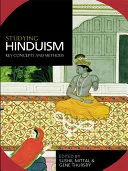
Studying Hinduism
 83
83

Studying Hinduism
Mittal and Thursby's compilation offers a commendable survey of Hindu traditions, notable for its inclusion of contributions from specialists across various academic disciplines. The strength lies in its breadth, showcasing the multiplicity of Hindu expressions rather than adhering to a singular, monolithic view. One particularly illuminating section discusses the diverse interpretations of the concept of 'Bhakti' (devotion) across different regions and time periods, moving beyond simplistic definitions. However, the book’s academic focus, while a strength for scholars, can sometimes render the material less accessible to the general reader seeking a more introductory or experiential engagement with Hinduism. The sheer volume of perspectives, while comprehensive, occasionally lacks a cohesive narrative thread that might guide a novice. Despite this, Studying Hinduism remains a vital academic resource for understanding the scholarly landscape of Hindu studies as it stood in the late 2000s.
📝 Description
83
Published in 2009, Studying Hinduism by Mittal and Thursby approaches the subject from multiple academic disciplines.
Studying Hinduism, first published in 2009, offers a multi-disciplinary look at the Hindu traditions. It incorporates insights from anthropology, art history, and comparative literature, moving beyond a single viewpoint. The book is structured to give students and scholars a broad overview, reflecting current academic discussions on the subject.
This book is mainly for university students in religious studies, comparative religion, and South Asian studies. It is also useful for researchers interested in current scholarship on Hinduism. Readers who want to analyze Hindu traditions critically, not just devotionally, will find it particularly helpful. The aim is to give readers methods for understanding the complexities of Hindu practices and philosophies.
The early 21st century saw increased academic study of world religions, with Hinduism as a key focus for interdisciplinary research. Mittal and Thursby's work appeared when scholars increasingly used ethnographic, sociological, and art historical methods alongside textual analysis. This approach allowed for a more complete understanding of Hinduism as a living tradition, shaped by many regional differences and historical changes, and moved past earlier colonial interpretations.
This work engages with the academic study of Hinduism, a tradition often approached through devotional or philosophical lenses. By incorporating anthropological and sociological methods, it seeks to understand Hinduism as a lived reality, influenced by diverse historical and regional factors. This approach stands apart from purely textual or mystical interpretations, situating the religion within broader human cultural and social frameworks.
💡 Why Read This Book?
• Gain an understanding of the academic study of Hinduism as it evolved into the 21st century, referencing the interdisciplinary approaches Mittal and Thursby highlight, moving beyond older scholarship. • Grasp the nuanced interpretations of concepts like Dharma and Karma by examining their varied expressions across different Hindu schools, as detailed in the text. • Appreciate the scholarly dialogue surrounding Hinduism by understanding how specialists in fields like anthropology and art history contribute to a multifaceted view of the tradition.
⭐ Reader Reviews
Honest opinions from readers who have explored this book.
❓ Frequently Asked Questions
When was Studying Hinduism first published and by whom?
Studying Hinduism was first published on January 19, 2009. It is authored by Sushil Mittal and Gene Thursby, recognized scholars in the field of religious studies.
What academic fields are represented in the contributors to Studying Hinduism?
The contributors to Studying Hinduism represent a range of academic disciplines, including anthropology, art history, comparative literature, and religious studies, reflecting a multi-faceted approach.
What core Hindu philosophical concepts does the book explore?
The book explores fundamental Hindu concepts such as Dharma, Karma, Moksha, and the varied theological significance of deities like Vishnu and Shiva.
Is Studying Hinduism suitable for someone new to Hinduism?
While valuable for its academic depth, the book is geared towards students and researchers. Beginners might find it more accessible if they have some prior exposure to academic religious studies or comparative religion.
What is the primary aim of Studying Hinduism according to its blurb?
The book aims to provide an indispensable resource for students and researchers to develop a deeper understanding of Hinduism by presenting diverse perspectives reflecting the current state of academic scholarship.
Does the book focus on a single tradition within Hinduism?
No, the book intentionally brings together a rich variety of perspectives to reflect the multifaceted nature of Hindu traditions, rather than focusing on a single, unified doctrine.
🔮 Key Themes & Symbolism
Deity Manifestations
The work examines the complex roles of key Hindu deities, such as Vishnu and Shiva, not merely as objects of worship but as complex figures within theological discourse and cultural practice. It highlights how these divine forms are interpreted differently across various sectarian traditions and philosophical schools, reflecting the dynamic evolution of Hindu devotional and intellectual life. Understanding these varied manifestations is crucial for appreciating the breadth of Hindu belief systems.
Philosophical Underpinnings
Central philosophical concepts like Dharma (duty/cosmic order), Karma (action and consequence), and Moksha (liberation) are explored in depth. The book emphasizes that these terms do not possess singular, static meanings but are subject to continuous interpretation within different Hindu philosophical systems, such as Vedanta and Yoga. This analysis provides critical insight into the ethical frameworks and soteriological goals that underpin Hindu life and thought.
Scholarly Methodology
Studying Hinduism distinguishes itself through its interdisciplinary approach, drawing on insights from anthropology, art history, and comparative literature. This methodology allows for a more holistic understanding of Hindu traditions as lived realities, moving beyond purely textual exegesis. By integrating diverse scholarly perspectives, the book demonstrates the value of multi-faceted analysis in comprehending complex religious phenomena.
Evolution of Practice
The text acknowledges Hinduism not as a monolithic entity but as a tradition that has evolved significantly over millennia. It touches upon historical developments, including the influence of devotional movements (Bhakti) and regional variations, showcasing how practices and beliefs adapt and transform. This historical perspective is vital for understanding the contemporary field of Hindu religious expression.
💬 Memorable Quotes
Direct passages from the work, attributed to the author.
“The book presents a rich variety of perspectives which reflect the current lively state of the field.”
— This statement highlights the volume's commitment to showcasing contemporary academic discourse on Hinduism, emphasizing its dynamic and evolving nature rather than presenting a static historical account.
“Accomplished specialists in several fields that include anthropology, art, comparative literature...”
— This indicates the intentional interdisciplinary approach of the collection, suggesting that understanding Hinduism requires insights from multiple academic domains beyond traditional theological or historical studies.
“An indispensable resource for students and researchers wishing to develop a deeper understanding.”
— This positions the book as a foundational text for serious academic study, implying it provides essential knowledge and frameworks for those seeking comprehensive engagement with the subject.
“One of the world's oldest and most complex religious traditions.”
— This succinctly captures the immense antiquity and inherent diversity of Hinduism, setting the stage for the varied explorations of its practices, philosophies, and historical developments within the book.
“Cooperative work by accomplished specialists.”
— This phrase underscores the collaborative nature of the book's creation, suggesting a synthesis of expert knowledge from various scholars to offer a well-rounded perspective on the subject matter.
🌙 Esoteric Significance
Tradition
While not strictly an esoteric text in the Western Hermetic or Kabbalistic sense, Studying Hinduism offers a scholarly framework for understanding the philosophical and cosmological underpinnings of a tradition that has significant esoteric dimensions within its own lineage. It provides the academic context for concepts that, when interpreted through specific yogic, tantric, or Vedantic lenses, form the basis of Indian esoteric practices.
Symbolism
The work likely examines symbols such as the Om (Aum) mantra, representing the primordial sound and consciousness, and the lotus flower, symbolizing purity, spiritual awakening, and cosmic creation. These symbols, when studied academically, reveal deeper layers of meaning within Hindu cosmology and meditative practices, connecting external forms to internal spiritual states.
Modern Relevance
Contemporary thinkers and practitioners exploring mindfulness, yoga, and non-dual philosophies often draw implicitly or explicitly on the academic study of Hindu traditions. The insights into Vedanta and Yoga provided by scholarly works like this inform modern spiritual movements and therapeutic practices seeking to integrate ancient wisdom with contemporary life.
👥 Who Should Read This Book
• Academic researchers in religious studies: Gain an overview of contemporary scholarship and diverse disciplinary approaches to Hindu traditions, essential for formulating research questions. • Students of comparative religion: Develop a foundational understanding of Hinduism's complexity and its place within the global religious landscape through an interdisciplinary lens. • Individuals interested in the philosophical and cultural aspects of Hinduism: Acquire analytical tools to appreciate the varied interpretations of core concepts like Dharma and Karma beyond devotional perspectives.
📜 Historical Context
Published in 2009, Studying Hinduism emerged during a period of robust academic engagement with world religions. The early 21st century saw a continued shift away from earlier, often colonial-influenced, Orientalist scholarship towards more nuanced, interdisciplinary approaches. Scholars like Wendy Doniger and Diana Eck were prominent, advocating for the study of Hinduism through lenses of gender, politics, and lived experience, challenging monolithic interpretations. Mittal and Thursby's work aligns with this trend by incorporating contributions from anthropology and art history, reflecting a broader academic current that sought to understand religious traditions in their full social and cultural complexity. The reception of such academic works generally favored their contribution to scholarly discourse, though debates persisted regarding the representation of minority religious experiences within Western academia.
📔 Journal Prompts
Reflect on the concept of Dharma as presented across different Hindu schools.
Analyze the scholarly integration of anthropology and art history in understanding Hindu practices.
Consider the varied interpretations of the deity Shiva discussed in the text.
Explore the evolution of Bhakti traditions as detailed by the contributors.
Examine the philosophical implications of Moksha within different Vedantic frameworks.
🗂️ Glossary
Dharma
A foundational concept in Hinduism encompassing duty, righteousness, cosmic order, and the inherent nature of things. Its interpretation varies significantly across different texts and traditions.
Karma
The principle of cause and effect, where actions (karma) influence an individual's present and future circumstances, including rebirth. It is a central tenet in Hindu ethics and soteriology.
Moksha
Liberation or release from the cycle of birth, death, and rebirth (samsara). It is the ultimate spiritual goal in many Hindu traditions, achieved through various paths like knowledge, devotion, or action.
Bhakti
Devotion or intense love directed towards a personal deity. Bhakti movements emphasize emotional connection and surrender as a path to spiritual realization.
Vedanta
A major school of Hindu philosophy that critically examines the Upanishads. It explores themes of ultimate reality (Brahman), the self (Atman), and their relationship.
Upanishads
Ancient Sanskrit texts that form the theoretical basis of Hinduism. They are considered the culmination of Vedic scripture and study philosophical concepts of Brahman and Atman.
Samsara
The continuous cycle of birth, death, and reincarnation, driven by karma. Liberation from samsara is a primary objective in many Hindu philosophical systems.