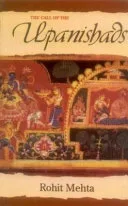
The Call of the Upanishads
 80
80

The Call of the Upanishads
Rohit Mehta's selection from the Upanishads offers a focused lens on the mystical heart of these ancient Indian texts. By prioritizing verses with direct bearing on esoteric teachings, Mehta provides a clear, if selective, pathway into the Vedanta tradition. His choice to include passages that speak to the identity of Atman and Brahman is particularly effective, highlighting the non-dualistic core that has captivated thinkers for centuries. The compilation succeeds in presenting the Upanishads not merely as historical documents but as living sources of spiritual inquiry.
However, the book's strength in focusing on mysticism is also its limitation. Readers seeking comprehensive philosophical or historical context might find the selections too narrow. While Mehta's intent is to reveal the "perennial philosophy," the omission of certain passages, however necessary for his specific aim, leaves the broader intellectual landscape of the Upanishads somewhat less visible. The work is best approached as an introduction to the contemplative aspects of Vedic thought, rather than a definitive scholarly treatment.
📝 Description
80
Rohit Mehta's 1970 compilation distills the core mystical teachings of the Upanishads.
This volume gathers selections from the Upanishads, ancient Sanskrit texts central to Hindu philosophy. Rohit Mehta compiled these passages in 1970, aiming to clarify the mystical and philosophical foundations of these scriptures. The book offers a curated look at the dialogues between teachers and students within the Upanishadic tradition. It is intended for those interested in the roots of Eastern mysticism, comparative religion, and contemplative practices. Students of Vedantic thought will find it a useful introduction to complex ideas. The work is not a complete scholarly translation but a guide to the essential mystical insights.
The Upanishads, originating between 800-500 BCE, marked a shift in Vedic thought towards metaphysical inquiry and introspection. They moved beyond ritual to explore inner understanding, influencing later Indian philosophical schools like Vedanta. Mehta's 1970 selection appeared during a global surge of interest in Eastern thought, connecting with a lineage of thinkers who introduced these ideas to Western audiences.
💡 Why Read This Book?
• Gain direct exposure to the core mystical concepts of the Upanishads, such as the identity of Atman and Brahman, as presented in Mehta's focused selection, offering a unique angle on self-realization. • Understand the philosophical shift from Vedic ritual to metaphysical inquiry, a pivotal movement in Indian thought around 800-500 BCE, contextualized by the Upanishads' emergence. • Explore the concept of "perennial philosophy" as distilled by Rohit Mehta, providing a specific framework for understanding universal spiritual principles within the context of the Upanishads.
⭐ Reader Reviews
Honest opinions from readers who have explored this book.
❓ Frequently Asked Questions
What is the primary focus of Rohit Mehta's 'The Call of the Upanishads'?
The book focuses on the mystical and philosophical teachings within the Upanishads, selecting verses that reveal the perennial wisdom of Ancient India's sages. Mehta emphasizes the core spiritual principles rather than exhaustive coverage.
When was 'The Call of the Upanishads' first published?
Rohit Mehta's 'The Call of the Upanishads' was first published in 1970, a period marked by significant global interest in Eastern spiritual traditions.
Are the Upanishads considered sacred texts?
Yes, the Upanishads are considered foundational sacred texts within Hinduism. They form the philosophical basis of Vedanta and are revered for their insights into the nature of reality and the self.
What is the relationship between Atman and Brahman discussed in the Upanishads?
A central teaching is the identity of Atman (the individual soul or self) with Brahman (the ultimate reality or universal consciousness), suggesting that the essence of the individual is indistinguishable from the divine.
Does this book offer a complete translation of the Upanishads?
No, 'The Call of the Upanishads' is not a complete translation. It is a curated selection of passages chosen by Rohit Mehta specifically for their relevance to mystical teachings.
What does 'perennial philosophy' refer to in the context of the Upanishads?
Perennial philosophy, as applied to the Upanishads, refers to the underlying, ageless spiritual truths and universal principles that proponents believe are present across different traditions and times.
🔮 Key Themes & Symbolism
Atman-Brahman Identity
The fundamental realization that the individual self (Atman) is identical with the ultimate reality (Brahman) is a central to the Upanishadic teachings presented. This concept challenges the illusion of separation, positing that the divine essence is not external but inherent within each being. Mehta highlights verses that articulate this profound non-dualistic truth, inviting contemplation on the unity of existence and the nature of consciousness beyond empirical perception.
The Path to Liberation (Moksha)
This work elucidates the Upanishadic understanding of liberation from the cycle of birth and death (samsara). It emphasizes that moksha is attained not through external rites but through inner knowledge and self-realization. The selected passages guide the reader towards understanding the practices and insights required to transcend ignorance, attachment, and the ego, leading to ultimate freedom and union with the Absolute.
Nature of Reality
The Upanishads, as curated by Mehta, offer a profound exploration of the ultimate nature of reality, identifying it as Brahman. This is presented as the singular, unchanging, all-pervading consciousness from which all phenomena arise. The text contrasts this ultimate truth with the illusory nature of the material world (Maya), encouraging a shift in perception from the transient to the eternal.
The Role of the Sage
Central to the Upanishadic narrative is the figure of the sage or seer, who through deep contemplation and spiritual discipline, attains direct knowledge of reality. The dialogues presented often feature these enlightened individuals imparting wisdom to their disciples. Mehta's selection underscores the importance of guidance from those who have realized the truth, acting as conduits for this ancient, esoteric knowledge.
💬 Memorable Quotes
Direct passages from the work, attributed to the author.
“The Upanishads contain the essential principles of this perennial—this ageless philosophy.”
— This statement frames the Upanishads not as isolated historical texts, but as a source of universal spiritual truths that transcend time and culture, forming a consistent philosophical foundation.
“It has not been possible to include all of them in this book.”
— This acknowledges the selective nature of the compilation, indicating that the author has made deliberate choices to focus on specific themes, likely the mystical and esoteric aspects, rather than providing an exhaustive overview.
“For the purposes of this book the author has taken those verses and passages that have a bearing on the mystical teaching of the Upanishads.”
— This explicitly states the editorial principle behind the selection, assuring the reader that the content is curated to illuminate the esoteric and contemplative dimensions of the Upanishadic philosophy.
“It is mysticism which is the very soul of the Upanishads.”
— This interpretation by the author posits that the essence and deepest meaning of the Upanishads lie in their mystical teachings, suggesting that a true understanding requires engaging with their esoteric dimensions.
“The seers and sages of Ancient India revealed fundamental principles of perennial philosophy.”
— This highlights the Upanishads as a repository of timeless wisdom, attributed to ancient Indian spiritual masters, who are presented as the originators of a universal philosophical outlook.
🌙 Esoteric Significance
Tradition
The Upanishads are foundational to the Advaita Vedanta tradition within Hinduism, a lineage deeply concerned with non-dualistic metaphysics and the realization of the unity of existence. This work aligns with Hermeticism and other esoteric paths in its pursuit of gnosis—direct, intuitive knowledge of the divine or ultimate reality—and its emphasis on inner transformation over external dogma.
Symbolism
Key symbols include the syllable 'Om' (AUM), representing the primordial sound and the totality of consciousness, and the concept of Maya, often symbolized by illusion or a cosmic veil, obscuring the true nature of reality. The fire (Agni) and sacrifice, though having ritualistic roots, are reinterpreted mystically as inner processes of purification and transformation.
Modern Relevance
Contemporary esoteric thinkers and practitioners, particularly within Vedanta, Integral Yoga, and various meditation traditions, continue to draw heavily on Upanishadic teachings. Concepts like mindfulness, the nature of consciousness, and the search for inner peace are deeply rooted in these ancient texts, making them relevant to modern psychological and spiritual exploration.
👥 Who Should Read This Book
• Students of comparative philosophy and religion seeking foundational texts of Indian spiritual thought, particularly those interested in the origins of Vedanta. • Seekers of esoteric knowledge interested in mystical traditions and the concept of perennial philosophy, looking for primary source material. • Individuals drawn to contemplative practices and self-inquiry who wish to explore ancient wisdom on the nature of consciousness and reality.
📜 Historical Context
The Upanishads emerged in India around the 8th to 5th centuries BCE, a period of intense philosophical ferment that saw a shift from the ritualistic focus of the earlier Vedas towards metaphysical speculation. This era gave rise to various schools of thought, including early forms of Vedanta, which sought to understand the nature of Brahman (ultimate reality) and Atman (the self). Rohit Mehta's compilation, published in 1970, arrived during a global resurgence of interest in Eastern spirituality, influenced by figures like Aldous Huxley who explored "perennial philosophy." This period saw a significant counter-cultural embrace of Eastern traditions, often seen as alternatives to Western materialism. While not a direct engagement, the Upanishads' influence on figures like Arthur Schopenhauer in the 19th century already indicated their lasting impact on Western philosophical discourse, setting a precedent for later translations and interpretations.
📔 Journal Prompts
The concept of Atman's identity with Brahman: what does this imply for perceived limitations?
Reflect on the Upanishadic understanding of Maya and its influence on daily perception.
Consider the role of a guru or sage in imparting mystical knowledge, as depicted in Upanishadic dialogues.
How does the pursuit of moksha, as described, differ from conventional life goals?
Explore the symbolic meaning of 'Om' in relation to the ultimate reality presented.
🗂️ Glossary
Brahman
The ultimate, unchanging, all-pervading reality or consciousness that is the source and sustainer of all existence in Hindu philosophy.
Atman
The individual soul, self, or innermost essence. In Advaita Vedanta, it is ultimately identical with Brahman.
Moksha
Liberation or release from the cycle of birth, death, and rebirth (samsara); ultimate spiritual freedom.
Samsara
The continuous cycle of birth, death, and reincarnation, driven by karma and ignorance.
Maya
Cosmic illusion or the power that conceals the true nature of reality, making the phenomenal world appear real.
Vedanta
A major school of Hindu philosophy, literally meaning 'the end of the Vedas,' focusing on the Upanishads and the nature of ultimate reality.
Perennial Philosophy
The concept that there is a single, universal, essential truth or spiritual doctrine underlying all religions and philosophies.