The Secret World of Vipassana and Mathematics
 74
74

The Secret World of Vipassana and Mathematics
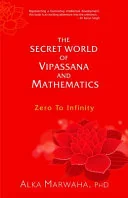
Alka Marwaha’s 2016 exploration, *The Secret World of Vipassana and Mathematics*, attempts an ambitious synthesis, linking the introspective rigor of Buddhist meditation with the objective language of numbers. The core argument—that both disciplines reveal underlying universal structures—is compelling, particularly when Marwaha discusses how the observation of natural patterns through mathematics can mirror the insights gained from disciplined mental observation in Vipassana. The section detailing the fractal nature of reality, observed both in nature and potentially in meditative states, is a strong point. However, the book occasionally falters in its presentation, at times feeling more like a collection of related ideas than a fully integrated argument. The conceptual leap from Vipassana’s phenomenology to specific mathematical theorems can sometimes feel asserted rather than rigorously demonstrated. Despite this, the work offers a unique lens for contemplating existence. It serves as a singular argument for the unity of analytical and experiential knowledge.
📝 Description
74
Alka Marwaha's 2016 book connects Vipassana meditation with mathematical structures.
Published in 2016, The Secret World of Vipassana and Mathematics examines the connections between Vipassana meditation and mathematics. Marwaha suggests these disciplines, though different, can both illuminate the nature of reality, the mind, and the universe. The book explores how mathematical ideas appear in the natural world and how meditative states might reveal insights into abstract mathematical concepts.
This work is for intellectually curious readers interested in the overlap of spirituality, philosophy, and science. It suits those who wish to understand the universe's hidden structures and consciousness's inner workings. The book offers a way to connect analytical thinking with intuitive understanding, bridging empirical observation and subjective experience.
The book reflects a modern trend of integrating various knowledge fields, following thinkers who have studied consciousness and reality. Its 2016 publication aligns with renewed interest in mindfulness and the philosophical questions raised by quantum physics, where mathematical order and meditative experience may show correlations.
This book fits within traditions that seek underlying order in both the external world and internal experience. It echoes the historical pursuit of universal principles, from Pythagorean number mysticism to modern contemplations on consciousness and physics. Marwaha's work joins a lineage of thinkers who see a correspondence between rigorous intellectual systems and profound meditative insight, suggesting that the abstract language of mathematics and the direct experience of awareness can lead to similar understandings of existence.
💡 Why Read This Book?
• Gain a novel perspective on the structure of reality by understanding how Vipassana meditation, as explored in Chapter 3, can offer empirical insights into concepts often associated with mathematical logic. • Discover the potential parallels between the disciplined observation of phenomena in Vipassana and the rigorous proofs in mathematics, as illustrated in the discussion on patterns in nature. • Explore how the human mind’s engagement with abstract concepts in mathematics might be enhanced by the mental clarity and focus cultivated through the practice of Vipassana, as detailed in the book's comparative analysis.
⭐ Reader Reviews
Honest opinions from readers who have explored this book.
❓ Frequently Asked Questions
What is the central thesis of The Secret World of Vipassana and Mathematics?
The book proposes that Vipassana meditation and mathematics are not separate domains but offer complementary paths to understanding reality. It argues that both disciplines reveal universal patterns and structures of existence, albeit through different methodologies.
Who is Alka Marwaha?
Alka Marwaha is the author of The Secret World of Vipassana and Mathematics, first published in 2016. Her work explores the intersection of contemplative practices and mathematical reasoning.
When was The Secret World of Vipassana and Mathematics first published?
The book was first published in 2016, placing it within contemporary discussions on mindfulness and the philosophy of science.
Does the book provide instructions for Vipassana meditation?
While the book discusses Vipassana as a framework for understanding, it primarily focuses on its philosophical and conceptual links to mathematics rather than offering detailed meditation instructions.
What kind of mathematical concepts are discussed in relation to Vipassana?
The book explores mathematical concepts such as patterns in nature, logic, and potentially abstract structures that can be perceived through both analytical reasoning and meditative insight.
Is this book suitable for beginners in either Vipassana or mathematics?
The book is best suited for readers with some existing familiarity or intellectual curiosity in both Vipassana and mathematical concepts, as it assumes a basic understanding to explore their synthesis.
🔮 Key Themes & Symbolism
Consciousness and Mathematical Structure
This theme explores how the subjective experience of consciousness, particularly during states of deep meditative awareness cultivated through Vipassana, might mirror or interact with the objective, logical structures inherent in mathematics. The book investigates whether the mind’s capacity to grasp abstract mathematical truths is itself a form of consciousness operating on fundamental principles that can also be observed through mindful introspection. It suggests that the patterns perceived in mathematics are not merely external descriptions but also reflections of internal cognitive architecture.
Vipassana as a Tool for Understanding
The work posits Vipassana not solely as a spiritual practice but as a rigorous method for direct observation of reality. By systematically observing the impermanent nature of mental and physical phenomena, practitioners can gain insights that align with certain philosophical implications of mathematical principles. This theme examines how the discipline of Vipassana, focusing on equanimity and insight, can prepare the mind to perceive the underlying order and interconnectedness that mathematics attempts to articulate about the cosmos.
Mathematics as the Language of Nature
Drawing on historical precedents, the book reinforces the idea that mathematics serves as the underlying language through which the universe's phenomena can be understood and described. It investigates how natural laws, from physics to biology, are expressed through mathematical equations. This theme connects this scientific view with esoteric thought, suggesting that this mathematical order is not just descriptive but potentially indicative of a deeper, perhaps conscious, organizing principle that can also be sensed through profound meditative states.
Bridging Analytical and Experiential Knowledge
A central aim of the book is to bridge the perceived divide between analytical, rational knowledge (often associated with mathematics and science) and experiential, intuitive knowledge (gained through practices like Vipassana). It proposes that true understanding arises from integrating these two modes of knowing. The work suggests that by applying the observational rigor of Vipassana to the abstract world of mathematical ideas, or by using mathematical frameworks to analyze meditative experiences, one can achieve a more holistic comprehension of existence.
💬 Memorable Quotes
Direct passages from the work, attributed to the author.
“The mind, trained in Vipassana, can perceive the elegance of mathematical truths.”
— This statement highlights the book's core argument: that the focused, observant state achieved through Vipassana meditation can enhance one's ability to apprehend the inherent beauty and logical structure found in mathematical concepts, suggesting a deep connection between inner awareness and external order.
“Vipassana offers a direct perception of impermanence, a concept fundamental to many mathematical models of change.”
— This interpretation suggests that the Buddhist concept of 'anicca' (impermanence), directly experienced in Vipassana, can be seen as a precursor or parallel to understanding dynamic systems and transformations described through mathematical equations.
“The rigor of mathematical proof finds a parallel in the disciplined observation of Vipassana.”
— This concept emphasizes the shared emphasis on precision and verifiable observation between the two disciplines, suggesting that the mental discipline cultivated in meditation can be applied to understanding abstract logical systems.
“Understanding the mind and understanding the universe may involve similar principles.”
— This core idea underpins the entire work, proposing that the internal exploration of consciousness through Vipassana and the external exploration of reality through mathematics can converge on similar fundamental truths about existence and order.
💡 Key Ideas
Editorial paraphrase of the work's core concepts — not direct quotes.
Natural phenomena exhibit patterns that resonate with logical structures.
This paraphrased concept points to the book's exploration of how observable reality, from the smallest particles to the largest cosmic formations, adheres to mathematical principles, implying an underlying order that mathematics seeks to decode.
🌙 Esoteric Significance
Tradition
This work aligns with perennialist philosophies that seek universal truths across diverse traditions, specifically bridging Eastern contemplative practices with Western rationalistic inquiry. While not strictly adhering to a single lineage like Hermeticism or Kabbalah, it engages with themes common in esoteric thought: the underlying unity of apparent opposites, the idea that the universe possesses an intelligent, ordered structure, and that human consciousness is a key to unlocking these mysteries. It departs from traditional esotericism by focusing on the direct correspondence between a specific meditation technique and a formal scientific discipline.
Symbolism
While the book doesn't rely on traditional esoteric symbols in a dense way, the core 'symbols' are abstract: the number itself represents order, logic, and universality in mathematics, while the act of mindful observation in Vipassana symbolizes present-moment awareness and the direct perception of reality. The concept of 'patterns' functions symbolically, representing the interconnectedness and underlying structure of both the external world (mathematics) and internal experience (Vipassana). The book implicitly uses these as motifs for universal principles.
Modern Relevance
The work speaks to contemporary trends in neuroplasticity research, which explore how mental practices like meditation can alter brain structure and function, potentially influencing cognitive abilities relevant to abstract thought. It also speaks to the growing interest in integrated approaches to well-being and knowledge, appealing to individuals seeking to synthesize scientific understanding with personal spiritual development. Thinkers in fields exploring consciousness studies and the philosophy of mathematics might find its arguments relevant for their investigations into the nature of knowledge and reality.
👥 Who Should Read This Book
• Students of comparative philosophy and religion looking to understand the potential structural overlaps between Buddhist contemplative methods and formal logic. • Individuals interested in the philosophy of mathematics and consciousness who seek to explore non-traditional pathways to understanding abstract concepts and subjective experience. • Practitioners of Vipassana meditation who are curious about the potential scientific or mathematical underpinnings of their practice and the nature of observed reality.
📜 Historical Context
Published in 2016, Alka Marwaha's *The Secret World of Vipassana and Mathematics* arrived during a period of significant cross-disciplinary interest. The early 21st century saw a burgeoning discourse on mindfulness, partly fueled by Jon Kabat-Zinn's popularization of secularized Buddhist practices, which contrasted with more traditional religious interpretations. Concurrently, fields like theoretical physics and complex systems were increasingly engaging with philosophical questions about reality, consciousness, and the role of mathematics. Marwaha's work can be seen as contributing to this intellectual atmosphere, seeking to bridge the empirical rigor of mathematics with the subjective, experiential insights of Vipassana. This approach diverged from purely scientific materialism and also from purely devotional spiritual paths, carving out a space for integrated understanding. While figures like Douglas Hofstadter had previously explored the interplay of consciousness and computation, Marwaha's specific focus on Vipassana and its direct phenomenological insights offered a unique angle within this broader conversation, without direct engagement with a specific contemporary scholar in this particular niche.
📔 Journal Prompts
The perception of patterns in Vipassana and their mathematical parallels.
How does the discipline of mathematical proof inform the practice of focused observation in Vipassana?
Reflect on a moment where an abstract mathematical concept felt intuitively understood.
Consider the nature of impermanence as directly observed versus mathematically modeled.
Explore the potential for consciousness to apprehend universal order through both introspection and calculation.
🗂️ Glossary
Vipassana
A Buddhist meditation technique that involves observing reality as it is, focusing on the impermanent nature of physical and mental phenomena to cultivate insight and equanimity.
Mathematics
The abstract science of number, quantity, and space, concerned with the logic of shape, quantity, and arrangement, and the relationships between them.
Phenomena
Observable facts or events; in this context, referring to both external natural occurrences and internal mental experiences.
Equanimity
Mental calmness and composure, especially in difficult situations; a key objective in Vipassana meditation.
Impermanence (Anicca)
A core Buddhist doctrine stating that all conditioned existence is in a constant state of flux; directly observed in Vipassana.
Logical Structure
The underlying framework and rules that govern reasoning and argumentation, fundamental to mathematics and rational thought.
Abstract Concepts
Ideas or notions that exist independently of concrete instances or sensory experience, such as those found in higher mathematics.
This book appears in 1 collection
🔮 Readers Also Liked
Browse all →









From the “Vipassana” Collection
View all →








More Free Occult Philosophy Books
View all →