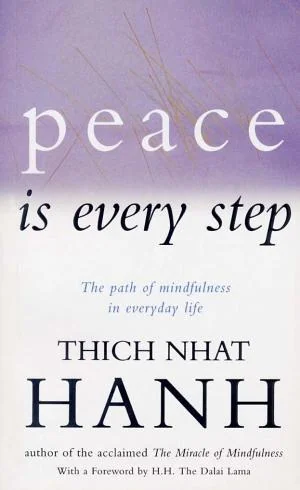
Peace Is Every Step
 82
82

Peace Is Every Step
Thich Nhat Hanh’s "Peace Is Every Step" offers a refreshing antidote to the perpetual chase for external validation. Instead of grand pronouncements, Hanh grounds his teachings in the mundane, showing how the profound can be accessed while performing simple tasks like washing dishes. His approach is disarmingly direct, a strength that sets it apart from more esoteric or abstract texts. The book’s primary limitation, however, lies in its very accessibility; for those already steeped in mindfulness, the foundational concepts might feel repetitive. Yet, the passage detailing the "walking meditation" exercises, which instructs the reader to feel each step, remains a potent reminder of the physical grounding required for mental presence. It’s a valuable resource for beginners and a gentle nudge for the experienced.
📝 Description
82
In 2010, Thich Nhat Hanh's Peace Is Every Step offered a simple path to mindfulness.
First published in 2010, Peace Is Every Step is a collection of commentaries and meditations by Zen Master Thich Nhat Hanh. The book aims to help readers find peace and mindfulness in their daily activities. Hanh draws on his long history as a peace activist and educator to present these ideas.
This book is for anyone looking for practical ways to find inner calm despite the pressures of modern life. It will appeal to those interested in Buddhist philosophy, mindfulness practices, and personal growth. The techniques presented are easy to apply to everyday routines.
The main point is that mindfulness is not about avoiding life but about engaging with it. Hanh stresses that peace can be found in common moments, such as washing dishes, walking, or simply breathing. This is achieved by paying attention to the present moment. The book includes straightforward but effective exercises to help readers reach this state.
Thich Nhat Hanh, a Vietnamese Zen Buddhist monk, brought mindfulness practices to a Western audience starting in the 1960s. Peace Is Every Step is part of his effort to make Buddhist concepts accessible outside of traditional monastic or academic settings. It connects with the contemplative traditions that emphasize direct experience and inner transformation, rather than solely theoretical understanding. This work stands alongside other accessible introductions to Buddhist meditation and ethics.
💡 Why Read This Book?
• You will learn to integrate mindfulness into mundane activities like driving or working, drawing from Thich Nhat Hanh's specific "walking meditation" technique discussed early in the book. • You will discover how to find moments of deep calm during your daily commute, a concept Hanh illustrates with anecdotes from his own life as a peace activist. • You will gain practical breathing exercises, as presented in the book's early chapters, to foster present-moment awareness and reduce stress in real-time.
⭐ Reader Reviews
Honest opinions from readers who have explored this book.
❓ Frequently Asked Questions
What is the core message of Thich Nhat Hanh's 'Peace Is Every Step'?
The core message is that peace and mindfulness are accessible in every moment of daily life, not just during formal meditation. Thich Nhat Hanh teaches that simple actions like breathing, walking, and washing dishes can become opportunities for deep presence.
When was 'Peace Is Every Step' by Thich Nhat Hanh first published?
'Peace Is Every Step' by Thich Nhat Hanh was first published on February 23, 2010, making it a relatively contemporary guide to mindfulness.
Are there specific exercises for mindfulness in the book?
Yes, the book contains numerous practical exercises. These include guided meditations on breathing, mindful walking, and techniques for bringing awareness to everyday activities like eating or working.
Who was Thich Nhat Hanh and why is his perspective important?
Thich Nhat Hanh was a Vietnamese Zen Buddhist monk, peace activist, and author. His perspective is highly regarded for his ability to translate complex Buddhist teachings into accessible language for Western audiences and his lifelong commitment to peace.
How does 'Peace Is Every Step' differ from other mindfulness books?
It distinguishes itself by focusing on integrating mindfulness into the most ordinary moments of daily life, such as commuting or working, rather than solely through dedicated practice sessions. This grounded approach is central to its appeal.
Can this book help with stress and anxiety?
Absolutely. By teaching techniques to anchor oneself in the present moment, such as mindful breathing exercises, the book provides practical tools to manage stress and anxiety as they arise in daily situations.
🔮 Key Themes & Symbolism
Mindfulness in Mundane Tasks
The work emphasizes that profound spiritual practice isn't confined to monasteries or meditation cushions. Thich Nhat Hanh illustrates how common activities, from washing dishes to drinking tea, become opportunities for deep presence when approached with mindful awareness. This integration challenges the conventional separation between the sacred and the secular, suggesting that the path to peace is paved with ordinary moments.
The Power of Breathing
Breathing is presented as an anchor to the present moment and a source of calm. The book details simple yet potent breathing exercises, such as 'breathing in, I calm my body; breathing out, I smile,' demonstrating how conscious respiration can regulate emotions and foster a sense of tranquility amidst chaos. This focus on an innate, ever-present tool highlights the accessibility of inner peace.
Non-violent Activism and Inner Peace
Drawing from his experiences as a peace activist during the Vietnam War, Thich Nhat Hanh connects inner peace with outer peace. He argues that true activism and societal change must begin with cultivating peace within oneself. This perspective links personal transformation to collective well-being, showing how individual mindfulness can contribute to a more peaceful world.
Everyday Gestures as Meditation
The book redefines meditation not as an escape from life, but as a way of engaging with it fully. Gestures like walking, sitting, or even driving can become meditative practices through focused attention. Hanh's anecdotes show how these simple acts, when imbued with mindfulness, can lead to a profound sense of groundedness and joy.
💬 Memorable Quotes
Direct passages from the work, attributed to the author.
“You have to love yourself, because you are the only person who will be with you for your entire life.”
— This statement underscores the importance of self-compassion and self-acceptance as foundational elements for well-being. It suggests that genuine peace and connection with others begin with a healthy relationship with oneself.
“Peace is every step. It turns the ordinary into the extraordinary.”
— This central aphorism captures the book's philosophy. It suggests that the path to peace is not a destination but a practice integrated into every action, transforming the mundane experience of living into something sacred and fulfilling.
“When you are mindful, you can look deeply into the nature of your anger and see that it is not solid.”
— This illustrates the power of mindfulness to deconstruct difficult emotions. By observing anger without judgment, one can understand its impermanent and conditioned nature, thereby reducing its power and cultivating equanimity.
“Smile, breathe, and go slowly.”
— This simple mantra represents the practical essence of Hanh's teachings. It offers an immediate, accessible method for grounding oneself in the present, fostering calm and presence through basic physiological and attitudinal shifts.
💡 Key Ideas
Editorial paraphrase of the work's core concepts — not direct quotes.
The present moment is filled with joy and happiness. If you are attentive, you will see this.
This quote highlights the core tenet of mindfulness: that peace and contentment are available now, not in some future ideal. It encourages active engagement with the present, suggesting that awareness is the key to unlocking inherent joy.
🌙 Esoteric Significance
Tradition
While rooted in Mahayana Buddhism, specifically Zen, Thich Nhat Hanh's work transcends strict sectarian boundaries, offering a universal approach to contemplative practice. Its esoteric quality lies not in arcane rituals, but in the profound realization of interconnectedness and emptiness (sunyata) through direct, embodied experience. It aligns with perennialist philosophies that seek common spiritual truths across diverse traditions, making the path to enlightenment accessible through everyday life.
Symbolism
The act of 'breathing' serves as a primary symbol, representing the constant, life-affirming connection to the present moment and the universe. 'Walking' symbolizes the journey of life, transforming each step into a conscious act of presence and peace. 'Smiling' is a symbol of inner well-being and acceptance, an outward manifestation of a mind at ease, accessible regardless of external circumstances.
Modern Relevance
Thich Nhat Hanh's teachings continue to be highly relevant in contemporary secular contexts, influencing fields like psychology (particularly mindfulness-based therapies), leadership development, and education. His emphasis on compassionate communication and interbeing appeals to current discussions on social justice, environmentalism, and the need for global peace, making his accessible approach a touchstone for various modern contemplative and activist movements.
👥 Who Should Read This Book
• Individuals new to mindfulness and Buddhist philosophy seeking practical, gentle guidance on integrating calm into their busy lives. • Long-term practitioners looking for reminders of the foundational principles of presence and self-compassion, particularly those familiar with Thich Nhat Hanh's Plum Village tradition. • Peace activists and social change advocates interested in understanding the connection between inner transformation and external action, as explored through Hanh's own history.
📜 Historical Context
Published in 2010, Peace Is Every Step arrived at a time when mindfulness and meditation, heavily influenced by Buddhist traditions, were gaining significant traction in Western popular culture and psychology. Thich Nhat Hanh, a globally recognized figure who had been exiled from Vietnam in the 1960s and established communities like Plum Village in France, was instrumental in popularizing Zen Buddhism outside of Asia. His work offered a gentle, accessible counterpoint to the often more rigorous or complex philosophical explorations of Buddhism. While figures like Jon Kabat-Zinn were popularizing secular mindfulness (Mindfulness-Based Stress Reduction) in clinical settings since the late 1970s, Hanh's approach maintained a clear connection to its spiritual roots, emphasizing compassion and interconnectedness, which resonated widely. The book's reception was generally positive, aligning with a growing societal interest in contemplative practices for stress reduction and personal well-being.
📔 Journal Prompts
Mindful breathing during a commute.
The practice of mindful walking on a familiar path.
Bringing awareness to a mundane chore like washing dishes.
Cultivating a smile while experiencing a difficult emotion.
Finding peace in everyday gestures.
🗂️ Glossary
Mindfulness
The practice of paying attention to the present moment without judgment. It involves being aware of one's thoughts, feelings, bodily sensations, and surrounding environment.
Interbeing
A concept central to Thich Nhat Hanh's teachings, suggesting that nothing exists independently. All phenomena exist in relationship and interdependence with everything else.
Zen
A school of Mahayana Buddhism that emphasizes meditation and intuitive understanding over scripture. It seeks direct experience of enlightenment.
Present Moment
The only moment that truly exists, distinct from the past (which is gone) and the future (which has not yet arrived). Mindfulness anchors awareness here.
Plum Village
The name of the monastic and practice center founded by Thich Nhat Hanh in France, serving as a hub for his teachings and community.
Calm
A state of mental and emotional tranquility, often achieved through mindful awareness and acceptance of the present experience.
Awareness
The state or ability to perceive, feel, or be conscious of events, objects, or sensory patterns. In mindfulness, it is directed towards the present moment.