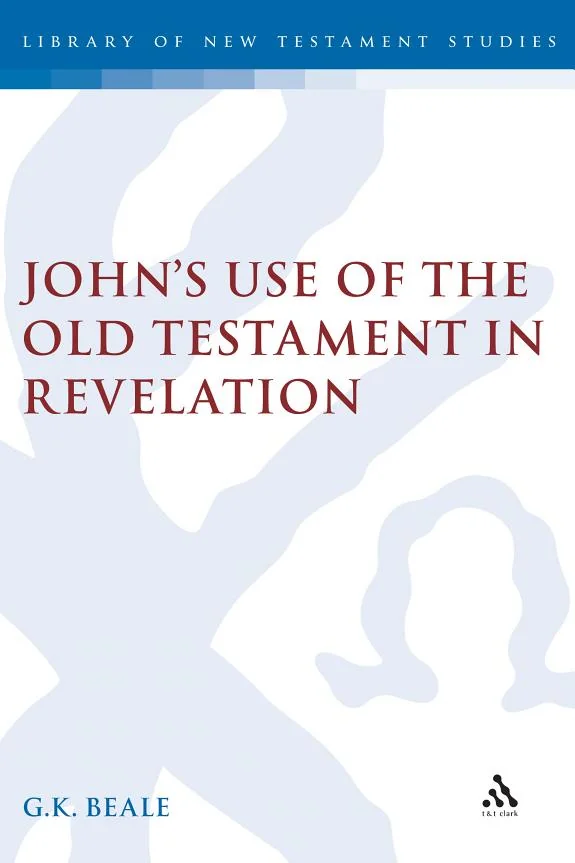
John's Use of the Old Testament in Revelation
 74
74

John's Use of the Old Testament in Revelation
Gregory K. Beale's focused study on the Apocalypse's scriptural underpinnings offers a robust defense of John's hermeneutical acumen. His detailed engagement with the scholarly divide over contextual usage—specifically contrasting his view with scholars like Christopher Rowland—is a significant contribution. Beale meticulously traces how specific Old Testament passages are recontextualized, demonstrating a sophisticated understanding of their original literary function. The work's strength lies in its deep dive into the textual mechanics, providing clear examples of how John refracts prophetic texts through his visionary lens. A limitation, however, is the dense academic prose, which may pose a barrier for those less familiar with advanced biblical exegesis. One particularly illuminating section examines the use of Isaiah, showing how John leverages its prophetic voice to frame his own apocalyptic message. Beale’s work ultimately provides a compelling case for intentional, context-aware scriptural deployment in Revelation.
📝 Description
74
Gregory K. Beale's 1998 book examines John's specific methods for integrating Old Testament scripture into Revelation.
Gregory K. Beale's "John's Use of the Old Testament in Revelation" analyzes how the author of the Apocalypse incorporated Old Testament texts. Beale moves beyond simple quotation to detail the conceptual and structural ways John engaged with these earlier scriptures. The study addresses significant scholarly discussions about the author's awareness of the original literary contexts of the Old Testament passages.
This work is suited for advanced students of biblical studies, especially those focused on New Testament eschatology and the history of interpreting the Bible. Readers interested in early Christian literature and the particular hermeneutical issues found in apocalyptic texts will find Beale's detailed analysis valuable. It is for those who appreciate careful textual scholarship and seek to understand how foundational Jewish texts were reinterpreted in a Christian context.
While not strictly an esoteric text, this book engages with the interpretation of a key apocalyptic scripture, the Book of Revelation. The study of Revelation itself often intersects with esoteric traditions due to its symbolic language and prophetic claims. Beale's work, by focusing on the precise ways John drew upon older texts, provides a scholarly framework for understanding the scriptural underpinnings of apocalyptic visions, which have historically been a source of esoteric speculation and divinatory practices.
💡 Why Read This Book?
• Gain insight into how Gregory K. Beale argues John redeploys Old Testament texts, understanding his concept of 'textual contextuality' as presented in the book’s analysis of Isaiah. • Grasp the central scholarly debate surrounding John's hermeneutics, as Beale evaluates differing perspectives from scholars like Ruiz and Moyise concerning the original literary context. • Appreciate the intricate scriptural connections within Revelation, learning specific methods of intertextual analysis that enhance comprehension of apocalyptic literature.
⭐ Reader Reviews
Honest opinions from readers who have explored this book.
❓ Frequently Asked Questions
What specific Old Testament books does Beale focus on in his analysis of Revelation?
Beale's work extensively analyzes John's use of prophetic books such as Isaiah, Jeremiah, and Ezekiel, alongside Leviticus and Psalms, demonstrating their pervasive influence on the Apocalypse's theological and literary structure.
When was John's Use of the Old Testament in Revelation first published?
The original publication date for Gregory K. Beale's "John's Use of the Old Testament in Revelation" was January 1, 1998.
What is the main scholarly disagreement Beale addresses regarding Old Testament usage in Revelation?
The central debate concerns whether John used the Old Testament with sensitivity to its original literary context, with scholars like Beale and Fekkes arguing for contextual awareness, and others like Ruiz and Moyise suggesting different priorities.
How does Beale's work relate to reader-response criticism?
Beale discusses how certain interpretations, which he contrasts with his own, see implications for reader-response criticism by suggesting John's focus was less on original context and more on how the text would be received by his audience.
What is meant by 'textual contextuality' in Beale's analysis?
'Textual contextuality' refers to Beale's argument that John employed Old Testament scriptures in ways that respected their original literary settings and theological meanings, rather than detaching them for symbolic use.
Is this book suitable for beginners in biblical studies?
While comprehensive, the book's academic rigor and engagement with scholarly debates make it more suited for advanced students and scholars of biblical interpretation rather than absolute beginners.
🔮 Key Themes & Symbolism
Textual Contextuality
This theme examines Beale's central argument that the author of Revelation, John, engaged with Old Testament texts not in isolation, but with a deep awareness of their original literary and theological settings. Beale contrasts this approach with interpretations that prioritize symbolic or visionary meaning over historical context. The work meticulously traces how John refracts prophetic pronouncements and legal texts, demonstrating a method of intertextuality that respects source material while creatively recontextualizing it for his apocalyptic message.
Scholarly Debate on Hermeneutics
A significant portion of the book is dedicated to surveying and evaluating contemporary scholarship on Revelation's use of scripture. Beale directly engages with contrasting viewpoints, particularly the debate between those who assert John's contextual sensitivity (like Fekkes and Bauckham) and those who argue for a different focus, such as Ruiz and Moyise. This critical engagement highlights the interpretive challenges and diverse methodologies applied to apocalyptic literature.
Apocalyptic Reinterpretation
The book studies how John, through his visionary experiences, reinterprets and applies Old Testament prophecies and narratives to the context of early Christian persecution and eschatological expectation. It explores the theological implications of this reinterpretation, showing how the Old Testament serves as a foundational interpretive framework for understanding God's unfolding plan and the ultimate victory of Christ.
Influence of Prophetic Literature
Beale investigates the pervasive influence of Old Testament prophetic books, such as Isaiah and Jeremiah, on the language, imagery, and theological themes of Revelation. The analysis reveals how John appropriates prophetic oracles, adapting them to convey a message of judgment and salvation relevant to his own time, underscoring the continuity and discontinuity between Israel's prophetic tradition and the New Testament's apocalyptic vision.
💬 Memorable Quotes
Direct passages from the work, attributed to the author.
“John uses the Old Testament in a way that is sensitive to its original literary context.”
— This is a core assertion by Beale, framing his analysis as a defense against interpretations that see John's scriptural usage as more arbitrary or purely symbolic, detached from the source texts' original meanings.
“Scholarly views are divided on whether John's use of the Old Testament demonstrates sensitivity to its original literary context.”
— This highlights the central scholarly debate Beale addresses, positioning his work within ongoing discussions about hermeneutics and intertextuality in apocalyptic literature.
“Beale evaluates arguments for and against John's contextual awareness in scriptural quotation.”
— This describes the critical method Beale employs, systematically assessing the evidence and scholarly interpretations regarding John's approach to the Old Testament.
“Reader-response criticism has implications for how we understand John's scriptural focus.”
— This points to Beale's consideration of how different critical lenses, like reader-response theory, influence the interpretation of John's intentionality in using Old Testament texts.
💡 Key Ideas
Editorial paraphrase of the work's core concepts — not direct quotes.
The Apocalypse recontextualizes Old Testament prophecies for new eschatological realities.
This paraphrased concept emphasizes how John adapts ancient prophetic messages to convey meaning for his contemporary audience facing specific challenges and future expectations.
🌙 Esoteric Significance
Tradition
While primarily a work of biblical scholarship, Beale's focus on the intricate symbolic language and visionary aspects of Revelation places it adjacent to esoteric traditions. It speaks to Hermetic and Gnostic interests in deciphering hidden meanings within scripture, offering a scholarly foundation for understanding apocalyptic texts as reservoirs of divine revelation and cosmic narrative, albeit interpreted through a historical-critical lens rather than a mystical one.
Symbolism
The book implicitly engages with the symbolic weight of Old Testament imagery that permeates Revelation. Concepts like the 'New Jerusalem,' the 'Dragon,' and the 'Lamb' are examined not merely as narrative elements but as potent symbols carrying layers of meaning derived from their Old Testament antecedents, which resonate with esoteric traditions seeking universal archetypes within specific scriptural accounts.
Modern Relevance
Modern esoteric thinkers and scholars of comparative religion find value in Beale's rigorous analysis of Revelation's scriptural foundations. His work provides a robust counterpoint to purely speculative interpretations, offering a historically grounded understanding of the text's symbolic power. It informs contemporary discussions on how ancient prophetic texts continue to be reinterpreted and applied, influencing fields from theology to literary criticism and even modern occult studies.
👥 Who Should Read This Book
• Advanced biblical studies students: Gain a nuanced understanding of the complex relationship between the Old Testament and Revelation, specifically Beale's arguments on contextual usage. • Scholars of early Christian literature: Benefit from detailed exegesis and engagement with key figures in apocalyptic studies, refining your analysis of intertextuality. • Readers interested in hermeneutics: Explore how critical methodologies are applied to ancient texts and understand the scholarly debates surrounding scriptural interpretation in the context of Revelation.
📜 Historical Context
Published in 1998, Gregory K. Beale's "John's Use of the Old Testament in Revelation" emerged during a period of intense scholarly re-evaluation of biblical interpretation. The late 20th century saw a significant turn towards historical-critical methods and a heightened focus on intertextuality, moving away from earlier allegorical readings. Beale’s work directly engages with this trend, addressing a key debate concerning the author of Revelation's hermeneutical practices. He critically analyzes contemporary scholars like David E. Aune and Adela Yarbro Collins, whose extensive works on apocalyptic literature had already shaped the discourse. The book entered a scholarly conversation where the precise relationship between the Old Testament and the New Testament, particularly in complex texts like Revelation, was a subject of vigorous contention, with Beale advocating for a contextually informed approach against competing interpretative frameworks.
📔 Journal Prompts
John's use of Isaiah: How does Beale's analysis of its contextual redeployment shape your understanding?
The debate between Beale and Ruiz/Moyise: What are the core hermeneutical differences?
Analyze a specific Old Testament passage referenced in Revelation through the lens of 'textual contextuality'.
How does Beale's approach to scripture differ from purely symbolic or allegorical readings?
The implications of Beale's findings for understanding apocalyptic literature more broadly.
🗂️ Glossary
Apocalypse
A genre of revelatory literature, often characterized by symbolic language, visions, and eschatological themes, purporting to reveal divine secrets about the end times.
Hermeneutics
The theory and methodology of interpretation, especially the interpretation of biblical texts, literature, or the law.
Intertextuality
The relationship between texts, the ways in which texts influence, reference, or shape each other, particularly in the context of scriptural usage.
Textual Contextuality
Beale's concept referring to the author's sensitivity to the original literary and historical setting of Old Testament scriptures when employing them in a new work.
Reader-Response Criticism
A critical approach that focuses on the reader's role in creating meaning from a text, emphasizing the interaction between the text and the reader's experience.
Eschatology
The branch of theology concerned with death, judgment, and the final destiny of the soul and of humankind; the study of end times.
Exegesis
Critical explanation or interpretation of a text, especially of the Bible.
This book appears in 1 collection
🔮 Readers Also Liked
Browse all →







From the “Apocalyptic Literature” Collection
View all →





More Free Sacred Texts & Gnosticism Books
View all →