The Dark Night of the Soul
 77
77

The Dark Night of the Soul
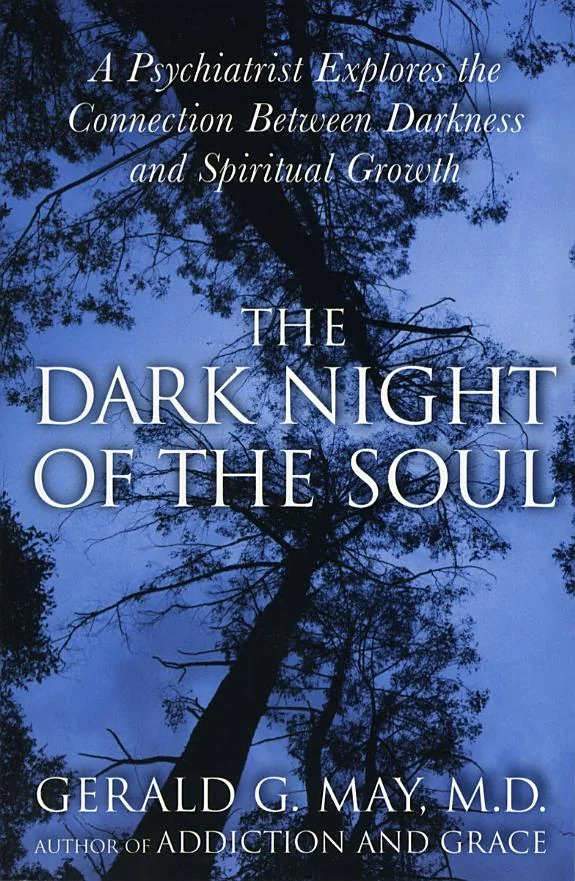
Gerald G. May’s *The Dark Night of the Soul* offers a much-needed counterpoint to the saccharine spiritualities that proliferate today. He rightly identifies the tendency to sanitize the spiritual path, rendering it palatable but ultimately ineffective for profound change. May’s strength lies in his clear, clinical yet compassionate articulation of the necessary suffering involved in genuine soul growth. He skillfully connects the psychological with the spiritual, arguing that the "shadow" is not to be banished but integrated. A limitation, however, is that the book occasionally feels more like a theological treatise than a practical guide for those in the thick of such a "night." The discussion of St. John of the Cross, while informative, can sometimes overshadow May's own distinctive contribution. Despite this, the work is an essential corrective, asserting that true spiritual life demands an honest encounter with its more arduous dimensions.
📝 Description
77
Gerald May's 2009 book, The Dark Night of the Soul, argues that spiritual growth requires confronting difficult experiences.
Gerald May's 2009 work, The Dark Night of the Soul, contends that genuine spiritual advancement involves grappling with difficult challenges. May, an M.D., suggests that a simplified, struggle-free view of spirituality hinders deep development. The book posits that accepting the shadowed, demanding aspects of spiritual life is not an anomaly but a vital part of authentic transformation.
This book is for those seeking a deeper understanding of spiritual development beyond easy affirmations. It addresses individuals who have experienced spiritual dryness, doubt, or a sense of divine absence and want to comprehend these states. Readers interested in the psychological aspects of faith and integrating difficult inner experiences into their spiritual lives will find this relevant.
May's writing connects with the Christian mystical tradition, particularly referencing St. John of the Cross, the 16th-century Spanish mystic whose poem gave the "dark night" its name. This discussion emerges at a time when popular spirituality often favors positive psychology and self-help, sometimes overlooking the inherent difficulties in deep spiritual commitment and promoting spiritual bypassing.
May's book engages with the Christian mystical tradition, referencing St. John of the Cross and his concept of the "dark night." This tradition understands periods of spiritual aridity not as failures but as necessary stages of purification and union with the divine. May's work places these contemplative insights into dialogue with modern psychology, suggesting that the "shadowed aspects" of spiritual life are crucial for authentic transformation, challenging contemporary trends that may avoid such difficult terrain.
💡 Why Read This Book?
• Learn to reframe periods of spiritual desolation not as failure, but as essential purification, drawing on May's interpretation of the "dark night" as a transformative stage. • Understand the psychological and spiritual necessity of confronting the "shadow" aspects of the self, moving beyond superficial positive thinking as outlined in the book's core arguments. • Gain a more robust framework for spiritual growth that acknowledges suffering and doubt, moving past the simplistic, overly optimistic spiritual narratives prevalent since the late 20th century.
⭐ Reader Reviews
Honest opinions from readers who have explored this book.
❓ Frequently Asked Questions
What is the "dark night of the soul" according to Gerald G. May?
Gerald G. May defines the "dark night of the soul" not as a crisis of faith, but as a necessary, often difficult, period of spiritual purification and growth. It's a phase where old spiritual comforts fall away, allowing for a deeper, more authentic connection with the divine.
How does May's interpretation differ from St. John of the Cross?
While May draws heavily from St. John of the Cross (16th century), he broadens the concept beyond extreme asceticism. May applies it to contemporary psychological understanding, suggesting that these "dark nights" are common to many earnest spiritual seekers, not just cloistered mystics.
Is this book about clinical depression?
No, May, an M.D., carefully distinguishes the spiritual "dark night" from clinical depression. While acknowledging potential overlap, he emphasizes that the "dark night" is a specific spiritual phenomenon characterized by a perceived absence of God, distinct from psychological disorders.
Who is Gerald G. May, M.D.?
Gerald G. May (1940-2005) was an American physician and writer known for his work integrating psychology, spirituality, and Christian theology. He was a significant voice in contemporary discussions on contemplative prayer and spiritual growth.
What kind of spirituality does May advocate against?
May criticizes what he calls "superficial" or "naively upbeat" spirituality. He argues against spiritual approaches that avoid or deny the difficult, challenging aspects of the spiritual journey, believing they ultimately hinder true soul enrichment.
When was The Dark Night of the Soul first published?
The book *The Dark Night of the Soul* by Gerald G. May was first published on March 31, 2009, posthumously.
🔮 Key Themes & Symbolism
The Necessity of Spiritual Struggle
May argues forcefully that genuine spiritual development is inextricably linked to periods of difficulty, doubt, and perceived absence of the divine. This "dark night" is not a sign of failure but a crucible for purification. He contrasts this with a modern tendency towards "spiritual bypassing," where discomfort is avoided at all costs. The work posits that only by confronting these shadowed aspects can the soul achieve authentic maturation and a deeper, more resilient faith, moving beyond illusions of constant spiritual bliss.
Integrating the Shadow Self
A core theme is the integration of what May refers to as the "shadow" side of the spiritual life. This encompasses not just personal failings but also the ego's resistance to surrender and the uncomfortable truths that emerge during profound spiritual engagement. Rather than repressing these elements, May suggests they must be acknowledged and faced. This honest encounter, he contends, is crucial for shedding spiritual pride and egoic attachments, paving the way for true spiritual humility and direct experience.
Critique of Superficial Spirituality
The book offers a pointed critique of contemporary spiritual movements that prioritize positive thinking and immediate gratification, often at the expense of depth. May contends that such "naively upbeat" approaches fail to heal or enrich the soul because they sidestep the essential challenges. He calls for a return to a more robust, demanding spirituality that recognizes the transformative power of arid periods and spiritual desolation, aligning with historical mystical traditions.
Psychological and Spiritual Integration
As an M.D., May brings a unique perspective that bridges psychological understanding with spiritual theology. He carefully distinguishes the spiritual "dark night" from clinical depression, while acknowledging potential points of intersection. The work advocates for a holistic approach to the self, where emotional and psychological struggles are seen not as obstacles to faith, but as potential pathways through which spiritual growth can occur, fostering a more integrated human experience.
💬 Memorable Quotes
Direct passages from the work, attributed to the author.
“Superficial and naively upbeat spirituality does not heal and enrich the soul.”
— This statement captures May's central critique: that spiritual paths emphasizing constant positivity and avoidance of difficulty ultimately fail to foster deep, lasting transformation and soul development.
“Only the honest, sometimes difficult encounters with what St. John of the Cross describes as “the dark night of the soul” can lead to true spiritual growth.”
— This highlights the book's thesis that genuine spiritual progress necessitates engaging directly with challenging experiences, often termed the 'dark night', rather than seeking to circumvent them.
“The dark 'shadow' side of true spiritual life has been trivialized and neglected.”
— May identifies a cultural tendency to ignore or downplay the arduous, less pleasant aspects of spiritual journeys, suggesting this neglect impoverishes our understanding and practice of deep spirituality.
“Deep spiritual growth cannot be relegated solely to mystics and saints.”
— This challenges the notion that profound spiritual experiences are exclusive to a select few, implying that the principles of significant spiritual development are accessible to all earnest seekers.
💡 Key Ideas
Editorial paraphrase of the work's core concepts — not direct quotes.
Interpretation: The work suggests that periods of spiritual dryness are not indicative of divine abandonment, but rather a necessary phase for shedding illusions and egoic attachments.
This paraphrased concept emphasizes May's view that difficult spiritual phases serve a crucial purpose in stripping away false perceptions and self-centeredness, leading to greater authenticity.
🌙 Esoteric Significance
Tradition
May's work draws heavily from the Christian mystical tradition, specifically the Carmelite school represented by St. John of the Cross. While not explicitly labeling himself within broader esoteric movements like Hermeticism or Gnosticism, his exploration of spiritual purification, the "dark night," and the integration of the shadow aligns with perennialist themes found across various esoteric lineages. It represents a Western esoteric interpretation focused on the soul's journey through trials towards divine union.
Symbolism
The central symbol is the "dark night" itself, representing not literal darkness but a state of spiritual obscurity, dryness, and perceived absence of God. This symbolizes the ego's dissolution and the soul's stripping away of attachments and illusions. The "shadow" is another key motif, representing the repressed or unacknowledged aspects of the self that must be confronted for wholeness. These symbols function within a Christian mystical framework to denote stages of spiritual purification and transformation.
Modern Relevance
May's insights remain highly relevant for contemporary spiritual seekers, particularly those disillusioned with superficial "positive vibes only" spirituality. Thinkers and practitioners in contemplative Christianity, depth psychology (e.g., Jungian analysis), and even some secular mindfulness communities that acknowledge difficulty find resonance in his work. His integration of psychological insight with spiritual rigor provides a valuable lens for understanding modern spiritual crises and the search for authentic meaning beyond fleeting positivity.
👥 Who Should Read This Book
• Individuals experiencing periods of spiritual dryness, doubt, or a sense of divine absence who seek theological and psychological context for these challenging phases. • Students of Christian mysticism and contemplative traditions interested in a modern, accessible interpretation of concepts like the "dark night" as articulated by St. John of the Cross. • Those seeking to move beyond superficial or "toxic positivity" in their spiritual or personal growth practices, desiring a more honest and integrated approach to the challenges of life.
📜 Historical Context
Gerald G. May's *The Dark Night of the Soul*, published in 2009, emerged in an era dominated by self-help literature and positive psychology, which often presented spirituality as an uncomplicated path to happiness. May's work directly challenged this trend by engaging with the historical Christian mystical tradition, particularly the writings of St. John of the Cross in the 16th century. While the concept of the "dark night" was well-established in Catholic contemplative theology, May sought to make its psychological and spiritual implications accessible to a broader, contemporary audience. His approach can be seen as a counter-movement to the pervasive "spiritual bypassing" phenomenon, offering a more rigorous and honest perspective on spiritual maturation. In contrast to the often-secularized wellness industry of the early 21st century, May grounded his exploration in a theological framework, drawing parallels between the spiritual journey and the integration of the psyche, a perspective subtly influenced by contemporary psychological thought but firmly rooted in ancient wisdom.
📔 Journal Prompts
The spiritual "shadow" as presented by May: what aspects do you resist acknowledging?
Reflecting on periods of spiritual aridity: how did they purify your faith?
May's critique of "naively upbeat spirituality": where have you encountered this, and why is it insufficient?
The concept of the "dark night": what illusions does it help to shed?
St. John of the Cross's "dark night": how does May's interpretation expand upon it for the modern seeker?
🗂️ Glossary
Dark Night of the Soul
A term popularized by St. John of the Cross, referring to a period of spiritual purification characterized by a sense of dryness, darkness, and perceived absence of God, leading to deeper union.
Spiritual Bypassing
The tendency to use spiritual ideas and practices to avoid dealing with unresolved psychological wounds, emotional issues, and unfinished developmental tasks.
Shadow
In a spiritual or psychological context, refers to the repressed, disowned, or unacknowledged aspects of the personality, which must be integrated for wholeness.
Purification
In spiritual terms, the process of cleansing the soul from attachments, egoic desires, and imperfections to become more aligned with the divine.
Naively Upbeat Spirituality
A term used by May to describe spiritual approaches that overly emphasize positivity and avoid confronting life's difficulties, offering superficial comfort without depth.
Ego
In spiritual discourse, often refers to the sense of self constructed by the mind, characterized by attachments, pride, and self-centeredness, which must be transcended for spiritual growth.
Contemplative Prayer
A form of prayer that emphasizes quiet reflection, stillness, and direct experience of God, often involving a letting go of discursive thought.
This book appears in 1 collection
🔮 Readers Also Liked
Browse all →




From the “Dark Night of the Soul” Collection
View all →








More Free Sacred Texts & Gnosticism Books
View all →