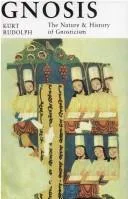
Gnosis
 76
76

Gnosis
Rudolph’s “Gnosis” is a formidable scholarly edifice, built stone by painstaking stone from the Coptic texts unearthed at Nag Hammadi. Its strength lies in its encyclopedic scope and its unwavering commitment to presenting Gnosticism as a complex, internally diverse religious system rather than a monolithic entity. The author masterfully navigates the labyrinthine mythologies and theological arguments, offering clarity on concepts like the Pleroma and the fall of Sophia. However, the sheer density of academic discourse, while accurate, can present a significant barrier to entry for the uninitiated. A passage detailing the intricate genealogies of Aeons within the Valentinian system, for example, while crucial for the scholar, demands considerable concentration from the general reader.
Despite its academic rigor, the work successfully conveys the distinct worldview of Gnosticism – one characterized by a profound sense of alienation from the material world and a yearning for liberation through esoteric knowledge. "Gnosis" remains a vital, if demanding, scholarly cornerstone for understanding this ancient spiritual current.
📝 Description
76
Kurt Rudolph's Gnosis meticulously reconstructs Gnosticism from the Nag Hammadi library.
Published in English in 2001, Kurt Rudolph's Gnosis presents an academic survey of Gnosticism based on the Coptic documents discovered at Nag Hammadi. The work analyzes the religion's theological systems, ethical views, and historical development. Rudolph examines diverse cosmologies, the nature of the divine and human, and the paths to salvation proposed by various Gnostic groups.
Rudolph situates Gnosticism as a significant religious phenomenon within the Hellenistic and early Christian world, acknowledging its interactions with Platonism, Judaism, and developing orthodox Christianity. He addresses scholarly debates concerning Gnosticism's origins, considering it both as a Christian heresy and a broader syncretic movement.
The book explains core Gnostic ideas, such as the dualism separating the True God from the Demiurge, the role of Sophia (Wisdom) in a cosmic drama initiated by her fall, and the concept of a divine spark within the human soul.
Rudolph's study places Gnosticism within the broader context of early Western esotericism. By drawing directly from the Nag Hammadi texts, the book engages with primary sources that reveal a complex spiritual movement interacting with established philosophical and religious traditions of the Hellenistic era. It highlights Gnosticism's unique perspectives on the divine, the material world, and human salvation, differentiating it from both contemporary pagan philosophies and nascent orthodox Christianity.
💡 Why Read This Book?
• Gain a precise understanding of the Gnostic concept of the Demiurge, the flawed creator of the material world, as detailed in Rudolph's analysis of the Nag Hammadi texts. • Explore the intricate cosmology of the Pleroma and the role of Sophia, the divine Wisdom whose fall precipitates the creation of the material realm, as presented in the book's theological sections. • Grasp the Gnostic emphasis on salvation through gnosis, or direct spiritual knowledge, contrasting it with faith-based salvation, a core distinction Rudolph meticulously outlines.
⭐ Reader Reviews
Honest opinions from readers who have explored this book.
❓ Frequently Asked Questions
What are the primary sources for Kurt Rudolph's "Gnosis"?
The primary sources are the Coptic manuscripts discovered at Nag Hammadi in 1945. Rudolph's work is a comprehensive study and interpretation of these invaluable Gnostic texts.
When was "Gnosis" first published in English?
The English translation of Kurt Rudolph's "Gnosis" was first published on June 20, 2001, making its extensive research accessible to a wider academic audience.
What is the significance of the Nag Hammadi library mentioned in the book?
The Nag Hammadi library comprises a collection of early Christian and Gnostic texts discovered in Egypt. Its contents provided unprecedented direct access to Gnostic beliefs and practices.
Is "Gnosis" by Kurt Rudolph suitable for beginners?
While comprehensive, Rudolph's "Gnosis" is a scholarly work. Beginners may find it dense, but it offers unparalleled depth for those committed to a rigorous academic study of Gnosticism.
How does Rudolph's work define Gnosticism?
Rudolph defines Gnosticism as a diverse religious phenomenon characterized by dualistic worldviews, the pursuit of salvation through knowledge (gnosis), and often a rejection of the material world's creator.
What is the Coptic language's role in this study?
The Nag Hammadi texts were written in Coptic, an ancient Egyptian script. Rudolph's analysis relies on the scholarly translation and interpretation of these Coptic documents.
🔮 Key Themes & Symbolism
The Demiurge and the Flawed Creator
Rudolph meticulously details the Gnostic concept of the Demiurge, often identified with the Old Testament God, who is seen not as the supreme, benevolent creator but as an ignorant or malevolent entity responsible for the flawed material universe. This contrasts sharply with the transcendent, unknowable God of the Gnostic spiritual realm. The work analyzes various texts that portray the Demiurge's creation as an imperfect imitation of the true divine order, highlighting a central tenet of Gnostic dualism.
Sophia's Fall and Cosmic Redemption
An important theme explored is the myth of Sophia (Wisdom), a divine emanation whose desire or error leads to her fall from the Pleroma, the fullness of the divine realm. This fall is often depicted as the catalyst for the creation of the material world and its subordinate rulers, including the Demiurge. Rudolph examines how Gnostic systems present a narrative of cosmic redemption, wherein a savior figure descends to awaken the divine spark trapped within humanity.
Salvation Through Gnosis
The core of Gnostic soteriology, as presented by Rudolph, is gnosis – direct, intuitive knowledge of the divine and one's own true spiritual nature. This knowledge is not acquired through faith or works but is an awakening of the innate divine spark within the individual. The book elucidates how various Gnostic texts describe the process of attaining this liberating knowledge, which enables the soul to escape the material prison and return to the spiritual source.
Dualism and Material World Rejection
Rudolph consistently addresses the pervasive dualism in Gnosticism, positing a fundamental opposition between the spiritual, true God and the material, created world. This often leads to a negative valuation of the material realm, seen as a area of ignorance, suffering, and bondage. The work explains how this worldview informs Gnostic ethics, ascetic practices, and their understanding of human existence as a spiritual exile.
💬 Memorable Quotes
Direct passages from the work, attributed to the author.
“The Gnostic seeks to find the divine within himself, not in an external, institutionalized religion.”
— This interpretation highlights the subjective and immanent nature of Gnostic spiritual seeking. Unlike religions focused on external dogma or divine intervention, Gnosticism emphasizes an internal realization of the divine principle.
“The material world is viewed as a prison created by an inferior deity.”
— This succinctly captures the Gnostic cosmology's strong dualistic tendency. The physical universe is not seen as inherently good or divinely ordained, but as a construct of a lesser power, a place from which the spirit seeks escape.
“The Pleroma represents the totality of divine powers and emanations.”
— This defines a key Gnostic cosmological term. The Pleroma is the ultimate spiritual reality, the fullness of the Godhead from which all divine beings emanate, and from which the Gnostic soul originates.
“Gnostic myths often involve the fall of a divine being leading to the creation of the cosmos.”
— This refers to a common narrative structure in Gnostic literature, such as the myth of Sophia. It explains how the perceived imperfection of the material world is accounted for within Gnostic theology.
💡 Key Ideas
Editorial paraphrase of the work's core concepts — not direct quotes.
Salvation is achieved through knowledge, not through grace or law.
This paraphrase underscores the central role of 'gnosis' in Gnostic thought. It differentiates Gnosticism from mainstream Christianity, where salvation is often understood through divine grace or adherence to religious law.
🌙 Esoteric Significance
Tradition
Rudolph's "Gnosis" is fundamentally about the Gnostic tradition, a significant branch within the broader spectrum of Western esotericism. While distinct from Hermeticism or Kabbalah, Gnosticism shares with them a focus on hidden knowledge, a dualistic worldview, and the pursuit of liberation from material constraints. This work provides the scholarly foundation for understanding Gnosticism's unique cosmology, its complex mythology, and its emphasis on an inner, experiential path to salvation, setting it apart from more structured esoteric systems.
Symbolism
Central symbols in Gnostic thought, as explored by Rudolph, include the serpent, often reinterpreted as a bringer of liberating knowledge rather than a tempter; the divine spark or light trapped within the human soul, representing the imprisoned divine essence; and the Tree of Knowledge, symbolizing the awakening to true reality. These symbols function not merely as allegories but as potent representations of the Gnostic worldview, signifying the fallen state of humanity and the potential for spiritual liberation through gnosis.
Modern Relevance
Contemporary thinkers and practitioners across various esoteric and philosophical circles continue to draw inspiration from Gnostic ideas. Movements such as the O.T.O. (Ordo Templi Orientis) and certain branches of modern Paganism and occultism engage with Gnostic themes of liberation and the rejection of oppressive cosmic structures. Philosophers and cultural critics also revisit Gnostic concepts to analyze issues of alienation, the nature of reality, and critiques of authoritarianism, demonstrating the enduring resonance of Gnostic thought in the 21st century.
👥 Who Should Read This Book
• Scholars and advanced students of religious studies, particularly those focusing on ancient Christianity, Hellenistic religions, and comparative esotericism, will find Rudolph's meticulous analysis indispensable for understanding primary source material. • Aspiring practitioners of Western esoteric traditions seeking a deep, historical understanding of Gnosticism's influence and core tenets will benefit from its scholarly rigor and comprehensive overview. • Readers interested in the philosophical implications of dualism, the nature of consciousness, and the critique of materialist worldviews will discover profound intellectual challenges and alternative perspectives.
📜 Historical Context
Kurt Rudolph's "Gnosis" emerged from the seismic shift in understanding Gnosticism following the 1945 discovery of the Nag Hammadi library. Before these Coptic texts were widely studied, Gnosticism was largely known through the polemics of its opponents, such as Irenaeus of Lyons in the 2nd century CE. Rudolph's work, published in English in 2001, synthesizes decades of post-Nag Hammadi scholarship, presenting Gnosticism not as a single heresy but as a complex spectrum of religious movements flourishing in the Hellenistic and Roman periods, contemporary with early Christianity and influenced by Platonism and other mystery traditions. The reception of the Nag Hammadi findings fundamentally altered the academic landscape, moving Gnostic studies from speculative reconstruction to text-based analysis. Rudolph engages with the ongoing scholarly debates about Gnosticism's origins, its relationship to Judaism and Christianity, and its place within the broader milieu of late antique religion.
📔 Journal Prompts
The concept of the Pleroma and its emanations.
Reflect on the Gnostic interpretation of the Demiurge's role in creation.
The significance of Sophia's fall in Gnostic cosmology.
The nature of salvation as gnosis versus faith.
The Gnostic view of the material world as a prison.
🗂️ Glossary
Gnosis
From the Greek word for 'knowledge,' gnosis refers to intuitive, experiential knowledge of the divine and spiritual truths, central to Gnostic salvation.
Demiurge
In Gnosticism, the creator-god of the material universe, often identified with the God of the Old Testament, considered inferior to the supreme, transcendent God.
Pleroma
The fullness of the divine realm, inhabited by the supreme God and various divine emanations (Aeons) in Gnostic cosmology.
Aeons
Divine beings or emanations originating from the supreme God within the Pleroma, forming the Gnostic spiritual hierarchy.
Sophia
A prominent Aeon, often translated as 'Wisdom,' whose fall from the Pleroma is frequently depicted as the origin of the material world and the Demiurge.
Coptic
An ancient Egyptian language written using a modified Greek alphabet, used for the majority of the Nag Hammadi library texts.
Soteriology
The doctrine of salvation; in Gnosticism, salvation is typically achieved through the attainment of gnosis.
![The Byrhtferth's Manuscript (MS 17) † Saint John’s College † Oxford † [1111]](/img/thumb/the-byrhtferth-s-manuscript-ms-17-saint-john-s-college-oxford-1111-the-monk-byrhtferth.webp)