The Path to Spiritual Excellence
 81
81

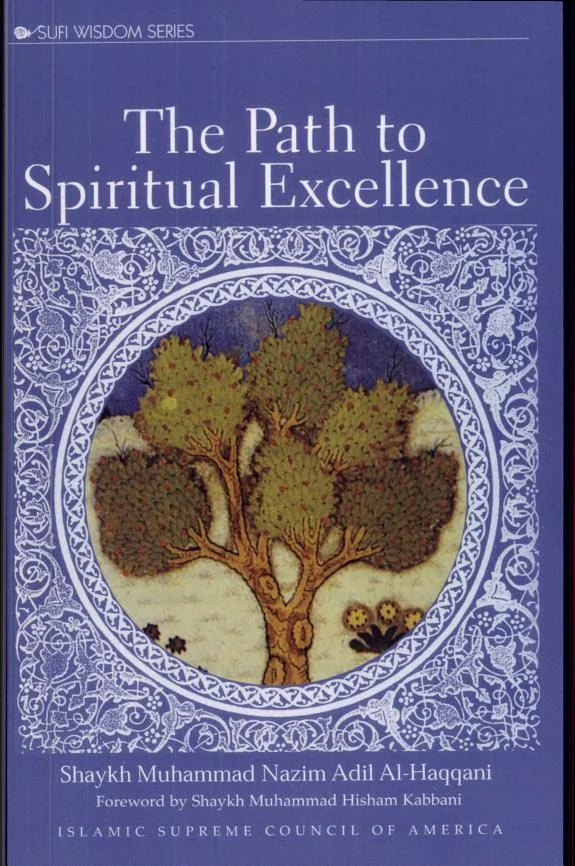
The Path to Spiritual Excellence
Shaykh Adil Al-Haqqani’s The Path to Spiritual Excellence offers a refreshingly direct engagement with Sufi principles, eschewing ornate prose for clear instruction. The strength of this volume lies in its actionable advice; passages detailing how to identify the 'true identity' through disciplined introspection are particularly compelling. Al-Haqqani avoids abstract pronouncements, instead grounding his lectures in the practicalities of spiritual cultivation. However, the book's reliance on specific Sufi terminology, while essential to its tradition, may present a barrier for newcomers unfamiliar with concepts like 'nafs' or 'ruh' without extensive prior knowledge. A notable section discusses the 'universal scheme,' positing individual spiritual powers as essential threads in a divine cosmic fabric, a concept articulated with particular clarity. While the book excels at guiding the initiated, its accessibility to the absolute beginner could be enhanced by more explicit glossary integration within the main text. It serves as a focused guide for those already on a spiritual path seeking structured advancement.
📝 Description
81
Published in 2002, The Path to Spiritual Excellence details Shaykh Adil Al-Haqqani's structured approach to inner development.
This volume collects lectures by Shaykh Adil Al-Haqqani that map a course for inner growth. Al-Haqqani argues that individuals possess latent spiritual capabilities, which are not separate from the wider cosmic order but integral to it. Aligning with these innate powers, he suggests, leads to a more complete existence. The book offers practical guidance for those seeking to understand their specific role within this universal framework. It is designed for individuals interested in moving from theoretical contemplation to applied spiritual practice. Readers will find lessons applicable to discovering their inherent spiritual potential and understanding its contribution to the universe. The work balances philosophical instruction with pragmatic advice aimed at tangible internal transformation.
Emerging in 2002, this work speaks to a renewed Western interest in esoteric traditions, particularly within Sufism. Shaykh Adil Al-Haqqani, as a leader of a Sufi order, offers teachings directly from an established lineage of Islamic mysticism. The book's focus on individual spiritual power and its cosmic integration echoes some themes found in New Age thought concerning self-actualization and universal connection. However, Al-Haqqani's perspective remains firmly grounded in orthodox Sufi principles, differentiating it from more syncretic or generalized spiritual movements.
💡 Why Read This Book?
• Learn to identify your 'true identity,' distinct from the ego, by understanding Shaykh Adil Al-Haqqani’s specific methods for self-observation, enabling a clearer path to spiritual clarity. • Discover how to activate your 'individual spiritual powers' as outlined in the book's framework, aligning them with the 'universal scheme' for a more purposeful existence. • Gain practical steps toward spiritual excellence, a core teaching presented in the 2002 publication, offering a structured approach to inner development rooted in Sufi tradition.
⭐ Reader Reviews
Honest opinions from readers who have explored this book.
❓ Frequently Asked Questions
What is the primary goal of "The Path to Spiritual Excellence"?
The book's primary goal is to guide individuals toward recognizing their 'true identity' and cultivating their inherent 'individual spiritual powers' to align with the 'universal scheme'.
Who is Shaykh Adil Al-Haqqani, the author?
Shaykh Adil Al-Haqqani is presented as the head of the world's largest Sufi order, offering teachings rooted in Islamic mysticism.
When was "The Path to Spiritual Excellence" first published?
The book was first published on July 15, 2002, making it a contemporary exploration of traditional Sufi thought.
What does the "universal scheme" refer to in the book?
The 'universal scheme' denotes the divinely ordained cosmic order and structure within which each individual's spiritual powers play an integral role.
Does the book offer practical steps for spiritual development?
Yes, the book is noted for providing practical steps and actionable guidance for individuals seeking to achieve spiritual excellence and self-realization.
Is this book suitable for beginners in Sufism?
It is suitable for those interested in Sufi metaphysics and practical esoteric disciplines, offering structured instruction for inner development.
🔮 Key Themes & Symbolism
Discovering True Identity
Al-Haqqani emphasizes that 'true identity' is the soul's original, unadulterated state, distinct from the ego or conditioned self. The book provides methods to shed layers of false identification—social roles, desires, fears—to reveal this core essence. This process involves rigorous self-observation and purification, aiming to connect the individual with their divine origin. It's presented not as an intellectual exercise, but as a lived realization essential for spiritual progress within the Sufi framework.
Individual Spiritual Powers
This theme explores the concept of latent divine capacities inherent in each person. These 'individual spiritual powers' are seen as specific manifestations of universal divine attributes, unique to each soul. The work guides the reader in recognizing, cultivating, and harmonizing these powers. Unlike mere personal talents, they are understood as conduits for divine grace and essential tools for fulfilling one's purpose within the grand cosmic design, as articulated by Al-Haqqani.
The Universal Scheme
Al-Haqqani posits a meticulously ordered 'universal scheme,' a divinely orchestrated reality where everything has its place and function. The book teaches that individual spiritual development is not an isolated pursuit but an act of aligning oneself with this overarching cosmic order. By understanding and integrating their 'individual spiritual powers' into this scheme, individuals contribute to the harmonious functioning of the whole, achieving a state of completeness and fulfilling their preordained role.
Practical Spiritual Cultivation
Central to The Path to Spiritual Excellence is its emphasis on applied spirituality. Al-Haqqani moves beyond theoretical discourse to offer concrete steps and practices designed for tangible inner transformation. This includes techniques for self-awareness, ethical conduct, and devotional practices aimed at purifying the heart and mind. The goal is to facilitate a direct, experiential understanding of spiritual truths, fostering consistent progress rather than occasional insight.
💬 Memorable Quotes
Direct passages from the work, attributed to the author.
“Tune in to your individual spiritual powers.”
— This directive encourages active engagement with one's innate divine capacities, suggesting they are like a frequency to be accessed through focused spiritual practice and awareness.
“Find your 'true identity'.”
— This points to the core Sufi pursuit of recognizing the soul's original essence, unburdened by the ego and worldly conditioning, as the foundation for all spiritual advancement.
“Complete the universal scheme.”
— This concept highlights the interconnectedness of all beings and the cosmos, implying that individual spiritual realization contributes to the perfection and harmony of the entire creation.
“Lectures offer practical steps.”
— This indicates the instructional nature of the book, emphasizing that it provides actionable guidance rather than purely philosophical exposition.
“The world's largest Sufi order.”
— This contextualizes the author's authority and the deep traditional roots of the teachings presented, suggesting a lineage of established spiritual transmission.
🌙 Esoteric Significance
Tradition
This work is firmly rooted in the Sufi tradition, a mystical dimension of Islam. It aligns with Sufism's core aim of direct experience of the Divine (haqiqa) through inner purification and devotion. While drawing on universal spiritual concepts, Al-Haqqani's approach is specifically Sufi, emphasizing the role of a spiritual guide (Shaykh) and structured practices like dhikr (remembrance) and muraqaba (contemplation) to achieve spiritual excellence.
Symbolism
The concept of 'true identity' serves as a primary symbol, representing the soul's primordial state before the veil of ego and worldly attachments. 'Individual spiritual powers' symbolize the divine attributes or potentials inherent within each soul, akin to sparks of the Divine Light. The 'universal scheme' functions symbolically as the intricate divine blueprint or cosmic order, within which every element, including the individual soul, plays a crucial part in the manifestation of Divine Will.
Modern Relevance
Contemporary seekers interested in authentic, lineage-based spiritual paths often turn to works like Al-Haqqani's. Modern Sufi orders and independent practitioners draw on these teachings for structured guidance in self-mastery and divine connection. Its emphasis on practical application and the integration of spiritual life with cosmic purpose speaks to individuals seeking depth beyond superficial spirituality, bridging traditional wisdom with the challenges of modern existence.
👥 Who Should Read This Book
• Seekers of authentic Sufi teachings: Individuals interested in the mystical dimensions of Islam and practical methods for spiritual growth within this tradition. • Students of comparative mysticism: Those studying various spiritual paths who wish to understand a specific, orthodox approach to self-realization and cosmic connection. • Individuals pursuing self-actualization: People actively looking for structured guidance on discovering their core identity and unlocking their inherent potential for a more meaningful life.
📜 Historical Context
Published in 2002, The Path to Spiritual Excellence emerged in an era where Western interest in esoteric and spiritual traditions, particularly those from the East, was significant. Shaykh Adil Al-Haqqani, leading what is described as the world's largest Sufi order, offered teachings deeply embedded in Islamic mysticism. This period saw a confluence of New Age thought, which often focused on self-empowerment and universal consciousness, and a renewed scholarly and popular engagement with classical spiritual lineages. Al-Haqqani's work, while sharing themes of self-discovery with broader esoteric movements, remained distinct by adhering strictly to Sufi principles, differentiating it from more syncretic or Westernized interpretations of spirituality. His position provided a direct link to a centuries-old tradition, countering the often fragmented or decontextualized spiritual seeking prevalent at the time.
📔 Journal Prompts
The concept of 'true identity' requires rigorous examination; describe your current understanding of this core self.
Reflect on the 'individual spiritual powers' you believe you possess and how they might align with the 'universal scheme'.
Analyze the practical steps offered in the book; which one will you implement first and why?
Consider the role of Shaykh Adil Al-Haqqani's lineage; how does this authority influence your perception of the teachings?
Evaluate the relationship between personal spiritual excellence and contributing to the 'universal scheme' as presented by Al-Haqqani.
🗂️ Glossary
True Identity
The essential, original state of the soul, distinct from the ego, personality, or social conditioning. It represents the soul's unadulterated connection to its Divine Source.
Individual Spiritual Powers
Latent capacities inherent in each soul, considered manifestations of divine attributes. These are unique to the individual and essential for fulfilling their role in the cosmic order.
Universal Scheme
The divinely ordained cosmic order and structure, encompassing all creation. It represents the intricate plan within which every being and event has a specific purpose and place.
Spiritual Excellence
A state of profound inner development and realization achieved through purifying the self, cultivating spiritual powers, and aligning with the Divine will and the universal order.
Sufism
The mystical dimension of Islam, focused on the inward journey of the soul toward direct experience of God (Allah) through practices of devotion, remembrance, and self-purification.
Nafs
Often translated as ego or lower self, it represents the part of the human psyche that is prone to desires, negative impulses, and self-centeredness. Purification of the nafs is central to spiritual progress in Sufism.
Haqiqa
The ultimate reality or truth; the direct experience of God. It is the goal of the Sufi path, often described as the unveiling of Divine Presence.
This book appears in 1 collection
🔮 Readers Also Liked
Browse all →









From the “Sufism” Collection
View all →

![The Conference Of The Birds Penguin Classics [download]](/img/thumb/the-conference-of-the-birds-penguin-classics-download.webp)


More Free Sacred Texts & Gnosticism Books
View all →