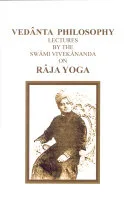
Vedanta Philosophy
 80
80

Vedanta Philosophy
Vivekananda's "Vedanta Philosophy" offers a direct conduit to the Swami's powerful oratorical style, a significant strength in conveying the essence of Advaita Vedanta. The clarity with which he presents concepts like Maya and the identity of Atman and Brahman is remarkable, especially considering the audience in 1902. The section on Raja Yoga, detailing Prana and psychic principles, feels particularly potent, grounding the abstract philosophy in tangible energetic concepts. However, the brevity of the lectures, inherent in their format, means that some intricate nuances of the Vedanta system might remain less explored than in more comprehensive scholastic works. The 1996 publication date also points to a specific edition, not the original delivery, which is a minor point but worth noting for scholars. The work's enduring value lies in its unvarnished presentation of core Vedantic truths, a potent spiritual stimulant for any serious inquirer. It remains a compelling introduction, though not an exhaustive exegesis.
📝 Description
80
Vivekananda delivered five lectures on Advaita Vedanta in 1902, later published as "Vedanta Philosophy."
Swami Vivekananda's "Vedanta Philosophy" collects five lectures given in 1902, focusing on the Advaita Vedanta school of Hindu thought. Published in 1996, this work aims to make complex metaphysical ideas understandable. It is not a rigid academic text but rather a series of talks designed to guide individuals toward spiritual realization. Vivekananda emphasizes the innate divinity within each person and stresses that understanding the Self requires more than just intellectual agreement; it calls for a lived experience.
The book speaks to anyone seeking spiritual knowledge, especially those interested in Eastern traditions and the concept of non-dualism. It offers historical context for students of comparative religion and mysticism, as well as for those curious about the roots of modern yoga and meditation. Readers questioning the nature of consciousness and reality will find a conceptual framework here. The lectures are accessible to newcomers to Vedanta and also provide depth for those already familiar with its principles.
These lectures emerged from a period when Swami Vivekananda was actively introducing Vedanta and Yoga to Western audiences, notably following his 1893 Parliament of Religions address. His teachings offered a spiritual alternative to the materialism prevalent in the late 19th century. This work is distinct from syncretic movements of the era, grounding itself firmly in orthodox Advaita Vedanta, a major tradition within Hindu philosophy.
💡 Why Read This Book?
• Gain an introduction to the concept of Maya, the cosmic illusion that veils ultimate reality, directly from Vivekananda's 1902 lectures, understanding its role in perpetuating suffering. • Explore the practical steps outlined in Raja Yoga, focusing on Prana and the control of psychic energy, as presented in the early sections of the book. • Grasp the core tenet of Vedanta that "Each soul is potentially divine," internalizing this message as a pathway to self-realization and liberation (Moksha).
⭐ Reader Reviews
Honest opinions from readers who have explored this book.
❓ Frequently Asked Questions
What is the primary philosophical school discussed in Vivekananda's Vedanta Philosophy?
The book primarily focuses on Advaita Vedanta, a prominent school of Hindu philosophy emphasizing the non-duality of the individual soul (Atman) and the ultimate reality (Brahman).
When were these lectures originally delivered?
The lectures were originally delivered by Swami Vivekananda in 1902, offering insights into Vedanta philosophy at the turn of the 20th century.
What is the stated goal of the orthodox systems of Indian philosophy as presented in the book?
According to the book, all orthodox Indian philosophical systems share the common goal of the liberation of the soul through perfection, a state of spiritual enlightenment and freedom.
Does the book cover practical techniques for spiritual development?
Yes, the book includes sections on Raja Yoga, discussing concepts like Prana and psychic energy, which are presented as practical steps toward spiritual realization.
What does 'Each soul is potentially divine' mean in the context of Vedanta?
This core Vedantic idea signifies that the true nature of the soul is pure, divine consciousness, obscured by ignorance or Maya. Realization involves uncovering this inherent divinity.
What is Maya as explained in Vivekananda's lectures?
Maya refers to the illusory power that creates the perception of a world of multiplicity and separation, veiling the underlying unity of Brahman and Atman.
🔮 Key Themes & Symbolism
The Divinity Within
A central tenet is the assertion that "Each soul is potentially divine." This isn't a mere hopeful statement but a foundational principle of Advaita Vedanta. Vivekananda expounds on the idea that the perceived individual self, or Atman, is in its essential nature identical with Brahman, the absolute reality. The work guides the reader to understand that spiritual practice is not about acquiring something external but about uncovering or realizing this inherent, pre-existing divinity, obscured by ignorance and worldly attachments. This concept challenges conventional notions of sin and salvation, reframing spiritual progress as self-discovery.
Raja Yoga and Psychic Control
The lectures dedicate significant attention to Raja Yoga, presenting it as a systematic path to spiritual mastery. This section studies the nature of Prana, the universal life force, and its manifestation as psychic energy within the individual. Vivekananda explains how the control of Prana and the mind through yogic practices is crucial for overcoming the limitations of ordinary consciousness. The focus is on achieving concentration, understanding the subtle energetic currents, and purifying the mind to facilitate the direct experience of the Self, moving beyond theoretical knowledge to practical application.
Liberation Through Perfection
The ultimate aim of all orthodox Indian philosophical systems, as articulated in the book, is liberation (Moksha). This is achieved not through external rituals alone, but through inner perfection and the attainment of self-knowledge. Vivekananda elucidates how understanding the true nature of reality—the non-dual existence of Brahman—dissolves the bonds of karma and rebirth. The lectures suggest that perfection is not an arduous climb toward an unattainable ideal but the recognition of one's already-perfected, divine essence, necessitating the removal of ignorance (Avidya) that clouds this awareness.
The Nature of Maya
Vivekananda confronts the concept of Maya, the cosmic illusion, which explains the perceived multiplicity and separateness of the universe. This is presented as the primary obstacle to realizing the unity of existence. The lectures explore how Maya operates on both the cosmic and individual levels, creating the world of names and forms that distracts from the underlying reality of Brahman. Understanding Maya is critical for liberation, as it allows the aspirant to see through the ephemeral appearances and recognize the unchanging, singular truth of Being.
💬 Memorable Quotes
Direct passages from the work, attributed to the author.
“All the orthodox systems of Indian philosophy have one goal in view, the liberation of the soul through perfection.”
— This statement captures the unifying objective of diverse Indian philosophical traditions, highlighting that spiritual progress is fundamentally about achieving inner completeness and freedom from bondage.
“Each soul is potentially divine.”
— A central to Vedanta, this phrase asserts that the inherent nature of every individual consciousness is pure, absolute, and divine, waiting to be realized.
“Raja Yoga - The First Steps, Prana, the Psychic Prana”
— This indicates the practical orientation of the lectures, moving beyond pure metaphysics to explore the energetic and mental disciplines necessary for spiritual attainment.
“The work explores the path toward spiritual liberation.”
— This interpretation highlights the book's function as a guide, clear the methods and understanding required to achieve ultimate spiritual freedom.
💡 Key Ideas
Editorial paraphrase of the work's core concepts — not direct quotes.
The goal... is the liberation of the soul.
This paraphrased concept emphasizes that the ultimate purpose of spiritual inquiry and practice within the Vedantic framework is freedom from suffering and the cycle of existence.
🌙 Esoteric Significance
Tradition
Vivekananda's teachings are firmly rooted in the orthodox Advaita Vedanta tradition of Hinduism, a school emphasizing non-duality (a-dvaita). While this tradition has esoteric dimensions within its philosophical depth, Vivekananda's approach, particularly in these lectures, focuses on philosophical clarity and the universality of its core tenets rather than sectarian rituals or hidden lineages. He presents Vedanta as a universal science of consciousness, accessible through reason and direct experience, aligning with a broader esoteric goal of understanding ultimate reality.
Symbolism
The concept of Brahman, often described as formless and attributeless (Nirguna Brahman), is central, representing the ultimate, undifferentiated reality. Conversely, the world of names and forms, perceived through the senses, is often understood through the lens of Maya. Prana symbolizes the vital, animating force pervading all existence, a key element in yogic practices aimed at controlling the mind and body. The 'liberation of the soul' itself functions as a profound symbol for transcending the limitations of individual ego and achieving unity with the Absolute.
Modern Relevance
Vivekananda's articulation of Vedanta continues to influence contemporary spiritual thought globally. His emphasis on the inherent divinity of the self and the practical application of yogic principles laid groundwork for the modern yoga movement. Thinkers and practitioners in fields ranging from transpersonal psychology to mindfulness meditation often draw upon the philosophical underpinnings he popularized. His work remains a foundational text for those exploring non-dual philosophies and seeking a synthesis of spiritual insight and rational inquiry in the 21st century.
👥 Who Should Read This Book
• Students of comparative philosophy and religion seeking to understand a major school of Indian thought from a key proponent. • Aspirants interested in Advaita Vedanta and non-dualistic paths to spiritual realization will find a clear exposition of core concepts. • Individuals exploring the historical introduction of Eastern philosophies to the West, particularly the work of Swami Vivekananda.
📜 Historical Context
Swami Vivekananda's "Vedanta Philosophy" lectures, delivered in 1902, emerged during a key moment in global intellectual history. The late 19th and early 20th centuries witnessed a surge of interest in Eastern thought within Western academia and esoteric circles, largely catalyzed by figures like Vivekananda himself following his impactful appearance at the 1893 Parliament of Religions in Chicago. His teachings provided a sophisticated articulation of orthodox Advaita Vedanta, distinguishing them from more syncretic or esoteric movements like Theosophy, which was gaining prominence concurrently through figures such as Annie Besant. Vivekananda's mission was to present Hinduism not as a primitive religion but as a profound philosophical system. These lectures offered a direct, unadulterated exposition of core Vedantic principles, aiming to correct misconceptions and establish the philosophical integrity of Indian traditions in the face of Western scientific and materialist dominance. The reception was significant, solidifying Vivekananda's role as a primary conduit for Vedantic thought into the West.
📔 Journal Prompts
The concept of Maya and its role in obscuring the soul's true nature.
The potential divinity inherent in each soul, as presented by Vivekananda.
The practical steps of Raja Yoga, focusing on Prana and psychic control.
The ultimate goal of liberation of the soul through perfection.
The relationship between Atman and Brahman in achieving self-knowledge.
🗂️ Glossary
Advaita Vedanta
A school of Hindu philosophy emphasizing the non-duality of the individual soul (Atman) and the ultimate reality (Brahman). It posits that all existence is ultimately one.
Atman
The individual soul or self. In Advaita Vedanta, Atman is ultimately identical with Brahman.
Brahman
The ultimate, unchanging reality or cosmic consciousness that underlies all existence. It is the Absolute, the ground of all being.
Maya
The cosmic illusion or phenomenal power that conceals the true nature of reality (Brahman) and creates the appearance of a diverse, material world.
Moksha
Liberation or release from the cycle of birth, death, and rebirth (samsara). It is the ultimate goal of spiritual practice in Hinduism.
Prana
The vital life force or energy that sustains all living beings. It is associated with breath and psychic energy.
Raja Yoga
A system of yoga focused on mental discipline, meditation, and control of the mind and consciousness, often involving the control of Prana.