Dead Sea Scrolls Deception
 73
73

Dead Sea Scrolls Deception
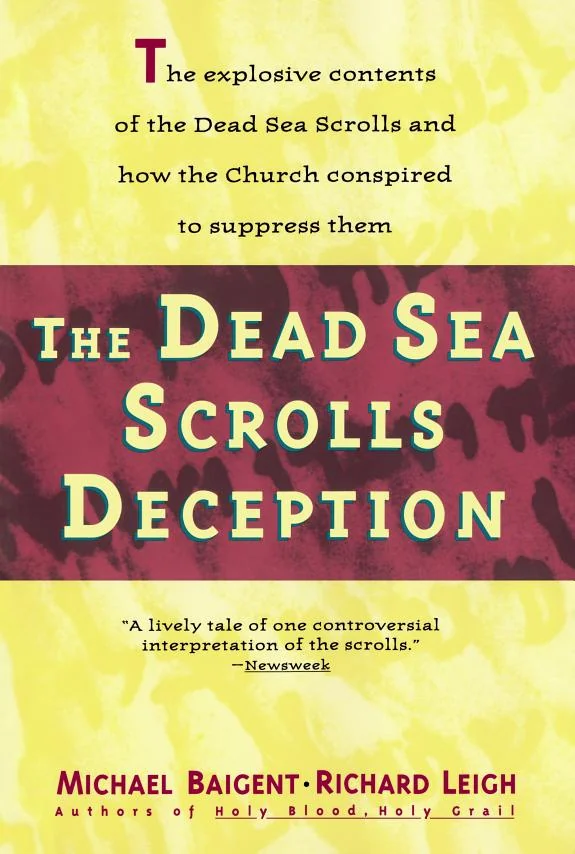
Baigent and Leigh's *Dead Sea Scrolls Deception* presents a compelling, if controversial, thesis: that the revolutionary implications of the Dead Sea Scrolls were actively concealed by a consortium of scholars and religious authorities. The authors meticulously detail the slow, controlled release of the scrolls, suggesting a deliberate effort to align their interpretation with pre-existing Christian dogma. A notable strength is their detailed account of the institutional control over the fragments after their discovery in 1947. However, the book sometimes leans heavily on insinuation rather than definitive proof, leaving the reader to bridge gaps with conjecture. The exploration of Father Roland de Vaux's stewardship of the scrolls, for instance, is intensely scrutinized but ultimately relies on an interpretation of motives. The work's most potent claim is that the suppression wasn't merely academic delay but a targeted effort to prevent texts from undermining the divinity of Christ. Despite its speculative nature in parts, *The Dead Sea Scrolls Deception* remains a significant challenge to the official narrative of the scrolls' discovery and dissemination.
📝 Description
73
In 1993, Baigent and Leigh claimed a conspiracy suppressed Dead Sea Scrolls findings.
Michael Baigent and Richard Leigh's 1993 book, "The Dead Sea Scrolls Deception," argues that a deliberate effort was made to suppress or alter the contents of the Dead Sea Scrolls. They posit that a group of biblical scholars and Vatican officials worked to withhold texts that might challenge established Christian doctrine. The authors focus on the period after the scrolls' discovery in the late 1940s and the subsequent control maintained by a small scholarly community.
The book's publication coincided with ongoing debates about access to and interpretation of the scrolls. For decades, most fragments were accessible only to a limited international team. Critics advocated for wider access, which eventually resulted in the release of many previously unpublished texts. Baigent and Leigh's work engages with this tension between scholarly control and public inquiry, suggesting that the limited access allowed for a specific narrative to take hold.
Readers interested in controversies surrounding biblical archaeology, textual criticism, and alternative interpretations of early Christian history will find this work relevant. It appeals to those skeptical of institutional control over historical narratives and those drawn to theories about hidden knowledge or scholarly collusion. The book questions mainstream interpretations and provides a perspective on the formation of religious texts.
This book fits within a tradition of questioning established religious narratives and scrutinizing the historical development of major faiths. It touches upon Gnostic ideas of hidden knowledge and challenges to orthodox interpretations, suggesting that certain texts were deliberately obscured to maintain a particular theological or political status quo. The work taps into historical anxieties about institutional power shaping religious understanding, a theme often found in esoteric literature that seeks alternative or suppressed truths outside mainstream dogma.
💡 Why Read This Book?
• Learn about the specific accusations of scholarly collusion in controlling the Dead Sea Scrolls' release after 1947, challenging the established narrative. • Understand the arguments presented regarding how certain scroll interpretations could have altered perceptions of early Christian origins and the figure of Jesus. • Gain insight into the institutional dynamics and academic gatekeeping that surrounded the Qumran fragments for decades, particularly concerning the role of figures like Father Roland de Vaux.
⭐ Reader Reviews
Honest opinions from readers who have explored this book.
❓ Frequently Asked Questions
What is the central claim of The Dead Sea Scrolls Deception?
The book's central claim is that a conspiracy of biblical scholars and Vatican officials deliberately suppressed the revolutionary contents of the Dead Sea Scrolls to protect established Christian doctrine, particularly concerning the divinity of Jesus.
When were the Dead Sea Scrolls discovered?
The Dead Sea Scrolls were discovered in caves near Qumran between 1947 and 1956, with the initial discoveries occurring in 1947.
Who were the main figures accused of suppressing the scrolls?
The authors implicate a small group of biblical scholars who were granted exclusive access to the scrolls for decades, notably Father Roland de Vaux, the chief excavator at Qumran, and his appointed team.
What kind of 'revolutionary contents' are discussed?
The book suggests revolutionary contents include texts that might offer alternative views on Jesus, Jewish sects with beliefs parallel to early Christianity, or evidence that could challenge the unique divinity of Christ.
What was the general reception of this book upon its release in 1993?
Upon its release in 1993, the book generated significant controversy, with many scholars dismissing its conspiracy theories while acknowledging the questions it raised about the slow publication of the scrolls.
Does the book present definitive proof of a conspiracy?
The book presents arguments and circumstantial evidence suggesting a deliberate suppression, but it relies heavily on interpretation and inference rather than direct, irrefutable proof of a formal conspiracy.
🔮 Key Themes & Symbolism
Scholarly Conspiracy Allegations
The core of Baigent and Leigh's thesis posits that the slow and restricted access to the Dead Sea Scrolls following their discovery in 1947 was not merely academic inertia but a deliberate, coordinated effort. They argue that a select cadre of scholars, often aligned with Vatican interests, intentionally delayed publication and controlled interpretation to prevent the dissemination of texts that might contradict or complicate the nascent Christian narrative. This theme explores the power dynamics within academia and religious institutions and how control over historical artifacts can shape foundational beliefs.
Textual Interpretation and Doctrinal Conflict
This theme examines how the interpretation of specific Dead Sea Scrolls fragments was allegedly manipulated to fit existing theological frameworks. The authors suggest that texts hinting at a more human Jesus, alternative messianic expectations within Judaism, or Gnostic-like concepts were downplayed or recontextualized. The work highlights the tension between objective textual analysis and the pressure to conform findings to established religious doctrines, particularly the dogma of Christ's divinity and the uniqueness of Christianity.
Control of Historical Narratives
Baigent and Leigh's book is fundamentally about the control exerted over historical narratives, specifically concerning one of the 20th century's most significant archaeological finds. They argue that the decades-long bottleneck in accessing and publishing the scrolls, overseen by figures like Father Roland de Vaux, served to protect a specific historical and religious narrative. This theme touches upon the broader issue of who controls historical knowledge and how such control can influence collective memory and understanding of the past.
The Qumran Community's Significance
The work examines the potential significance of the Qumran community, believed to be the creators or custodians of the scrolls. The authors explore theories suggesting this Essene sect possessed esoteric knowledge or spiritual practices that prefigured or paralleled early Christian developments. The alleged suppression is framed as an attempt to obscure the Jewish roots and potential non-uniqueness of certain Christian tenets, thereby preserving the distinctiveness of the Church.
💬 Memorable Quotes
Direct passages from the work, attributed to the author.
“The revolutionary contents of the Dead Sea Scrolls”
— This phrase expresses the book's central premise: that the scrolls contained information so potentially disruptive to established religious and historical understanding that powerful entities sought to keep it hidden.
“The slow, controlled release of the scrolls”
— This concept points to the decades-long period after the 1947 discovery during which access to the fragments was highly restricted, which the authors argue was a key tactic in the alleged suppression.
“Undermining the divinity of Christ”
— This highlights the perceived theological threat posed by certain scroll interpretations, suggesting that evidence could emerge suggesting Jesus was a more human or politically motivated figure.
“Father Roland de Vaux's stewardship”
— This refers to the period when the French Dominican priest oversaw the excavation and initial cataloging of the scrolls, a tenure the authors scrutinize intensely for signs of intentional obstruction.
💡 Key Ideas
Editorial paraphrase of the work's core concepts — not direct quotes.
A handful of Biblical scholars conspired to suppress...
This quote directly identifies the alleged perpetrators and their motive – a clandestine group of academics acting to conceal vital information from the scrolls.
🌙 Esoteric Significance
Tradition
While not strictly adhering to a single esoteric lineage, *The Dead Sea Scrolls Deception* engages with themes resonant in Gnostic and Hermetic traditions concerning hidden knowledge and esoteric interpretations of scripture. It posits a Gnostic-like scenario where a select few possess (or suppress) true understanding. The work indirectly aligns with the Hermetic principle of 'As Above, So Below,' suggesting that the manipulation of ancient texts reflects a manipulation of spiritual truth. It challenges orthodox religious structures, a common endeavor within many esoteric movements seeking direct access to divine or hidden truths.
Symbolism
The Dead Sea Scrolls themselves function as potent symbols of hidden wisdom and ancient truth. The desert environment of Qumran symbolizes purification, isolation, and the place where profound revelations are received, echoing desert ascetic traditions found in various mystical paths. The fragments represent fractured or incomplete knowledge, requiring careful reconstruction and interpretation – a metaphor for the esoteric quest to piece together hidden doctrines from scattered clues. The alleged suppression symbolizes the perennial conflict between exoteric (public) religion and esoteric (hidden) spiritual knowledge.
Modern Relevance
Contemporary thinkers and groups interested in alternative spiritualities, Gnostic studies, and critical historical analysis of religious origins often reference the debates surrounding the Dead Sea Scrolls, including the theories presented by Baigent and Leigh. Modern esoteric scholars examining the Jewish roots of Christianity or seeking evidence of early mystical traditions frequently revisit the controversies. The book's arguments about institutional control over sacred texts remain relevant to discussions on censorship, historical revisionism, and the ongoing search for 'lost' or 'suppressed' spiritual knowledge in the digital age.
👥 Who Should Read This Book
• Independent researchers into early Christian history and Jewish-Christian relations who suspect established narratives may obscure alternative interpretations. • Readers interested in the history of biblical scholarship and textual criticism, particularly those questioning the institutional control over significant archaeological finds. • Skeptics of religious dogma and academic orthodoxy who are drawn to investigative works that challenge official accounts of historical and religious events.
📜 Historical Context
Published in 1993, *The Dead Sea Scrolls Deception* emerged amidst growing public and scholarly frustration over the protracted publication of the Qumran fragments. For over four decades after their discovery beginning in 1947, access was limited to a small, predominantly Catholic, international team led initially by Father Roland de Vaux. This exclusivity contrasted sharply with the burgeoning field of biblical archaeology and the rise of critical historical scholarship, exemplified by figures like Josephus Flavius, whose historical accounts were also subject to intense scrutiny. Competing schools of thought debated the scrolls' origins: some emphasizing Essene connections, others Sadducean or Zealot links. The work tapped into existing skepticism, fueled by the slow pace and perceived secrecy surrounding the scrolls' handling. When the Rockefeller Museum, where the fragments were housed, finally began releasing previously unpublished texts in the early 1990s, Baigent and Leigh’s book argued this was not a concession but a carefully managed release, validating their conspiracy thesis for many.
📔 Journal Prompts
The alleged conspiracy surrounding the Dead Sea Scrolls' publication: what motives beyond doctrinal preservation might scholars have had?
Father Roland de Vaux's role: analyze the evidence for his actions being either meticulous stewardship or deliberate obstruction.
Compare the Qumran community's potential beliefs with early Christian doctrines as presented in the book.
The concept of 'suppressed knowledge' in religious history: how does the Dead Sea Scrolls controversy fit into broader patterns?
Evaluate the impact of the slow scroll release on the academic and public understanding of early Judaism and Christianity.
🗂️ Glossary
Dead Sea Scrolls
A collection of ancient Jewish manuscripts discovered between 1947 and 1956 in caves near the Dead Sea, dating roughly from the 3rd century BCE to the 1st century CE. They include biblical texts, apocryphal writings, and sectarian documents.
Qumran
An archaeological site on the northwest shore of the Dead Sea, widely believed to be the settlement of an ancient Jewish sect (likely Essenes) responsible for the Dead Sea Scrolls.
Essenes
An ancient Jewish ascetic sect that flourished from the 2nd century BCE to the 1st century CE. Many scholars associate them with the Qumran community and the Dead Sea Scrolls.
Textual Criticism
The process of identifying and removing errors and alterations in the transmission of texts. In biblical studies, it aims to reconstruct the earliest possible wording of scripture.
Doctrinal Suppression
The act of withholding or altering information believed to contradict or undermine established religious beliefs or dogmas.
Apocryphal Writings
Texts, often religious or pseudepigraphal, that are not part of the accepted canon of scripture but may hold historical or theological interest.
Sectarian Documents
Texts originating from specific religious groups or sects, often revealing their unique beliefs, practices, and interpretations of scripture, as seen in many Dead Sea Scrolls.
This book appears in 1 collection
🔮 Readers Also Liked
Browse all →







From the “Dead Sea Scrolls” Collection
View all →






More Free Sacred Texts & Gnosticism Books
View all →