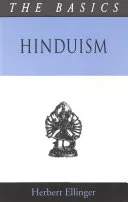
Hinduism
 83
83

Hinduism
Herbert Ellinger's "Hinduism" presents a commendably organized survey of a vast religious landscape. Its strength lies in its systematic approach, moving from abstract philosophical bases to concrete expressions in deities, scriptures, and social practices. The author, drawing on extensive time spent in the East, avoids the pitfalls of sensationalism often found in popular introductions. A particular passage discussing the intricate symbolism within temple architecture offers a tangible connection to the devotional life. However, the author's background as a pharmaceutical company director, while perhaps fostering an analytical mind, sometimes leads to a tone that feels more descriptive than deeply interpretive, particularly when discussing the nuances of yogic practices or monastic orders. Despite this, the book serves as a solid, fact-based primer for those unfamiliar with the subject matter.
This is a useful, if somewhat dry, academic overview for the uninitiated.
📝 Description
83
Herbert Ellinger's Hinduism, published in 1996, provides a structured introduction to Hindu belief and practice.
Herbert Ellinger's Hinduism, first published in 1996, offers a clear, academic introduction to Hindu thought and practice. The book moves beyond a simple overview to examine the philosophical foundations of the Hindu worldview, giving context to its many expressions. It is written for anyone seeking an accessible entry point into understanding Hinduism, whether they are curious about the gods and goddesses, the importance of scriptures, or social structures like the caste system. Readers interested in the spiritual lives of monks and ascetics will also find value here.
Ellinger structures the work to systematically break down complex ideas such as dharma, karma, and samsara. It also covers practical aspects of Hindu life, including temple design, worship, and the roles of different spiritual figures, aiming for a complete picture of the tradition. The book reflects the academic and spiritual interests of the late 20th century, a time when comparative religion was gaining recognition as a distinct academic field.
Published in 1996, Ellinger's Hinduism engages with the growing Western interest in Eastern religions that followed scholars like Mircea Eliade. It represents a shift from earlier, often Theosophical or missionary, approaches to comparative religion. The book emerged during a period when religious studies was solidifying as an academic discipline, aiming to present Hindu traditions through their philosophical underpinnings and practical expressions rather than solely through a mystical or devotional lens.
💡 Why Read This Book?
• Gain an understanding of the Hindu concept of Samsara, the cycle of death and rebirth, as presented in Ellinger's work, to grasp its implications for spiritual progression. • Learn about the Hindu pantheon and the foundational scriptures, such as the Vedas and Upanishads, as detailed in the book, to contextualize the worship and deities described. • Explore the role of monks, saints, and ascetics within the Hindu tradition, as examined in Ellinger's account, to appreciate the diverse paths to spiritual realization.
⭐ Reader Reviews
Honest opinions from readers who have explored this book.
❓ Frequently Asked Questions
When was Herbert Ellinger's book on Hinduism first published?
Herbert Ellinger's "Hinduism" was first published on April 1, 1996, marking its entry into the academic and spiritual literature of the late 20th century.
What specific aspects of Hindu belief does Ellinger's book cover?
The book covers the basis of the Hindu understanding of the world, the Hindu gods, scriptures, the caste system, death and rebirth, monks and ascetics, and temples and worship.
What is the author's background related to Hinduism?
Herbert Ellinger, the author, has spent many years in the Far East and possesses a deep interest in religion and philosophy, bringing a grounded perspective to his work.
Is this book suitable for beginners in religious studies?
Yes, "Hinduism" is an introductory account, making it suitable for beginners seeking a structured overview of the religion's core tenets and practices.
Does the book discuss Hindu scriptures in detail?
Yes, the book includes a section dedicated to Hindu scriptures, examining their importance within the broader context of Hindu understanding and practice.
What is the author's profession outside of writing about religion?
Herbert Ellinger is also the director of a pharmaceutical company, a background that may inform his analytical approach to the subject matter.
🔮 Key Themes & Symbolism
The Hindu Pantheon
Ellinger's work maps the diverse array of Hindu deities, moving beyond simple identification to explore their roles within the cosmic order. It details how figures like Shiva, Vishnu, and Devi represent fundamental forces and principles, offering a glimpse into the complex devotional landscape that shapes the lives of millions. The book examines how these divine beings are not merely distant figures but are intricately woven into the fabric of daily worship and philosophical contemplation.
Samsara and Karma
A central theme is the concept of Samsara, the continuous cycle of birth, death, and rebirth, intricately linked with the law of Karma. Ellinger explains how actions in this life determine the circumstances of future existences, providing a framework for understanding Hindu ethics and spiritual goals. This concept underpins the pursuit of Moksha, liberation from the cycle, offering a profound perspective on existence and consequence.
Spiritual Disciplines
The book examines the varied paths undertaken by spiritual aspirants within Hinduism, including the practices of monks, saints, and ascetics. It outlines their methods for renunciation, meditation, and self-discipline, highlighting their role in seeking higher consciousness or liberation. This section offers insight into the extreme ascetic practices and the philosophical underpinnings that drive such dedicated spiritual pursuits.
Temple Worship and Architecture
Ellinger explores the significance of Hindu temples not just as places of worship but as microcosms of the universe and embodiments of divine presence. The architecture, iconography, and rituals performed within these sacred spaces are analyzed to reveal deeper meanings and devotional practices. This theme connects the physical structures to the abstract spiritual concepts they represent.
💬 Memorable Quotes
Direct passages from the work, attributed to the author.
“The world of the Hindu gods is intricately connected to human existence.”
— This interpretation points to the book's exploration of the deities' roles, emphasizing their active engagement with and influence on the lives of devotees, not just their symbolic representation.
“Death and rebirth are understood as integral parts of a larger cosmic cycle.”
— This interpretation emphasizes the book's treatment of Samsara, framing it not as an isolated event but as a continuous process governed by spiritual laws.
💡 Key Ideas
Editorial paraphrase of the work's core concepts — not direct quotes.
The Hindu understanding of the world is based on a complex philosophical framework.
This paraphrase highlights the book's focus on the underlying philosophical structures that inform Hindu beliefs, suggesting a systematic rather than purely anecdotal approach to the subject.
Hindu scriptures form the bedrock of religious and philosophical thought.
This paraphrased concept underscores the foundational importance of texts like the Vedas and Upanishads, as presented in Ellinger's work, in shaping the Hindu worldview and practices.
Ascetic practices are a means to transcend worldly attachments.
This paraphrased concept captures the essence of the discussion on monks and ascetics, suggesting their disciplined pursuit of spiritual liberation through detachment from material existence.
🌙 Esoteric Significance
Tradition
While not explicitly aligned with a single esoteric lineage like Hermeticism or Kabbalah, Ellinger's work on Hinduism can inform practitioners seeking to understand Eastern philosophies that share common ground with Western esoteric traditions. Concepts like karma and reincarnation have parallels in Theosophical thought and certain Gnostic schools, offering points of comparative study for those exploring universal spiritual laws.
Symbolism
The book touches upon potent symbols within Hinduism, such as the Om mantra, representing the primordial sound and the essence of ultimate reality, and the Swastika, an ancient symbol of auspiciousness and well-being, often misunderstood in Western contexts. Understanding these symbols, as presented by Ellinger, can unlock deeper layers of meaning in devotional practices and philosophical discourse.
Modern Relevance
Contemporary spiritual seekers and scholars interested in the roots of yoga, meditation, and mindfulness practices often turn to foundational texts and analyses like Ellinger's. His work provides a necessary academic grounding for understanding the cultural and philosophical context from which these popular practices emerged, informing modern applications and preventing superficial appropriation.
👥 Who Should Read This Book
• Students of comparative religion seeking a foundational, structured overview of Hindu philosophy, deities, and practices, moving beyond superficial understanding. • Individuals interested in the concepts of karma and reincarnation, looking for a clear explanation of these core tenets and their societal implications. • Aspiring practitioners of Eastern spiritual disciplines who wish to understand the cultural and philosophical bedrock of practices like yoga and meditation.
📜 Historical Context
Published in 1996, Herbert Ellinger's "Hinduism" entered a field of religious studies increasingly influenced by post-structuralist thought and comparative religion scholars like Wendy Doniger, who offered nuanced interpretations of Indian traditions. This period saw a move away from monolithic portrayals of religions towards understanding their internal diversity and historical evolution. Ellinger's work, while introductory, reflects this academic trend by providing a structured overview that acknowledges the foundational philosophical bases before detailing specific practices and deities. It stands in contrast to earlier, more devotional or overtly colonial-era analyses, aiming for an objective, academic presentation. The book emerged at a time when interest in Eastern spirituality was high in the West, yet the academic study of religion was solidifying its methodologies, distinct from New Age interpretations.
📔 Journal Prompts
The concept of Samsara and its relation to karma.
The role of the Hindu pantheon in devotional life.
The significance of scriptures in Hindu understanding.
The purpose and practice of asceticism.
The symbolism embedded in Hindu temple architecture.
🗂️ Glossary
Samsara
The continuous cycle of birth, death, and rebirth, a fundamental concept in Hinduism and other Indian religions, driven by karma.
Karma
The principle of cause and effect, where actions in this life determine future circumstances and rebirths. It is a core ethical and spiritual doctrine.
Dharma
One's duty, righteousness, or cosmic law. It encompasses moral conduct, social obligations, and the inherent nature of reality.
Moksha
Liberation or release from the cycle of Samsara. It is the ultimate spiritual goal in Hinduism, often achieved through various paths.
Ascetics
Individuals who practice severe self-discipline and abstinence, often for religious or philosophical reasons, to achieve spiritual goals.
Pantheon
All the gods of a particular religion collectively. In Hinduism, this refers to the vast array of deities like Brahma, Vishnu, and Shiva.
Upanishads
A collection of philosophical texts that form the theoretical basis for Hinduism. They are considered part of the Vedas, Hinduism's oldest scriptures.