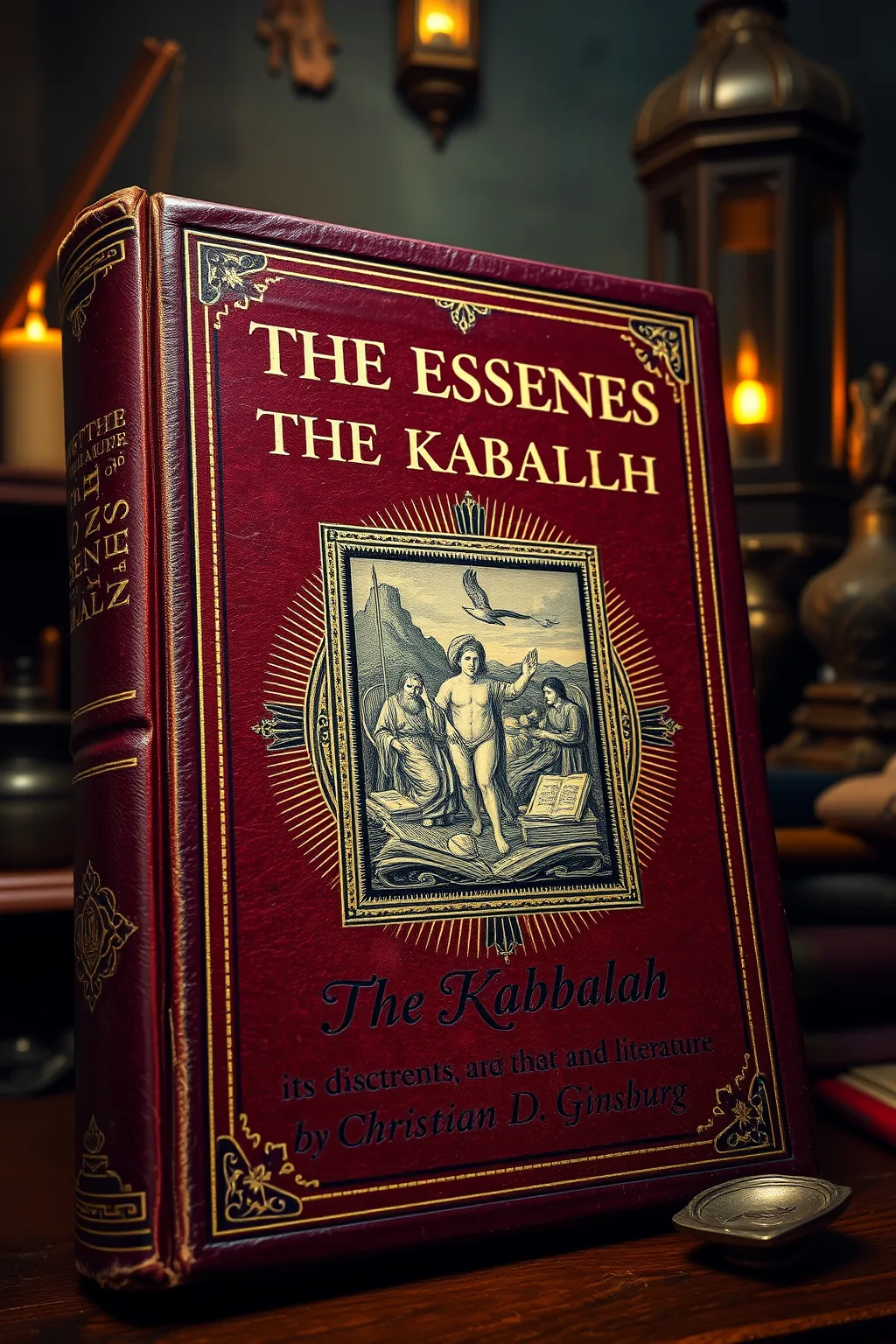
The Essenes The Kabbalah: its doctrines, development, and literature
 62
62

The Essenes The Kabbalah: its doctrines, development, and literature


Sophia Crane (Associate Editor): Christian D. Ginsburg's 'The Essenes and The Kabbalah' is a cornerstone for any serious exploration of Jewish mystical traditions. Ginsburg masterfully interweaves the history and philosophy of the Kabbalah with the enigmatic Essenes, revealing profound connections previously obscured. His scholarship illuminates the intricate symbolism and doctrines, offering seekers an authoritative and deeply insightful guide. This work is essential for understanding the esoteric lineage and the profound spiritual quest at its core. A must-read for students of mysticism, comparative religion, and those seeking to deepen their comprehension of ancient wisdom.
📝 Description
62
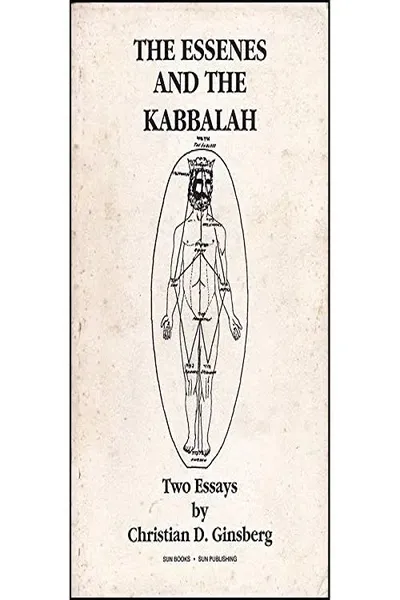
Christian D. Ginsburg first published 'The Essenes and The Kabbalah' in 1865.
Christian D. Ginsburg's 1865 study examines the Essenes and the Kabbalah, two significant streams within Jewish mysticism. The book details the doctrines, historical development, and written traditions of the Kabbalah. Ginsburg connects these mystical teachings to the ancient Essene sect, suggesting shared roots and influences. He explains the symbolic language, gematria (numerology), and cosmological frameworks central to Kabbalistic thought.
The author aims to illuminate the secretive practices and teachings that originated in ancient communities, like desert enclaves. This work is intended for those seeking a deeper understanding of the philosophy and spiritual structure of Jewish mysticism. It provides insight into concepts that informed Jewish thought and Western esoteric traditions, touching upon ideas of creation and spiritual progression.
This book situates Kabbalah within the broader context of Jewish esoteric traditions, particularly linking it to the historical Essene movement. It addresses the symbolic interpretation of texts and the use of numerology, common features in many mystical systems. Ginsburg's work touches upon concepts of divine knowledge (Gnosis) and the structure of creation, themes that resonate within various Western esoteric schools. It traces the lineage of mystical thought from ancient Jewish sects through to later developments that influenced Western esotericism.
💡 Why Read This Book?
Delve into the secret wisdom of the Kabbalah and its ancient Essene precursors. Uncover profound esoteric doctrines, symbolic language, and the philosophical underpinnings of Jewish mysticism. Ideal for seekers of hidden knowledge, scholars of comparative religion, and practitioners aiming for a deeper understanding of spiritual traditions.
⭐ Reader Reviews
Honest opinions from readers who have explored this book.
❓ Frequently Asked Questions
What is the primary focus of this book?
The book's primary focus is to elucidate the doctrines, historical development, and literary corpus of the Kabbalah, with a particular emphasis on its potential connections to the ancient Essene community and their esoteric teachings.
Who was Christian D. Ginsburg?
Christian D. Ginsburg was a renowned scholar and theologian, particularly known for his extensive research and translations of Hebrew texts, including the Masoretic Text and various Kabbalistic works. He was a leading authority on Jewish biblical studies and mysticism.
What is the Kabbalah?
The Kabbalah is a system of Jewish mysticism that seeks to understand the divine nature and the relationship between God and the created world through symbolic interpretation of scripture and contemplation of divine emanations.
Are the Essenes discussed in relation to the Kabbalah?
Yes, a significant aspect of the book explores the hypothesized links and shared esoteric principles between the Essene sect and the development of Kabbalistic thought and literature, suggesting a common wellspring of ancient wisdom.
Is this book suitable for beginners?
While comprehensive, the book's depth may be best appreciated by those with some prior interest in esoteric or theological studies. However, its foundational explanations make it accessible to dedicated beginners eager to learn.
🔮 Key Themes & Symbolism
The Divine Emanations (Sefirot)
This theme studies the Kabbalistic concept of the Sefirot, the ten divine attributes or emanations through which the Infinite God (Ein Sof) reveals Himself and creates the universe. Ginsburg meticulously explores the symbolic representation and hierarchical structure of these emanations, offering insight into the Kabbalistic cosmology and the divine pathways that connect the celestial realms to the terrestrial. Understanding the Sefirot is crucial for grasping the Kabbalah's intricate map of creation and spiritual ascent, revealing the energetic blueprint of existence and the divine presence within all things.
Symbolism and Gematria
The book extensively examines the collection of symbolism embedded within Kabbalistic texts, including the mystical significance of Hebrew letters, numbers, and ancient alphabets. Ginsburg highlights the practice of Gematria, the numerological interpretation of Hebrew words, as a key method for unlocking hidden meanings and divine connections within scripture and sacred texts. This exploration reveals how seemingly simple words and phrases can contain profound esoteric truths, serving as keys to understanding the divine mind and the interconnectedness of all phenomena in the cosmos.
The Essene Connection
A central thesis of Ginsburg's work is the exploration of the potential historical and doctrinal links between the ancient Essene community and the emergence of Kabbalah. The book investigates shared mystical practices, ethical frameworks, and esoteric interpretations of scripture that suggest a common lineage or significant influence. This comparative analysis offers a unique perspective on the roots of Jewish mysticism, positing the Essenes as a vital bridge between earlier prophetic traditions and the more formalized Kabbalistic systems that developed later, clear a hidden thread of spiritual continuity.
💬 Memorable Quotes
Direct passages from the work, attributed to the author.
“Hidden knowledge is the key to true understanding.”
— This speaks to the esoteric nature of the Kabbalah, suggesting that its deepest truths are not readily apparent but require dedicated study, contemplation, and the unlocking of symbolic languages to be revealed.
“The Essenes guarded ancient secrets.”
— This highlights the mysterious nature of the Essenes and their role as keepers of esoteric wisdom, implying that their practices and teachings laid foundational elements for later mystical traditions.
“Symbolism bridges the seen and unseen.”
— This emphasizes the crucial role of symbolism within Kabbalah, illustrating how it serves as a conduit to understand the divine, spiritual realms, and the hidden order of the universe.
💡 Key Ideas
Editorial paraphrase of the work's core concepts — not direct quotes.
The Kabbalah is the science of the divine.
This quote expresses the book's premise: that Kabbalah is not merely a religious philosophy but a systematic, almost scientific, study of the nature of God and His creation, employing specific methods and principles.
The universe is a divine blueprint.
This quote reflects the Kabbalistic worldview that creation is not random but a divinely orchestrated design, with intricate patterns and meanings waiting to be deciphered through mystical study.
🌙 Esoteric Significance
Tradition
This work is deeply rooted in the tradition of Jewish Mysticism, specifically the Kabbalah, and explores its connections to the ancient Essene sect. It studies the Gnostic and Neoplatonic influences that permeated early esoteric thought, tracing a lineage of hidden knowledge passed down through select initiates. The book serves as a gateway to understanding the spiritual architecture and mystical cosmology central to these traditions.
Symbolism
The esoteric significance lies in its profound exploration of Kabbalistic symbolism, including the Tree of Life, the divine names, Hebrew letters, and gematria. These symbols are presented not as mere decorative elements but as keys to unlocking the hidden structure of reality, the divine emanations, and the pathways of spiritual transformation. The book reveals how this rich symbolic language acts as a universal grammar for understanding the interconnectedness of all existence.
Modern Relevance
In an era seeking deeper meaning and spiritual grounding, Ginsburg's work offers a sophisticated framework for understanding the universe and humanity's place within it. The Kabbalah's emphasis on inner transformation, divine connection, and the interconnectedness of all life resonates powerfully with contemporary seekers. The book provides timeless insights into consciousness, creation, and the pursuit of wisdom, making its ancient doctrines relevant to modern spiritual and philosophical exploration.
👥 Who Should Read This Book
This book is essential for scholars of Jewish history, religion, and mysticism seeking authoritative textual analysis. It is indispensable for practitioners of Kabbalah and related esoteric arts aiming to deepen their theoretical understanding and grasp the historical context of their practices. Furthermore, it will captivate the curious seeker of hidden knowledge, those fascinated by ancient wisdom traditions, and anyone interested in the profound philosophical and spiritual underpinnings of Jewish thought.
📜 Historical Context
Christian D. Ginsburg's work emerged during a period of intense scholarly interest in ancient texts and esoteric traditions. The late 19th and early 20th centuries saw a revival of studies into comparative religion, mysticism, and the historical Jesus, including the Essenes. Ginsburg's meticulous scholarship aimed to provide a rigorous, textual foundation for understanding Kabbalah, moving beyond mere speculation to a scholarly analysis of its doctrines and literature. His work situates Kabbalah within its Jewish context while also exploring its potential connections to other ancient mystical currents, reflecting a broader intellectual climate fascinated by the hidden wisdom of the past and its relevance to contemporary spiritual inquiry.
📔 Journal Prompts
Reflect on the concept of divine emanations (Sefirot). How might these principles be observed or applied in daily life?
Consider the role of symbolism in your own life. How do symbols shape your understanding of the world and yourself?
What aspects of the Essene community and their potential connection to Kabbalah intrigue you the most? Explore this further.
Ginsburg discusses hidden knowledge. What 'hidden knowledge' do you feel compelled to seek and understand in your spiritual journey?
How does the idea of the universe as a 'divine blueprint' influence your perspective on order, chaos, and purpose?
🗂️ Glossary
Kabbalah
A system of Jewish mysticism that explores the divine nature and creation through esoteric interpretations of scripture, numerology, and contemplation of divine emanations (Sefirot).
Essenes
An ancient Jewish ascetic sect known for its communal living, strict observance of the Law, and esoteric interpretations, believed by some scholars to have influenced early mystical traditions.
Sefirot
The ten divine emanations or attributes through which God reveals Himself and creates the universe in Kabbalistic cosmology. They form the 'Tree of Life'.
Gematria
A method of Kabbalistic interpretation that assigns numerical values to Hebrew letters, allowing for the discovery of hidden meanings and connections between words and concepts.
Ein Sof
The Kabbalistic concept of the Infinite, Unknowable God, the absolute divine essence that transcends all comprehension and manifestation.
This book appears in 1 collection
🔮 Readers Also Liked
Browse all →







More by Christian D. Ginsburg
All books →

From the “Kabbalah” Collection
View all →




More Free Kabbalah & Jewish Mysticism Books
View all →