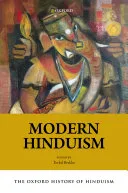
The Oxford History of Hinduism: Modern Hinduism
 77
77

The Oxford History of Hinduism: Modern Hinduism
Torkel Brekke’s contribution to the Oxford History of Hinduism series, focusing on the modern period, presents a dense, factually rich account of a complex religious landscape. Its strength lies in its meticulous detailing of how Hindu traditions have been altered by and responded to colonialism, globalization, and internal reform movements since the 19th century. Brekke skillfully dissects the period, moving beyond the well-trodden ground of 19th-century reformers to examine the subsequent five decades of religious practice and conceptualization. A limitation, however, is the book's academic density; readers seeking a more accessible introduction might find its academic rigor somewhat imposing. The section discussing the impact of globalization on diaspora Hinduism, for instance, is particularly illuminating in its detailed examples of adaptation and continuity. The work is a valuable, if demanding, scholarly resource.
📝 Description
77
Torkel Brekke's 2019 book examines Hindu traditions from the 19th century to the present.
This volume traces the transformations within Hindu traditions from the 19th century to the present day. It moves past earlier reform movements, looking at how internal changes interacted with outside forces like colonialism and globalization. The book places modern Hinduism against a historical background that includes the British Raj, India's independence, and increasing global connections.
It contrasts the religious situation of the early 21st century with the 19th century, a time of major reformist ideas and engagement with Western academic thought. The analysis focuses on how 'modernity' influenced Hinduism, observing how traditions changed, pushed back, or were altered by secularization, nationalism, and new technologies. The text discusses the rise of various Hindu groups and the formation of religious identities under these pressures.
While not strictly an esoteric text itself, Brekke's work engages with the historical development of Hindu traditions that often contain esoteric dimensions. It analyzes how concepts and practices, some of which are esoteric, were reinterpreted or adapted in response to modernization and Western scholarship. The book provides a historical framework for understanding the evolution of these traditions, including their engagement with both mainstream and less visible spiritual currents, during a period of significant global change.
💡 Why Read This Book?
• Learn how Hinduism adapted to colonial encounters and the subsequent wave of globalization, understanding specific shifts in religious practice and belief from the 19th century onwards. • Gain insight into the development of modern Hindu conceptualizations, moving past 19th-century reform movements to examine later changes in religious thought and organization. • Understand the impact of global interconnectedness on Hindu traditions, exploring how external forces shaped internal religious expression and identity in concrete ways.
⭐ Reader Reviews
Honest opinions from readers who have explored this book.
❓ Frequently Asked Questions
What period does 'Modern Hinduism' in this Oxford History cover?
This volume focuses on developments from the 19th century to the early 21st century, analyzing changes driven by both internal movements and external factors like colonialism and globalization.
How does this book differ from histories of earlier Hindu periods?
It deliberately moves away from the well-documented reforms of the 19th and early 20th centuries to examine subsequent, often less-studied, changes in religious practice and conceptualization.
Who is the author, and when was this volume first published?
The author is Torkel Brekke, and the book was first published on June 27, 2019.
What kind of influences on Hinduism does the book explore?
It examines influences from both internal movements within Hindu traditions and external factors such as colonialism and globalization.
Is this book suitable for beginners to Hinduism?
While comprehensive, its academic depth makes it most suitable for students, scholars, and those with a foundational knowledge of religious studies seeking detailed analysis.
What does the book say about religious practice in modern Hinduism?
It dedicates chapters to presenting key developments and changes in religious practice, offering specific examples of how traditions have evolved over time.
🔮 Key Themes & Symbolism
Post-Colonial Religious Adaptation
The work scrutinizes how Hindu traditions navigated the legacy of British colonialism and the subsequent emergence of independent India. It details the adaptation of religious practices and beliefs in response to political and social shifts, moving beyond simplistic notions of cultural imposition. Brekke highlights how diasporic communities, influenced by their experiences in new lands, also contributed to the evolving field of Hindu expression, creating hybrid forms and reinterpreting traditions.
Globalization and Hindu Identity
This theme examines the lasting impact of global interconnectedness on Hinduism in the modern era. It explores how increased travel, communication technologies, and transnational movements have reshaped both practice and theological discourse. The book analyzes the construction of Hindu identities in a globalized world, addressing challenges and opportunities presented by secularism, consumer culture, and the rise of Hindu nationalism.
Internal Reform and Modernity
Brekke analyzes the ongoing process of internal reform within Hinduism, distinguishing it from earlier 19th-century movements. The focus is on how contemporary Hindu thinkers and practitioners engage with modernity, reinterpreting ancient texts and traditions to address contemporary ethical, social, and spiritual concerns. This includes the formation of new organizations and the redefinition of religious authority in response to changing societal structures.
Shifting Religious Practices
A core focus is the evolution of religious practices across diverse Hindu communities. The book presents detailed case studies illustrating changes in ritual, worship, asceticism, and community organization. It investigates how modernization and global flows of information have led to both the standardization and diversification of practices, offering a nuanced view of contemporary Hindu religiosity.
💬 Memorable Quotes
Direct passages from the work, attributed to the author.
“developments resulting from movements within the tradition as well as contact between India and the outside world”
— This expresses the dual forces shaping modern Hinduism: internal dynamism and external pressures from colonialism and globalization, highlighting the dynamic interplay examined throughout the book.
“Moving away from the reforms of the 19th and early 20th century”
— This signals the book's unique contribution by focusing on later periods and transformations, acknowledging earlier reforms but prioritizing subsequent, often less-analyzed, evolutions in Hindu thought and practice.
“part two includes five chapters each presenting key developments and changes in religious practice in mod”
— This points to the book's structured approach to exploring concrete shifts in how Hinduism is lived and practiced, moving from historical background to contemporary manifestations.
“contact between India and the outside world through both colonialism and globalization”
— This phrase identifies the critical external factors Brekke examines, emphasizing how historical power dynamics and increasing global integration have continuously reshaped Hindu traditions.
“historical background to modern conceptualizations of Hinduism”
— This highlights the book's commitment to providing a foundational understanding of how contemporary Hindu ideas and practices are rooted in specific historical trajectories and intellectual currents.
🌙 Esoteric Significance
Tradition
While not explicitly aligning with a single esoteric lineage like Theosophy or Kabbalah, this work is crucial for understanding how esoteric interpretations of Hinduism interacted with broader societal changes. It examines how Hindu traditions, often containing deeply mystical and philosophical dimensions, were presented, adapted, or sometimes obscured by colonial scholarship and later globalized New Age movements.
Symbolism
The book implicitly touches upon the symbolic transformations of Hindu concepts in the modern era. For instance, the concept of 'dharma' itself has been reinterpreted through nationalist, global, and individualistic lenses, moving from a communal, cosmic order to a more personal ethical framework. Similarly, the iconography of deities, while ancient, is frequently recontextualized in modern media and popular culture, altering its perceived esoteric meaning.
Modern Relevance
Contemporary thinkers and practitioners engaging with the global spread of Yoga and Vedanta, as well as academics studying religious nationalism and diaspora communities, draw on the historical grounding this book provides. It informs discussions on how ancient traditions maintain relevance and adapt their esoteric or philosophical teachings in secularizing societies and across diverse cultural contexts.
👥 Who Should Read This Book
• Academic researchers in religious studies, sociology of religion, and post-colonial studies seeking a detailed historical account of Hindu transformations. • Students of Hinduism needing to understand the complex interplay of internal reform and external influences like colonialism and globalization on contemporary practice. • Individuals interested in comparative religious history who wish to trace the evolution of a major world religion beyond its classical formulations.
📜 Historical Context
Published in 2019, Torkel Brekke's analysis of Modern Hinduism arrived at a time when scholarship on South Asian religions was increasingly concerned with globalization's impact and the complexities of post-colonial identity. The work situates itself within a lineage of rigorous historical scholarship on Hinduism, engaging with debates that followed the foundational studies of scholars like R.C. Majumdar and S. Radhakrishnan, who documented earlier reform movements. Brekke's approach departs from a focus solely on elite intellectual history, incorporating a wider view of religious practice. While not explicitly engaging with a specific competing school of thought in its blurb, the book implicitly challenges simplistic nationalist or essentialist narratives of Hinduism by emphasizing external influences and internal diversity. Its detailed examination of developments post-independence addresses a scholarly gap concerning the later 20th century.
📔 Journal Prompts
The legacy of colonial contact on modern conceptualizations of Hinduism.
Changes in religious practice during the post-independence era.
The impact of globalization on Hindu identity construction.
Distinguishing modern reform movements from earlier 19th-century agendas.
Analyzing the interplay between internal traditions and external influences.
🗂️ Glossary
Modern Hinduism
Refers to the diverse religious beliefs, practices, and organizations that have emerged or been significantly transformed within Hindu traditions from the 19th century onwards, shaped by factors like colonialism, nationalism, and globalization.
Colonialism
The policy or practice of acquiring full or partial political control over another country, occupying it with settlers, and exploiting it economically. Its impact on Hindu traditions is a key focus of the book.
Globalization
The process by which businesses or other organizations develop international influence or start operating on an international scale, significantly impacting religious traditions and their followers.
Reform Movements
Organized efforts within a religion to change or improve its doctrines, practices, or institutions, particularly those that arose in the 19th and 20th centuries within Hinduism.
Religious Practice
The observable actions, rituals, and devotional activities undertaken by adherents of a religion, which can evolve significantly over time due to various societal influences.
Conceptualizations
The way in which ideas, beliefs, and doctrines within Hinduism have been understood, articulated, and redefined, especially in response to modern intellectual and social currents.
Diaspora Hinduism
The religious and cultural practices of Hindu communities living outside of India, which often develop unique characteristics influenced by their new environments.