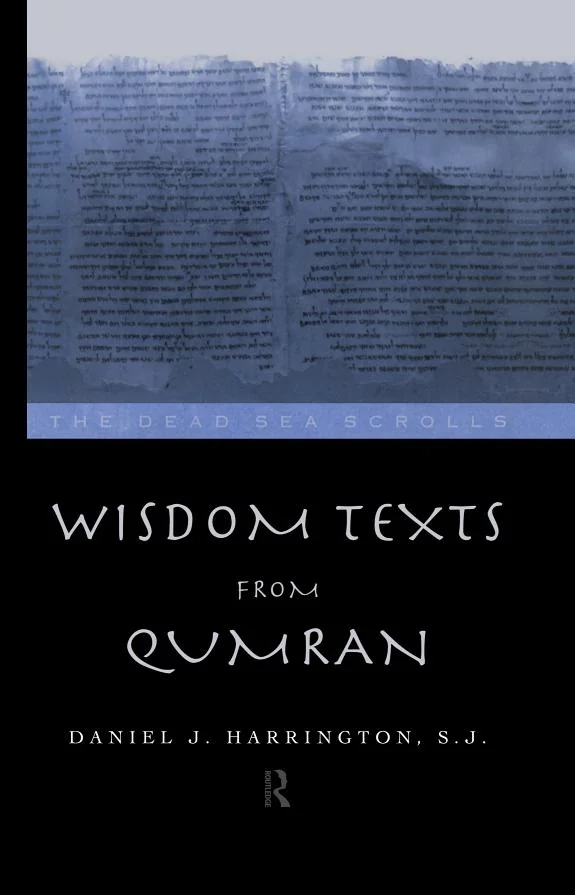
Wisdom Texts from Qumran
 75
75

Wisdom Texts from Qumran
Daniel J. Harrington’s *Wisdom Texts from Qumran* is a valuable, if dry, scholarly endeavor. Its strength lies in providing accessible, new translations and extensive background for a body of literature often overshadowed by the more famous biblical scrolls. Harrington meticulously details the Qumran community's intellectual output, particularly focusing on the significant 'Sapiential Work A'. While the depth of analysis is commendable, the prose occasionally becomes dense, potentially alienating readers not already steeped in Dead Sea Scroll studies. The work’s limitation is its purely academic focus, which, while precise, may not fully convey the spiritual or practical implications these texts might have held for their original audience. Nevertheless, for those seeking a definitive scholarly introduction to Qumran wisdom literature, this book serves as an indispensable resource.
📝 Description
75
Daniel J. Harrington's 1996 book examines the wisdom literature from the Dead Sea Scrolls.
Published in 1996, Daniel J. Harrington's study offers translations and analysis of wisdom texts found among the Dead Sea Scrolls. It moves beyond simple listing to dissect a distinct intellectual tradition. This work is for scholars of ancient Near Eastern religions, textual critics of biblical and extrabiblical literature, and those interested in the communities that produced the scrolls. It provides rigorous academic engagement with primary sources, laying groundwork for comparative studies.
The discovery of the Dead Sea Scrolls starting in 1947 changed understanding of Second Temple Judaism. Harrington's book places the Qumran wisdom texts within this context, contrasting them with biblical traditions and noting their unique contributions. The study addresses the intellectual environment of Jewish thought in the centuries before and during the early Christian era. Harrington's analysis focuses on identifying and interpreting wisdom traditions from the Qumran community. He differentiates canonical biblical wisdom, such as Proverbs, from the distinct, often sectarian, wisdom in the scrolls. A significant part of his work details a text known as 'Sapiential Work A', uncovering its educational goals and theological basis.
The wisdom texts from Qumran represent a development within Second Temple Judaism, a period of intense scriptural and theological activity. These writings, distinct from mainstream biblical tradition, reveal a community with its own interpretive methods and theological outlook. Their focus on specific teachings and community rules places them within a broader stream of ancient Jewish mysticism and esoteric interpretation, where hidden knowledge and divine instruction were paramount. Harrington's work illuminates this specific tradition, showing its internal logic and its place in the religious landscape before the rise of Gnosticism.
💡 Why Read This Book?
• Gain a foundational understanding of the Qumran community's unique wisdom traditions, distinct from canonical biblical texts, as detailed in Harrington's analysis of 'Sapiential Work A'. • Access new, scholarly translations of key wisdom texts from the Dead Sea Scrolls, providing direct engagement with primary sources first unearthed in 1947. • Grasp the historical and religious context of Second Temple Judaism by examining texts that illuminate the intellectual currents beyond mainstream biblical scholarship.
⭐ Reader Reviews
Honest opinions from readers who have explored this book.
❓ Frequently Asked Questions
What is the primary focus of Daniel J. Harrington's study on Qumran wisdom texts?
Harrington's work provides the first full analysis of wisdom literature found among the Dead Sea Scrolls. It includes new translations, background information, and a detailed examination of texts like 'Sapiential Work A'.
When were the Qumran wisdom texts first discovered and published?
The Dead Sea Scrolls, including the wisdom texts, were discovered starting in 1947. Harrington's comprehensive study was first published in 1996, decades after the initial discoveries.
How does the wisdom literature from Qumran differ from biblical wisdom books?
The study distinguishes between canonical biblical wisdom (e.g., Proverbs) and the wisdom texts from Qumran, which often reflect sectarian viewpoints and pedagogical approaches specific to the Qumran community.
What is 'Sapiential Work A' and why is it important in this book?
'Sapiential Work A' is a significant and well-preserved wisdom instruction text from Qumran. Harrington identifies it as the centerpiece of his book, offering an in-depth discussion of its content and meaning.
Is this book suitable for beginners in Dead Sea Scroll studies?
While providing new translations, the book is primarily a scholarly analysis. Readers with some background in ancient Near Eastern studies or biblical exegesis will likely find it most accessible.
What period does the wisdom literature from Qumran represent?
The texts originate from the Second Temple period, roughly from the 3rd century BCE to the 1st century CE, a critical era for the development of Jewish thought and traditions.
🔮 Key Themes & Symbolism
Sectarian Wisdom Pedagogy
This work illuminates how the Qumran community, distinct from broader Jewish society, developed its own instructional texts. Harrington analyzes 'Sapiential Work A' as a prime example, revealing methods of teaching and ethical formation aimed at community members. It explores the esoteric transmission of knowledge within a closed group, emphasizing discipline and adherence to specific interpretations of divine law and wisdom.
The Boundaries of Canon
Harrington's study directly confronts the distinction between texts considered canonical biblical wisdom and those found exclusively at Qumran. This exploration studies how communities defined their authoritative literature, highlighting the Qumran sect's unique canon and its emphasis on texts that reinforced their particular worldview and practices.
Ancient Near Eastern Literary Connections
Beyond the immediate biblical context, the book surveys extrabiblical wisdom traditions. This situates Qumran's output within a broader ancient Near Eastern literary heritage, showing influences and adaptations from earlier Mesopotamian and Egyptian wisdom genres, demonstrating a complex intellectual exchange.
Interpretive Frameworks
The core of the book lies in its detailed interpretation of the Qumran wisdom texts. Harrington provides the necessary background and context for understanding these often cryptic writings, offering scholarly insights into their theological underpinnings, ethical directives, and cosmological views as understood by the community.
💬 Memorable Quotes
Direct passages from the work, attributed to the author.
“The centrepiece of the book is a discussion of the large wisdom instruction known as Sapiential Work A.”
— This highlights 'Sapiential Work A' as the most thoroughly analyzed text, suggesting it contains the richest insights into Qumran's unique wisdom traditions and pedagogical methods.
“New translations and a full explanation of the background and context of wisdom literature introduce the reader...”
— This emphasizes the book's dual role: providing fresh renderings of ancient texts and offering crucial historical and cultural context for their comprehension.
“After surveying biblical and extrabiblical wisdom books, the author considers the best and most fully preserved wisdom texts from Qumran.”
— This outlines the comparative methodology, establishing a baseline with known wisdom traditions before focusing on the distinctive Qumran materials.
“This study is the first full analysis of the Qumran wisdom texts.”
— This assertion underscores the pioneering nature of Harrington's research, positioning it as the foundational scholarly work dedicated to this specific corpus of scrolls.
“...introduce the reader to an important and hitherto little discussed part of the Dead Sea Scrolls.”
— This points to the relative obscurity of these wisdom texts prior to Harrington's publication, signaling their significance for a more complete understanding of the scrolls' contents.
🌙 Esoteric Significance
Tradition
While not strictly fitting into a single modern esoteric lineage like Hermeticism or Kabbalah, the Qumran wisdom texts represent a vital precursor to esoteric thought within Judaism. They embody a form of esoteric transmission, where specialized knowledge and interpretations of divine law were reserved for initiates, forming a distinct spiritual path within the broader Jewish range of the Second Temple period.
Symbolism
Key symbols within Qumran wisdom literature often revolve around light and darkness, purity and impurity, and the concept of the 'sons of light' versus the 'sons of darkness.' These dualistic motifs, particularly prominent in texts like 'Sapiential Work A,' reflect a worldview focused on spiritual discernment, ethical struggle, and the community's perceived role as bearers of true divine knowledge.
Modern Relevance
Contemporary esoteric practitioners and scholars interested in the roots of Western mysticism often turn to the Dead Sea Scrolls for insights into early Jewish mysticism and sectarianism. Harrington's work provides a critical lens for understanding these foundational texts, informing modern explorations of Gnostic precursors, early Christian esoteric interpretations, and the historical development of spiritual disciplines.
👥 Who Should Read This Book
• Scholars of Second Temple Judaism and biblical studies seeking a detailed analysis of non-canonical wisdom literature. • Students of comparative religion interested in the diversity of ancient Jewish thought and sectarian practices. • Researchers of ancient textual traditions looking for primary source material with rigorous scholarly commentary and new translations.
📜 Historical Context
The discovery of the Dead Sea Scrolls, commencing in 1947, fundamentally altered scholarly perspectives on Second Temple Judaism. Daniel J. Harrington's *Wisdom Texts from Qumran* (1996) emerged in this transformative period, offering the first comprehensive scholarly treatment of a specific subset of these scrolls. The era was marked by intense debate concerning the identity of the Qumran community, with prevailing theories linking them to the Essenes. Harrington's work engages with this intellectual current by meticulously analyzing texts that reveal the community's distinct pedagogical and ethical frameworks, contrasting them with the more widely studied biblical texts. While figures like J.T. Milik were actively publishing on various scroll fragments, Harrington focused specifically on the wisdom corpus. The reception of the scrolls involved extensive international collaboration and competition among scholars, making comprehensive studies like Harrington's crucial for synthesizing findings and establishing new research trajectories.
📔 Journal Prompts
The concept of 'Sapiential Work A' as a central teaching document for the Qumran community.
The distinction between biblical wisdom and Qumran sectarian wisdom.
The role of dualistic symbolism (light/darkness) in Qumran texts.
The implications of extrabiblical wisdom traditions on Qumran literature.
The process of canon formation and its reflection in the Dead Sea Scrolls.
🗂️ Glossary
Dead Sea Scrolls
A collection of ancient Jewish manuscripts discovered between 1947 and 1956 in caves near the Dead Sea. They include the oldest known surviving copies of biblical books and numerous non-biblical texts.
Wisdom Literature
A genre of literature, both biblical and extrabiblical, that focuses on practical advice, moral instruction, and reflections on the nature of life and divine order, often attributed to wise figures.
Second Temple Period
The historical era in Judaism spanning from the rebuilding of the Jerusalem Temple (c. 516 BCE) to its destruction by the Romans in 70 CE.
Sapiential Work A
A significant, well-preserved wisdom text found among the Qumran scrolls, analyzed in detail by Harrington as a key example of the community's instructional literature.
Extrabiblical Texts
Writings from the ancient world that are not part of the Hebrew Bible (Old Testament) canon but are relevant to understanding the historical and religious context.
Sectarian Literature
Writings produced by a specific religious group or sect, often reflecting its unique doctrines, practices, and interpretations of scripture.
Qumran Community
The group believed to have inhabited the settlement of Qumran and produced or collected the Dead Sea Scrolls, often associated with the Essenes.
This book appears in 1 collection
🔮 Readers Also Liked
Browse all →







From the “Dead Sea Scrolls” Collection
View all →






More Free Esoteric History & Biography Books
View all →