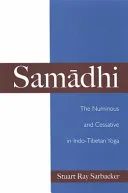
Samadhi
 78
78

Samadhi
Stuart Ray Sarbacker’s "Samadhi" presents a refreshingly analytical lens on yogic and meditative traditions. Rather than succumbing to New Age platitudes, Sarbacker grounds his exploration in the psychological and sociological contexts surrounding these practices, a critical move that separates it from many popular accounts. His meticulous dissection of "samadhi" as a multi-layered phenomenon, rather than a singular mystical event, is a significant strength. For instance, his discussion of the distinction between concentration (samatha) and insight (vipassana) meditation, and how different schools frame the path to samadhi, offers clarity. However, the book’s academic rigor, while commendable, can at times render the material dense for the casual reader. The focus on theoretical frameworks occasionally overshadows the lived, experiential aspect of these practices. Ultimately, Sarbacker offers a valuable, if demanding, scholarly contribution to understanding Eastern contemplative traditions.
📝 Description
78
Stuart Sarbacker's 2006 book examines samadhi beyond altered states to its role in Eastern cultural development.
Published in June 2006, Samadhi by Stuart Ray Sarbacker provides a scholarly analysis of yoga and meditation practices within Eastern religious thought. The book moves past simple spiritual or philosophical readings, incorporating psychological and sociological viewpoints to construct a fuller understanding of these ancient disciplines. Sarbacker treats yoga and meditation not solely as methods for achieving altered consciousness but as fundamental elements in cultural and individual growth.
This text is designed for readers who seek a rigorous, academic study of yoga and meditation. It is especially useful for students of comparative religion, philosophy of mind, and cultural studies interested in the varied nature of these practices. Individuals curious about the historical evolution and societal influence of Eastern contemplative traditions will find its analytical approach valuable. The book does not function as a practical guide to reaching samadhi; instead, it investigates its significance and purpose.
Sarbacker's work situates the academic study of Eastern religions and their contemplative practices within the growing field of Western scholarship on non-Western traditions in the late 20th century. This scholarship increasingly acknowledged psychological and social aspects alongside theological ones. The book engages with this discourse, which has also involved thinkers like Mircea Eliade and Wendy Doniger, who examined the connections between religion, culture, and psychology.
💡 Why Read This Book?
• Understand "samadhi" beyond simplistic definitions by exploring its distinct yogic and Buddhist interpretations as detailed in Sarbacker's analysis, moving past generic spiritual aspirations. • Grasp the psychological and social underpinnings of meditation by examining how Sarbacker connects these practices to cultural development and personal transformation, offering insights unavailable in purely devotional texts. • Gain context on the academic study of Eastern religions by understanding how Sarbacker situates yoga and meditation within scholarly discourse, referencing historical approaches and intellectual currents from the late 20th century.
⭐ Reader Reviews
Honest opinions from readers who have explored this book.
❓ Frequently Asked Questions
What is the primary focus of Stuart Ray Sarbacker's book 'Samadhi'?
The book primarily focuses on yoga and meditation within Eastern religions, examining them through psychological and sociological lenses, moving beyond purely spiritual interpretations.
When was 'Samadhi' by Stuart Ray Sarbacker first published?
The book 'Samadhi' by Stuart Ray Sarbacker was first published on June 1, 2006.
Does 'Samadhi' provide practical meditation techniques?
No, 'Samadhi' is an analytical and scholarly exploration of the concepts and contexts of yoga and meditation, not a practical guide for practitioners.
What academic disciplines does 'Samadhi' draw upon?
It draws upon comparative religion, psychology, and sociology to analyze Eastern contemplative practices.
Who would benefit most from reading 'Samadhi'?
Students of religion, philosophy, psychology, and cultural studies, as well as those seeking a rigorous academic understanding of Eastern contemplative traditions, would benefit.
What does the book say about the term 'samadhi' itself?
Sarbacker explores 'samadhi' as a complex phenomenon with varied interpretations across yogic and Buddhist traditions, distinguishing it from mere ecstatic states.
🔮 Key Themes & Symbolism
The Multiplicity of Samadhi
Sarbacker's work critically examines the term "samadhi," presenting it not as a monolithic spiritual goal but as a spectrum of experiences and states of consciousness recognized across diverse yogic and Buddhist lineages. He highlights how different traditions conceptualize the path to and the nature of samadhi, differentiating between states of focused attention, deep absorption, and ultimate realization. This nuanced approach encourages readers to question singular definitions and appreciate the rich variety of contemplative aims within Eastern religions.
Psychology and Social Integration
A central contribution of this book is its integration of psychological and sociological perspectives into the study of yoga and meditation. Sarbacker argues that these practices are not solely individualistic pursuits but are deeply embedded within cultural contexts and have tangible psychological effects. He explores how social structures, rituals, and community support influence the development and expression of meditative states, offering a more holistic understanding than purely introspective accounts.
Yogic and Buddhist Frameworks
The book provides a comparative analysis of how yoga and Buddhist traditions frame the pursuit of altered states of consciousness. It examines specific concepts like the yamas and niyamas within yoga, and practices such as samatha and vipassana in Buddhism, to illustrate the varied methodologies and philosophical underpinnings that guide practitioners. This comparative approach underscores the intellectual traditions that shape the experience and understanding of samadhi.
Beyond Experientialism
Sarbacker steers clear of advocating for or detailing personal spiritual experiences. Instead, the focus remains on the academic and theoretical exploration of these practices. By treating yoga and meditation as objects of scholarly inquiry, the book provides analytical tools for understanding their historical development, cultural significance, and psychological functions, offering a critical distance valuable for researchers and serious students.
💬 Memorable Quotes
Direct passages from the work, attributed to the author.
“Samadhi is understood as a complex cognitive and affective phenomenon.”
— This interpretation highlights Sarbacker's view of samadhi not as a simple mystical event, but as a many-sided state involving thought processes, emotions, and conscious awareness that can be analyzed.
“The integration of psychological and sociological perspectives is crucial for understanding Eastern contemplative practices.”
— This reflects the book's core argument that to fully grasp yoga and meditation, one must consider their impact on the mind and their embeddedness within societal structures.
“Different yogic and Buddhist lineages offer distinct conceptualizations of the path to samadhi.”
— This emphasizes the diversity within Eastern traditions regarding how samadhi is achieved and what its ultimate nature entails, moving beyond a singular, universal definition.
“The study of these practices necessitates moving beyond purely spiritual or devotional interpretations.”
— This underscores Sarbacker's scholarly approach, advocating for analytical rigor and critical examination rather than uncritical acceptance or experiential endorsement.
“Ritual and community play significant roles in mediating meditative experiences.”
— This points to the social dimension of spiritual practice, suggesting that communal activities and established rituals are integral to how individuals experience and understand states like samadhi.
🌙 Esoteric Significance
Tradition
While "Samadhi" is primarily an academic text on Eastern religions, its exploration of advanced states of consciousness and the disciplined path to achieving them touches upon themes relevant to Western esoteric traditions. It operates within the broad lineage of understanding consciousness transformation, a common thread in Hermeticism, Gnosticism, and various mystical paths. Sarbacker's work provides a critical, scholarly framework that can inform, or stand in contrast to, the experiential accounts found in many Western esoteric texts.
Symbolism
The book directly engages with the concept of "samadhi" itself as a central motif, representing a state of profound mental absorption and integration. It also implicitly discusses symbols associated with the disciplined mind, such as the focused attention required in meditation (akin to the "single eye" or "inner gaze" in some Western traditions) and the ethical frameworks (like the yamas and niyamas) that act as symbolic guides for practitioners on their path.
Modern Relevance
Contemporary thinkers and practitioners in fields ranging from mindfulness-based stress reduction (MBSR) to academic departments of religious studies and psychology continue to draw on scholarship that rigorously analyzes contemplative practices. Sarbacker's work provides a foundational text for understanding the historical and theoretical underpinnings of techniques that have become globally popular, offering a critical perspective that remains relevant for researchers and practitioners alike.
👥 Who Should Read This Book
• Students of comparative religion and philosophy seeking a scholarly understanding of yogic and Buddhist contemplative traditions. • Psychologists and sociologists interested in the cognitive and social dimensions of altered states of consciousness and spiritual practices. • Academically-minded practitioners of yoga and meditation looking for a deeper, analytical context beyond personal experience.
📜 Historical Context
Published in 2006, Stuart Ray Sarbacker's "Samadhi" emerged during a period of robust academic engagement with Eastern religions and contemplative practices in the West. The late 20th and early 21st centuries saw scholars increasingly move beyond philological or purely theological studies to incorporate anthropological, psychological, and sociological methodologies. Sarbacker's work fits within this trajectory, offering a sophisticated analysis that parallels the interdisciplinary approaches championed by figures like Wendy Doniger, who examined mythology and religion through cultural and psychological lenses. The book contributes to a scholarly discourse that was actively seeking to clarify and critically analyze practices often shrouded in esoteric language. While not a direct engagement with Western esoteric traditions like Hermeticism or Kabbalah, it implicitly addresses a Western audience increasingly interested in Eastern spirituality, providing a grounded, academic counterpoint to popular, often superficial, interpretations.
📔 Journal Prompts
The concept of samadhi as a spectrum of experiences.
The psychological and social factors influencing meditative states.
Distinctions between yogic and Buddhist approaches to concentration and insight.
The role of ethical frameworks (yamas and niyamas) in the practice of yoga.
Comparing Sarbacker's analytical approach to personal experiences of meditation.
🗂️ Glossary
Samadhi
A state of profound mental concentration, absorption, or ecstatic union, central to yogic and Buddhist traditions. Sarbacker explores its varied interpretations across different lineages.
Yoga
A broad term referring to various philosophical and spiritual traditions originating in ancient India, focused on achieving union of mind, body, and spirit. Sarbacker examines its meditative and ethical aspects.
Meditation
A practice where an individual uses a technique – such as mindfulness, or focusing the mind on a particular object, thought, or activity – to train attention and awareness, and achieve a mentally clear and emotionally calm and stable state.
Yamas
Ethical restraints or principles in yoga philosophy, forming the first limb of Ashtanga Yoga. They guide conduct towards others and the external world.
Niyamas
Observances or disciplines in yoga philosophy, forming the second limb of Ashtanga Yoga. They relate to one's inner world and self-discipline.
Samatha
A type of Buddhist meditation focused on developing concentration and tranquility, often by focusing on a single object.
Vipassana
A type of Buddhist meditation focused on developing insight into the true nature of reality, often by observing impermanence, suffering, and non-self.