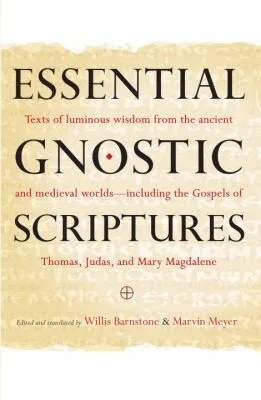
Essential Gnostic Scriptures
 78
78

Essential Gnostic Scriptures
Meyer’s compilation arrives not with fanfare, but with the quiet authority of source material. The strength of "Essential Gnostic Scriptures" lies in its straightforward presentation of primary texts, allowing the often bewildering, yet fascinating, Gnostic worldview to emerge without excessive mediation. Meyer's editorial hand is subtle, prioritizing the content of the scriptures themselves. A point of contention, however, could be the sheer density of the material; newcomers might find the initial immersion challenging without extensive prior grounding. The "Gospel of Thomas," with its stark, aphoristic pronouncements on the Kingdom of Heaven, offers a particularly accessible entry point, yet even here, the implications are far-reaching. It is a scholarly presentation, not a beginner’s guide, demanding careful reading. The work offers a crucial window into a significant, albeit often misunderstood, ancient spiritual current.
📝 Description
78
Marvin Meyer's 2010 collection presents Gnostic scriptures, offering direct access to primary source material.
Marvin Meyer's "Essential Gnostic Scriptures" gathers key texts from the Gnostic movement, which developed in the first few centuries CE. This compilation focuses on primary sources, allowing readers to engage directly with the writings of Gnostic teachers. The book bypasses secondary interpretations to present the original ideas on complex cosmologies, the nature of the divine, and the human search for spiritual freedom. Meyer structures the volume to give a clear view of these ancient voices and their concepts. The collection includes important texts that shed light on religious diversity during the Hellenistic and Roman periods. It makes these ancient writings accessible to a modern audience interested in esoteric thought and the intellectual history of the Roman Empire. The book is particularly useful for those studying the Nag Hammadi library, enabling direct engagement with its foundational documents.
Gnosticism, a diverse religious and philosophical current from the early centuries CE, often contrasted with nascent Christianity and Platonism. Its scriptures, like those found at Nag Hammadi, explore intricate cosmologies and the path to spiritual liberation. These texts frequently feature figures such as Sophia, representing a divine feminine aspect of wisdom, and discuss the Archons, rulers of the material world. Meyer's compilation situates these writings within a modern academic framework, contributing to discussions on Gnosticism's origins and its place within the broader tapestry of ancient religious thought.
💡 Why Read This Book?
• Gain direct access to the foundational texts of Gnosticism, such as the "Gospel of Thomas" and the "Apocryphon of John," understanding their unique cosmological narratives and salvation doctrines as presented by their ancient authors. • Explore the concept of Sophia and her complex role in Gnostic mythologies, learning how this divine feminine figure’s descent and awakening are central to Gnostic soteriology. • Engage with the radical dualism presented in these scriptures, differentiating the Gnostic view of the material world and its creator from orthodox religious traditions prevalent in the 2nd century CE.
⭐ Reader Reviews
Honest opinions from readers who have explored this book.
❓ Frequently Asked Questions
What are the most significant Gnostic scriptures included in Marvin Meyer's collection?
The "Essential Gnostic Scriptures" features key texts like the "Gospel of Thomas," the "Apocryphon of John," the "Gospel of Truth," and the "Gospel of Mary," offering diverse perspectives on Gnostic cosmology and teachings.
When did Gnosticism emerge and flourish?
Gnosticism was a diverse movement that emerged and developed primarily in the 1st to 4th centuries CE, during the Hellenistic and Roman periods, overlapping with early Christianity.
What is the Nag Hammadi library and its relevance to this book?
The Nag Hammadi library, discovered in Egypt in 1945, comprises a collection of ancient Gnostic texts. Meyer's book draws heavily from this discovery, providing scholars and readers with direct access to these vital Gnostic scriptures.
What does the Gnostic concept of 'Gnosis' refer to?
In Gnosticism, 'Gnosis' refers to esoteric knowledge, particularly knowledge of the divine and the true nature of reality. It is through this salvific knowledge that individuals can achieve liberation from the material world.
How does Gnosticism differ from mainstream Christianity of the same era?
Gnosticism often presents a radical dualism, viewing the material world as flawed or evil, created by a lesser deity (the Demiurge), and emphasizes direct, personal Gnosis for salvation, contrasting with the orthodox Christian focus on faith in Jesus Christ and divine grace.
Who was Marvin Meyer in relation to Gnostic studies?
Marvin Meyer was a prominent scholar of Gnosticism and early Christianity, known for his translations and critical editions of Gnostic texts, making ancient wisdom accessible to a wider audience.
🔮 Key Themes & Symbolism
The Divine Feminine and Sophia
A significant theme within these scriptures is the role of Sophia, often depicted as a divine feminine being whose actions, such as a passionate desire or errant thought, lead to the creation of the material world and its flawed rulers, the Archons. Her story is frequently intertwined with the concept of redemption, as her emanations or her own efforts contribute to the eventual restoration of divine order and the liberation of trapped divine sparks. This emphasis on a primordial feminine divinity offers a stark contrast to patriarchal religious structures and highlights a unique aspect of Gnostic cosmology.
The Material World as Prison
Many Gnostic texts portray the material universe not as a benevolent creation, but as a flawed or even malevolent realm, an illusionary prison designed to trap the divine spirit. The creator of this realm, often identified with the Old Testament God or Yahweh, is seen as an ignorant or tyrannical Archon. Humanity, possessing a divine spark or 'pneuma,' is thus alienated from the true, transcendent God. Salvation is achieved not through adherence to material laws or societal norms, but through escaping this illusory cosmos via Gnosis.
Salvation Through Gnosis
The core of Gnostic soteriology (doctrine of salvation) is Gnosis – a direct, intuitive, and often revelatory knowledge of the true divine nature and one's own divine origin. This is not mere intellectual understanding but an experiential awakening that liberates the divine spark from its material confinement. The scriptures often present Jesus Christ not as a savior who dies for sins, but as a revealer of Gnosis, imparting secret teachings that enable individuals to recognize their true selves and ascend to the Pleroma, the field of the true God.
Dualism and the Archons
A pervasive element is the concept of radical dualism, positing a fundamental opposition between the spiritual, transcendent field of the true God (the Pleroma) and the material, immanent realm created by a lesser, ignorant deity. This lesser deity, often called the Demiurge or the God of the Jews, presides over the cosmos through his agents, the Archons. These Archons are cosmic powers that maintain the illusion of the material world, blind humanity to its divine origin, and impede spiritual ascent. Understanding the Archons is crucial to reading through the Gnostic path to liberation.
💬 Memorable Quotes
Direct passages from the work, attributed to the author.
“The elect spirit is the one who has Gnosis of the Father.”
— This statement underscores the central Gnostic tenet that salvation is achieved through direct, experiential knowledge (Gnosis) of the supreme, transcendent God. It implies that only those who attain this specific inner knowing are truly 'chosen' in the Gnostic framework.
“The Kingdom of Heaven is within you.”
— Another concept prominent in the "Gospel of Thomas," this aphorism directly challenges the notion of a geographically distant or future divine realm. It asserts that the divine presence and the potential for spiritual realization are immanent, accessible through inner awareness and Gnosis.
“For where the Archons are, there is the flesh.”
— This interpretation highlights the Gnostic association of the material world and the physical body ('flesh') with the dominion of the Archons. It implies that the Archons' influence is tied to the limitations and desires of the material existence, which Gnosis seeks to transcend.
💡 Key Ideas
Editorial paraphrase of the work's core concepts — not direct quotes.
Jesus said, 'If you bring forth what is within you, what you bring forth will save you. If you do not bring forth what is within you, what you do not bring forth will destroy you.'
This quote from the "Gospel of Thomas" expresses the Gnostic emphasis on inner, spiritual knowledge (Gnosis) as the key to salvation. It suggests that true liberation comes from recognizing and actualizing one's innate divine potential, rather than relying on external doctrines or authorities.
The rulers of this world are ignorant, and through their ignorance, they have imagined that they rule.
This paraphrase reflects the Gnostic view of the Archons and the Demiurge. Their power is based on illusion and ignorance; they believe they control the cosmos, but their dominion is fundamentally flawed and temporary from a Gnostic perspective.
🌙 Esoteric Significance
Tradition
This work is central to understanding the Gnostic tradition, a mystical and philosophical current that presented a radical alternative to mainstream religious thought in antiquity. Gnosticism emphasizes the innate divinity of humanity and the pursuit of secret knowledge (Gnosis) for liberation from a flawed material cosmos. It departs from traditional Abrahamic faiths by often positing a distant, unknowable supreme God separate from the creator of the material world, and by highlighting the divine feminine principle, Sophia, in its cosmology.
Symbolism
Key symbols include the Serpent, often representing wisdom or the revealer of Gnosis who liberates humanity from ignorance imposed by the Archons. The Pleroma signifies the fullness of the divine realm, the ultimate source from which all emanations originate. Light is a recurring motif, symbolizing divine consciousness and truth, contrasting sharply with the darkness and illusion of the material world created by the ignorant Demiurge.
Modern Relevance
Contemporary esoteric schools, particularly those drawing from Hermeticism and Western esotericism, frequently reference Gnostic ideas concerning the illusory nature of the material world and the importance of inner knowledge. Modern spiritual movements exploring concepts of consciousness, liberation from societal conditioning, and the divine feminine often find resonance and inspiration within Gnostic scriptures.
👥 Who Should Read This Book
• Scholars of comparative religion and early Christianity seeking primary source material on a significant ancient spiritual movement. • Students of esoteric philosophy interested in exploring dualistic worldviews and salvation through knowledge. • Individuals curious about alternative interpretations of biblical narratives and the nature of divinity.
📜 Historical Context
Gnosticism emerged as a complex network of religious and philosophical ideas during the Hellenistic and Roman periods, primarily between the 1st and 4th centuries CE. This era was marked by intense intellectual and spiritual ferment, with various traditions like Platonism, Pythagoreanism, and mystery cults interacting with nascent Christianity. Gnostic thinkers often sought to synthesize elements from Jewish scripture, Greek philosophy, and Eastern mysticism, creating unique cosmologies that challenged established religious norms. The discovery of the Nag Hammadi library in 1945 revolutionized the study of Gnosticism, providing direct access to primary texts previously known mainly through the refutations of Church Fathers like Irenaeus. Meyer's 2010 compilation directly engages with this post-Nag Hammadi scholarship, offering a curated selection of these vital scriptures. The reception of Gnosticism by early Christianity was largely hostile, with figures like Irenaeus of Lyon vehemently denouncing Gnostic teachings as heresy in his work "Against Heresies" around 180 CE.
📔 Journal Prompts
The concept of Sophia's aeonic fall and its implications for creation.
Reflections on the Archons as symbolic representations of worldly limitations.
The role of the divine spark within the human psyche, as presented in Gnostic texts.
Contrasting the Gnostic path to salvation with other religious traditions.
The significance of the "Gospel of Thomas" within the broader Gnostic canon.
🗂️ Glossary
Gnosis
A Greek term meaning 'knowledge.' In Gnosticism, it refers to esoteric, salvific knowledge of the divine, the true self, and the nature of reality, which liberates the spirit from the material world.
Archons
Cosmic rulers or powers, often depicted as malevolent or ignorant, who govern the material universe and seek to keep humanity trapped in illusion and ignorance.
Sophia
Greek for 'Wisdom.' In Gnostic mythology, she is a divine feminine being whose actions often lead to the creation of the material world and its flawed rulers.
Demiurge
A term derived from Greek philosophy, used in Gnosticism to refer to the lesser creator god responsible for the material universe, often identified with the God of the Old Testament.
Pleroma
The totality of divine powers and emanations; the spiritual realm or 'fullness' of the supreme, transcendent God, from which Gnostic cosmology originates.
Aeon
An eternal being or divine power that emanates from the supreme God. The Pleroma is composed of various Aeons, including Sophia.
Pneuma
Greek for 'spirit' or 'breath.' In Gnosticism, it refers to the divine spark or essence within certain humans, originating from the true God.
🔮 Readers Also Liked
Browse all →






More by Marvin Meyer
All books →




More Free Sacred Texts & Gnosticism Books
View all →