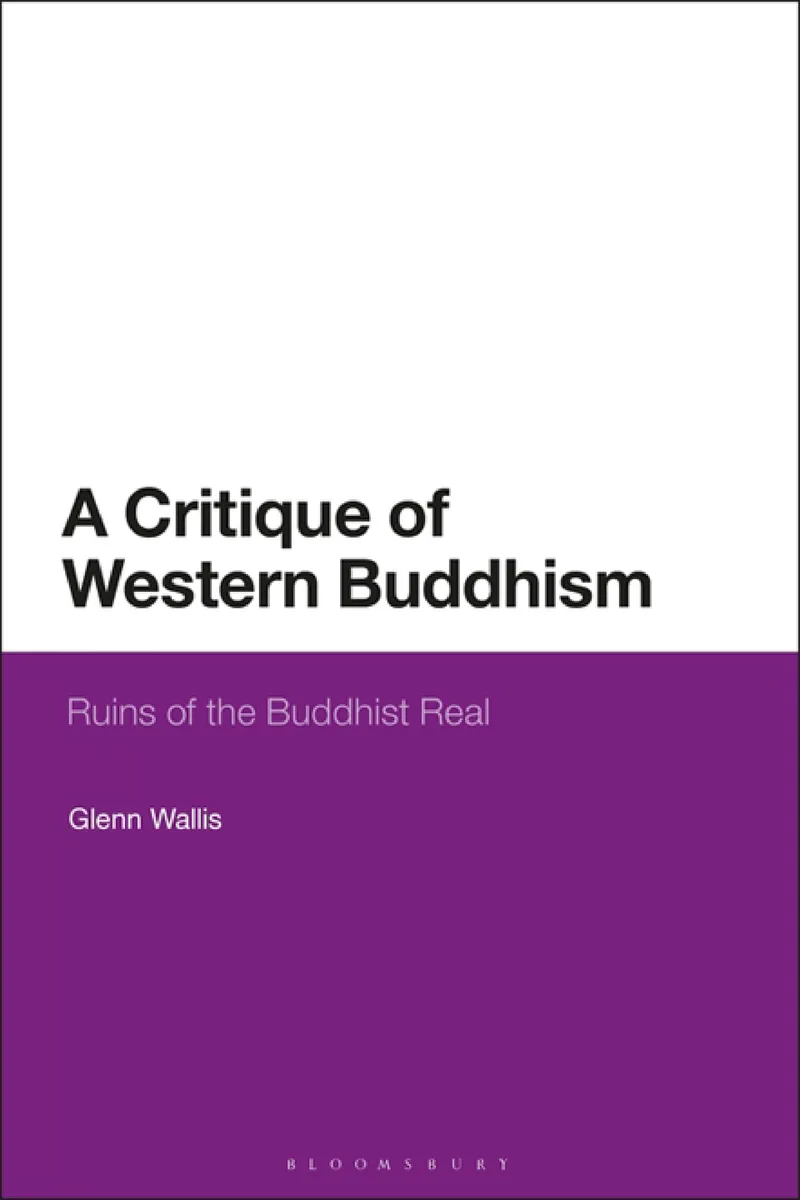
A Critique of Western Buddhism
 80
80

A Critique of Western Buddhism
Glenn Wallis’s "A Critique of Western Buddhism" tackles a significant contemporary issue: the dilution of Buddhist philosophy through its assimilation into the wellness industry. Wallis articulates a compelling argument that by aligning Buddhist practices with self-help and mindfulness trends, Western Buddhism often sidesteps the more challenging, even nihilistic, implications of its own doctrines. The strength of the book lies in its direct confrontation with concepts like "vanishing" and "no-self," which Wallis argues are crucial to understanding Buddhism's "real." However, the critique occasionally feels overly polemical, potentially alienating those who find genuine solace and benefit in secularized mindfulness. The book’s exploration of how "contingency" is often smoothed over in popular adaptations is particularly insightful. Ultimately, Wallis’s work serves as a vital, albeit sharp, call for a more intellectually rigorous engagement with Buddhist thought in the West.
📝 Description
80
Glenn Wallis's 2018 book critiques the sanitization of Buddhist concepts in Western culture.
Glenn Wallis's "A Critique of Western Buddhism" scrutinizes how Buddhist philosophies are adapted into Western contexts, particularly their integration with the wellness industry. Wallis argues this fusion sanitizes core Buddhist ideas, diminishing their radical potential. Instead of engaging with challenging concepts like emptiness, impermanence, and the dissolution of self, Western Buddhism, he contends, often settles for easily digestible self-help strategies. The book posits that authentic Buddhist thought, much like other significant philosophical systems, articulates a distinct view of reality.
This work is aimed at scholars of religious studies and comparative philosophy, as well as those interested in the sociology of religion. It will also resonate with Buddhist practitioners who are critically assessing Western interpretations of their tradition. Furthermore, it speaks to readers who question the commodification of spiritual practices and desire a more rigorous engagement with existential thought, regardless of their personal spiritual paths. The book addresses a sentiment that profound philosophical systems should not be oversimplified for mass appeal.
Published in 2018, this critique arrives at a time when Buddhist traditions, particularly Zen and Vipassanā, were already established in Western popular culture. While figures like Alan Watts had previously made Buddhism more accessible, the late 2010s saw an undeniable link forming with the wellness and self-care movements. Wallis's book engages with the broader trend of religious secularization and therapeutic adaptation, a phenomenon also seen in other spiritual traditions. It contrasts with earlier, more academic analyses of Buddhism's reception in the West.
💡 Why Read This Book?
• Understand the critique of Western Buddhism's integration with wellness, specifically how concepts like "vanishing" are presented in contrast to their original philosophical weight, offering a deeper appreciation of Buddhist existentialism. • Gain insight into the historical context of Buddhism's Western reception, particularly the impact of figures like Alan Watts and the rise of secular mindfulness post-2010, enabling a more nuanced view of its adaptation. • Explore the philosophical implications of "no-self" and "contingency" as articulated by Wallis, challenging conventional interpretations and prompting personal reflection on the nature of reality beyond therapeutic frameworks.
⭐ Reader Reviews
Honest opinions from readers who have explored this book.
❓ Frequently Asked Questions
What is the primary argument of Glenn Wallis's "A Critique of Western Buddhism"?
The book argues that Western Buddhism, by aligning itself with the wellness industry, often avoids confronting the radical implications of core Buddhist concepts like nihility and no-self, thereby sanitizing the tradition.
Is "A Critique of Western Buddhism" available for free?
Yes, the book is accessible as an open-access publication and can be found on the Bloomsbury Collections website, funded by Knowledge Unlatched.
What specific Buddhist concepts does the book critique?
The work focuses on concepts such as vanishing, nihility, extinction, contingency, and no-self, arguing that their challenging aspects are often overlooked in Western adaptations.
Who is Glenn Wallis?
Glenn Wallis is the author of "A Critique of Western Buddhism." He is presented as a critical voice examining the philosophical and cultural shifts in how Buddhism is practiced and understood in the West.
When was "A Critique of Western Buddhism" first published?
The book was first published on September 6, 2018.
What is the "real" as discussed in the book?
The book posits that Buddhism, like other potent systems of thought, articulates a notion of the "real" that is raw and confronts difficult existential truths, rather than offering simple comfort.
🔮 Key Themes & Symbolism
The Wellness Industry's Influence
This theme explores how the contemporary wellness industry has co-opted and reshaped Buddhist practices, transforming them into marketable self-help tools. Wallis contends that this integration often strips away the radical, existential dimensions of Buddhist philosophy, such as confronting impermanence and the dissolution of the ego. The focus shifts from liberation from suffering through clear insights to superficial well-being, a commodification that dilutes the tradition's potency and critical edge.
The Radical Nature of Buddhist Concepts
Wallis emphasizes that concepts like "vanishing," "nihility," "extinction," and "no-self" are not mere philosophical abstractions but are integral to understanding Buddhism's notion of the "real." These ideas, he argues, point to a stark, unvarnished reality that challenges conventional human desires for permanence and selfhood. The book champions a return to grappling with these difficult concepts, asserting that their raw articulation is what gives Buddhist thought its enduring power and transformative potential.
Critique of Western Adaptations
The book specifically targets the Western interpretation and adaptation of Buddhism, arguing that it often reflects Western cultural biases and desires rather than the original teachings. By focusing on the therapeutic and palatable aspects, many Western Buddhist movements, Wallis suggests, evade the rigorous self-inquiry and existential confrontation inherent in traditional Buddhism. This critique aims to provoke a re-evaluation of how Buddhist philosophy is presented and practiced outside its Asian origins.
Defining the "Real"
Central to Wallis's argument is the idea that Buddhism, like other profound philosophical systems, offers a specific articulation of what constitutes the "real." This "real" is characterized not by comfort or affirmation but by its raw, often unsettling, nature. Concepts like contingency and no-self are presented as pointers towards this reality, which is fundamentally different from the constructed self and the illusion of permanence that people cling to.
💬 Memorable Quotes
Direct passages from the work, attributed to the author.
“Western Buddhists evade the consequences of Buddhist thought.”
— This statement expresses the core critique: that the Western embrace of Buddhism often stops short of engaging with its most challenging implications, leading to a diluted and less transformative practice.
“Buddhism, like all potent systems of thought, articulates a notion of the “real.””
— This suggests that Buddhism is not merely a set of ethical guidelines or meditation techniques, but a philosophical framework that offers a specific, and often stark, understanding of existence itself.
“The alignment with the contemporary wellness industry.”
— This points to the specific context of Wallis's critique, identifying the modern wellness movement as a primary driver behind the perceived dilution and commodification of Buddhist teachings.
“Contingency as a core aspect of reality.”
— This concept underscores the book's focus on the unpredictable and interdependent nature of existence, as understood through Buddhist philosophy, contrasting it with the desire for stable, self-contained realities.
💡 Key Ideas
Editorial paraphrase of the work's core concepts — not direct quotes.
Raw, unflinching engagement with concepts like vanishing and no-self.
This paraphrased concept highlights the book's advocacy for confronting the difficult, existential aspects of Buddhist philosophy without softening them for popular appeal.
🌙 Esoteric Significance
Tradition
While not strictly aligning with a single esoteric lineage like Hermeticism or Kabbalah, Wallis's critique taps into a broader esoteric vein concerned with the integrity of profound spiritual and philosophical systems. It echoes Gnostic concerns about the corruption of true knowledge and Hermetic principles of understanding reality through its fundamental, often hidden, laws. The work departs from traditional esoteric frameworks by focusing on a modern religious movement, but its emphasis on confronting difficult truths about existence aligns with esoteric traditions that prioritize gnosis over popular comfort.
Symbolism
The book's primary symbolic concern is the "real" itself, which acts as a potent, albeit abstract, symbol for the unvarnished truth Buddhism points towards. Concepts like "vanishing" and "nihility" function symbolically to dismantle illusions of permanence and self, representing the dissolution of egoic structures. "No-self" serves as a symbol for a state beyond conventional identity, challenging the Western emphasis on individual ego and personal narrative, which are often reinforced by wellness culture.
Modern Relevance
Contemporary thinkers engaged with post-secularism, critical theory, and the philosophy of religion find Wallis's work highly relevant. It informs discussions on the commodification of spirituality and the ethical implications of adapting traditions for Western consumer markets. Scholars examining the sociology of Buddhism and mindfulness practitioners seeking a deeper philosophical grounding beyond therapeutic applications often cite or engage with Wallis's arguments. His critique provides a crucial lens for understanding the evolution of spiritual practices in the digital age.
👥 Who Should Read This Book
• Practitioners of Buddhism seeking a critical examination of its Western adaptations, especially those concerned about the influence of the wellness industry and the potential dilution of core philosophical tenets. • Scholars of religious studies and comparative philosophy interested in the sociology of religion, the secularization of spiritual traditions, and the cultural reception of Eastern philosophies in the West. • Readers interested in existential philosophy and critical theory who are drawn to rigorous intellectual engagement with concepts like nihility, contingency, and the nature of the "real," regardless of their specific spiritual background.
📜 Historical Context
Published in 2018, "A Critique of Western Buddhism" emerged during a period of intense mainstreaming of Buddhist-derived practices, particularly mindfulness, within Western culture. Decades after figures like Alan Watts introduced Zen to a wider audience, and following the popularization of Vipassanā meditation, the 2010s saw these traditions heavily integrated into the wellness and self-help industries. Wallis’s work directly challenges this trend, arguing it represents a departure from the radical philosophical core of Buddhism. His critique engages with broader academic discussions on the secularization and therapeuticization of religion, a phenomenon observed across various spiritual traditions. The book’s accessible, open-access format, funded by Knowledge Unlatched, also signals a contemporary approach to scholarly dissemination, contrasting with the more traditional publishing routes of earlier Buddhist scholarship in the West.
📔 Journal Prompts
The "real" as articulated by potent systems of thought, such as Buddhism.
Vanishing and nihility as concepts that challenge the ego.
The consequences of Buddhist thought in Western contexts.
Contingency versus the desire for permanence.
The critique of Western Buddhism's alignment with wellness.
🗂️ Glossary
Vanishing
A Buddhist concept referring to the impermanent and ultimately insubstantial nature of all phenomena, including the self. Wallis uses it to critique interpretations that soften this radical idea.
Nihility
The philosophical concept of nothingness or non-existence. In Buddhist contexts, it relates to emptiness (śūnyatā) and the lack of inherent, independent existence.
Extinction
Relates to the cessation of suffering (nirvana) or the dissolution of conditioned existence. Wallis suggests this concept is often avoided in Western therapeutic Buddhism.
Contingency
The state of being dependent on chance or unpredictable factors; the lack of necessity. Wallis highlights this as a fundamental aspect of reality often obscured by wellness narratives.
No-self (Anātman/Anattā)
The doctrine that there is no permanent, unchanging, independent self or soul. Wallis critiques Western interpretations that fail to grasp its radical implications.
The "Real"
As used by Wallis, this refers to the fundamental, unvarnished nature of existence as articulated by potent philosophical systems, often characterized by its rawness and lack of comforting illusion.
Wellness Industry
A broad range of commercial activities and products focused on promoting health and well-being, which Wallis argues has co-opted and diluted Buddhist practices.