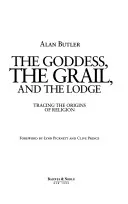
The Goddess, the Grail, and the Lodge
 74
74

The Goddess, the Grail, and the Lodge
Alan Butler’s *The Goddess, the Grail, and the Lodge* offers a compelling, if sometimes speculative, re-reading of the Grail legend. The book’s strength lies in its persistent focus on the feminine divine, drawing a direct line from ancient matriarchal cults to the enduring symbolism of the Grail. Butler persuasively argues that the legend, as commonly understood, has often occluded its deeper, feminine roots. A notable limitation is the reliance on theoretical connections that, while intriguing, can feel less substantiated than the core thesis warrants. The exploration of the Cathars and their potential links to Grail symbolism, for instance, leans heavily on interpretive inference rather than concrete historical proof. However, the work’s persistent attention to the 'feminine overtones' of the Grail, particularly in its analysis of its central place in modern religion suggesting survival of age-old beliefs focusing around a Great Goddess, provides a valuable lens. This is a work that challenges conventional Grail scholarship by centering the suppressed feminine.
📝 Description
74
Alan Butler's 2006 book argues the Arthurian Grail legend is imbued with feminine symbolism.
This volume examines the feminine divine within Western traditions, focusing on the Arthurian Grail legend. Butler proposes that the Grail is not merely a masculine quest object but carries significant feminine symbolism. He traces this symbolism back to pre-Christian cults dedicated to a Great Goddess. The book appeals to scholars and practitioners interested in comparative mythology, religious history, and esoteric interpretations of Western legends. It is for those curious about goddess worship's resurgence, ancient symbols' enduring power, and hidden feminine currents in established religions. Readers will gain insight into how patriarchal structures might conceal older, matriarchal foundations.
Butler's 2006 publication appeared during a time of increased interest in Goddess spirituality and feminist critiques of patriarchal religious systems. The book engages with theories on the origins of Christianity, the Cathars, and the Knights Templar, offering a counterpoint to exclusively masculine readings of chivalric romances. Its central argument is that the 'Grail' represents a potent symbol of the feminine principle, often marginalized within patriarchal religious frameworks. The author also discusses the 'Great Goddess' as a primal archetype whose influence persists across cultures. The work touches upon esoteric lodges and secret societies as keepers of this ancient knowledge.
Published in 2006, this work engages with traditions that seek hidden meanings within Western religious and mythological narratives. It situates itself within discussions concerning the survival of ancient pagan and Gnostic ideas, particularly those related to the feminine principle and the concept of a Great Goddess. The book connects these themes to esoteric interpretations of figures like the Cathars and the Knights Templar, suggesting that certain secret societies may have preserved this older, feminine-centered wisdom. It offers a perspective often found in esoteric studies that challenge orthodox religious interpretations.
💡 Why Read This Book?
• Gain a unique perspective on the Grail legend, understanding its feminine symbolism and potential links to ancient Goddess cults, as explored in Butler's analysis of the 2006 publication. • Discover how patriarchal religious structures may have incorporated or suppressed older matriarchal foundations, offering a critical lens on Western religious history. • Examine the theory that the Grail is a symbol replete with feminine overtones, suggesting the survival of age-old religious beliefs focusing around a Great Goddess.
⭐ Reader Reviews
Honest opinions from readers who have explored this book.
❓ Frequently Asked Questions
What is the central argument of 'The Goddess, the Grail, and the Lodge'?
The book argues that the Grail is primarily a symbol of the feminine divine, linked to ancient Great Goddess traditions, whose influence has persisted in Western religion despite patriarchal interpretations.
Who was Alan Butler and when was this book first published?
Alan Butler was an author exploring esoteric and historical subjects. 'The Goddess, the Grail, and the Lodge' was first published in 2006.
Does the book discuss the Knights Templar?
Yes, the work touches upon the Knights Templar as a potential link or historical context for the survival and transmission of esoteric knowledge related to the Grail.
What is the 'Great Goddess' concept explored in the book?
The 'Great Goddess' refers to a primal, archetypal feminine divine principle believed by some to be the source of ancient fertility cults and pre-patriarchal religious systems.
How does the book connect lodges to the Grail?
It suggests that esoteric lodges and secret societies may have served as custodians of ancient wisdom, preserving and transmitting the symbolism associated with the Goddess and the Grail.
Is this book suitable for beginners in esoteric studies?
While accessible, the book delves into complex theories of religious history and symbolism. It is best suited for those with some existing interest in comparative mythology or esoteric traditions.
🔮 Key Themes & Symbolism
The Feminine Grail
Butler challenges the traditional masculine interpretation of the Grail, positing it as a powerful symbol of the feminine divine. This perspective suggests the Grail legend is a continuation of much older religious beliefs centered on a Great Goddess, whose attributes of fertility, creation, and cosmic order were later suppressed or recontextualized within patriarchal frameworks. The book examines how this feminine essence might have been preserved through various historical periods and esoteric traditions.
Survival of the Great Goddess
A central theme is the argument that the widespread reverence for the Grail in Western culture indicates the enduring presence of the Great Goddess archetype. This ancient deity, predating many organized religions, represented a fundamental cosmic power. Butler traces her influence through myth, folklore, and religious symbolism, suggesting that the Grail legend serves as a vital conduit for her continued, albeit often unrecognized, spiritual significance in the modern world.
Esoteric Lodges and Symbolism
The work explores the role of esoteric lodges and secret societies in preserving and transmitting ancient spiritual knowledge, particularly concerning the Goddess and the Grail. These groups are presented as potential inheritors of traditions that maintained a focus on the feminine divine when it was marginalized by mainstream religions. The book examines how the symbolism associated with these figures and objects might have been kept alive within these hidden currents of Western esotericism.
Feminine Mysticism in Western Religion
Butler's analysis scrutinizes the historical development of Western religions, particularly Christianity and its Arthurian romances, to identify the persistent threads of feminine mysticism. He suggests that elements crucial to understanding spiritual fulfillment and divine connection have been overlooked due to an overemphasis on masculine divine imagery. The book advocates for a re-evaluation of these traditions to acknowledge and reintegrate the feminine aspect of the sacred.
💬 Memorable Quotes
Direct passages from the work, attributed to the author.
“The Grail is a symbol replete with feminine overtones.”
— This concise statement expresses the book's core thesis, asserting that the widely recognized Grail legend holds a profound, yet often overlooked, connection to feminine divine principles and symbolism.
“Its central place in modern religion suggests the survival of age-old religious beliefs focusing around a Great Goddess.”
— This interpretation links the enduring cultural power of the Grail to the persistence of ancient matriarchal religious systems, suggesting a continuity of the Great Goddess archetype.
“The book suggests the survival of age-old religious beliefs focusing around a Great Goddess.”
— This interpretation emphasizes the historical depth of the book's argument, proposing that contemporary religious phenomena, like the Grail's prominence, can be traced back to very ancient, goddess-centric belief systems.
💡 Key Ideas
Editorial paraphrase of the work's core concepts — not direct quotes.
The work examines the theory that the Grail is a symbol replete with feminine overtones.
This paraphrased concept highlights the book's investigative approach, focusing on the symbolic nature of the Grail and its inherent feminine qualities as the primary subject of inquiry.
The Grail's symbolism is presented as having profound feminine overtones.
This paraphrased concept reiterates the central argument, focusing on the symbolic language of the Grail and its intrinsic connection to feminine divine energies and concepts.
🌙 Esoteric Significance
Tradition
This work aligns with modern esoteric traditions that seek to recover and re-center the feminine divine, often drawing from Gnostic, pre-Christian European, and archetypal psychology perspectives. It departs from purely historical or dogmatic interpretations by focusing on the symbolic and energetic dimensions of religious narratives. Butler's approach can be seen as part of a broader Neopagan and Goddess-centric revival, seeking to find continuity of ancient spiritual practices within later religious forms.
Symbolism
The primary symbols explored are the Grail itself, interpreted as a chalice or vessel representing the womb, the source of life, and divine feminine receptivity, and the 'Great Goddess,' an archetypal representation of the primordial feminine creative and destructive power. The 'Lodge' symbolizes hidden knowledge and initiatory traditions, often seen as preserving the feminine aspects of the sacred that mainstream religions have obscured.
Modern Relevance
Butler's work is relevant to contemporary Goddess feminists, Neopagan practitioners, and scholars of comparative religion interested in the reclamation of feminine divinity. Thinkers and groups focused on archetypal psychology, such as those influenced by Jung, find resonance in the concept of the Great Goddess as a powerful, enduring archetype. The book also informs discussions on the evolution of religious symbolism and the potential for reinterpreting patriarchal myths through a feminine lens.
👥 Who Should Read This Book
• Students of comparative mythology and religious history seeking alternative interpretations of Western legends, particularly the Arthurian cycle. • Practitioners and scholars of Goddess spirituality and Neopaganism interested in the historical roots and symbolic continuity of the Great Goddess archetype. • Readers exploring esoteric traditions and secret societies who wish to understand the potential role of these groups in preserving suppressed feminine divine symbolism.
📜 Historical Context
Published in 2006, Alan Butler's work emerged within a landscape increasingly receptive to feminist theological critiques and the resurgence of Goddess spirituality, movements that gained significant traction from the late 20th century onwards. This intellectual climate provided fertile ground for re-examining patriarchal religious narratives. Butler's exploration of the Grail legend and its potential links to ancient matriarchal cults engaged with ongoing scholarly and esoteric debates concerning the origins of Western religions and the suppression of feminine divine imagery. Contemporaries like Riane Eisler, who wrote about the historical prevalence of partnership societies, offered parallel arguments about gender dynamics in early civilizations. While Butler’s specific reception within mainstream academia might be limited, his work taps into a broader academic and popular interest in alternative interpretations of religious history and symbolism, particularly concerning the Cathars and their purported esoteric connections.
📔 Journal Prompts
The Grail's feminine overtones: how do they contrast with patriarchal interpretations?
Reflect on the concept of the Great Goddess as a survival of age-old religious beliefs.
Analyze the role of esoteric lodges in preserving symbolism related to the Goddess and Grail.
Consider how the Grail's prominence suggests a continued spiritual influence of the feminine divine.
Compare Butler's interpretation of the Grail with traditional chivalric romance narratives.
🗂️ Glossary
The Grail
In this context, the Grail is reinterpreted not just as a knightly quest object, but as a potent symbol deeply imbued with feminine divine qualities, representing a source of life and spiritual nourishment.
Great Goddess
An archetypal feminine divine principle believed to be the source of ancient fertility cults and pre-patriarchal religious systems, representing creation, nurturing, and cosmic order.
Feminine Overtones
Qualities, associations, or symbolic meanings that are inherently linked to the feminine principle, as opposed to masculine or neutral interpretations, particularly in religious and mythical contexts.
Esoteric Lodge
A secret or private group dedicated to the study and practice of mystical or occult knowledge, often seen as a vehicle for preserving and transmitting ancient spiritual traditions.
Matriarchal Cults
Ancient religious systems or practices that were centered around female deities and may have had a societal structure with significant female authority or focus.
Patriarchal Interpretations
Readings or understandings of religious texts, myths, and symbols that prioritize or exclusively focus on masculine divine principles and societal structures.
Symbolic Survival
The continuation and adaptation of ancient symbols and their meanings within later cultural and religious contexts, even when their original forms or interpretations are obscured.
This book appears in 1 collection
🔮 Readers Also Liked
Browse all →









From the “Templar Knights” Collection
View all →






More Free Sacred Texts & Gnosticism Books
View all →