A History of Ancient Egypt
 72
72

A History of Ancient Egypt
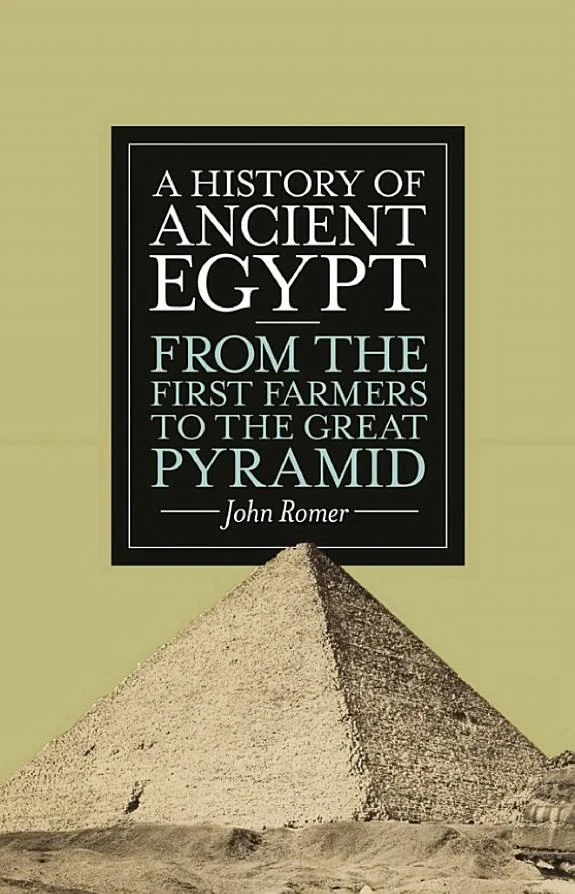
John Romer’s "A History of Ancient Egypt" commendably redirects attention to the formative centuries of Egyptian civilization, a period often overshadowed by the more spectacular achievements of the Old Kingdom. His detailed account of the emergence of farming communities and the gradual development of centralized administration is particularly strong. Romer succeeds in presenting the complex evolution of a state from its agrarian roots. However, the narrative’s laser focus on the pre-dynastic period, while ambitious, might leave readers seeking more on the iconic Pharaonic era feeling somewhat underserved, despite the author's clear intent. A passage detailing the logistical planning for early Nile-based transport systems vividly illustrates the book's analytical rigor. Romer’s work offers a valuable, if specialized, perspective on Egypt's deep past.
📝 Description
72
John Romer's 1994 history begins not with pharaohs, but with the Neolithic farmers who shaped ancient Egypt.
This history of ancient Egypt diverges from typical accounts by focusing on the fifteen centuries before the unification of the country. John Romer traces the development from early farming communities along the Nile through the emergence of complex administrative systems. The book details the socio-economic and political shifts that made monumental construction possible. It is written for the serious reader interested in the deep origins of Egyptian civilization, moving beyond the commonly discussed pharaonic periods. Readers curious about the gradual development of statehood and centralized authority, as well as the organizational demands of early large-scale projects, will find this work valuable. Romer contrasts his approach with scholarship that often prioritizes dynasties and divine kingship, instead highlighting the slow, organic growth of Egyptian society. The narrative underscores the incremental innovations in agriculture, social organization, and state formation that prepared the way for later accomplishments.
While not strictly an esoteric text, Romer's work engages with the deeper, less commonly examined foundations of Egyptian civilization. By shifting focus from the dynastic period to the pre-unification era, it aligns with a tradition of seeking origins and understanding the slow, organic development of complex societies. This perspective resonates with esoteric interests in the foundational principles and gradual unfolding of human organization, offering a view that predates the commonly known religious and political structures.
💡 Why Read This Book?
• Gain an understanding of the Neolithic origins of Egyptian statehood, exploring the shift from agrarian communities to centralized control, a process Romer details through the development of administrative systems. • Appreciate the logistical groundwork required for monumental construction, as the book explains the sophisticated supply and transport networks that preceded projects like the Great Pyramid. • Reframe your view of ancient Egypt by focusing on the fifteen centuries of development leading up to the Pharaonic period, moving beyond common historical narratives.
⭐ Reader Reviews
Honest opinions from readers who have explored this book.
❓ Frequently Asked Questions
What period does John Romer's 'A History of Ancient Egypt' primarily focus on?
The book primarily focuses on the fifteen centuries preceding the commonly discussed Pharaonic period, specifically the Neolithic era and the emergence of a centralized Egyptian state from farming communities along the Nile.
How does Romer's work differ from popular histories of Egypt?
Unlike popular histories that concentrate on the Pharaonic period, Romer shifts the reader's attention to the earlier Neolithic period, tracing the growth of a centralized Egyptian state and its administrative systems.
What key developments does the book explore?
It explores the development of farming communities along the Nile, the creation of sophisticated administrative and supply systems, and the socio-economic evolution that enabled large-scale construction.
What is the significance of the Great Pyramid in Romer's narrative?
The Great Pyramid serves as an example of the sophisticated administrative, transport, and supply systems that Romer argues were developed over fifteen hundred years prior to its construction.
Is this book suitable for beginners in Egyptology?
Yes, it is aimed at non-specialists, offering an engaging account of the formative years of Egyptian civilization, distinct from typical introductions that focus heavily on later dynasties.
When was 'A History of Ancient Egypt' first published?
John Romer's 'A History of Ancient Egypt' was first published in 2012.
🔮 Key Themes & Symbolism
Emergence of Centralized State
The work details the gradual transition from scattered Neolithic farming communities along the Nile to a unified, centralized Egyptian state. It examines the socio-economic and political structures that fostered this consolidation, highlighting the development of administrative and logistical systems necessary for large-scale societal organization. This theme underscores the idea that the foundations of Egyptian civilization were built over centuries of incremental growth and innovation, rather than appearing fully formed.
Logistics of Early Civilization
A central focus is the sophisticated planning and execution of transport and supply systems that enabled monumental undertakings. Romer illustrates how fifteen hundred years of development were required to create the infrastructure and organizational capacity that allowed for projects like the Great Pyramid. This theme emphasizes the practical, organizational genius underlying ancient Egyptian achievements, moving beyond purely ideological interpretations.
Pre-Pharaonic Foundations
This book deliberately shifts the scholarly and popular gaze away from the well-trodden Pharaonic period towards the Neolithic and Predynastic eras. It argues that understanding the fifteen centuries of development – from early farming to state formation – is crucial for a complete comprehension of Egyptian civilization. The work positions these formative years as the essential prelude to the dynastic age.
Agrarian Roots of Society
The book traces the deep connection between the Nile's fertility and the rise of Egyptian civilization. It details how the emergence of reliable farming communities provided the stable economic base and population density necessary for the development of more complex social structures, administration, and eventually, a unified state. This highlights the fundamental role of agriculture in shaping ancient Egyptian society.
💬 Memorable Quotes
Direct passages from the work, attributed to the author.
“The work aims to refocus the gaze of the non-specialist away from the Pharaonic period onto the Neolithic, and the growth of a centralised Egyptian state.”
— This statement clearly defines the book's contrarian approach, prioritizing the formative, often overlooked, centuries of Egyptian history over the more popularly celebrated dynastic era.
“He traces fifteen hundred years of development, from the emergence of farming communities along the route of the Nile to the creation of sophisticated administrative, transport and supply systems.”
— This captures the ambitious scope of the book, emphasizing the long, evolutionary process required to build the complex infrastructure that supported later Egyptian achievements.
“The growth of a centralised Egyptian state.”
— This phrase captures the core argument regarding political and social evolution, highlighting the gradual process of unification and the establishment of governing structures from agrarian beginnings.
“Sophisticated administrative, transport and supply systems which allowed the construction of the Great Pyrami”
— This highlights the practical, organizational achievements of early Egypt, linking developed logistical capabilities directly to the feasibility of constructing monumental architecture.
“The emergence of farming communities along the route of the Nile.”
— This points to the foundational period of settled life and agricultural development as the essential starting point for understanding the trajectory of Egyptian civilization.
🌙 Esoteric Significance
Tradition
While not explicitly framed within a specific esoteric lineage like Hermeticism or Gnosticism, Romer's work speaks to esoteric traditions that emphasize cyclical time, the deep roots of civilization, and the hidden knowledge embedded in ancient structures. It aligns with esoteric inquiries into the fundamental principles of societal organization and the spiritual or energetic underpinnings of large-scale human endeavors, albeit approached through a historical-critical lens.
Symbolism
The Nile River itself can be seen as a potent symbol, representing life, cyclical renewal, and the artery of civilization, a concept central to many ancient cosmologies. The Great Pyramid, while discussed for its logistical implications, also carries immense symbolic weight in esoteric thought, representing ascension, cosmic order, and hidden wisdom. The very concept of 'centralized state' can be interpreted esoterically as the manifestation of a unified consciousness or divine will on Earth.
Modern Relevance
Contemporary esoteric thinkers and practitioners interested in ancient civilizations, sacred geometry, and the origins of consciousness find value in Romer's meticulous reconstruction of Egypt's formative centuries. His emphasis on the organizational principles and logistical achievements of early Egypt can inform modern discussions on sustainable societal structures, collective consciousness, and the potential for human civilization to achieve monumental feats through coordinated effort.
👥 Who Should Read This Book
• Students of early state formation and comparative civilization will find Romer's detailed account of the fifteen centuries leading to Egyptian unification invaluable. • Readers interested in the practical and logistical challenges of ancient monumental construction will gain specific insights into the development of administrative and supply systems. • Those seeking a deeper, more foundational understanding of Egyptian civilization beyond the commonly discussed Pharaonic era will appreciate the focus on Neolithic and Predynastic roots.
📜 Historical Context
John Romer’s "A History of Ancient Egypt" (2012) emerged in a field still heavily influenced by narrative traditions focusing on dynastic Egypt and pharaonic achievements. While scholars like Toby Wilkinson were producing comprehensive surveys of dynastic history, Romer consciously steered away from this established path. His work sought to place the Neolithic and Predynastic periods – the fifteen centuries leading up to the Old Kingdom – at the forefront, challenging the conventional focus. This approach positioned his book as a corrective, emphasizing the organic, long-term development of state structures, agriculture, and logistical systems. The work implicitly engaged with debates on the origins of the state, offering a detailed account of socio-economic evolution rather than focusing solely on political unification or divine kingship. Its reception highlighted a renewed interest in the deep roots of civilization, away from the more sensational aspects of Egyptian history.
📔 Journal Prompts
The emergence of farming communities along the Nile: How did settled agriculture fundamentally alter human social organization?
The creation of sophisticated administrative systems: Reflect on the organizational challenges inherent in managing resources for large populations.
The development of transport and supply networks: Consider the precursor technologies and social structures needed for large-scale logistics.
The growth of a centralised Egyptian state: Analyze the transition from local autonomy to unified governance.
The context for constructing the Great Pyramid: Imagine the societal consensus and infrastructure required for such an undertaking.
🗂️ Glossary
Neolithic period
The later Stone Age, characterized by the development of farming, polished stone tools, and settled communities. In Egypt, this period saw the crucial transition from nomadic hunter-gatherer lifestyles to stable agrarian societies along the Nile.
Centralised state
A form of political organization where power and administrative functions are concentrated in a central authority, as opposed to being dispersed among local or regional entities.
Pharaonic period
The historical era of ancient Egypt ruled by pharaohs, typically divided into the Old Kingdom, Middle Kingdom, and New Kingdom, known for its monumental architecture and complex religious and political systems.
Administrative systems
The structures, processes, and personnel involved in managing the affairs of a state or organization, including taxation, record-keeping, and resource allocation.
Transport and supply systems
The methods and infrastructure used to move goods, resources, and people, and to ensure adequate provision for a population or project, particularly crucial for large-scale endeavors like construction.
Nile River
The major river of Egypt, whose annual floods provided fertile land essential for the development of early agriculture and the subsequent rise of Egyptian civilization.
Great Pyramid
The largest of the pyramids in Giza, built as a tomb for the Pharaoh Khufu during the Old Kingdom. Its construction represents a pinnacle of ancient Egyptian engineering and organizational capacity.
This book appears in 1 collection
🔮 Readers Also Liked
Browse all →






From the “Pyramids” Collection
View all →




More Free Esoteric History & Biography Books
View all →