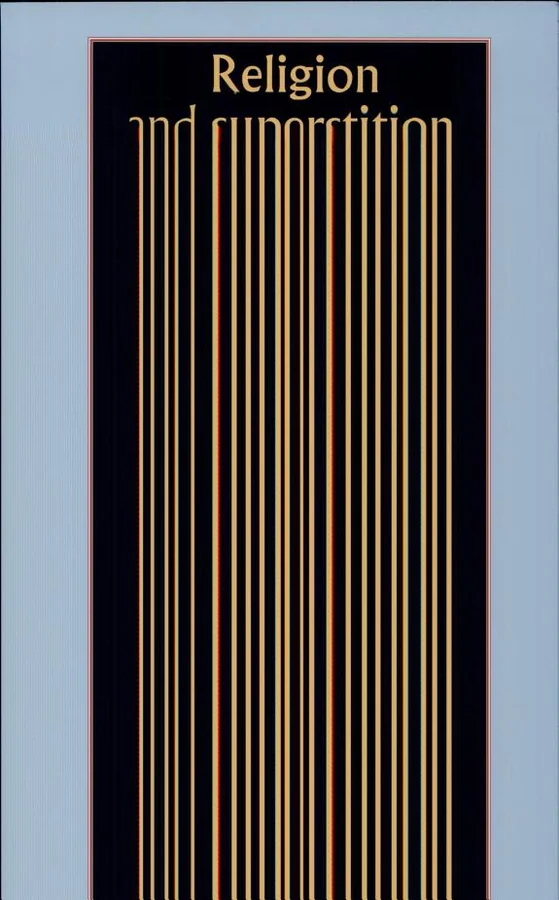
Religion and Superstition in Reformation Europe
 80
80

Religion and Superstition in Reformation Europe
Helen Parish and William G. Naphy’s collection offers a vital corrective to simplistic narratives of the Reformation, particularly concerning the pervasive concept of "superstition." Instead of treating it as a fixed pejorative, the contributors dissect its fluid application across diverse European regions. A notable strength lies in the examination of Catholic responses to the Reformation, revealing the intricate ways the Church sought to retain its influence amidst challenges. However, the collection occasionally feels fragmented, with the overarching argument about the contested nature of "superstition" sometimes lost amidst the specific case studies. The analysis of attitudes towards prophets, for instance, offers a particularly compelling look at how divine communication was perceived and weaponized. Ultimately, this volume serves as an essential, albeit occasionally uneven, resource for understanding the complex religious landscape of early modern Europe.
📝 Description
80
In Reformation Europe, "superstition" was a charged term used to contest religious practices.
Helen Parish and William G. Naphy's volume examines the concept of "superstition" during the European Reformation, a time of significant religious change. The book moves past simple definitions to show how beliefs and practices, often labeled as superstitious, were handled and contested across different regions and religious groups. It looks at how people viewed prophecies, ghosts, the power of saints' relics, and the presence of demonology in both Catholic and new Protestant communities.
This work is for scholars and advanced students of early modern European history, religious studies, and cultural anthropology. It is particularly useful for those interested in the details of how everyday religious beliefs interacted with official teachings and reform movements. Readers who want a deeper understanding of the Reformation's effect on daily spiritual life, beyond the main theological arguments, will find its case study approach beneficial. The book is set during the Reformation's intellectual period, from the early 16th to the mid-17th century, a time when the idea of superstition became a tool in religious arguments.
This book engages with the historical study of popular belief and religious practice, examining how concepts like "superstition" were defined and contested by authorities and laypeople alike. It focuses on the Reformation era, a period where the boundaries between accepted religious expression and condemned superstition were actively debated and enforced. The work considers how traditional practices, often seen as folk magic or remnants of older systems, were reinterpreted or rejected within new confessional frameworks, shedding light on the cultural and intellectual shifts of the time.
💡 Why Read This Book?
• Gain a nuanced understanding of "superstition" as a contested concept during the Reformation, moving beyond simplistic definitions by examining its application in specific national and regional studies. • Explore the varied attitudes towards prophets, ghosts, and saints within both Catholic and reformed churches, understanding how these beliefs were reinterpreted or suppressed. • Analyze the Catholic Church's strategic responses to the Reformation, revealing how it adapted its practices and doctrines to counter the perceived "superstition" in reformed communities.
⭐ Reader Reviews
Honest opinions from readers who have explored this book.
❓ Frequently Asked Questions
What is the primary argument regarding "superstition" in Reformation Europe?
The primary argument is that "superstition" was not a fixed category but a highly contested term used strategically by various religious and intellectual factions during the Reformation to label and discredit opposing beliefs and practices.
Which specific regions or countries are examined in the book?
The book features examinations of various national and regional studies, offering a broad scope across Europe, though specific examples like England, France, and parts of the Holy Roman Empire are often central.
How did the Reformation impact beliefs about the supernatural?
The Reformation led to a reevaluation of supernatural phenomena. Reformers often sought to rationalize beliefs, demonizing practices associated with Catholic saints or relics as "superstitious," while Catholic authorities sometimes adopted similar demonological frameworks.
What role did prophets and demonology play in the discussions of superstition?
Prophets were scrutinized for their divine claims, and demonology became a framework for explaining perceived irrational beliefs. Both were key areas where "superstition" was identified and debated by theologians and popular audiences.
When was "Religion and Superstition in Reformation Europe" first published?
The book was first published in 2002, making it a significant contribution to scholarship on early modern religious culture from the turn of the 21st century.
Are attitudes to saints and relics discussed in relation to superstition?
Yes, the book directly addresses attitudes towards saints and relics, often analyzing them as focal points for "superstitious" practices that reformers sought to eliminate or redefine.
🔮 Key Themes & Symbolism
The Contested Nature of Superstition
This theme deconstructs "superstition" not as an objective category but as a dynamic and often weaponized label during the Reformation. The work demonstrates how accusations of superstition were used by reformers to dismantle Catholic practices and by Catholics to critique Protestant innovations. It highlights the fluidity of the term, showing how beliefs about miracles, saints, or even prophetic utterances could be classified as superstitious depending on the confessional agenda of the observer, challenging a monolithic understanding of religious belief in the period.
Popular Piety and Reformist Agendas
The volume examines the complex relationship between enduring forms of popular piety—such as devotion to saints, veneration of relics, and belief in omens—and the reformist agendas of the era. It investigates how these traditional practices were perceived, tolerated, or actively suppressed by both Catholic and Protestant authorities. The work explores the ways in which the Reformation reconfigured the boundaries between acceptable religious expression and "superstitious" excess, often leading to anxieties about demonic influence and witchcraft.
Catholic Responses to Reformation Challenges
A significant focus is placed on how the Catholic Church reacted to the intellectual and spiritual challenges posed by the Reformation, particularly concerning accusations of "superstition." This theme analyzes the strategies employed by Catholic thinkers and institutions to defend their doctrines and practices, often by reinterpreting or re-emphasizing elements that reformers deemed superstitious. The work reveals the adaptive resilience of Catholicism in navigating a Europe increasingly divided by religious conflict.
The Supernatural and Demonology
The collection explores the persistent belief in the supernatural, including phenomena like ghosts, prophecies, and demonic activity, and how these beliefs were integrated into theological debates about superstition. It examines the development of demonological theories and their connection to perceived superstitious practices, particularly in the context of emerging anxieties about witchcraft. The work shows how these beliefs shaped the religious and social landscape, influencing attitudes towards perceived "superstitious" behaviors.
💬 Memorable Quotes
Direct passages from the work, attributed to the author.
“"Superstition" is one of the most fought over terms in the history of early modern popular culture.”
— This statement underscores the central thesis: "superstition" was not merely an academic classification but a highly contentious concept actively employed in cultural and religious conflicts of the Reformation era.
“The volume offers a novel approach to the issue, based upon national and regional studies.”
— This highlights the book's methodological contribution, emphasizing its comparative and localized examination of superstition rather than a broad, overarching theoretical framework.
“It challenges the assumptions about the clear-cut division between Catholic "superstition" and Protestant rationality.”
— This points to a key argument: the Reformation did not simply eradicate superstition in favor of reason, but rather redefined and redistributed beliefs, blurring the lines often drawn between confessional groups.
“Examinations of attitudes to prophets, ghosts, saints, and demonology.”
— This indicates the specific phenomena the book analyzes, revealing the concrete areas where the concept of superstition was applied and debated during the Reformation period.
“The presence of "superstition" in the reformed churches.”
— This suggests that the book explores the paradoxical reality that even reformed churches, often seen as eradicating superstition, still contained or grappled with practices and beliefs that could be labeled as such.
🌙 Esoteric Significance
Tradition
While not explicitly aligned with a single esoteric lineage, this work touches upon themes relevant to Hermeticism and Renaissance magic, particularly in its examination of prophecy, demonology, and the interpretation of signs. The Reformation's reordering of the sacred landscape and its impact on belief systems surrounding the supernatural can be seen as influencing later esoteric developments that often sought alternative spiritual pathways outside dominant religious structures.
Symbolism
The book implicitly engages with symbols of divine and demonic authority. Saints, often depicted with specific attributes (like keys for Peter or books for Augustine), represented channels of divine grace or intercession, which reformers often re-framed as superstitious intermediaries. Conversely, demonic symbols represented the forces of chaos and deception, used to explain perceived irrationality or heresy. Ghosts and spectral apparitions also served as potent symbols of the liminal space between the living and the dead, interpreted through both religious and folkloric lenses.
Modern Relevance
Contemporary scholars of religion, folklore, and cultural history continue to draw on the nuanced understanding of "superstition" presented here. Thinkers exploring the sociology of belief, the construction of religious authority, and the enduring power of folk religion find the book's analysis of how labels are applied and contested highly relevant to understanding modern phenomena, from conspiracy theories to New Age practices. It informs studies of how dominant narratives shape perceptions of marginalized beliefs.
👥 Who Should Read This Book
• Academic historians and religious studies scholars seeking a deeper understanding of the Reformation's impact on popular belief and practice. • Students of early modern European culture interested in the interplay between official doctrines and everyday religious experiences. • Researchers investigating the historical construction and application of terms like "superstition" in religious and social discourse.
📜 Historical Context
The Reformation era, spanning roughly from the early 16th to the mid-17th century, was a period of profound religious and intellectual transformation in Europe. Martin Luther’s Ninety-five Theses in 1517 ignited a movement that challenged the authority of the Roman Catholic Church, leading to the establishment of Protestantism. This period saw intense debates not only over theology but also over the very nature of religious practice and belief. The concept of "superstition" became a critical tool in these polemics, employed by reformers like John Calvin to denounce Catholic traditions (such as the veneration of saints and relics) as remnants of paganism or demonic deception. Simultaneously, Catholic thinkers engaged in their own reassessments, seeking to reaffirm orthodox practices and combat perceived heresies. This volume engages with contemporaries like Jean Bodin, whose work on demonology also grappled with the perceived irrationality of certain beliefs, placing the discussion of "superstition" within broader intellectual currents of the time.
📔 Journal Prompts
The contested nature of "superstition" as a label during the Reformation.
Attitudes towards prophets, ghosts, and saints across confessional divides.
Catholic strategies for responding to accusations of superstition.
The role of demonology in shaping perceptions of "superstitious" practices.
How national and regional studies illuminate the complexity of Reformation beliefs.
🗂️ Glossary
Superstition
A belief or practice regarded as irrational or superstitious, often associated with magic, excessive devotion, or unorthodoxy. During the Reformation, it was a key term in theological and polemical debates.
Reformation
The 16th-century religious, political, intellectual, and cultural upheaval that splintered Catholic Europe, setting in place the structures and beliefs that would define it in the modern world. Key figures include Martin Luther and John Calvin.
Demonology
The study of demons or beliefs about demons. During the Reformation, it became a significant framework for understanding perceived supernatural evil and explaining behaviors deemed "superstitious" or heretical.
Popular Piety
Religious beliefs and practices observed by ordinary people, often distinct from or supplementary to official church doctrine. This includes devotions to saints, relics, and local traditions.
Confessionalism
The adherence to or the doctrine of a confession of faith. In Reformation Europe, it refers to the distinct theological and institutional identities of various churches (Catholic, Lutheran, Calvinist, etc.).
Saints
Individuals recognized for their holiness and often venerated for their intercessory powers. The Reformation saw significant debate over the veneration of saints, with reformers often critiquing it as superstitious.
Prophets
Individuals believed to receive divine revelations or foretell the future. Attitudes towards prophets varied widely, with some seen as divinely inspired and others as deluded or demonic.
This book appears in 1 collection
🔮 Readers Also Liked
Browse all →



From the “Superstition” Collection
View all →






More Free Esoteric History & Biography Books
View all →